Visitors consistently describe Rakov Škocjan as one of the most rewarding free stops in the region, and also one of the least managed. There is no ticket office, no lighting and no visitor center in the valley. Feedback splits along a clear line: people who researched the route and the water level before setting out come away impressed, while people expecting a signposted attraction often leave frustrated.
Local name: Rakov Škocjan
6

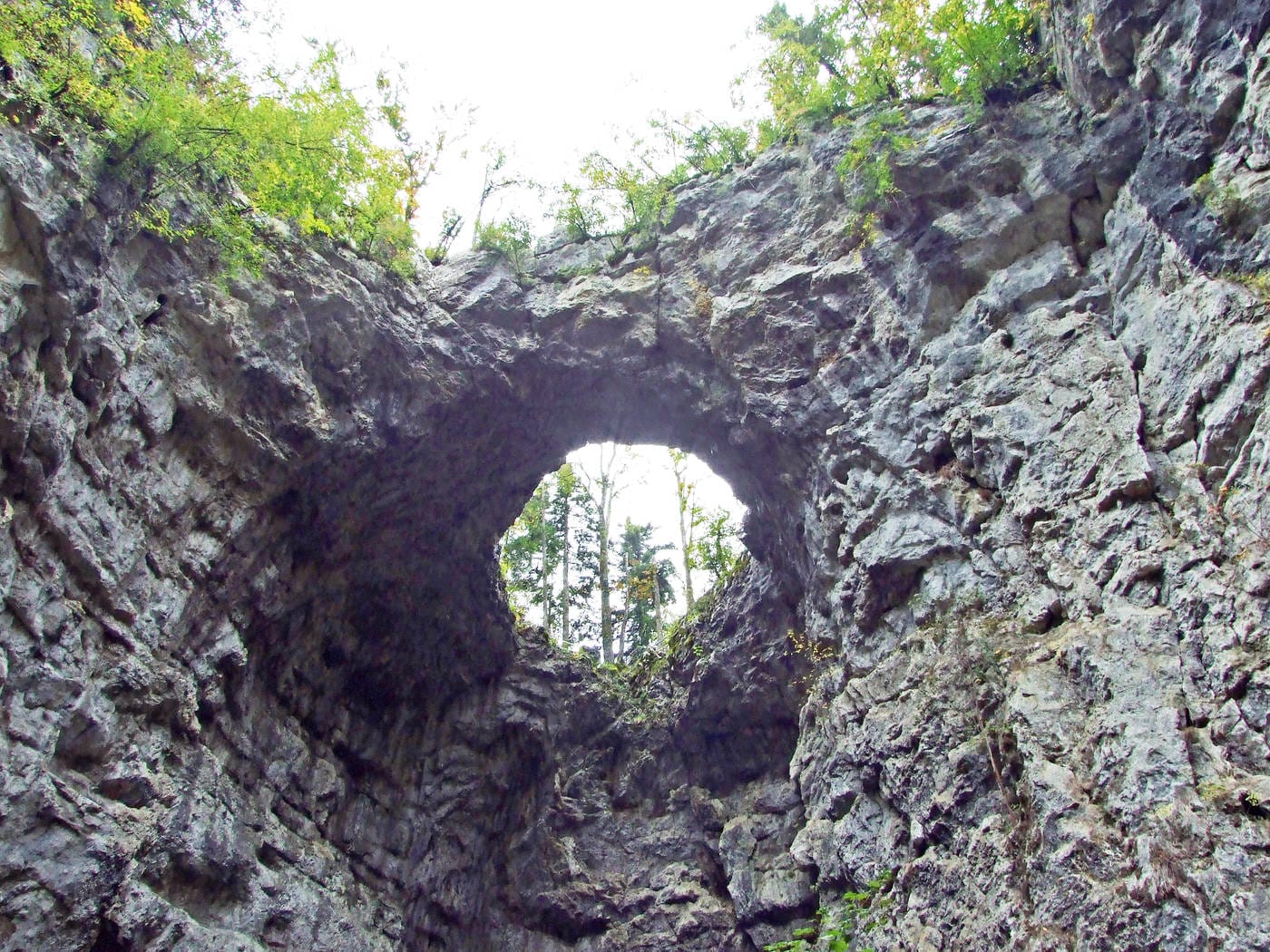

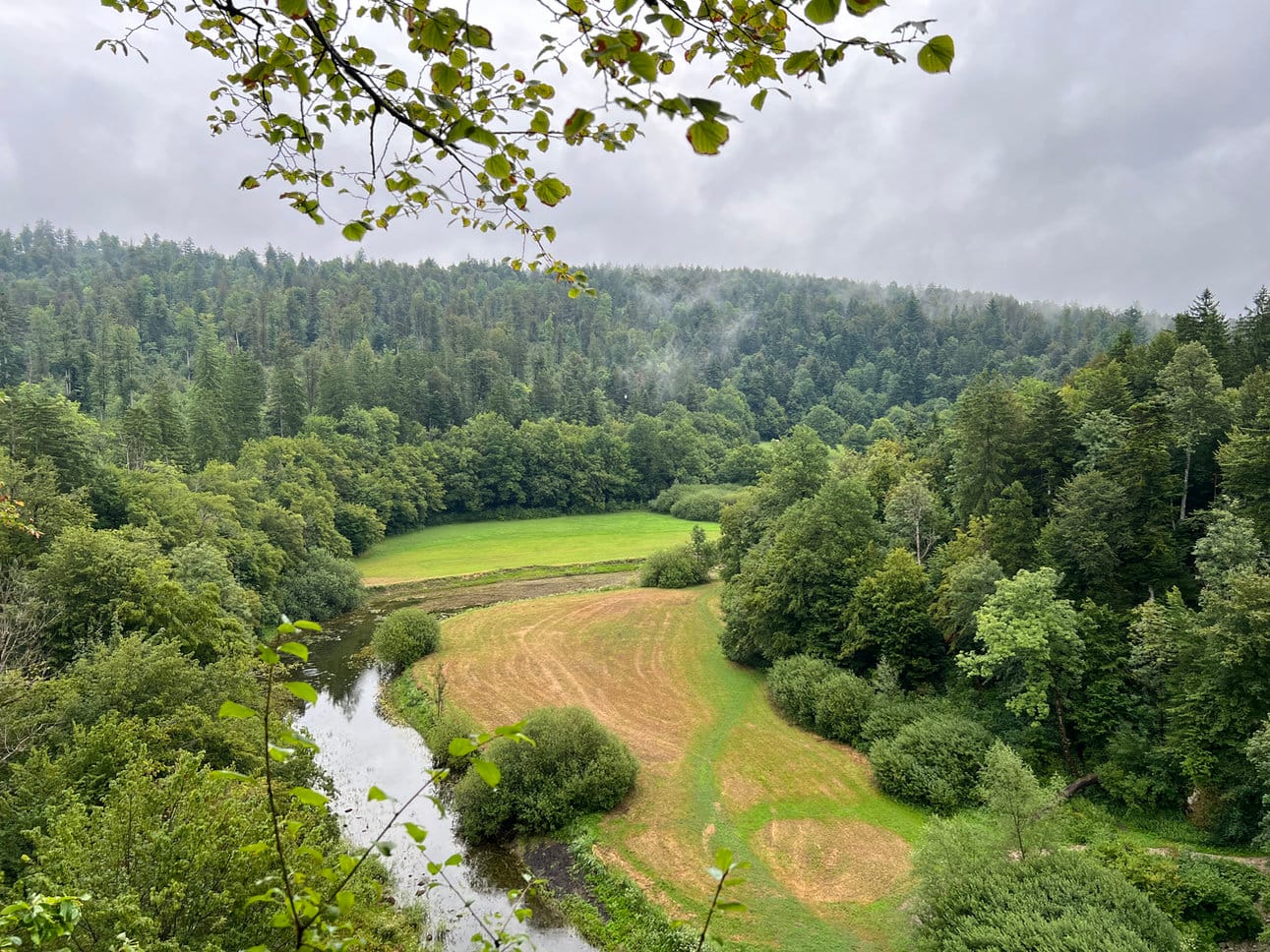

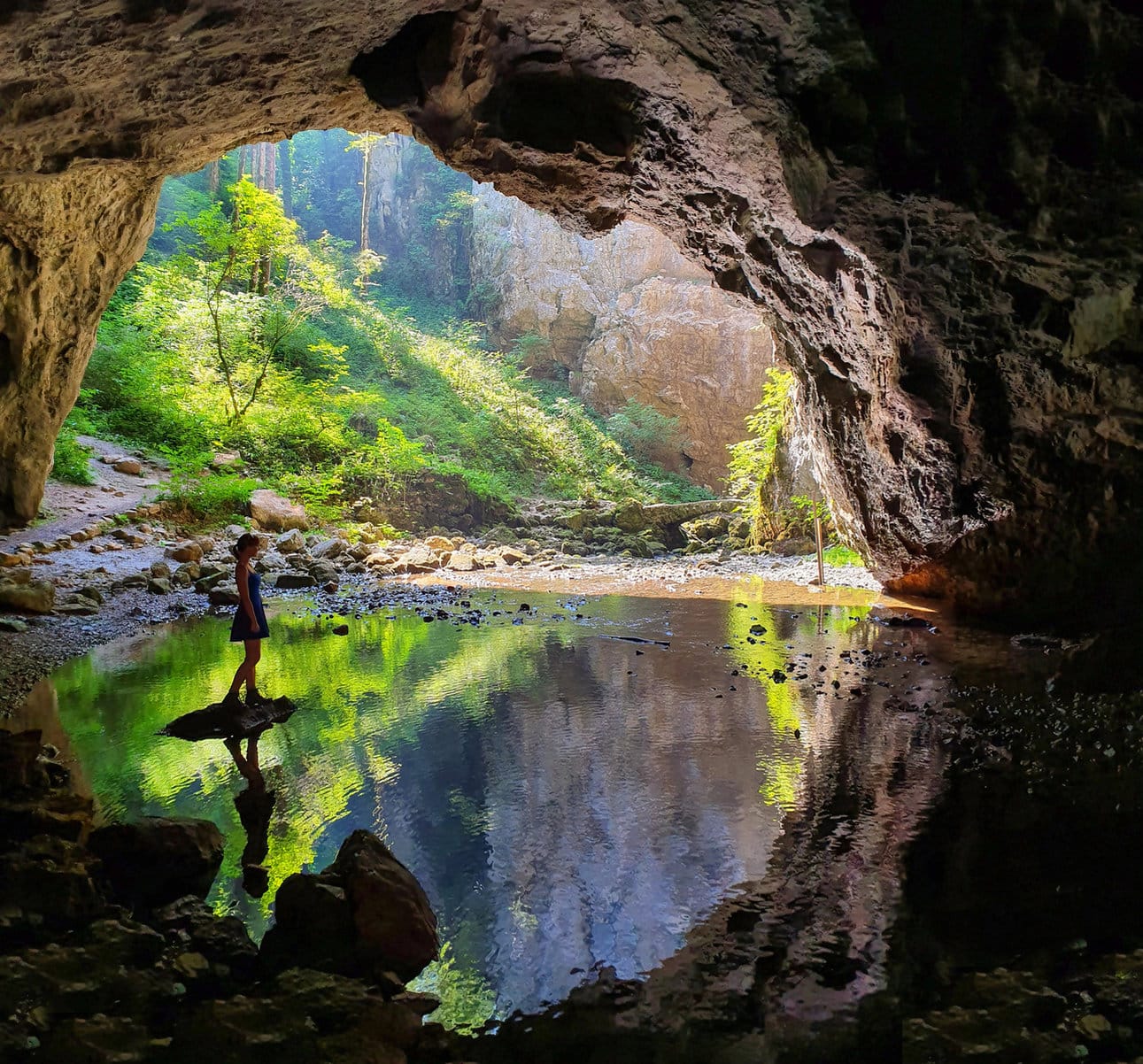
Rakov Škocjan is a karst valley where a cave roof collapsed and left two rock arches standing above the Rak stream, 42 and 37 meters high. When the water is low you can walk under the Big Natural Bridge, follow the dry channel and step into the mouth of Tkalca Cave. Protected since 1949, it was Slovenia's first landscape park, and it still has no gate, no ticket desk and no lighting. It pairs easily with Postojna Cave in a day: that one is ticketed, lit and guided, this one is free and self-guided.
Plan Your Visit
<
>
Opening Hours
Open now
Open 24 hours
Entry Fee
Free
Paid extras available
Ticket prices
Official source
Entry to Rakov Škocjan Landscape Park
Independent access to the valley, both natural bridges, the cave entrances and the marked educational trail.
Standard entry
Entry to the valley and educational trail
Free access all year, confirmed by the managing institution. No ticket desk, no barrier and no donation box.
Free
Optional experiences
Guided walk — Rakov Škocjan: Valley of Natural Bridges
Guided 8-kilometer exploration of the valley led by the park, covering both natural bridges, karst springs and the ruins of the church of St. Cantianus. The currently published event runs from 09:00 to 13:00 on 22 November 2026, meeting at the parking area beside Hotel Rakov Škocjan. Places are limited; advance registration gives priority, and the experience can also be held in English.
Per person
The current official event page publishes €18.00 per person and a 15 percent discount for families consisting of two adults and minor children. The price includes guiding. The experience is suitable for visitors aged 6 and over. Registration is accepted until 20 November 2026; attendance without prior registration is possible only if space remains, with registered visitors receiving priority.
€18.00
Official prices updated:
3 Aug 2026
- Entry to the valley and use of the educational trail are free of charge, with no ticket office on site.
- The park also runs an optional guided walk on published dates, which is booked and paid separately.
Parking Situation
Small parking
View options
Parking Options
Official source
Situation: Small parking
Parking info updated: 2 Aug 2026
- There is no managed car park in Rakov Škocjan.
- Visitors use small formed gravel areas beside the valley road: the main one by the Little Natural Bridge, another at the western end for the Big Natural Bridge and Tkalca Cave, and a third at Hotel Rakov Škocjan.
- Park only in the formed areas; driving or parking in natural areas away from designated roads and forest roads is prohibited.
Visitor Requirements
Age guidance
View requirements Requirements
Visitor Requirements
Suitable child age groups
- Young children (4–7 years)
- Older children (8–12 years)
- Teenagers (13–17 years)
Important
- There is no minimum age and no admission requirement of any kind — the valley is open and free. Children of any walking age can enjoy the valley floor and the forest road. The short descents to the Little Natural Bridge, the Zelška Caves and Tkalca Cave are a different matter: they are steep, rocky and secured with fixed steel cables, and they suit confident children from roughly eight years upward. The tops of both natural bridges are unfenced above drops of 42 and 37 meters, so children need close supervision anywhere near the edge. The park’s own scheduled guided walk is published as suitable for everyone aged 6 and above; that rule belongs to the guided product, not to independent access.

Parking Fee
Free

Child safety note
Uneven terrain+3 more

Access Notes
Caution in wet weather

Suitable For
Couples+4 more

Stroller accessibility
No

Wheelchair access
No

Estimated visit time
3–4 h

Family Friendly
Partly

Pet Friendly
Yes

Walking Difficulty
Moderate

Best season
Spring, Summer, Autumn
Highlights
Ramsar wetland of international importance
Natural bridges formed by cave collapse
Follow a river into the karst underground
Rare wildlife adapted to cave life
Naturally preserved cave — no lighting or paved paths
Marked trail through karst features
Cross a natural bridge high above the river
See a karst river emerge and sink again
Safety Notes
!Stay on marked paths
!Slippery stone surfaces possible
!Unprotected drops and cliff edges
!Water levels can rise quickly
Photo Tip
The strongest shot is the Big Natural Bridge from the streambed when the Rak is low, with the arch framing the channel above you. The Little Natural Bridge is better from below, looking up through the arch. Light reaches into the dolines mid-morning and late afternoon; at midday the deep shade against bright sky is hard to expose for.
Before You Go
!Protected area
!Respect nature protection rules
!Not suitable for limited mobility
!Guided tours available
!Can be busy in summer
!Seasonal access
!Free entry
!Check water levels before visiting
!Sturdy footwear recommended
!Gravel access road
Access & Parking
Detailed access info in Plan Your Visit ↑
The last few kilometers in are unsurfaced forest road, fine for an ordinary car in dry weather but slow. A road runs the length of the valley with small gravel parking areas near the main features, so you can drive between the two bridges rather than walk the whole loop. From each one the viewpoints are a short walk, but the descents to the arches themselves are steep, rocky and cable-assisted in places.
Interesting Facts
1
Slovenia’s first landscape park
Rakov Škocjan was placed under protection by republic decree in 1949, the first Slovenian landscape park. The push came from the karst scholar Pavel Kunaver and from Angela Piskernik, the first Slovenian professional nature conservationist. The much larger Notranjska Regional Park that now surrounds it followed only in 2002, so this one small valley carries more than seventy-five years of continuous protection.
2
The smaller bridge is the taller one
The two rock arches are named for their span rather than their height, which catches most first-time visitors out. The Little Natural Bridge, Mali naravni most, carries an arch 42 meters high, while the Big Natural Bridge, Veliki naravni most, measures 37 meters. Both are surviving fragments of the roof of a single cave system that once ran the length of the valley. Everything between them collapsed.
3
A river with a beginning and an end inside one valley
The Rak surfaces from the Zelška Caves at the eastern end of Rakov Škocjan, meanders across the flat clayey valley floor, then disappears underground again at Tkalca Cave in the west. Its water arrives from the Cerknica plain and from beneath the Javorniki hills, and once it has sunk it runs on to Planina Cave, where it meets the Pivka underground. Very few places let you stand at both the spring and the sinkhole of the same river in one afternoon.
4
Named after a church that is now a ruin
The valley takes its name from the church of St. Cantianus, whose Slovene form Šent Kancijan contracted over centuries into Škocjan. The building stood beside the Big Natural Bridge and enters the written record in 1526, in a court document about a tax raised for defence against Ottoman raids. The date 1616 is still legible on a window arch on the north side and is usually read as a rebuilding. Only low stone walls survive today.
5
Valvasor put the valley on the map
Janez Vajkard Valvasor included Rakov Škocjan in The Glory of the Duchy of Carniola in 1689, with an engraving titled S. Cantianvs showing the lower Rak and Big Natural Bridge as part of a small settled landscape, with two churches, a cemetery, a sexton’s house and two farm buildings. The buildings on the bridge stayed inhabited until the Josephine reforms around 1780. By the Franciscean cadastre of 1823, only the ruined church remained.
6
A wetland of international importance
Rakov Škocjan is protected under the Ramsar Convention as part of a site it shares with Lake Cerknica and Križna Cave. The designation recognizes the karst hydrology that binds the three together: water sinking on the Cerknica plain resurfaces here as the Rak before vanishing again toward Planina. The valley also lies inside the Natura 2000 network, and the wider protected area is one of the richest places for biodiversity in Slovenia.
7
Home to the first cave beetle ever described
The dark fissures and flooded passages beneath Rakov Škocjan shelter true cave specialists, and the best known of them is the narrow-necked blind cave beetle, the first cave-dwelling beetle species ever described by science. Animals like this have spent millions of years underground and have lost both their eyes and their pigment. Almost no visitor will ever see one, but they are a large part of why these caves are treated as scientifically important.
8
A named component of the Classical Karst nomination
Rakov Škocjan appears by name in Classical Karst, the entry Slovenia placed on the UNESCO World Heritage Tentative List in 2015, which lists the poljes of the Classical Karst with the Rakov Škocjan valley among its areas of outstanding universal value. Tentative-list status is a stage in the nomination process rather than an inscription, so the valley remains a candidate rather than a World Heritage Site — a distinction worth keeping straight here.
9
The same valley looks like two different places
Water level changes a visit here more than season or weather does. When the Rak is low the stream bed dries out, and you can walk beneath the Big Natural Bridge, follow the empty channel through the collapse doline and step into the mouth of Tkalca Cave. When the water is high, that same ground is a flooded pool and the arch has to be admired from above. Regular visitors deliberately come back at both extremes.
10
An easy trail with a hard middle
The operator’s educational trail runs 6 kilometers with 188 meters of ascent, takes about 3 hours and is rated Easy, with information boards explaining the karst springs, the collapse dolines, the two arches, the forest and the cultural remains along the Rak. That rating describes the route along the valley. The short descents to the bridges and the cave entrances are a different matter: steep, rocky and secured with fixed cables in places.
Visitor Wisdom
Traveler Insights
Combined public visitor ratings from Google and Tripadvisor. Last verified August 2026.
Recurring praise centers on being able to walk right under and through karst features that would be ticketed and railed off almost anywhere else. Visitors single out the descent to the Little Natural Bridge and the walk into the mouth of Tkalca Cave. The absence of crowds comes up nearly as often as the scenery, along with the deep forest shade that keeps summer visits comfortable.
The most common regret is arriving without checking the Rak’s water level. In dry conditions the stream bed becomes a walkable route through the collapse doline to Tkalca Cave; in high water the same ground is submerged and the lower routes become inaccessible. Visitors also wish they had known about the long gravel approach road, the scattered parking areas, and how little signage there is once you are in the valley.
Rakov Škocjan suits nature lovers, photographers, geology-minded travelers and families with children old enough to handle steep ground. It works poorly for wheelchair users, stroller pushers and anyone with limited mobility, since the descents to both bridges are rocky and cable-assisted. It also disappoints visitors who wanted a short, clearly marked highlight stop to slot between two larger attractions.
The name causes real trouble. Rakov Škocjan is a free karst valley near Cerknica, while Škocjan Caves is a ticketed, guided UNESCO cave system near Divača about half an hour away, and travelers regularly book one while intending to visit the other. Other common mistakes are wearing smooth-soled shoes on wet limestone, setting off without a torch, and assuming the route will be obvious at every junction. Several visitors report losing the trail entirely.
Regulars treat the valley as two destinations. Dry spells open the stream bed under the Big Natural Bridge and let you follow the channel into the collapse doline and on to the cave mouth; high water turns the same spot into a still pool that mirrors the arch. The short path above the Big Natural Bridge to the church ruins is often skipped and worth taking.
Families report an excellent outing along the valley floor and the forest road, where children have space and the hotel provides somewhere to finish. The descents to the bridges are a different proposition: rocky, cable-assisted, and unfenced at the top. Parents of younger children usually shorten the route and stay on the gravel road rather than attempting the full loop, and still rate the day highly.
Photographers rate the valley highly and return in different conditions. Autumn brings color to the beech canopy and usually enough water for reflections, while dry summers open ground-level angles inside the collapse doline that are otherwise unreachable. Deep shade against bright sky makes exposure awkward around midday. Tripods are easy to use because the site is so rarely busy.
The overall impression is of a place that has been protected for a very long time without ever being packaged. Most visitors leave surprised that something on this scale is free and largely unsupervised. Negative reviews almost always trace back to navigation and expectations rather than to the landscape itself. Those who plan around the water level tend to rate it among their strongest memories of the region.
Quick Facts
Estimated visit time
3–4 h
Best season
Spring, Summer, Autumn
Walking difficulty
Moderate
Family friendly
Partly
Pet friendly
Yes

Entry Fee
Free with paid extras

Access type
Forest path
Help Improve This Listing
Found outdated information, a mistake, or a useful local tip? Let us know.
Suggest an Update →Help Improve This Listing
Your feedback helps us keep Explore In Slovenia accurate and useful for future visitors.
×Visitor Reviews
Write a review
No visitor reviews yet.
Be the first to share your experience.
No reviews yet!
Sorry! Please login first to submit reviews.