- Visitors consistently describe Ad Pirum as more substantial than they expected. The wall circuits are long, well cleared and legible on the ground, and the interpretive boards do a real job of explaining what you are looking at rather than decorating it.
- The site is free, unstaffed and never closes, so the visit runs entirely at your own pace.
- Two things temper the praise: the Museum Room keeps limited hours and depends on a third-party inn, and the fort is enclosed by forest, so nobody comes here for views.
- Set aside an hour or two, wear proper shoes, and treat it as a walk through an archaeological site rather than a museum visit.
Local name: Arheološki park Ad Pirum

16
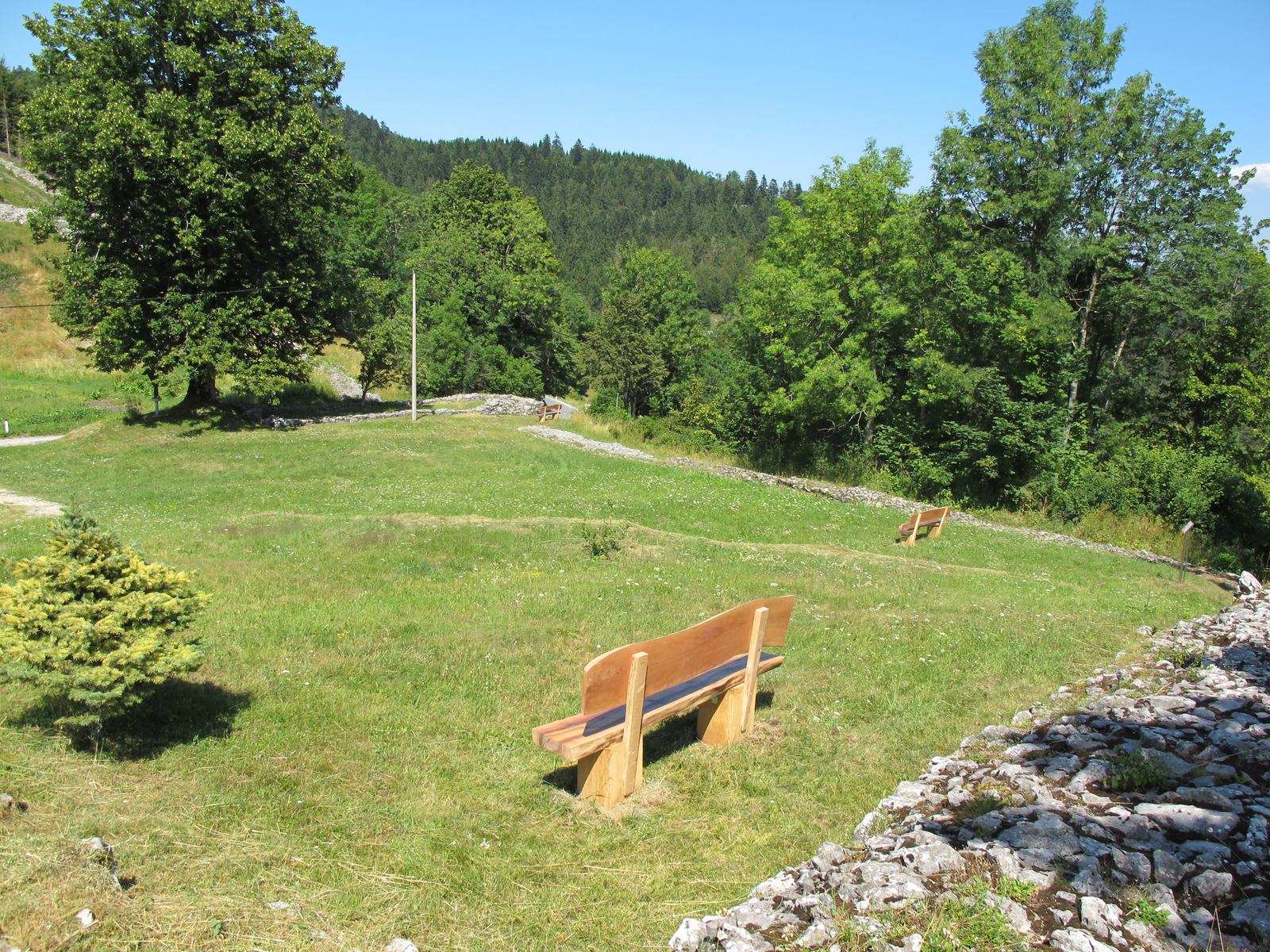
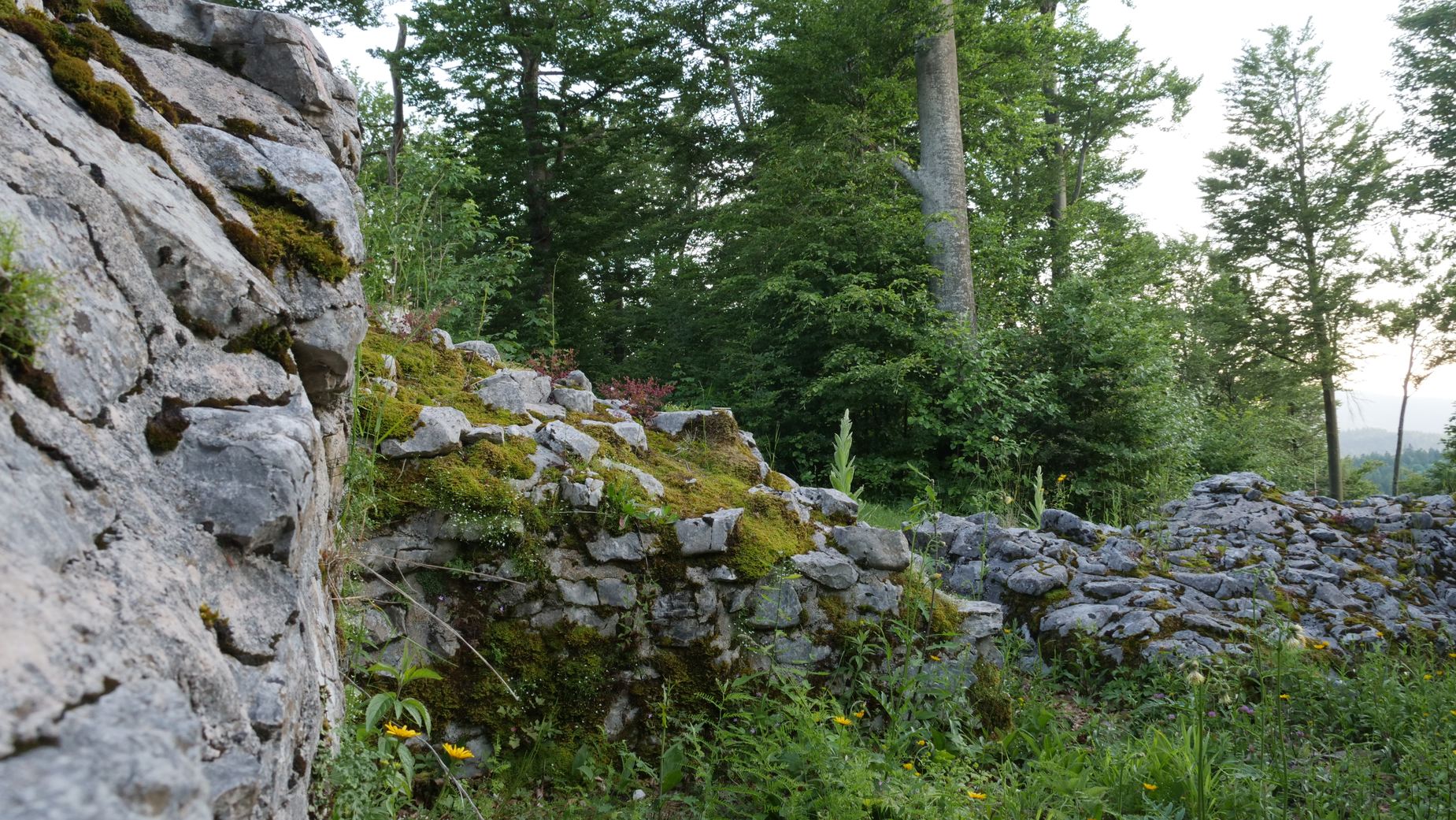

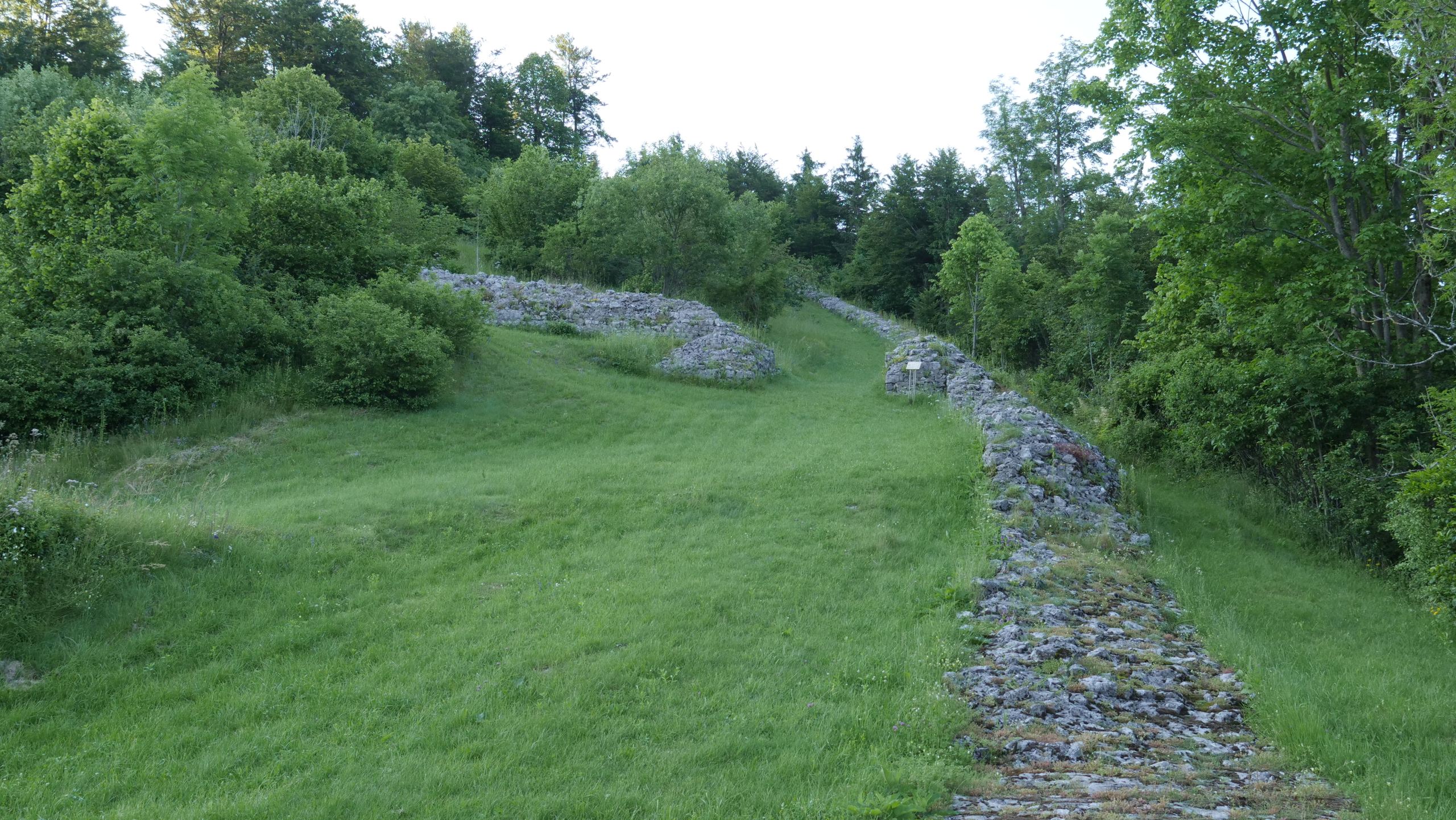
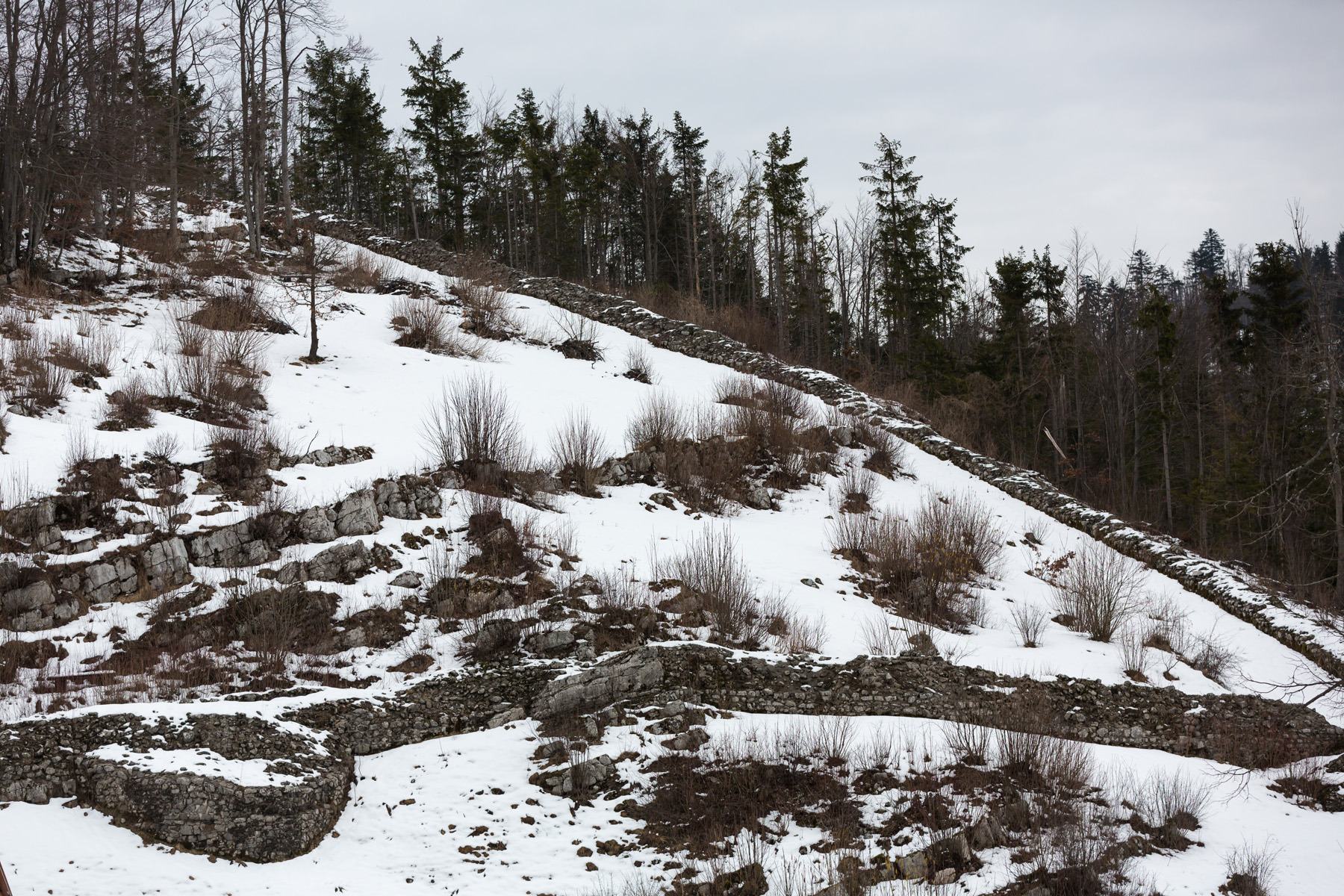
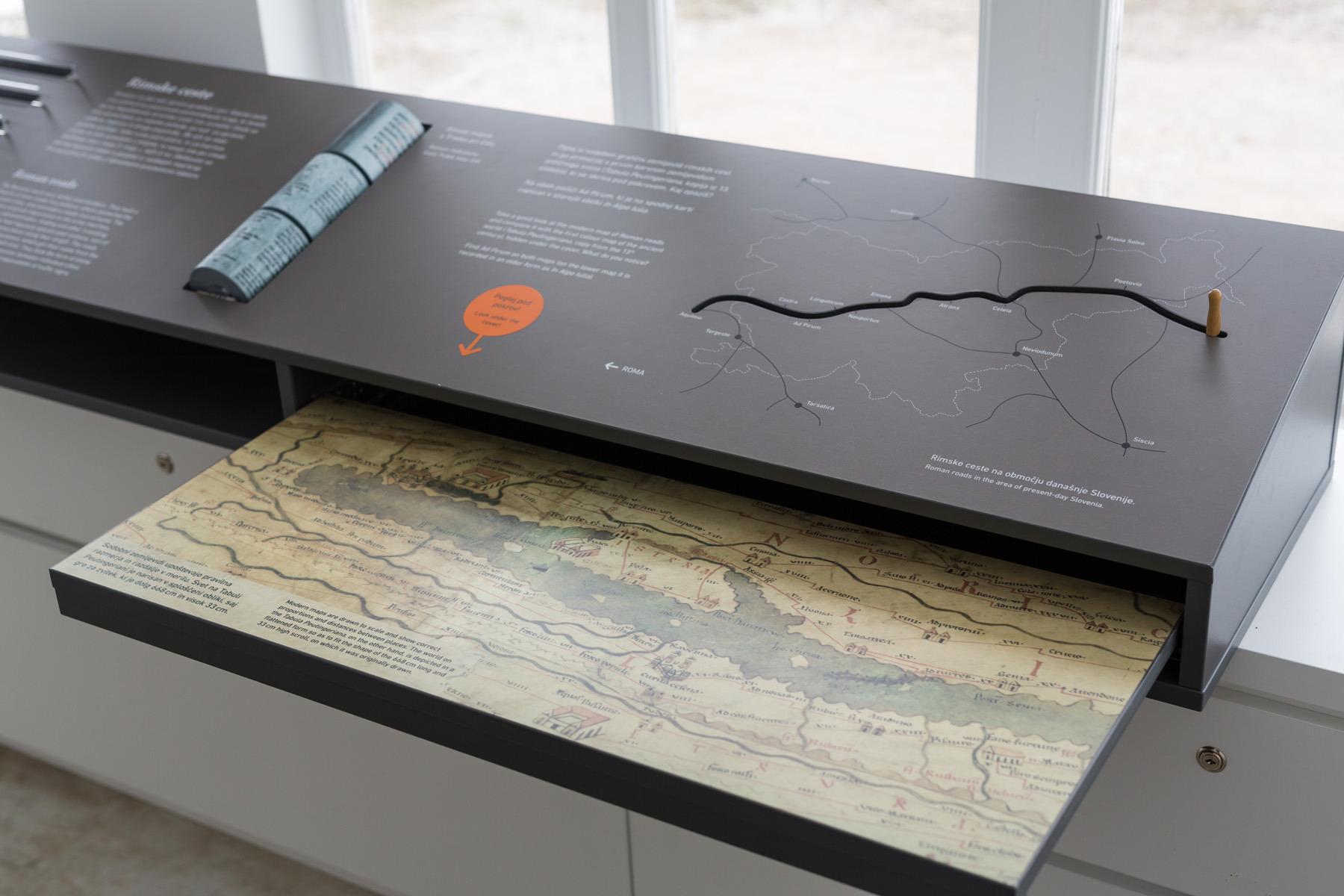
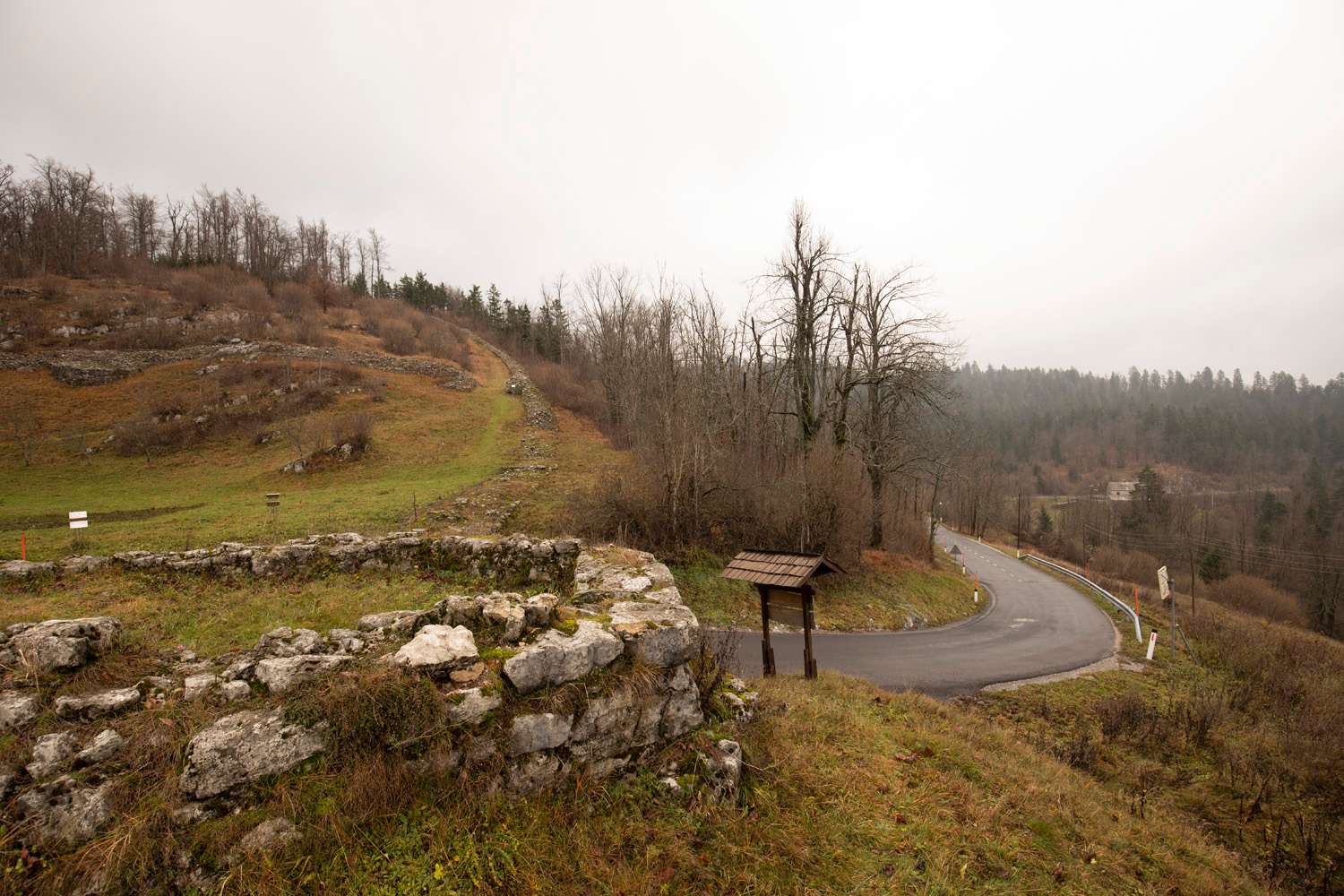

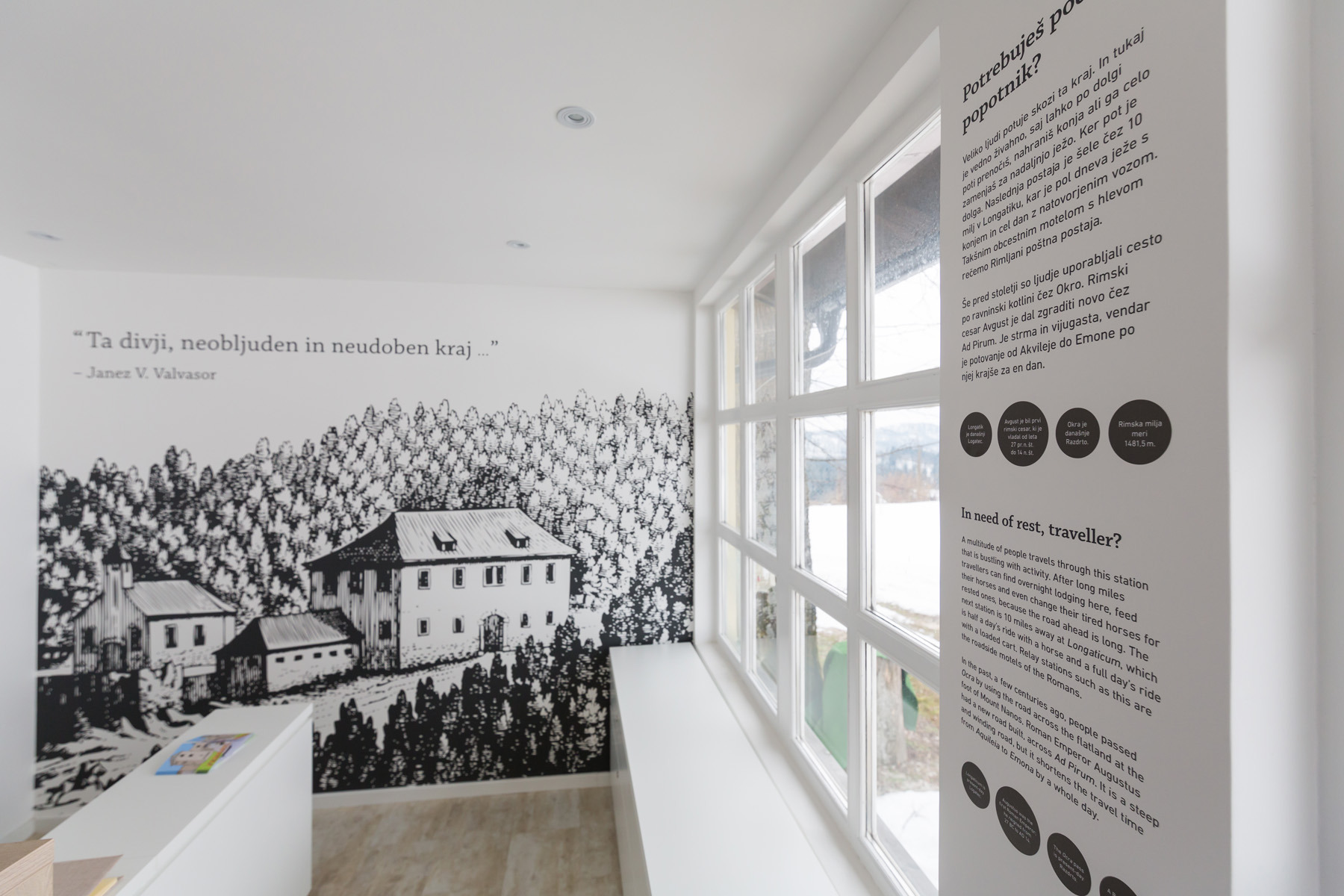

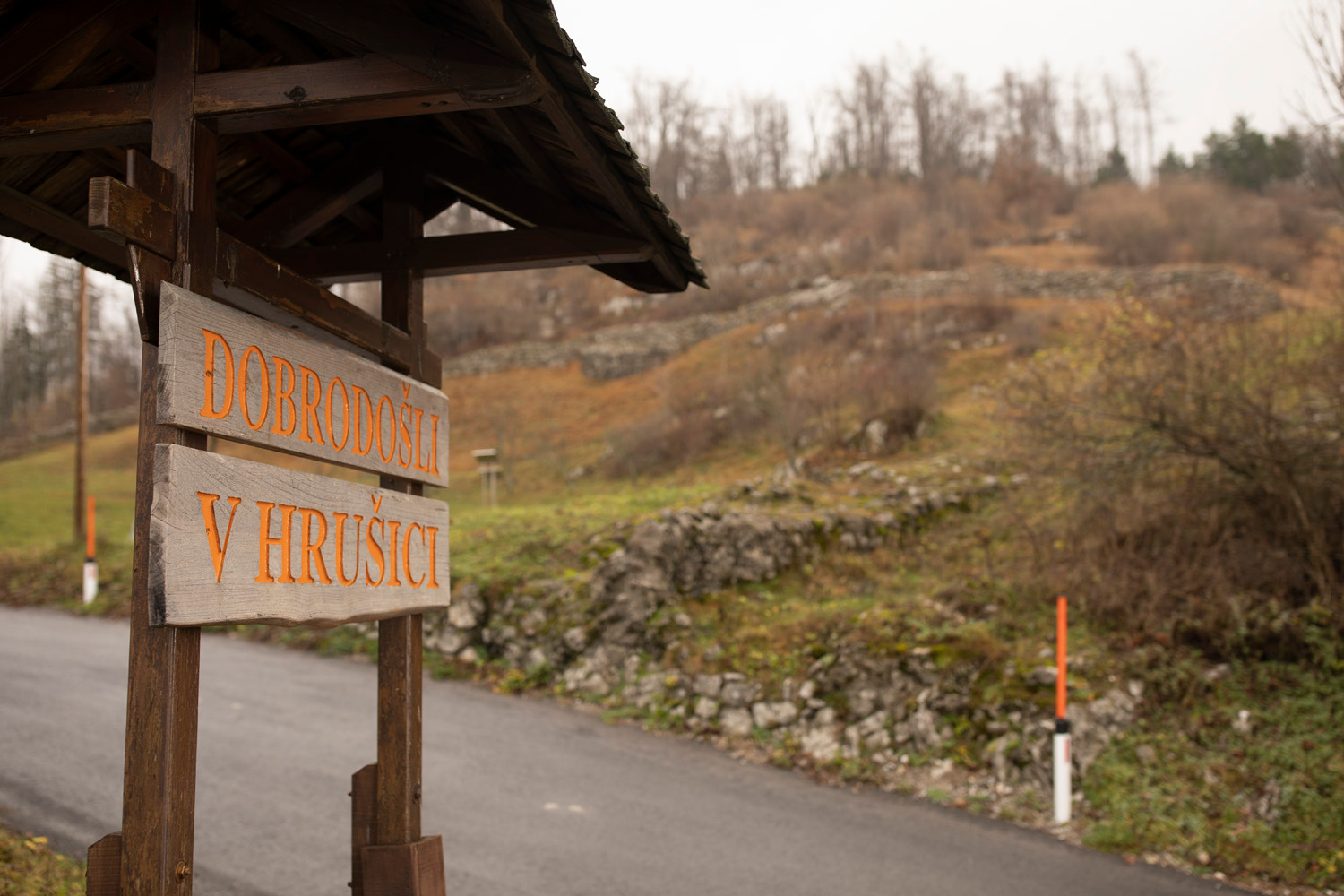
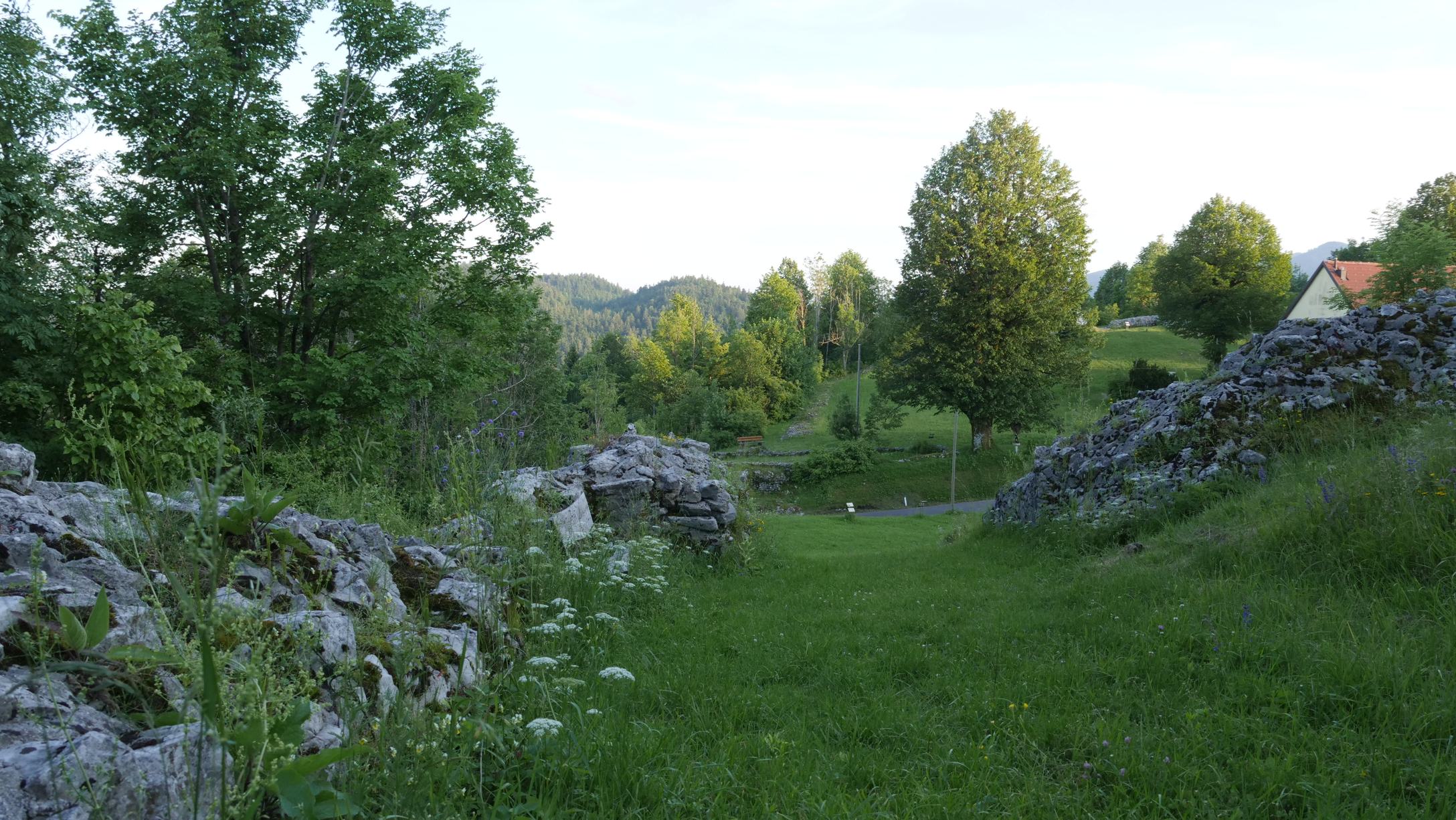

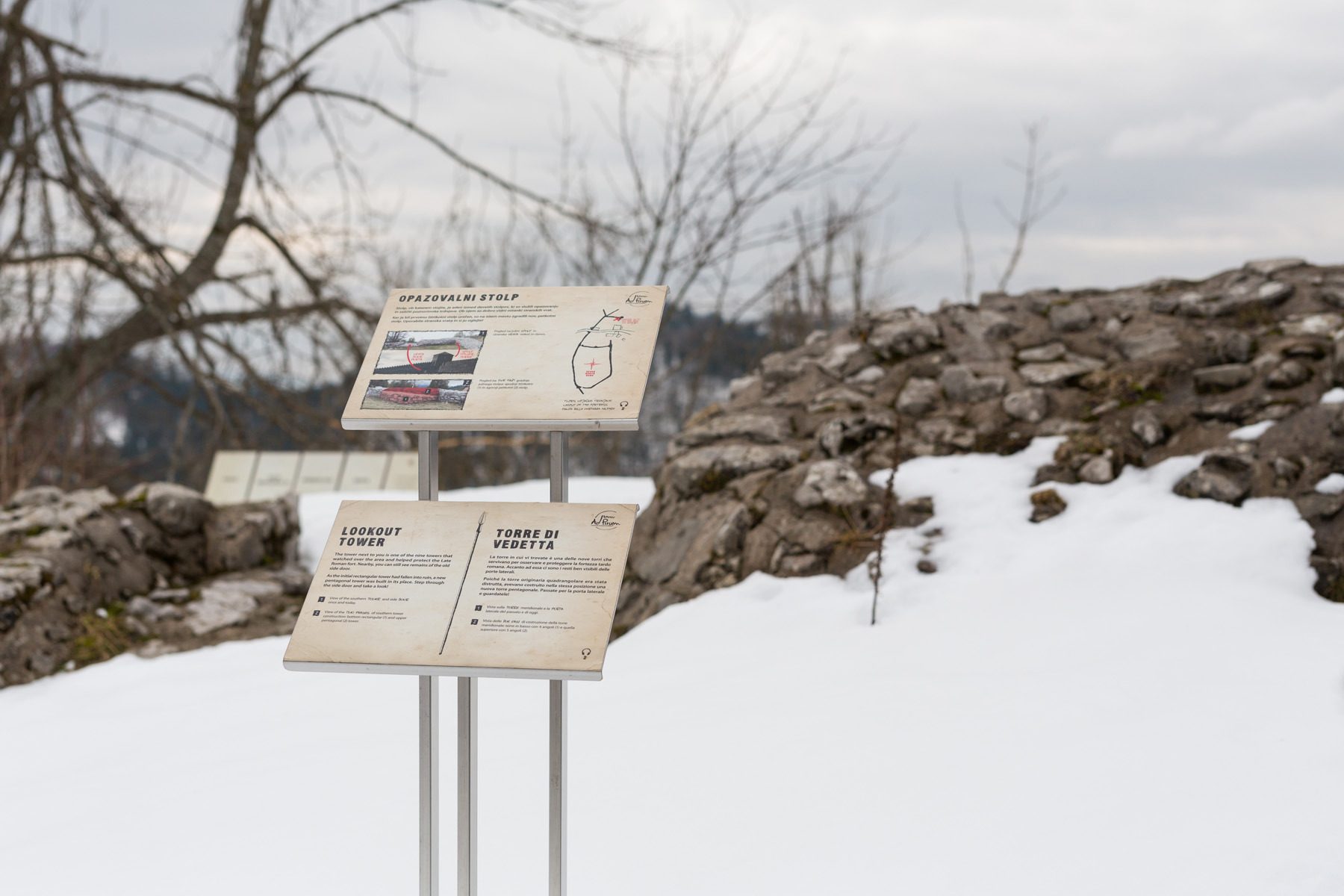
The walls of Ad Pirum run for hundreds of metres through the forest, tracing the oval of a late Roman fortress large enough for around 500 soldiers. It guarded the highest pass on the road from Aquileia to Emona, one fort in Claustra Alpium Iuliarum, the late Roman barrier defending the approaches to Italy. Boards along the trails explain the site, and a small Museum Room in the old post inn displays the finds. The park is free and open at any hour, and Predjama Castle makes an easy contrasting stop nearby.
Plan Your Visit
<
>
Opening Hours
Open now
Open 24 hours
The archaeological park is open at any time and admission is free. The Museum Room follows the opening hours of the Stara pošta inn and is closed on Mondays and Tuesdays. Outdoor footwear is recommended.
Entry Fee
Free
Free entry
Ticket prices
Official source
Archaeological Park and Museum Room Admission
Free admission to the open archaeological park at any time and to the Museum Room during its opening hours.
Standard prices
All visitors
Both the archaeological park and the Museum Room are free of charge.
Free
Guided Tour of the Ad Pirum Fort
An optional guided walk through the fortress led by the National Museum of Slovenia, available from April to October by prior arrangement.
Standard prices
Public guided tour
Per person, at scheduled public tours.
€2.50
Prearranged school group
Per person. Prior arrangement required.
€4.00
Prearranged group — 10 or more persons
Per person. Prior arrangement required.
€5.00
Prearranged group — up to 9 persons
Flat rate for the whole group. Prior arrangement required.
€45.00
Official prices updated:
12 Sep 2026
- Entry to the archaeological park and the Museum Room is free.
- Public guided tours are €2.5 per person; prearranged school groups are €4 per person; prearranged groups of 10 or more are €5 per person; groups up to 9 are €45 per group.
- The former threshold conflict is resolved.
Parking Situation
Parking at the entrance
View options
Parking Options
Official source
Situation: Parking at the entrance
Parking info updated: 11 Sep 2026
- Parking is beside the site, on the right side of the state road when approaching from Ajdovščina.
- It is municipal, free of charge and open every day, including when the Stara pošta inn is closed.
- Larger groups can park a bus.
Visitor Requirements
Age guidance
View requirements Requirements
Visitor Requirements
Suitable child age groups
- Toddlers (2–3 years)
- Young children (4–7 years)
- Older children (8–12 years)
- Teenagers (13–17 years)
Important
- No age or height restrictions apply.
- The flat southern section beside the inn suits the youngest visitors; the northern circuit crosses uneven ground with about forty metres of ascent and open wall remains, so younger children should be supervised there.

Parking Fee
Free

Child safety note
Uneven terrain

Suitable For
Couples+5 more

Stroller accessibility
Partly

Wheelchair access
Partly

Estimated visit time
1–2 h

Family Friendly
Yes
Pet Friendly
Yes-on leash

Walking Difficulty
Easy

Best season
Spring, Summer, Autumn
Highlights
Freely accessible open-air site
Marked interpretive trails
On a Roman road route
Roman military fortress
Late Antique barrier-system site
Medieval church remains on site
Preserved Roman defensive walls
Roman road station origins
Safety Notes
!Slippery stone surfaces possible
!Stairs inside
!Supervise children
!Uneven historic surfaces
Photo Tip
The strongest images here are the wall lines, especially on the northern circuit where mossy limestone masonry climbs uphill between the trees. Light under the canopy is dappled and high-contrast, so overcast weather or the first hour after sunrise works better than midday. Walk the northern loop counter-clockwise and shoot back along the wall for depth and scale.
Before You Go
!Audio guide available
!Check opening hours
!Guided tours available
!Limited interior access
!Respect heritage site rules
!Sturdy footwear recommended
!Uneven historic surfaces
!Uphill walk
Access & Parking
Detailed access info in Plan Your Visit ↑
The site sits on the old Logatec–Ajdovščina road at the Hrušica pass, with free municipal parking beside the Stara pošta inn, open every day. The southern half of the fortress begins at the car park and is flat and easy. The northern half starts across the road and is a forest circuit with about forty metres of ascent and uneven ground. Not every approach road is fully paved or cleared in winter, so check the route you plan to drive.
Interesting Facts
1
A pass named after a pear tree
The Romans called this place Ad Pirum summas Alpes, roughly "at the pear tree, at the summit of the Alps". The name has survived almost unchanged for seventeen centuries: Hrušica comes from the Slovene word for pear, and the German name for the plateau, Birnbaumer Wald, means pear-tree forest. At 858 metres this was the highest point on the state road between Aquileia and Emona.
2
A road that saved a full day of travel
The state road over Hrušica was built under Augustus in the early first century, replacing a longer crossing over Okra near present-day Razdrto. The new alignment cut a full day from the journey between Aquileia and Emona, which is why the empire was willing to carry a highway over an exposed limestone plateau. The fortress came much later, built to protect what the road had already made valuable.
3
Three jobs before the walls went up
Long before any fortress existed, this site already worked for the empire. A postal and horse-changing station operated here from the first century, built at the same time as the road itself. From the second century a beneficiarii post was added, a kind of military police station controlling traffic over the pass. Only in the later third century did the Romans enclose the whole settlement in stone.
4
An oval fortress shaped to the ridge
Ad Pirum was not laid out on the neat rectangular grid that Roman military engineering is known for. The walls follow the contour of the ridge in an irregular oval roughly 250 metres long and between 30 and 80 metres wide. The curtain wall was about 2.7 metres thick and originally stood six to eight metres high, with gate towers reaching around ten metres.
5
Unusually thick walls for an unusually important pass
The walls at Hrušica were built markedly stronger than those of comparable posts in the same barrier system. That difference is taken as a measure of how much the pass mattered rather than as a construction accident. The fort controlled one of the principal approaches toward Italy and remained important during the fourth-century civil wars.
6
Room for a garrison of five hundred
The lower, flatter southern sector held the buildings that mattered: a headquarters building, barracks, workshops and cisterns fed by rainwater. Around 500 soldiers could be stationed here. Alongside the expected pottery, weapons and everyday objects, excavations here and at Castra turned up camel bones, evidence that pack animals more familiar from the eastern provinces were being used on this route.
7
Underfloor heating at 858 metres
Life at the pass was not uniformly rough. Excavation in the southern sector found buildings roofed with tile, fitted with glazed windows, decorated with painted wall plaster and warmed by Roman floor and wall heating. At this altitude, in a forest that still feels remote today, that represents a serious investment in comfort for the officers and staff who wintered here.
8
Part of Slovenia’s largest Roman-period monument
Ad Pirum was one node in Claustra Alpium Iuliarum, a barrier system of walls, watchtowers and forts running more than 80 kilometres from the Soča valley to the area of present-day Rijeka. Taken together, the surviving remains of that system form the largest Roman-period monument in Slovenia; Hrušica is one of its principal fortified sites.
9
A church for travellers inside the ruins
Long after the garrison left, the site found a second life. Between the twelfth and fourteenth centuries a small church dedicated to Saint Gertrude was built inside the abandoned fortress walls, close to where the inn stands today. Gertrude is a patron saint of travellers, which suits a place that had already been serving people crossing these mountains for more than a thousand years.
10
Post horses until the nineteenth century
The Roman road station was not the last of its kind here. Travellers continued to change horses at this pass through the medieval period and into the nineteenth century, when the Habsburg postal service ran the crossing. The inn beside the fortress is still called Stara pošta, the old post house, and Valvasor described both the route and its posting station as early as 1689.
Visitor Wisdom
Traveler Insights
Combined public visitor ratings from Google and Tripadvisor. Last verified August 2026.
- The recurring theme in visitor feedback is surprise at how much survives. Reviewers single out the long stretches of wall, the gate towers and the sheer size of the enclosure, which reads clearly even under forest cover.
- The multilingual boards get repeated praise for being thorough rather than token, with Slovenian, English and often Italian text and translations printed on the reverse of single-language panels.
- The setting matters too: mossy limestone masonry running uphill through dense trees is atmospheric in a way a cleared and manicured site would not be.
- Above all, people love having a nationally significant Roman monument effectively to themselves.
- The park itself is always open, but the Museum Room is closed on Mondays and Tuesdays and follows its published weekly schedule.
- The operator also confirms that the room is poorly accessible: there is one low step at the museum entrance and another between the vestibule and the main room.
- Dogs are allowed in the outdoor park and in the Museum Room but must be on a lead; assistance or service dogs are allowed in line with the applicable law.
- The northern circuit remains the other practical surprise, with roughly forty metres of ascent, uneven ground and open masonry, so proper footwear matters.
- This site rewards anyone with an interest in Roman history, defensive engineering or a quiet walk with interpretation along the way.
- Families do well in the flatter southern half, while the operator specifically highlights the location for motorcyclists, cyclists and hikers and notes that larger groups can park a bus.
- The adjacent Stara pošta inn separately offers a hall for groups and accommodation for individuals; those are hospitality services of the inn, not part of the archaeological-park product.
- It is less ideal for visitors chasing panoramas or anyone who needs step-free access throughout, because the Museum Room has two low steps and the northern circuit is uneven.
- Do not assume every approach to Hrušica is fully paved. The operator lists Črni Vrh–Hrušica as unpaved and Postojna–Bukovje–Hrušica as partly paved; only the Logatec and Ajdovščina approaches are stated to be regularly cleared of snow in winter.
- The second mistake is treating the adjacent Stara pošta hospitality business — or the municipal parking beside it — as if either were the attraction itself.
- The third is stopping after the easy southern section beside the parking area. The longer wall stretches continue across the road to the north.
- Reviewers recommend taking the northern half counter-clockwise: climb along the eastern wall to the northernmost board, then turn left and follow the line back. The path eventually runs up against a private garden, so either retrace your steps or cut back along the transverse wall, which also gives a useful view down over the southern part of the site.
- Download the operator’s audio-guide content before the visit if you want it available offline.
- The operator also highlights the pass as a natural stop for motorcyclists, cyclists and hikers, including travellers on Martin’s Way.
- For a fuller picture of the barrier system, continue down to Castra in Ajdovščina, another major fortress of the same defensive line that survives inside a modern town rather than a forest.
- The southern section around the inn is flat, short and easy, and the boards give children something concrete to look for: gates, towers, the outline of the church. That part suits toddlers and pushchairs reasonably well.
- The northern circuit is a different proposition, with about forty metres of climb, uneven footing and unfenced wall remains, so younger children need close supervision there and a pushchair is not realistic.
- There is no playground and no dedicated family programme on ordinary days, though the operator runs occasional Roman-themed events and workshops.
- The inn beside the car park is the only place to eat or use facilities.
- The pictures that work here are close and structural: masonry courses, the gate tower footprints, and the wall line disappearing between the trees.
- The forest canopy makes light dappled and high in contrast, so overcast weather or the first hour after sunrise gives far more usable results than midday sun.
- Shooting back along the northern wall as it climbs gives the ruins depth and a sense of scale that a straight-on frame loses.
- Do not plan around panoramas: despite the altitude, the fort is enclosed by trees, and the one open outlook from the transverse wall looks down over the site rather than out across the region.
- The overall impression across both rating platforms is of a place that punches well above its visitor numbers. People arrive expecting a few stones and a board, and leave describing a fortress.
- The combination of scale, legibility, free access and near-total quiet is unusual, and the interpretation is strong enough that no guide is needed.
- The reservations are consistent and minor: limited Museum Room hours, no views, and terrain that asks for proper footwear on the northern half.
- For anyone with an interest in the Roman world, this is among the most rewarding hours available anywhere in western Slovenia.
Quick Facts
Estimated visit time
1–2 h
Best season
Spring, Summer, Autumn
Walking difficulty
Easy
Family friendly
Yes
Pet friendly
Yes-on leash

Entry Fee
Free

Access type
Direct roadside access
Help Improve This Listing
Found outdated information, a mistake, or a useful local tip? Let us know.
Suggest an Update →Help Improve This Listing
Your feedback helps us keep Explore In Slovenia accurate and useful for future visitors.
×Visitor Reviews
Write a review
No visitor reviews yet.
Be the first to share your experience.
No reviews yet!
Sorry! Please login first to submit reviews.