- Škocjan is a physical visit rather than a passive one.
- Allow two to three hours, expect several hundred steps, and plan for no photography inside.
- It suits travellers who come for scale, geology and the sound of an active underground river more than for delicate formations - although the Silent Cave has plenty of those too.
Local name: Škocjanske jame
6
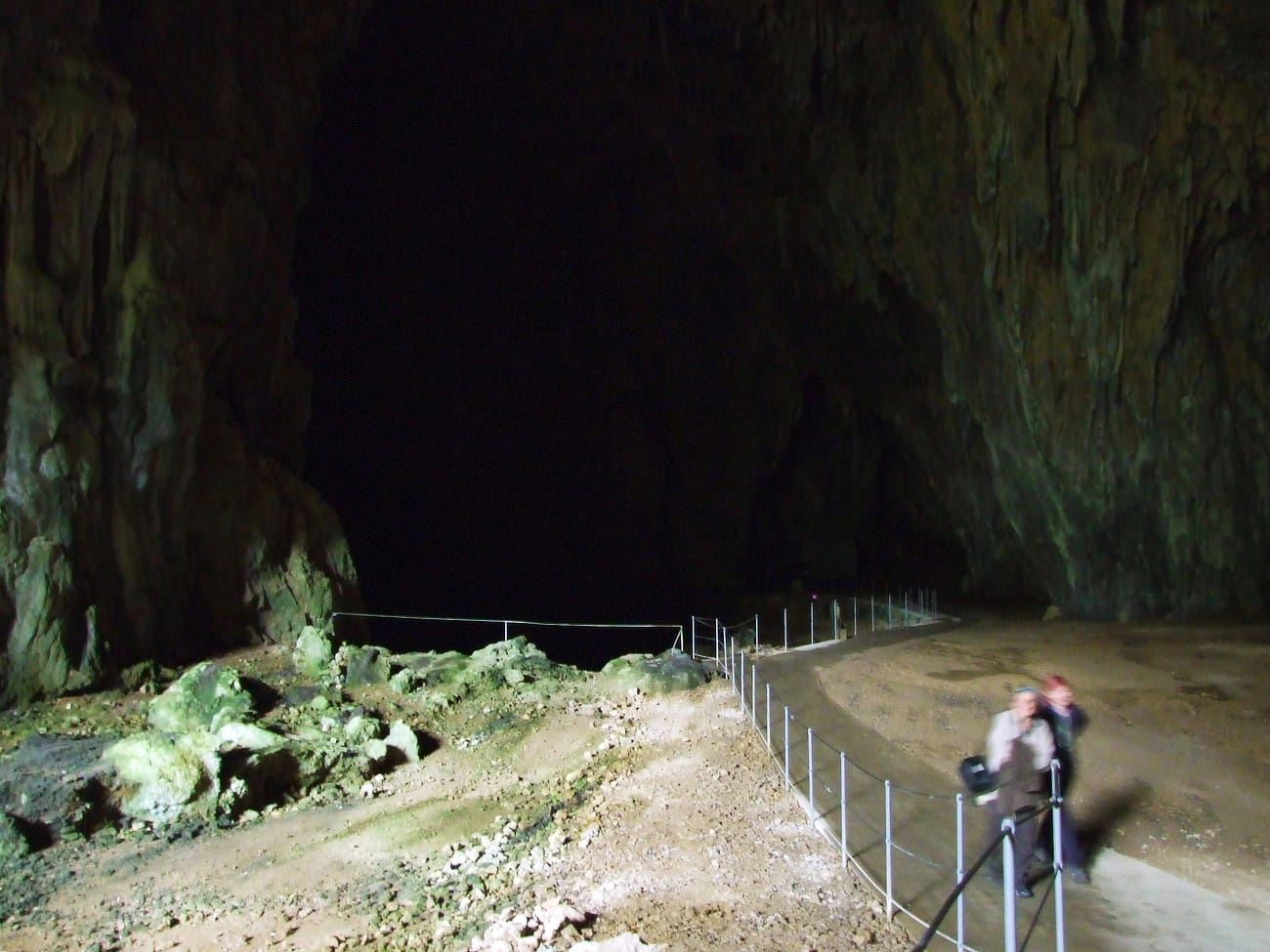
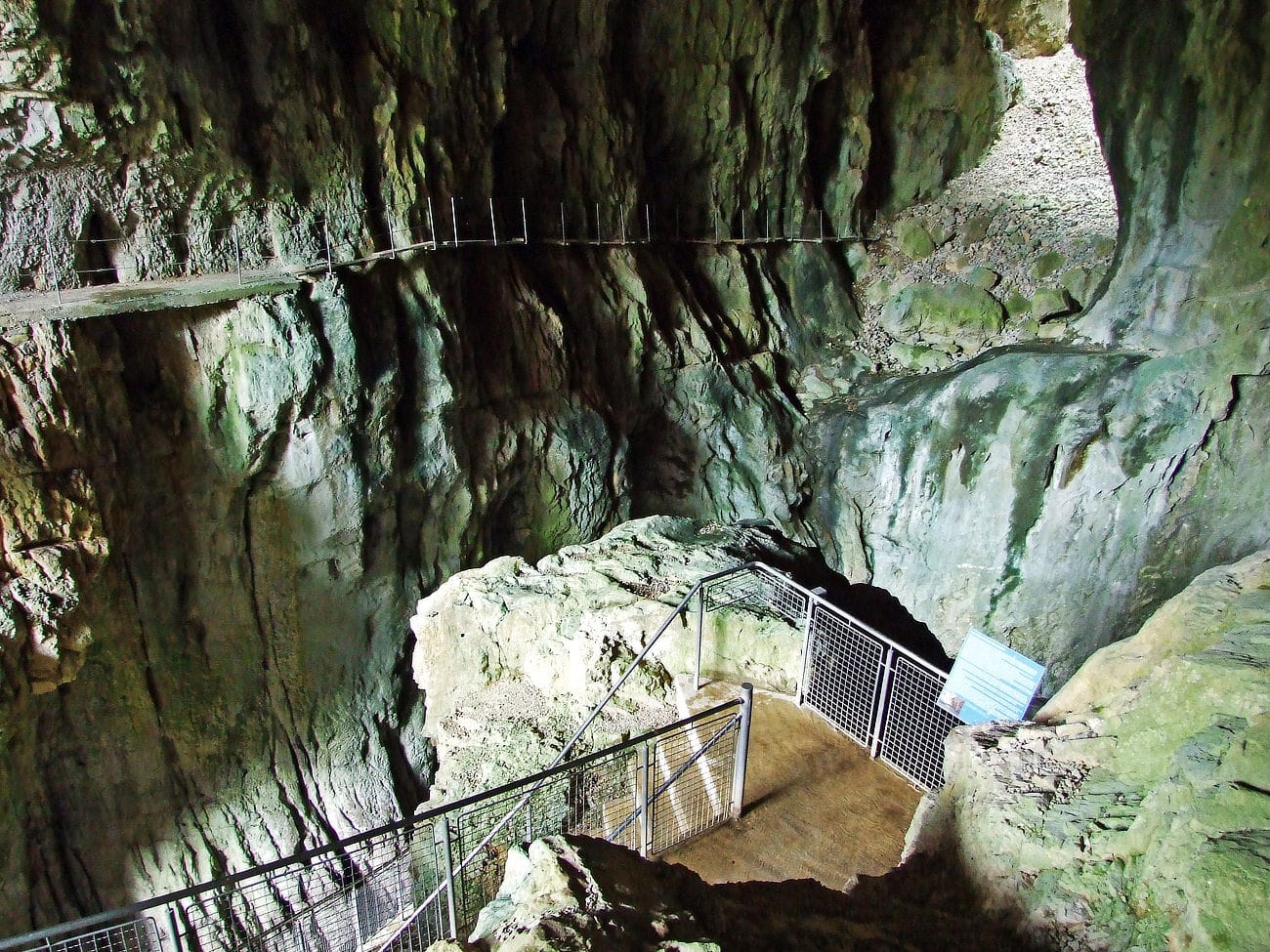
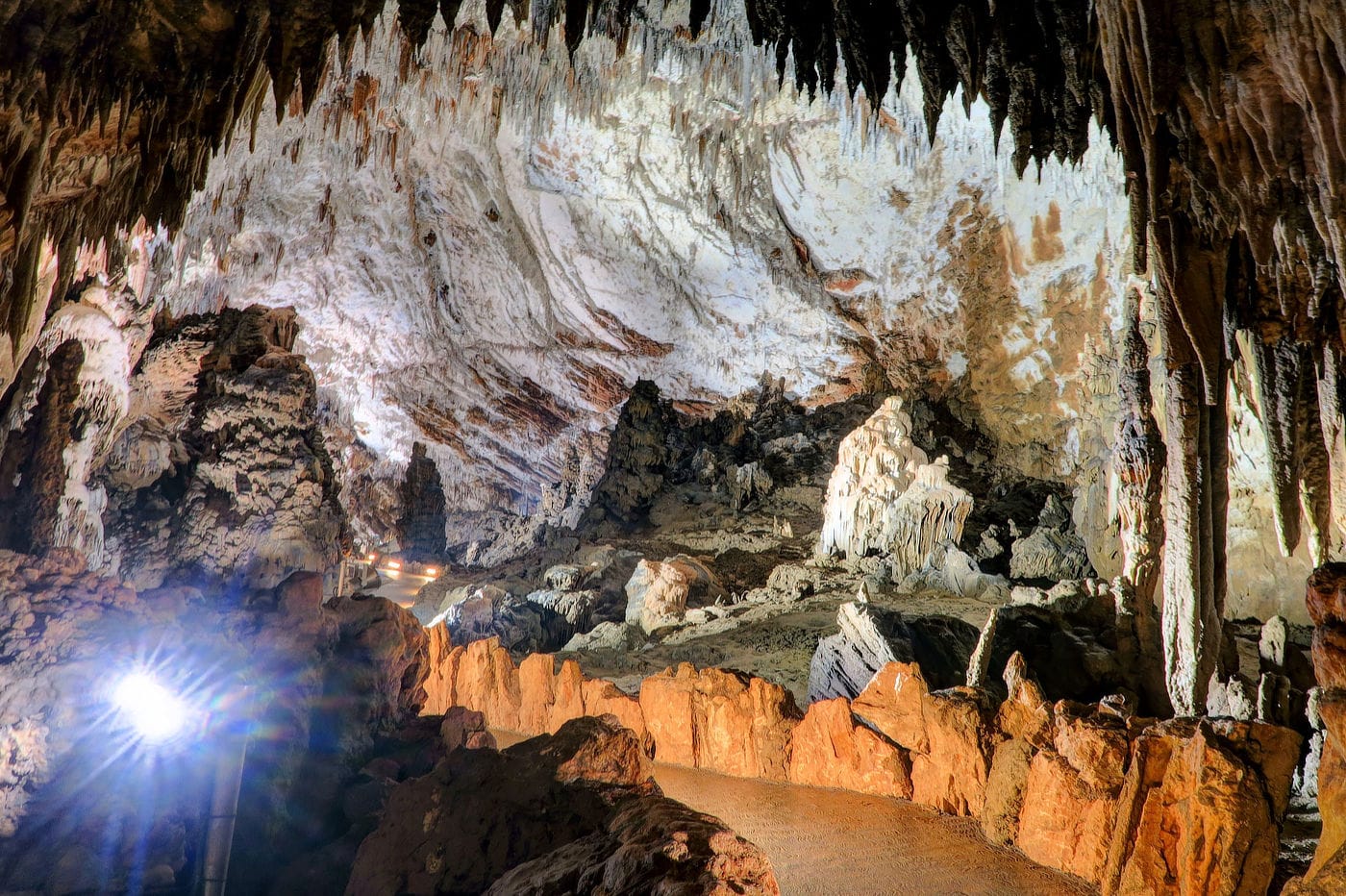
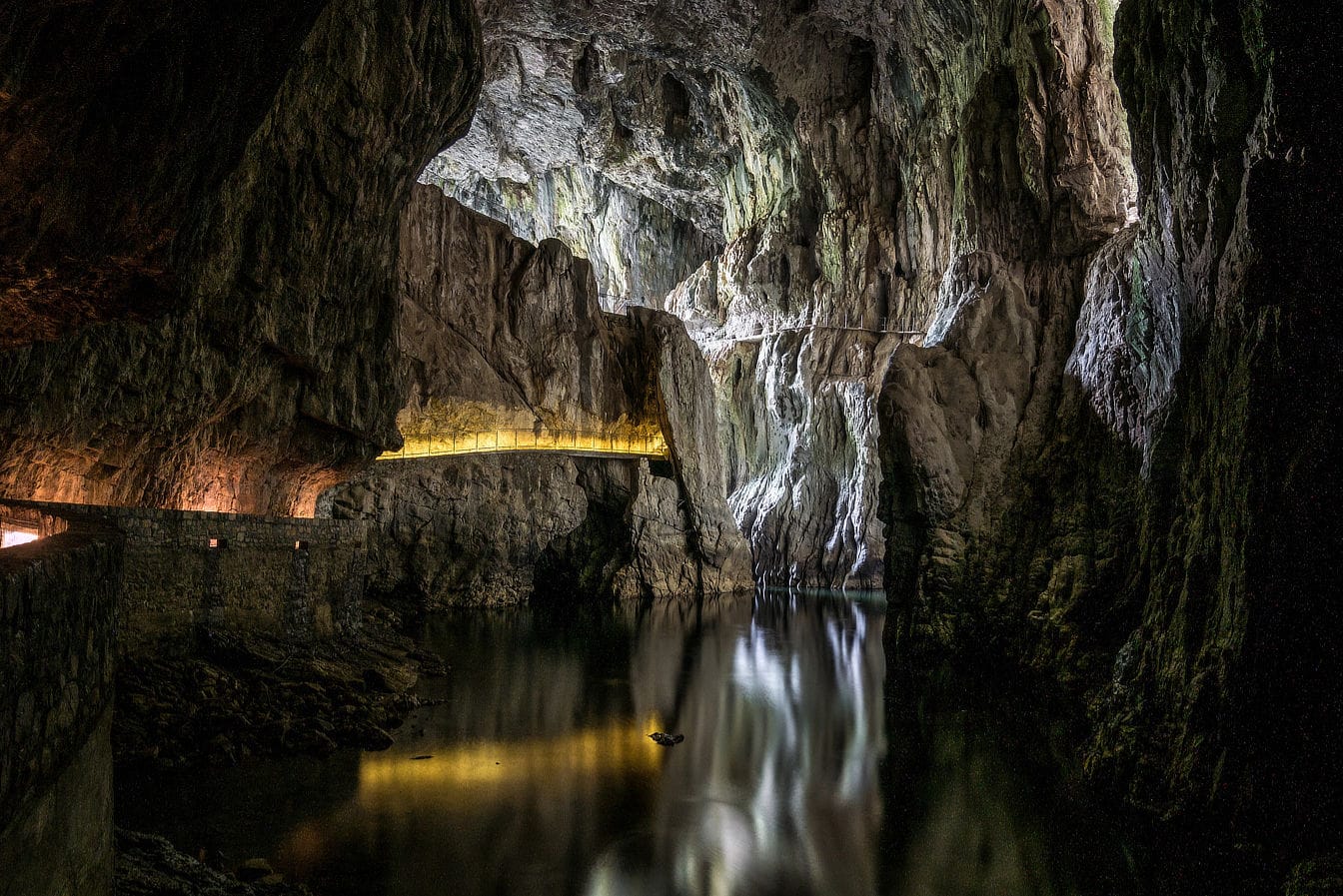
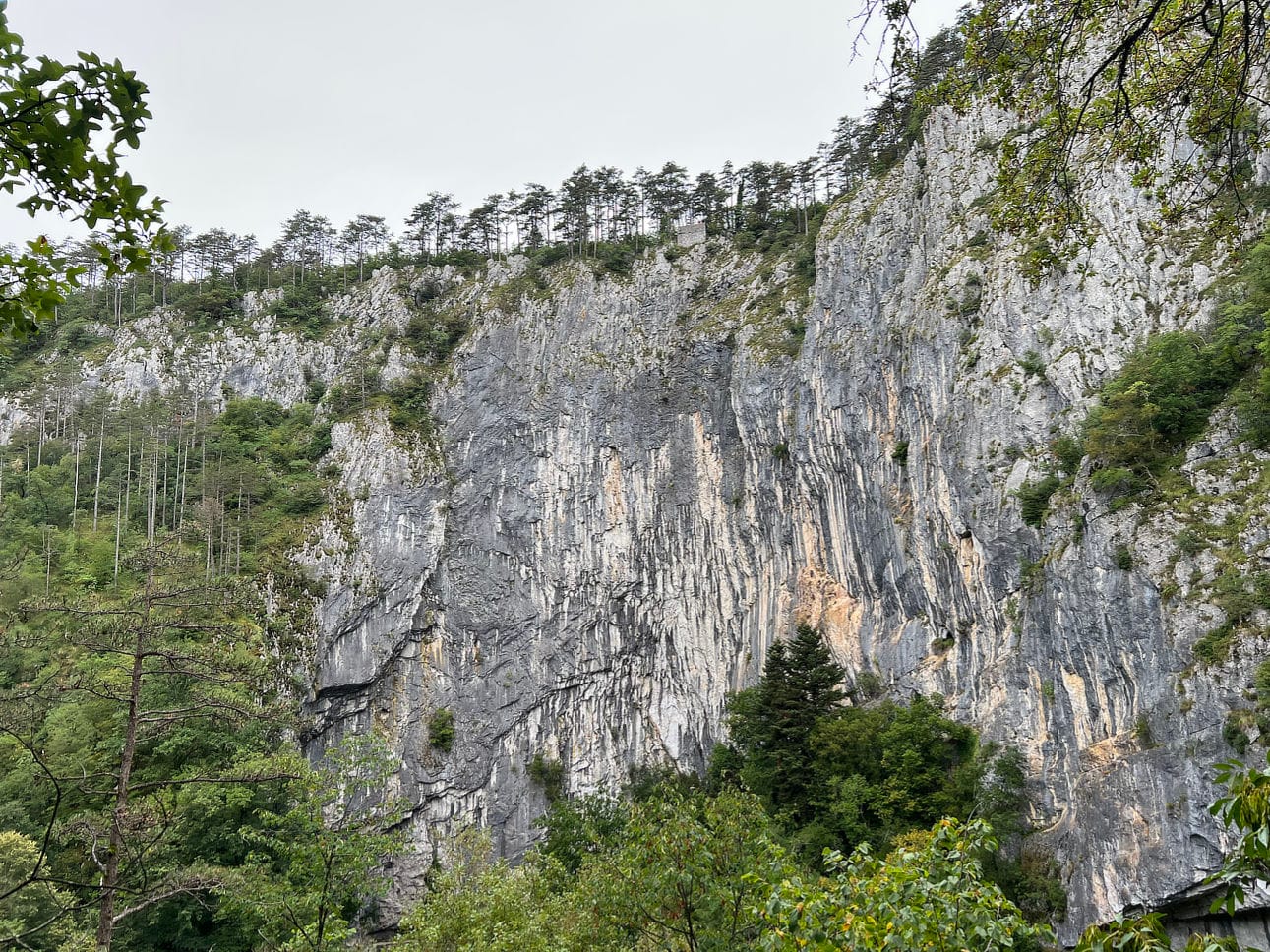
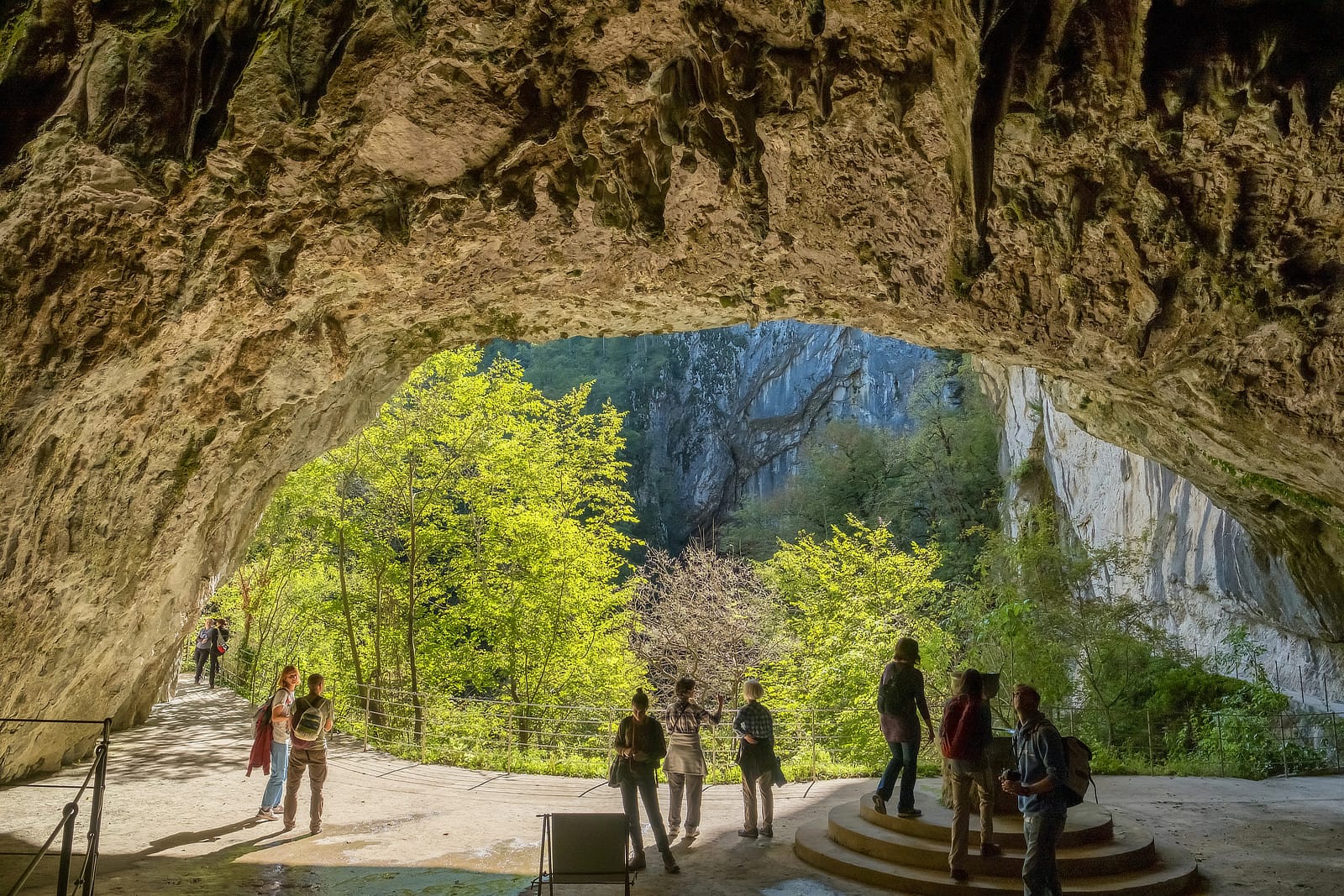
At Škocjan the Reka River disappears into the limestone and keeps flowing, through one of the largest underground canyons in Europe. The guided walk starts in the Silent Cave, a dry passage hung with flowstone, then continues into the gorge itself, where a footbridge crosses high above the water. You hear the river long before you reach it, and you finish by climbing back into daylight through two huge collapse dolines. Slovenia's first UNESCO World Heritage Site, it pairs easily with Lipica Stud Farm for a full day on the Karst.
Plan Your Visit
<
>
Opening Hours
Hours available
Today: Check official source
November-December
The caves can only be visited on a guided tour with fixed departure times that change through the year; tours are led in Slovenian and English. Be at the reception centre at least 30 minutes before departure. Closed 1 January and 25 December. Summer departures regularly sell out, so advance online purchase is strongly recommended.
View opening hours
January-February (Jan 1 - Feb 29)-
March (Mar 1 - Mar 31)-
April-June (Apr 1 - Jun 30)-
July-August (Jul 1 - Aug 31)-
September-October (Sep 1 - Oct 31)-
November-December (Nov 1 - Dec 31)-
New Year’s Day (Jan 1)Closed
Christmas Day (Dec 25)Closed
Entry Fee
Paid
Adults EUR 16.00
Ticket prices
Official source
Visit of the Škocjan Caves
Guided tour through the Škocjan Caves, from the Silent Cave to the underground canyon of the Reka River and the Cerkvenik Bridge.
January-March, November and December
Adults
€16.00
Pensioners
The printed price list publishes pensioners and students up to 26 years as one combined category at this price.
€12.00
Students up to 26 years
Valid ID required.
€12.00
Children
Ages 6-17.99, confirmed by the current official ticket shop.
€7.50
Young children
Children up to 5.99 years enter free, confirmed by the current official ticket shop.
Free
April and October
Adults
€18.00
Pensioners
The printed price list publishes pensioners and students up to 26 years as one combined category at this price.
€14.00
Students up to 26 years
Valid ID required.
€14.00
Children
Ages 6-17.99, confirmed by the current official ticket shop.
€9.00
Young children
Children up to 5.99 years enter free, confirmed by the current official ticket shop.
Free
May, June and September
Adults
€22.00
Pensioners
The printed price list publishes pensioners and students up to 26 years as one combined category at this price.
€16.00
Students up to 26 years
Valid ID required.
€16.00
Children
Ages 6-17.99, confirmed by the current official ticket shop.
€10.00
Young children
Children up to 5.99 years enter free, confirmed by the current official ticket shop.
Free
July and August
Adults
€24.00
Pensioners
The printed price list publishes pensioners and students up to 26 years as one combined category at this price.
€18.00
Students up to 26 years
Valid ID required.
€18.00
Children
Ages 6-17.99, confirmed by the current official ticket shop.
€12.50
Young children
Children up to 5.99 years enter free, confirmed by the current official ticket shop.
Free
Guided tour along the Škocjan Education Trail
Guided walk on the circular Education Trail around Velika and Mala dolina and through the villages of Betajna, Škocjan and Matavun. From June to October the guided tour also includes the museum collections and Velika dolina.
Includes
- Museum collections in Škocjan
- Velika dolina
Standard prices
Adults
Booking rule conflict: Slovenian page states at least 10 days; English page states at least 14 days and minimum 12 people. Confirm before entry.
€6.00
Pensioners
The printed price list publishes pensioners and students up to 26 years as one combined category at this price.
€5.00
Students up to 26 years
Valid ID required.
€5.00
Children
Exact age band not published on the price list.
€3.50
Individual visit, unguided
Walking the Education Trail independently is free every day of the year and requires no booking.
Free
Hanke Channel
Guided adventure caving tour in full caving gear along Hanke’s Channel to Swid’s viewpoint, on the route cut by the first explorers more than 130 years ago.
Standard prices
Hanke Channel
Per person. Fixed dates only, always departing at 09:00, and only with a reservation confirmed at least 10 days in advance.
€100.00
Official prices updated:
26 Jul 2026
- Admission prices for the Škocjan Caves change by season.
- Pensioners and students up to 26 years share the reduced price, while child and young-child ticket categories are priced separately.
- Guided Education Trail tours and the Hanke Channel caving tour are priced separately.
Parking Situation
Large parking
View options
Parking Options
Official source
Situation: Large parking available
Parking info updated: 26 Jul 2026
- The park's own parking area is at the Information Centre in Matavun, for cars and coaches, right beside the ticket office and the start of the Education Trail.
- Traffic is heavier in July and August and departures sell out, so allow extra time on top of the 30-minute arrival rule.
Visitor Requirements
Age guidance
View requirements Requirements
Visitor Requirements
Suitable child age groups
- Young children (4-7 years)
- Older children (8-12 years)
- Teenagers (13-17 years)
Important
- There is no minimum age for the main guided visit of the Škocjan Caves. The whole route is walked on foot - there is no stroller access, and even the shortened option involves several hundred steps. The separate Hanke Channel adventure tour is not open to children under 15; visitors aged 15 to 18 may take part accompanied by a parent or guardian, or unaccompanied only with prior written parental consent.
EV charging
4.4 km by road · 2 × 13.8 kW AC+1 more
Distances by road or on foot from the car park of this place, the straight line in brackets · 1 public charger within 5 km by air
- 4.4 km by road (2.6 km by air)Petrol · DivačaTrg 15. Aprila 1B, Divača DirectionsPower2 × 13.8 kW AC · Type 2CableBring your own Type 2 cableAccessPublic charger (national register) · 24/7 per register, hours not confirmedStart & payNo contract needed - pay in the OneCharge web app, at an e-payment terminal where fitted, or prepay at the Petrol shop till (ad-hoc price). · Helpdesk +386 1 471 46 66 (24/7)Price€0.41/kWh · idle fee €0.04/min after 180 min (7:00-20:00) · Petrol price list, valid from 1 Nov 2025, checked 23 Oct 2026 price listLiveChecking live status…VisitorsNo problems reported
Nearest fast DC (CCS2, 50 kW+): Tesla · Kozina, Slovenia - 9.6 km by road (7.6 km by air) · 6 × 185.6 kW DC · CCS2 / Type 2 Directions
Good to know
LawMarked EV charging bays are for vehicles that are charging - parking there without charging is fined €80 (Road Traffic Rules Act, Art. 65, as reported). source
PetrolOne DC session may last at most 120 minutes and the bay must be left within 15 minutes after charging. Registered OneCharge users pay less (€0.37/0.47/0.66); chargers Petrol runs for municipalities (e.g. Postojna) and Ljubljana Airport have their own prices (exceptions list of 16 Sep 2026). source
Plug-in hybrids and single-phase cars draw 3.7-7.4 kW from these posts, whatever the post can give.
Source: national charger register (NAP Slovenia, CC BY-SA 4.0), refreshed nightly · operator price lists as dated.
Distances by road and on foot: OSRM routing (FOSSGIS), map data © OpenStreetMap contributors · report a map error
Parking Fee
Unknown
Child safety note
Uneven terrain+4 more
Access Notes
Arrive 30 minutes early
Suitable For
Couples+4 more
Stroller accessibility
No
Wheelchair access
No
Estimated visit time
2-3 h
Family Friendly
Partly
Pet Friendly
No
Walking Difficulty
Moderate
Best season
Spring, Summer, Autumn
Highlights
Cave bridge crossing high above the river
Follow a river into the karst underground
Karst landscape education trail
UNESCO World Heritage Site
Collapse dolines and natural bridges
Giant stalagmites and flowstone
Historic explorers’ pathways
One of the largest underground canyons in Europe
Safety Notes
!Exposed sections and high bridge
!Not suitable for fear of heights or claustrophobia
!Stay on marked paths
!Underground route - limited phone signal
Photo Tip
Photography isn't allowed inside the caves, so plan your shots for the surface. The best views are from the marked viewpoints above Velika and Mala dolina, where the natural bridge, the gorge and the stone houses of Škocjan line up in one frame. Late afternoon light warms the doline walls.
Before You Go
!Check opening hours
!Guided tours available
!Many steps on the route
!Not suitable for limited mobility
!Outdoor areas nearby
!Pets not allowed
!Seasonal access
!Ticket required
!Underground visit
!Warm clothing recommended
Access & Parking
Detailed access info in Plan Your Visit ↑
Visitors use the park's own car park in Matavun, a few steps from the reception centre where every guided tour starts. Be at the reception centre at least 30 minutes before departure. The walk to the cave entrance takes about ten minutes, and the underground route involves several hundred steps, so wear proper shoes and allow more time than the tour length alone suggests.
Interesting Facts
1
Slovenia's first UNESCO World Heritage Site
The Škocjan Caves were added to the UNESCO World Heritage List in 1986, the first site in Slovenia and in the Classical Karst to be recognised. The listing was made on natural criteria rather than cultural ones, for the scale of the underground canyon and the scientific value of the karst landscape above it. The same area is now also a Ramsar wetland and the core of a UNESCO biosphere reserve.
2
A canyon cut by a river that vanishes
The Reka River runs across impermeable rock until it reaches limestone at Škocjan, sinks underground, and has cut what the park describes as one of the largest underground canyons in Europe. The guided route follows it through Šumeča jama, the Murmuring Cave, where the sound of the water reaches you long before the water does. Walking beside a full-sized river inside a mountain, rather than past formations, is what makes this cave different.
3
A bridge high above an underground river
The Cerkvenik Bridge crosses the canyon high above the Reka and is the part of the tour people talk about afterwards. It carries the name of the Cerkvenik brothers, local explorers among those who pushed into the deepest known parts of the system at the end of the nineteenth century. From the bridge the gorge rises far overhead and narrows sharply in places, which is why the operator warns visitors who are uneasy with heights.
4
A river that can rise a hundred metres
The Reka's flow swings from a trickle in dry spells to a torrent in flood. The canyon ends in a comparatively small siphon that cannot take those volumes, so water backs up and the level inside the cave can rise by more than a hundred metres. The last major flood, in 1965, is recorded at 108 metres - well above the visitor bridge, which is closed whenever conditions are unsafe.
5
A Bronze Age sanctuary above the caves
Above the caves lies Mušja jama, a shaft where archaeologists recovered more than 600 metal objects dating from roughly the twelfth to the eighth centuries BC. Most were weapons, deliberately burnt and broken, left alongside animal bones - the remains of sacrificial rites performed at the edge of the abyss. The finds came from Italy, the Alps, Pannonia, the Balkans and even Greece, which suggests Škocjan drew people from a very wide region.
6
Alpine and Mediterranean plants side by side
The two collapse dolines create a microclimate found in very few places. On shaded rock in Velika and Mala dolina, where sunlight rarely reaches and the air stays cold all year, Alpine species such as auricula survive. A short distance away, where air from the cave keeps temperatures above freezing, Mediterranean maidenhair fern grows. Alpine and Mediterranean plants living within sight of each other is exceptionally rare, and it is one reason the site is protected.
7
Two centuries of visitors
Škocjan has been receiving visitors for far longer than most show caves. A visitors' book was opened in 1819, and the first path down into Velika dolina was cut in the 1820s by a local patron. Organised tourism began in the 1880s, when a mountaineering society from Trieste leased the caves and started guided tours. Explorers of that period reached the Dead Lake in 1890 and the Silent Cave in 1904, defining the route visitors still walk.
8
The Silent Cave and the Giant
The tour begins in Tiha jama, the Silent Cave, a dry fossil passage rich in flowstone and dripstone. Its Velika dvorana, or Great Hall, holds Orjak - the Giant - one of the largest stalagmites in the system. Further on, the Rimstone Pools' Hall is named for its unusually large calcite basins. The contrast between this quiet, decorated section and the roaring canyon that follows is what gives the visit its shape.
9
An underground ecosystem with international protection
The caves shelter nursery colonies of several bat species, the olm - the blind cave salamander known in Slovene as človeška ribica - and endemic underground crustaceans and beetles. Humidity stays very high and the dry sections hold a steady 12 °C, conditions these species depend on. The importance of this underground wetland was formally recognised in 1999, when large parts of the site were added to the Ramsar list of wetlands of international importance.
10
A route the first explorers cut by hand
Parts of the visitor path are themselves heritage. Sections of the trail through the canyon were cut into near-vertical walls by cavers working with hand tools more than 130 years ago, and the separate Hanke Channel adventure tour still follows that original route. Electric lighting reached the cave only in 1959, well over a century after the first paths were cut.
Visitor Wisdom
Traveler Insights
Combined public visitor ratings from Tripadvisor and Google. Last verified July 2026.
- The size of the underground canyon is the thing people struggle to describe afterwards, and photographs of it rarely help.
- Crossing the Cerkvenik Bridge high above the Reka is the moment most visitors mention first, and the roar of the water reaches you well before you see it.
- Guides are consistently described as knowledgeable and well paced, and large groups are split by language.
- The restrained lighting also gets credit for leaving the cave feeling like a cave.
- Photography is not permitted anywhere inside the cave, so it is better to plan for that than to be surprised by it.
- The full circuit runs to two and a half or three hours, and the underground section is only part of it.
- You need to be at the reception centre before your departure time, with a further ten-minute walk to the entrance after that.
- It is 12 °C inside all year, so a jacket matters even in August, and from October to April the route is shortened and ends at Exit 1.
- Best for nature and geology enthusiasts, active couples and solo travellers, families with children who walk confidently, and anyone looking for somewhere cool on a hot day.
- Less ideal for visitors with walking or mobility difficulties, a fear of heights or claustrophobia - conditions the operator flags directly - and for families with prams, photographers hoping for interior shots, or anyone with less than two hours.
- If you are weighing this up against Postojna Cave, the difference worth knowing is that Škocjan is walked from start to finish, with several hundred steps, exposed sections and no photography inside.
- In summer, arriving without buying ahead often means the departure you wanted has already sold out.
- Treating the departure time as your arrival time is the other common error - the operator asks you to check in at least 30 minutes earlier, and the walk to the entrance comes after that.
- Wear shoes that grip on damp stone and steps.
- If you are coming by train, remember that Divača station is followed by a marked four-kilometre walk.
- The circular Education Trail is free, open every day of the year, and gives the clearest views down into Velika and Mala dolina - the part of the site most people skip.
- Walk it after the cave rather than driving off, when you can see from above the landscape you have just been inside. From
- May to September the full route continues through the surface cave and doline landscape, while the shorter exit stays available if you would rather take fewer steps.
- Families with children who walk confidently tend to do very well here - the scale of the canyon lands strongly with older children, and young children pay a reduced rate or go free.
- The practical side is that everyone walks the whole route: no prams, several hundred steps, and long stretches of subdued light.
- Younger children can find the noise of the river and the open bridge intense.
- Bring a warm layer for each child, and leave time for the free trail afterwards where they can move around.
- Photography is prohibited throughout the cave, so the pictures come from the surface: the viewpoints over the collapse dolines, the natural bridge, the stone houses of Škocjan above the gorge, and the point where the Reka disappears beneath the cliff.
- Late afternoon gives the doline walls more depth.
- A slow walk of the Education Trail will do more for your photographs than carrying extra gear around the underground route.
- What stays with most visitors is the scale of the canyon, the sound of the river under the bridge, and the switch from the quiet, decorated Silent Cave to the active gorge.
- Many say photographs had not prepared them for the dimensions.
- It is tiring for some, but the guided access and restrained lighting keep it feeling like a natural cave rather than an attraction built around one.
Seen on Screen
1. Škocjanska okapnca - jama in poti njenih raziskovalcev (2015)
Status:
Confirmed
Production type:
Documentary
Connection to this place:
Filming location
Official project pages state that demanding explorer scenes were filmed in the caves, including research and siphon sequences.
The dramatized documentary recreates the work and routes of early Škocjan cave explorers and premiered at the park in 2015.
SourceVisitor Reviews
Write a review
No visitor reviews yet.
Be the first to share your experience.
No reviews yet!
Sorry! Please login first to submit reviews.