- Lipica rewards planning. Visitors who come for a guided tour and either a performance or the morning and late-afternoon movement of the mares and foals describe the day as memorable.
- Those who arrive mid-afternoon with a plain admission ticket and no programme often feel the price was too high for what they saw.
- Decide what you want to see, then build the day and the time slot around it.
Local name: Kobilarna Lipica
50
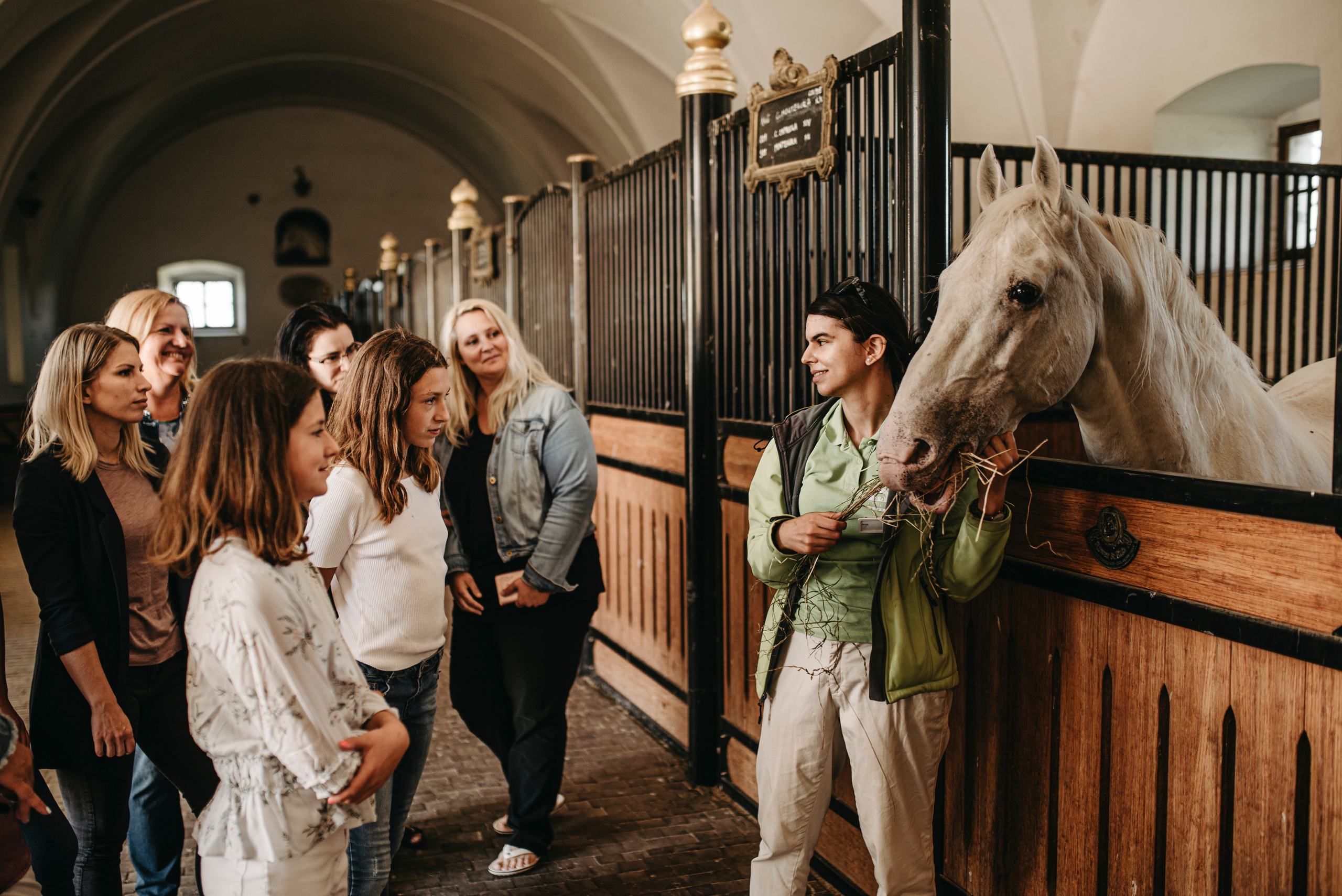
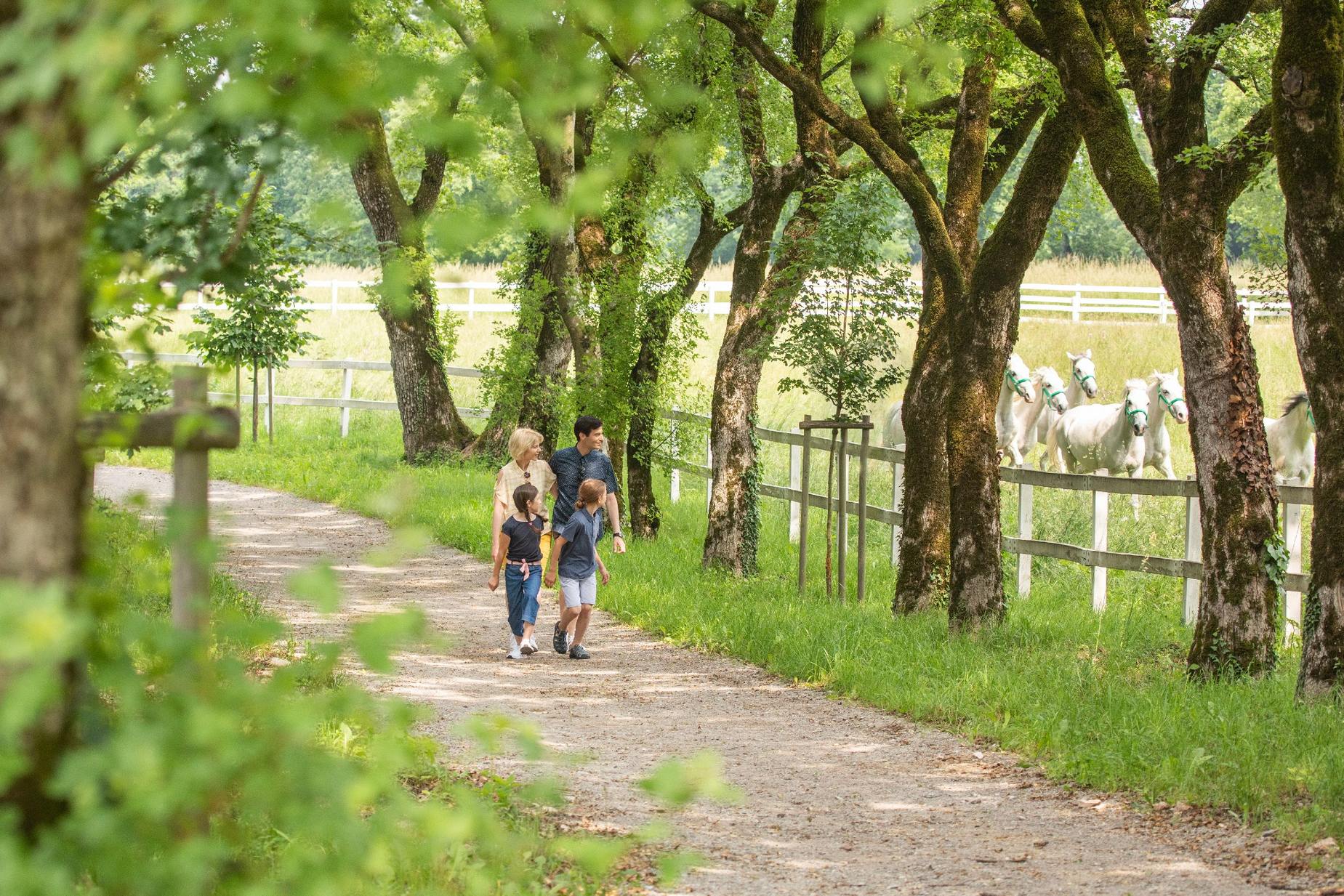
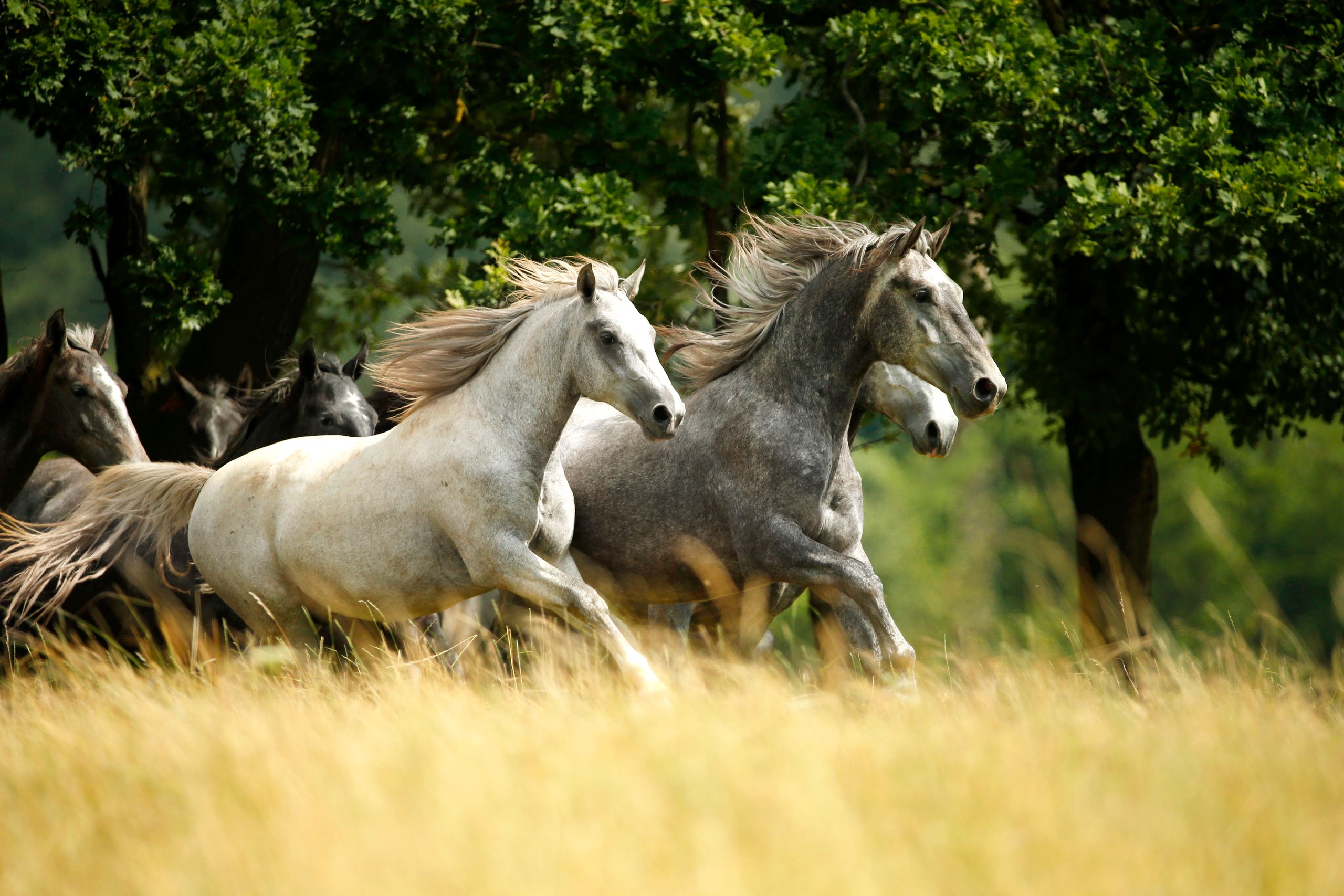
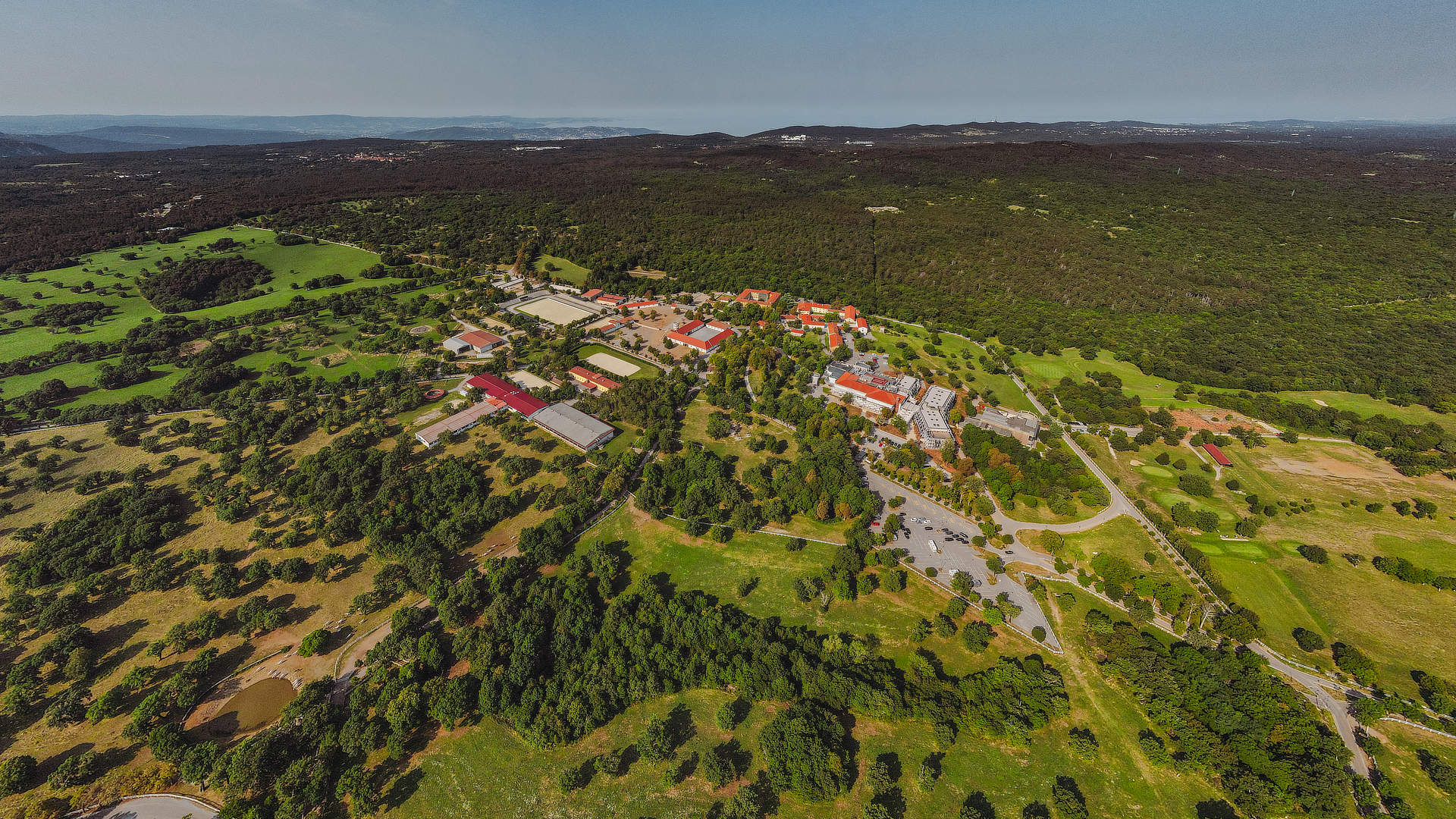
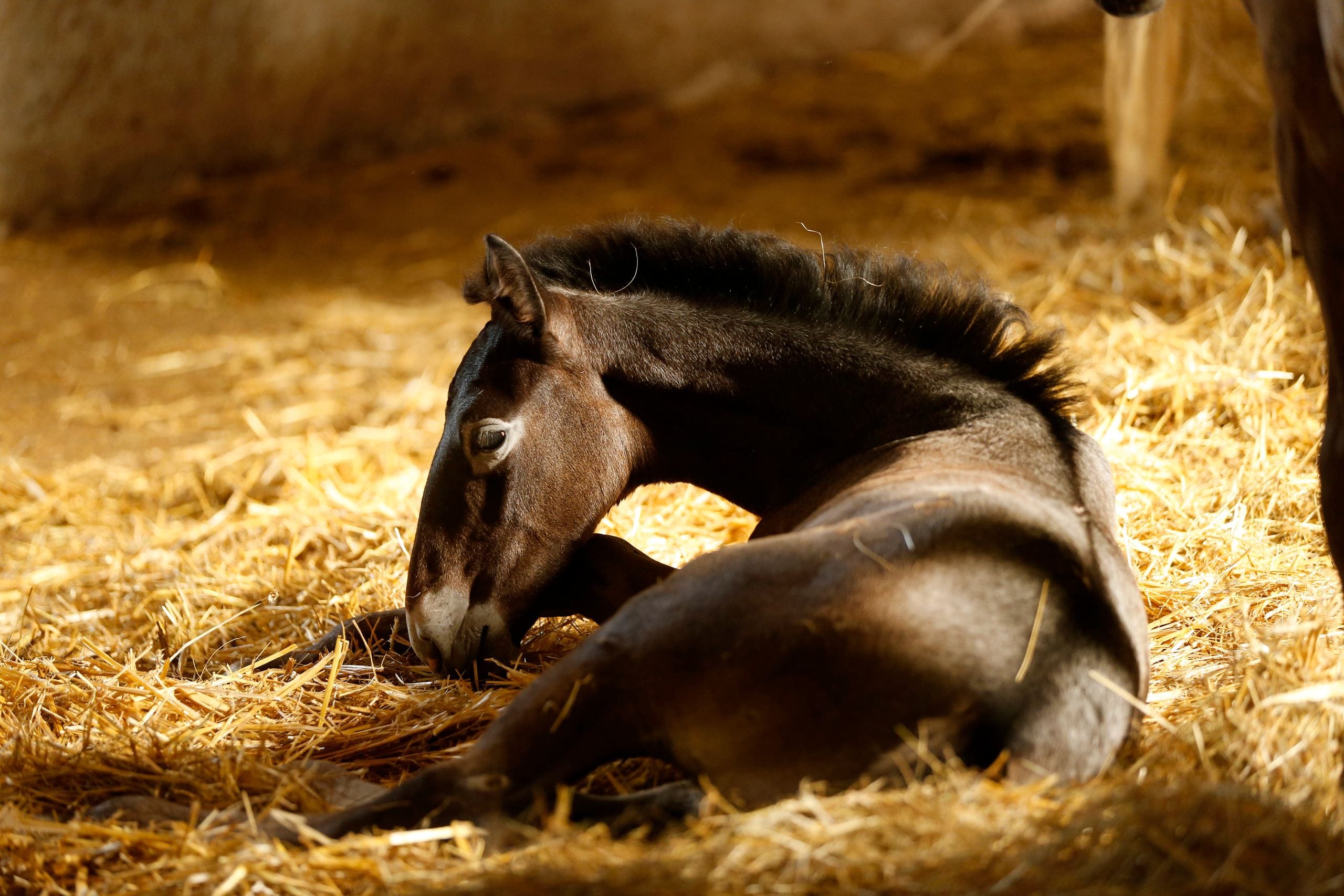
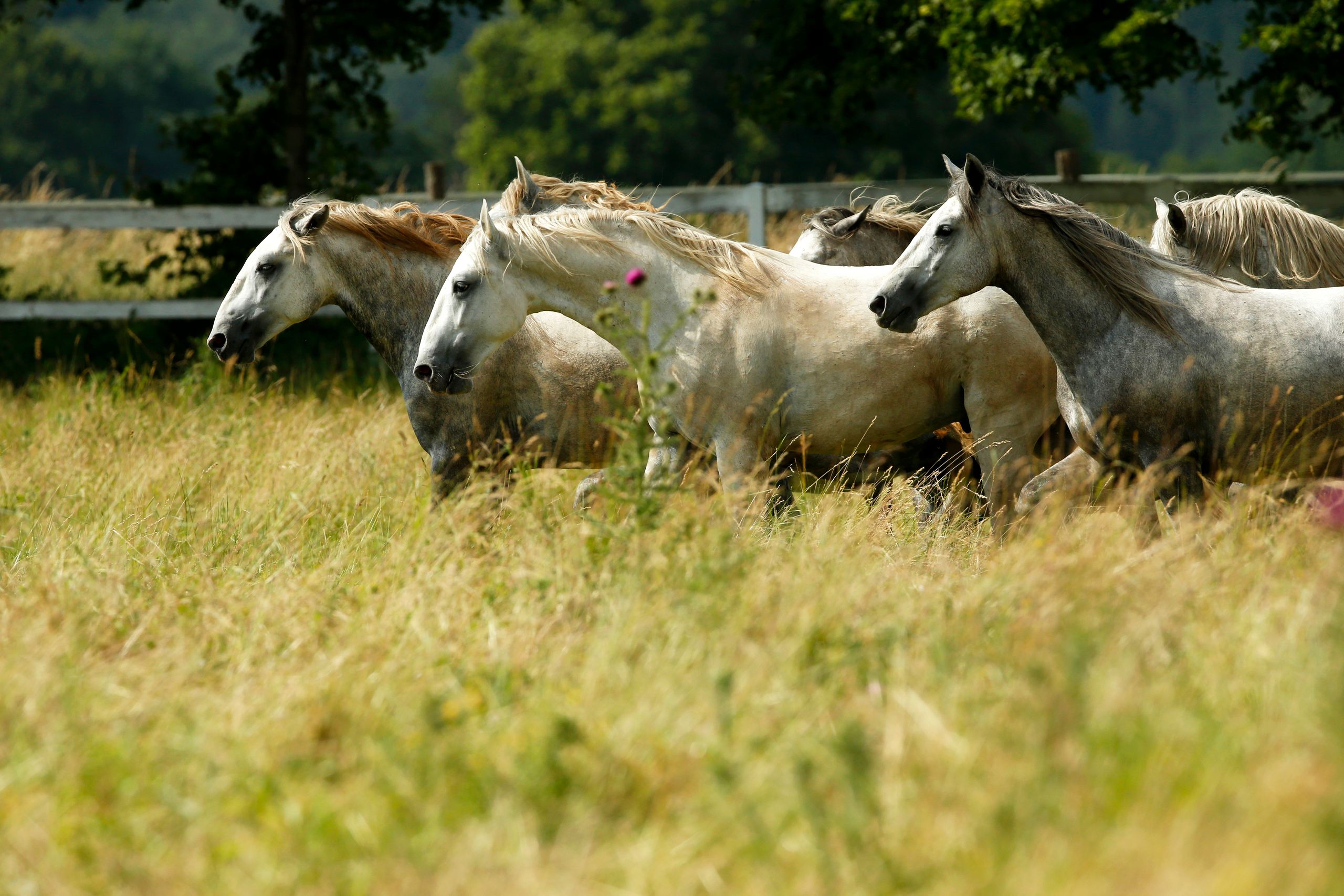
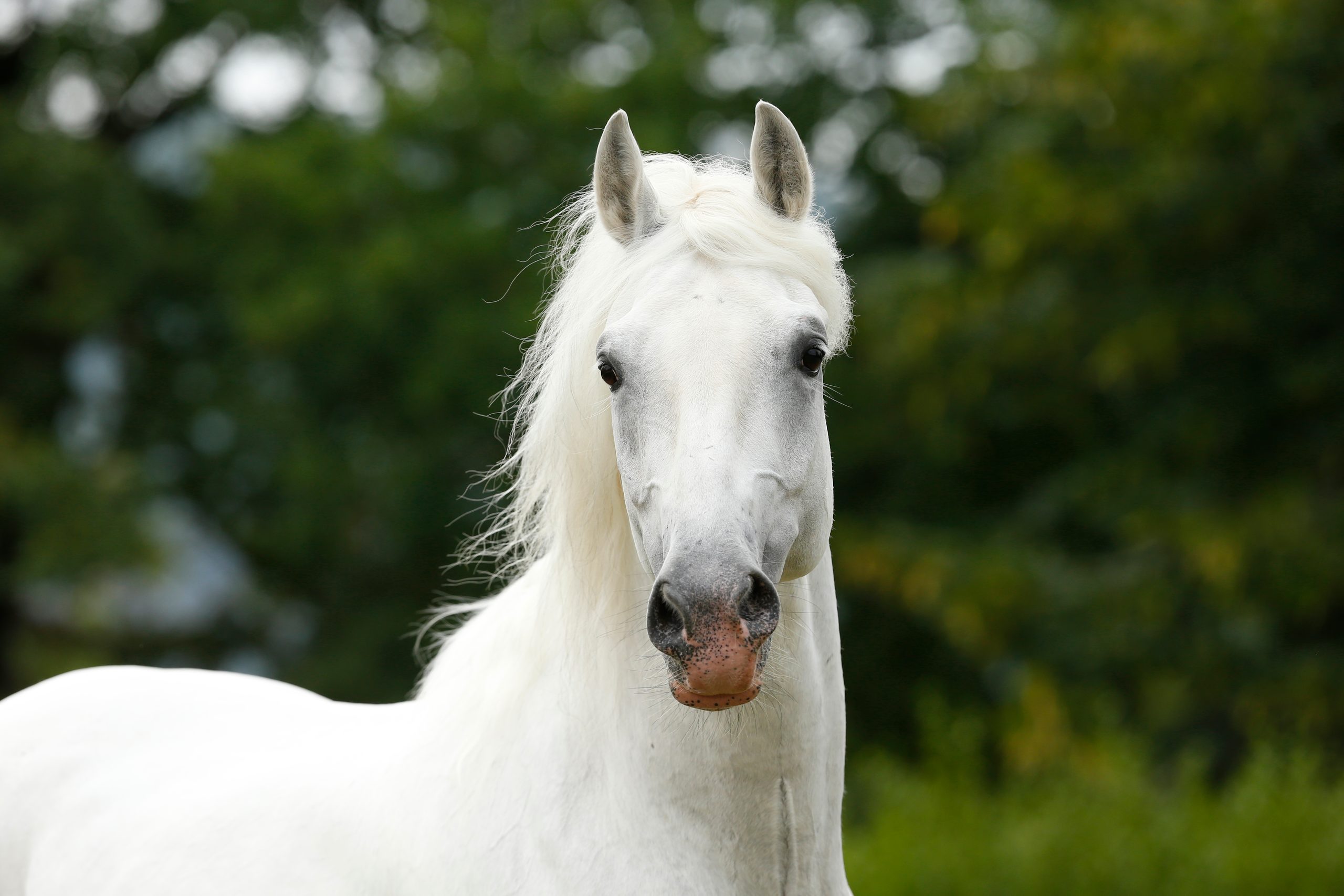
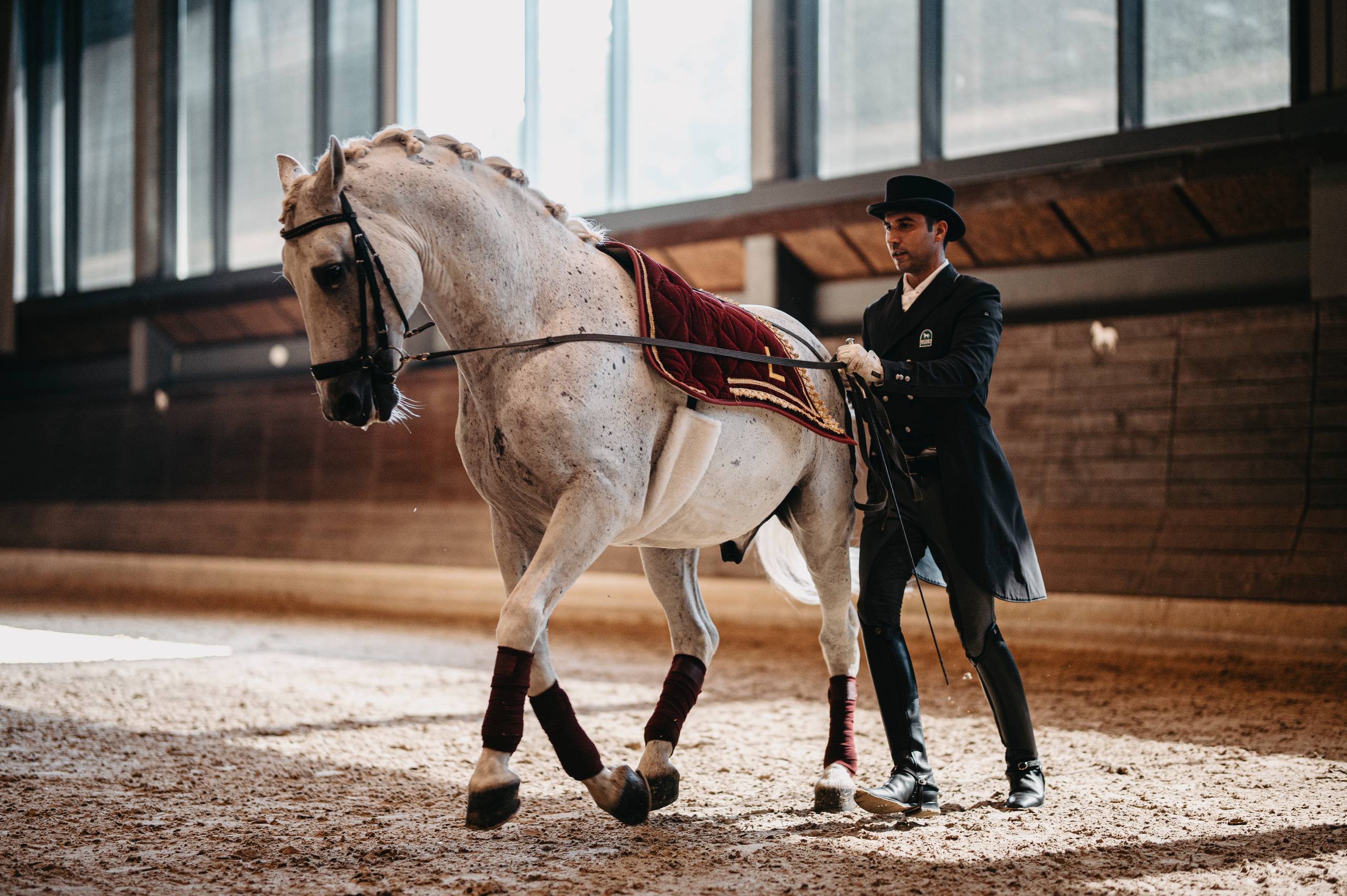
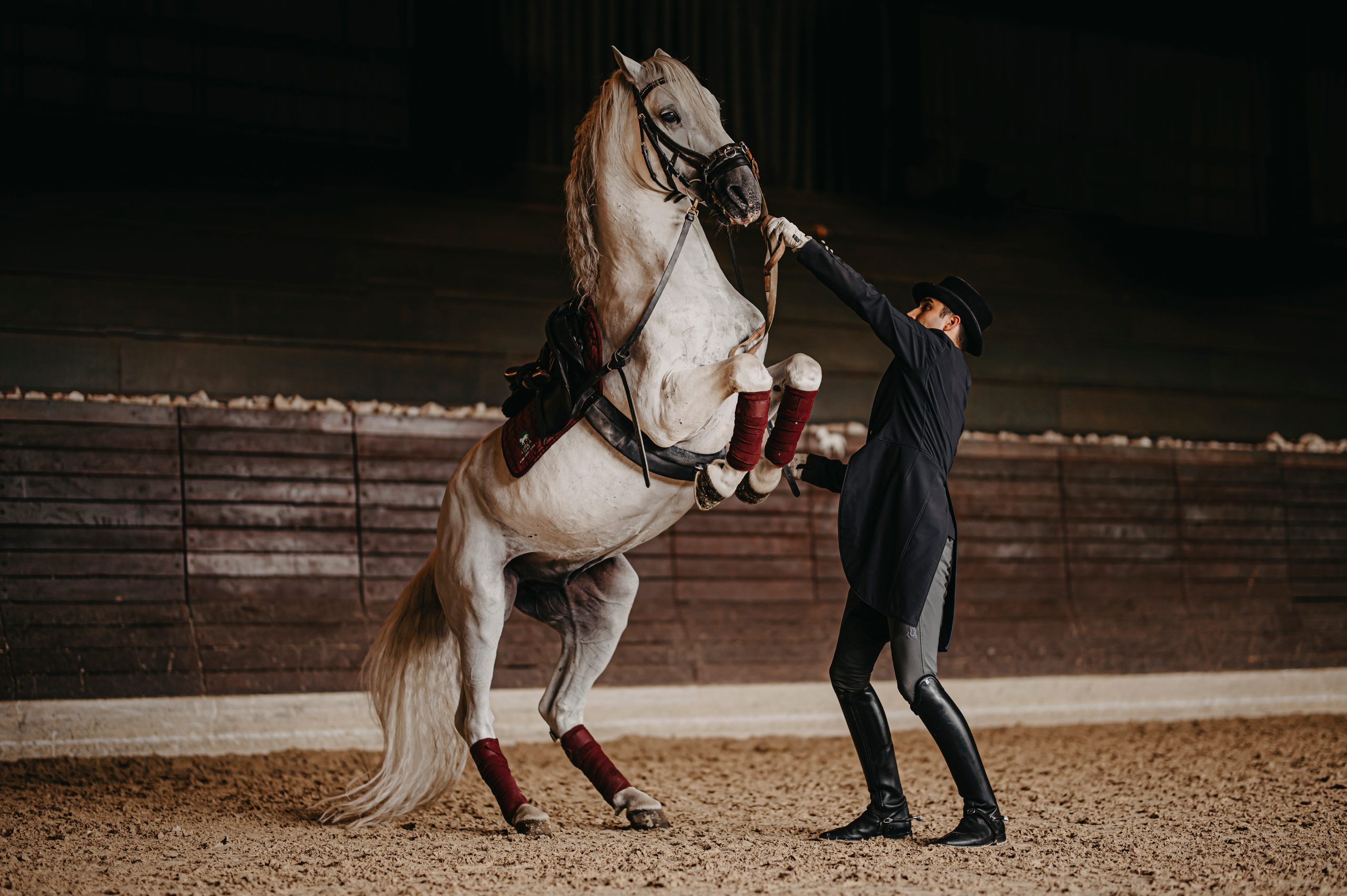

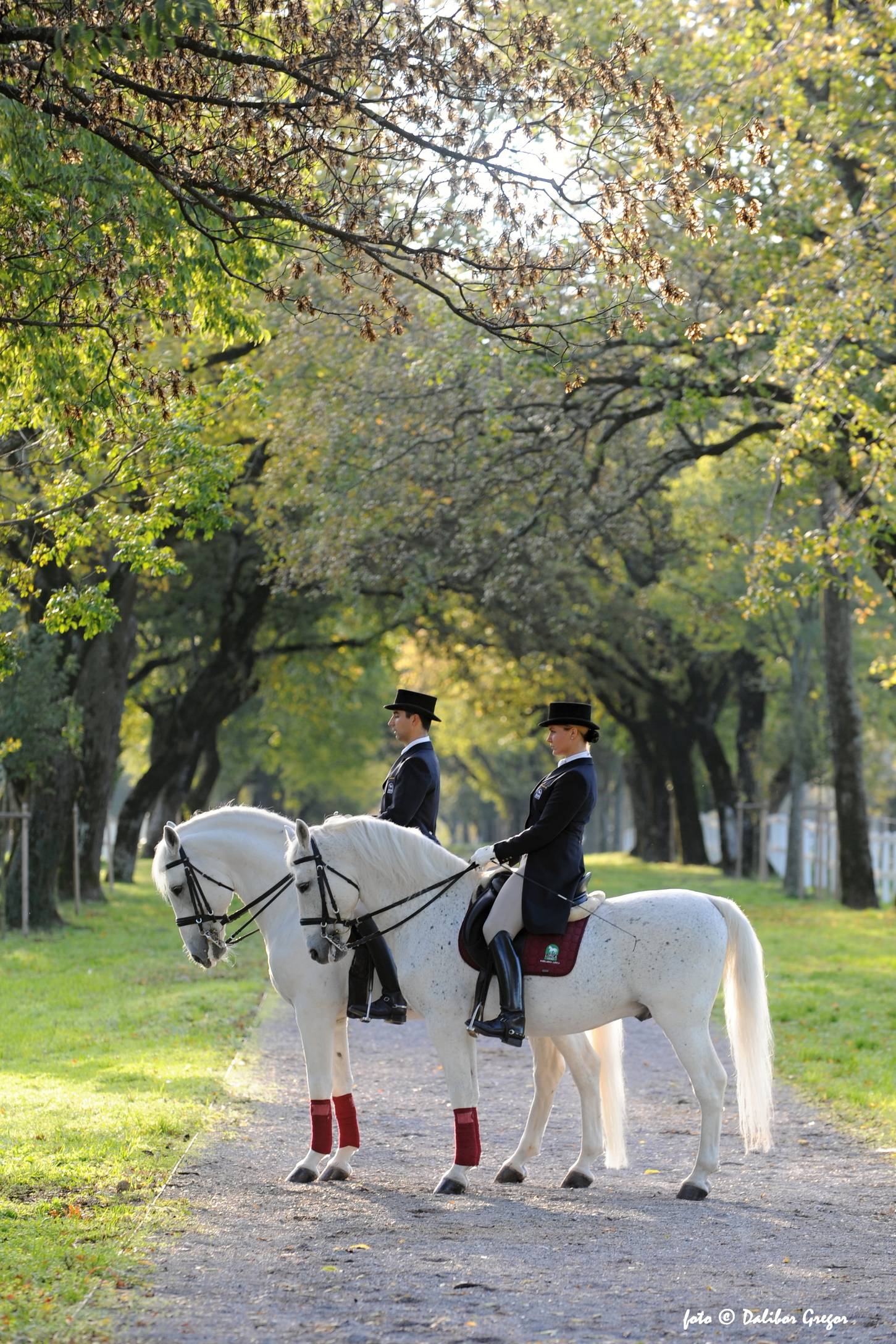

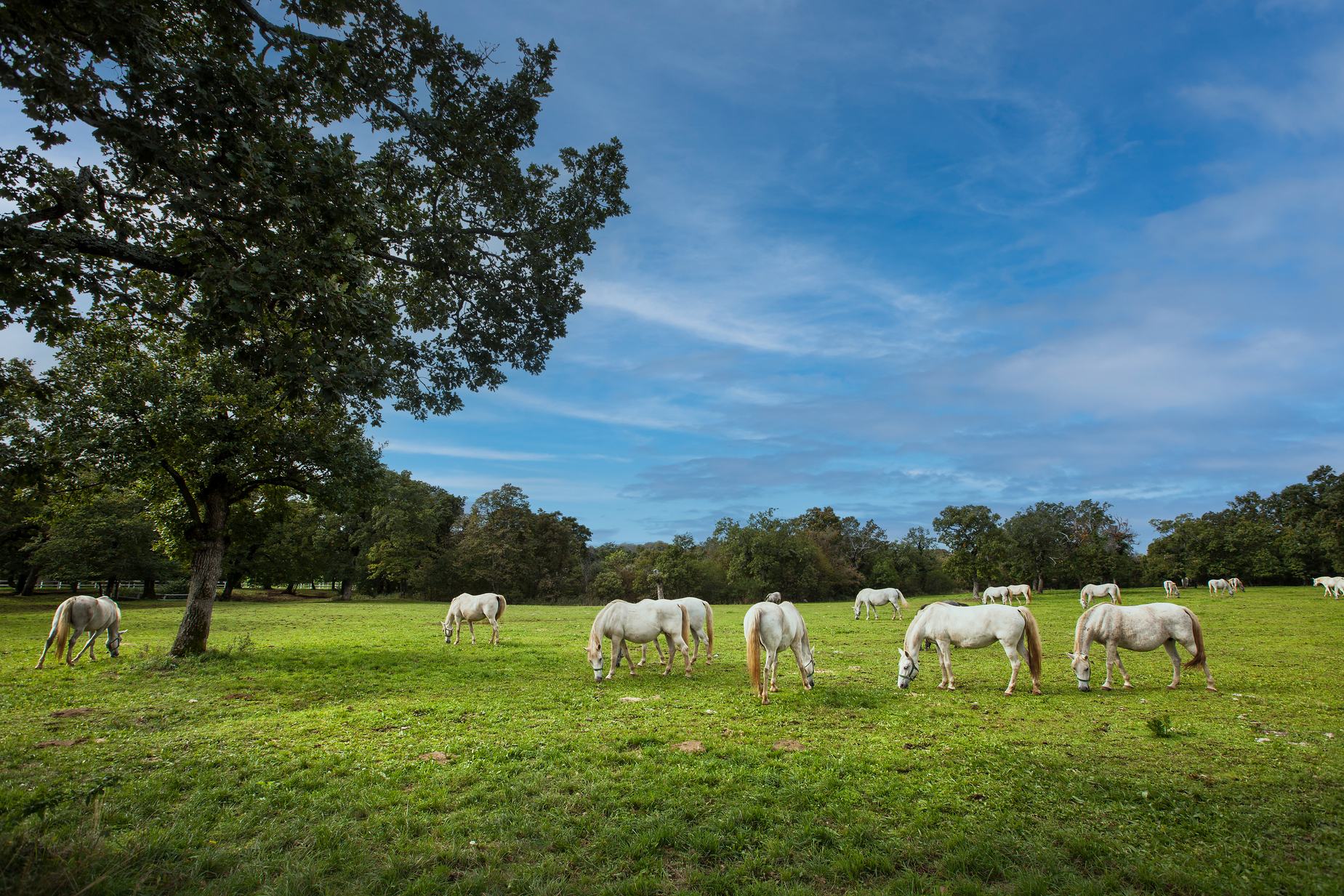
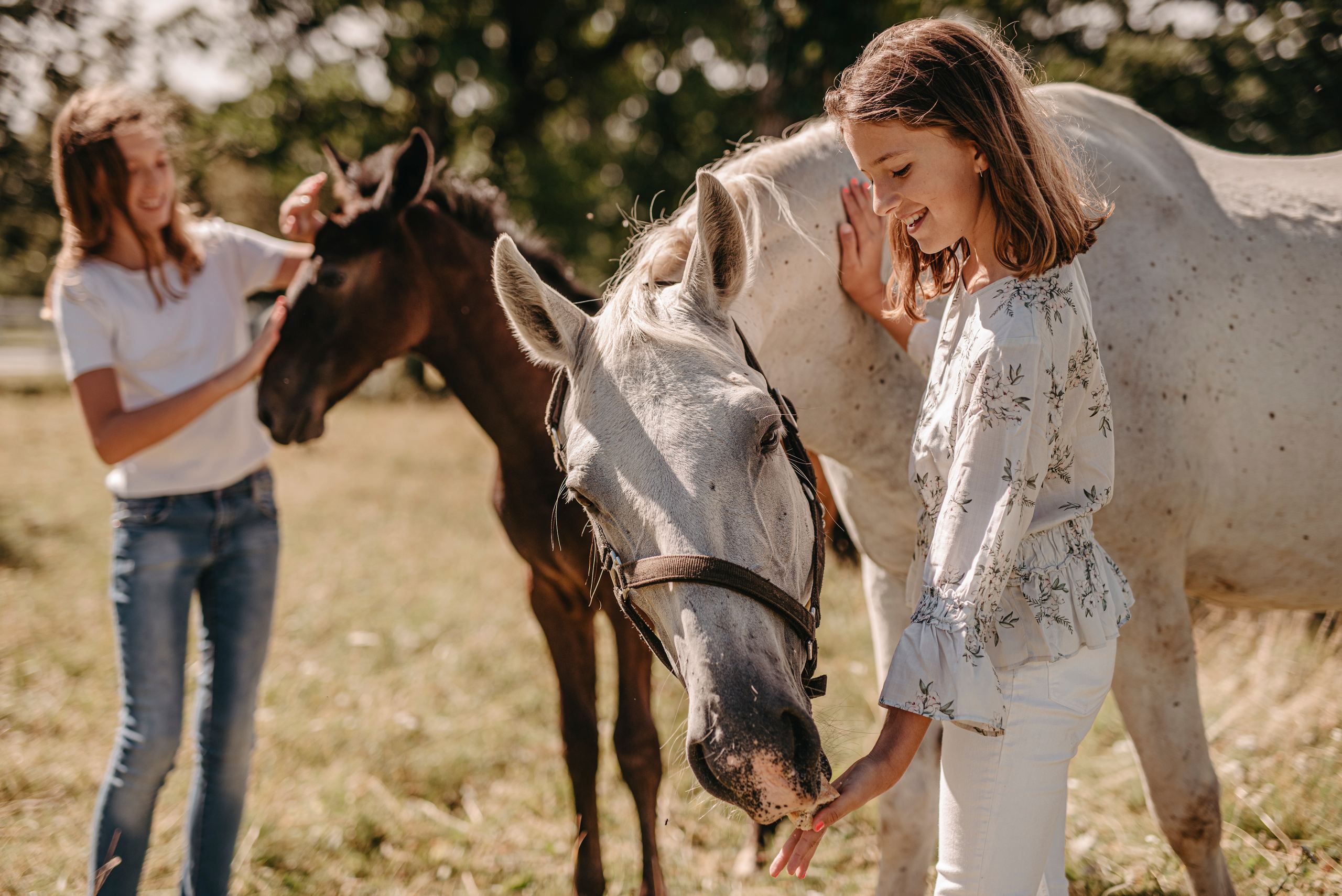
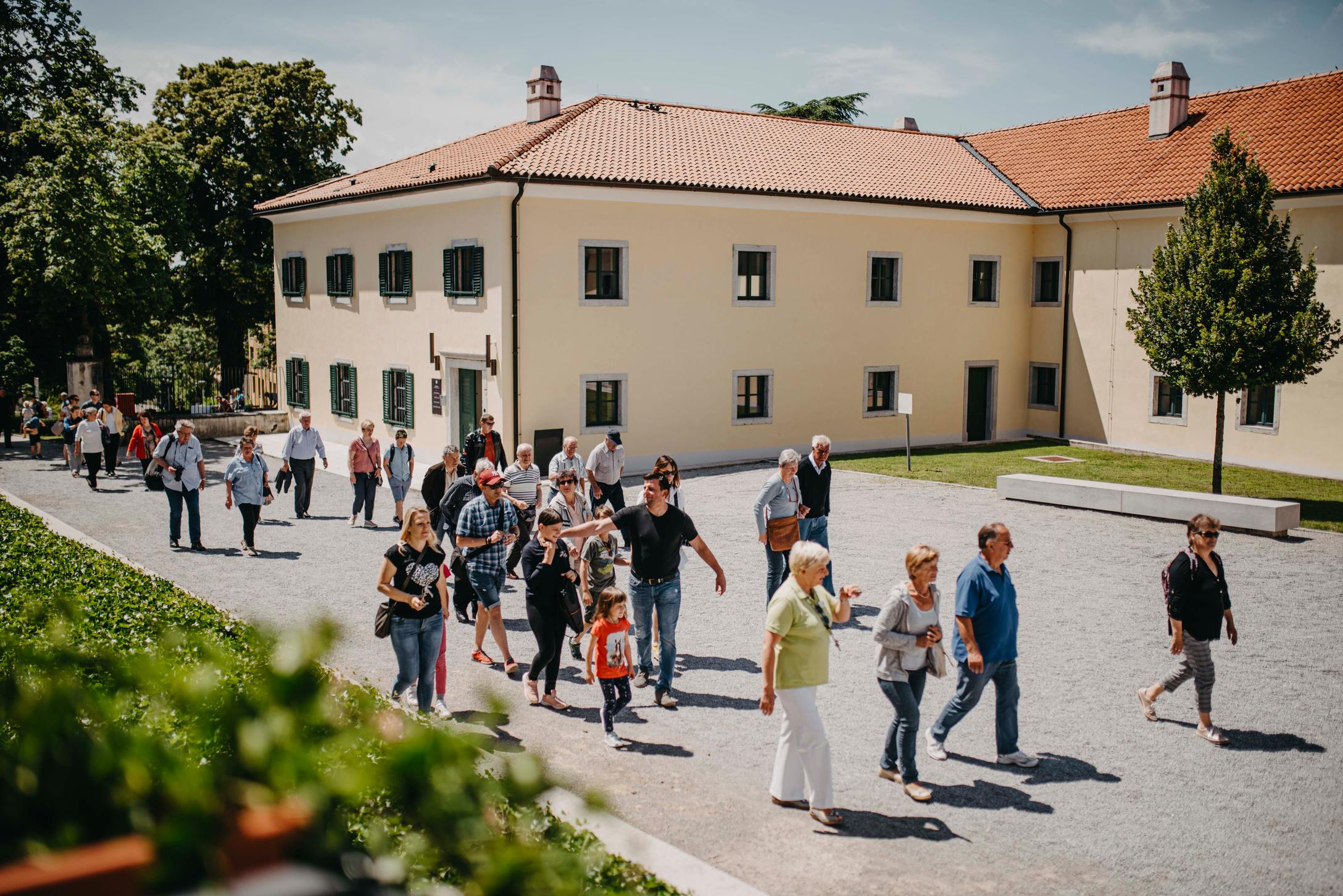
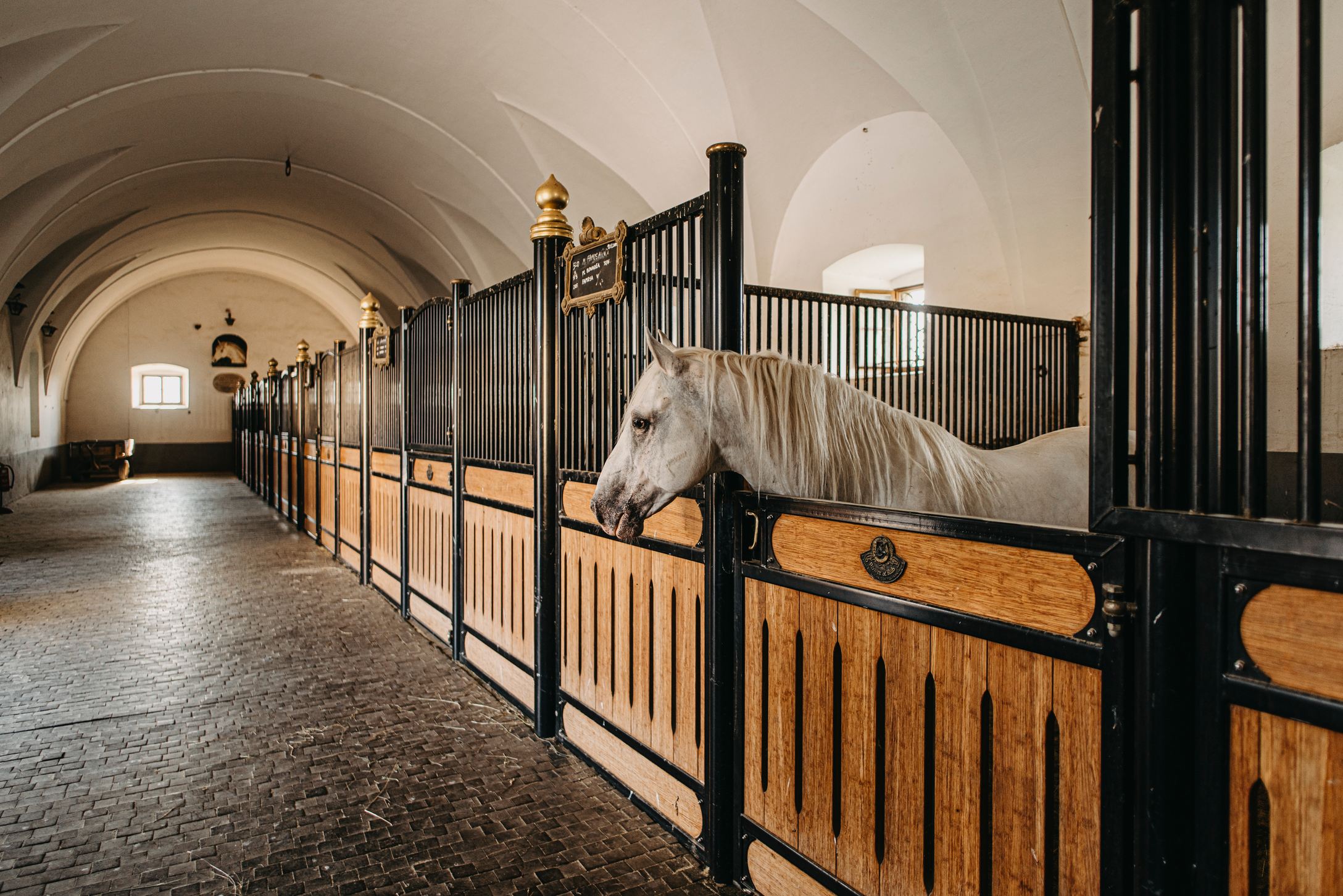
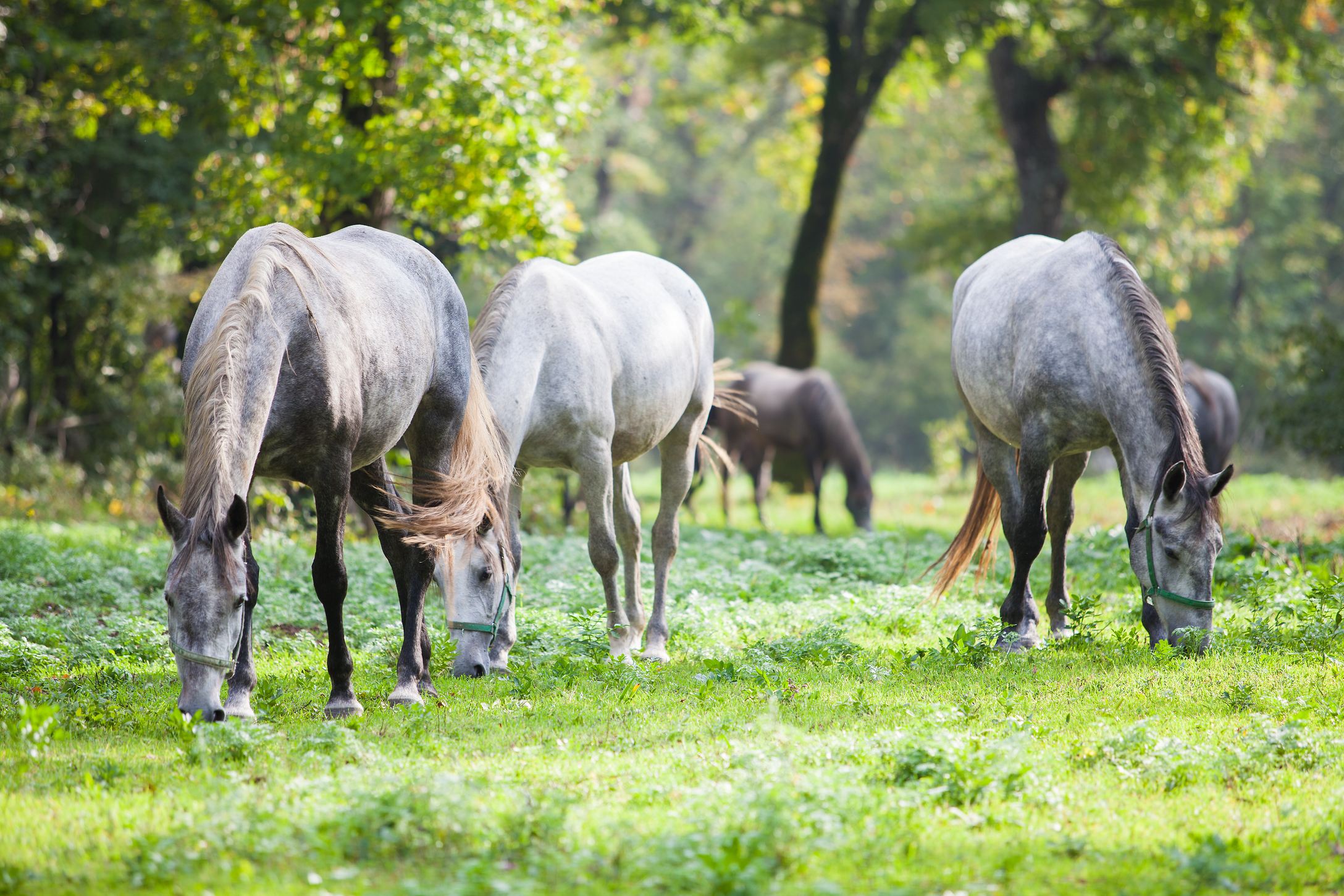
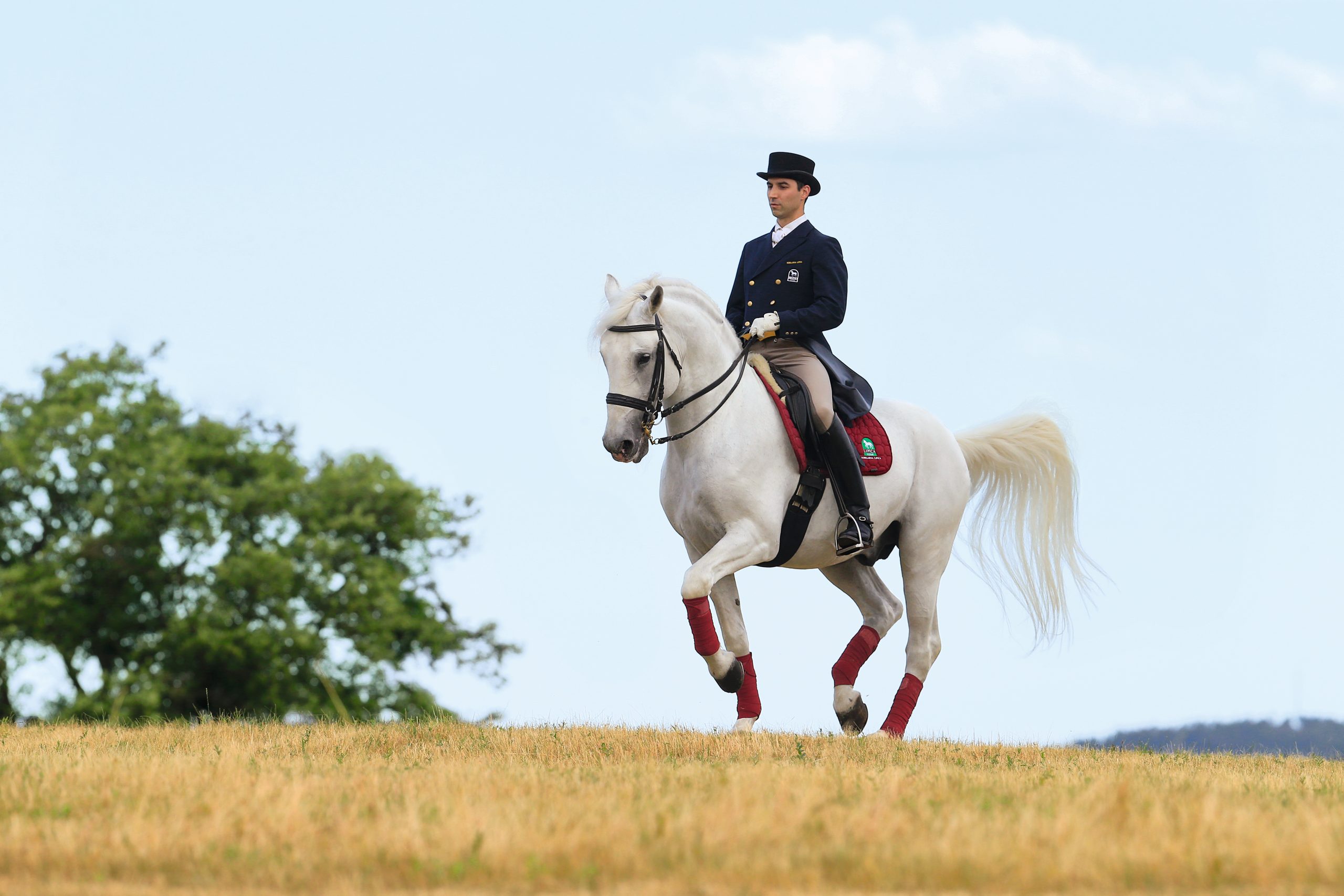
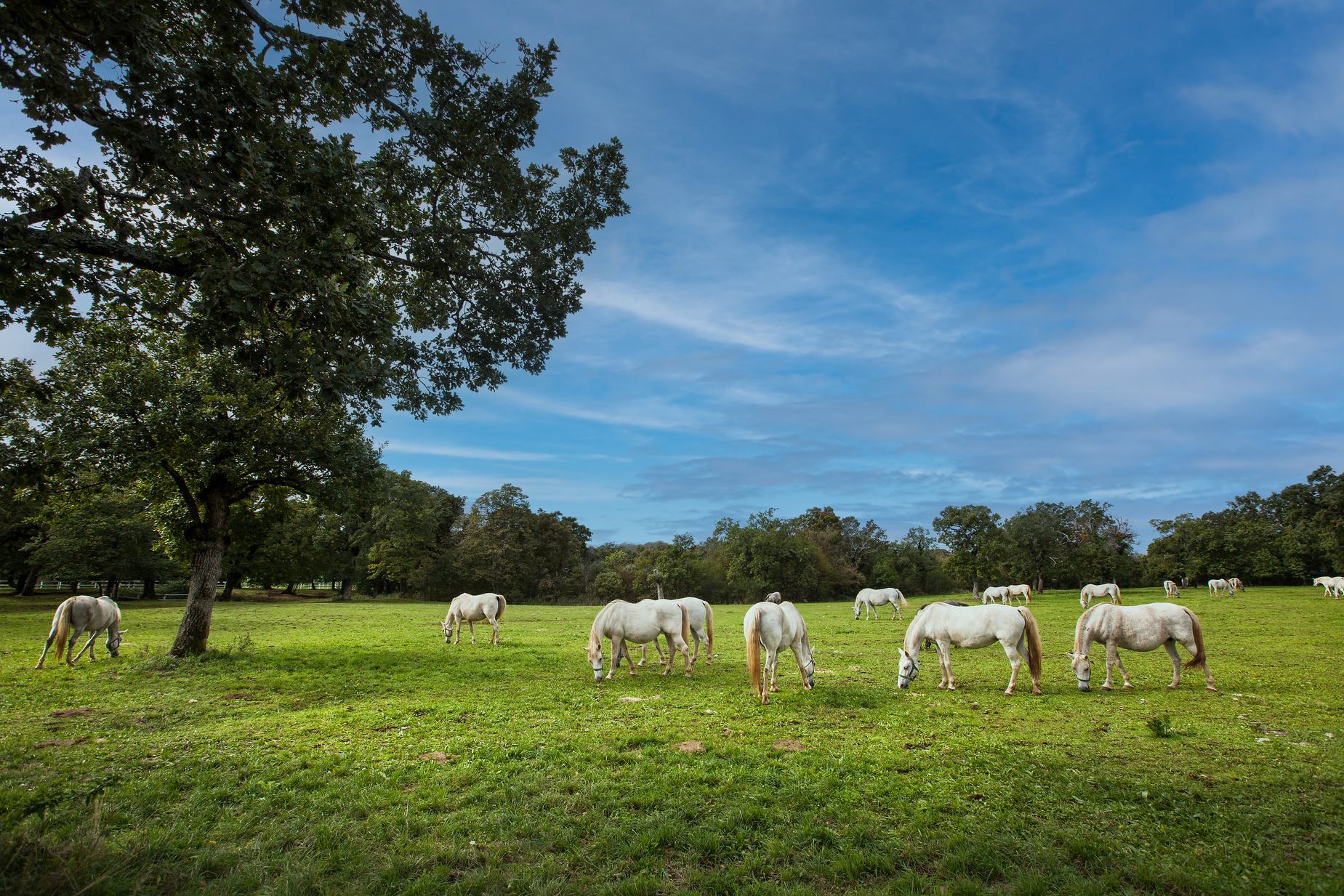
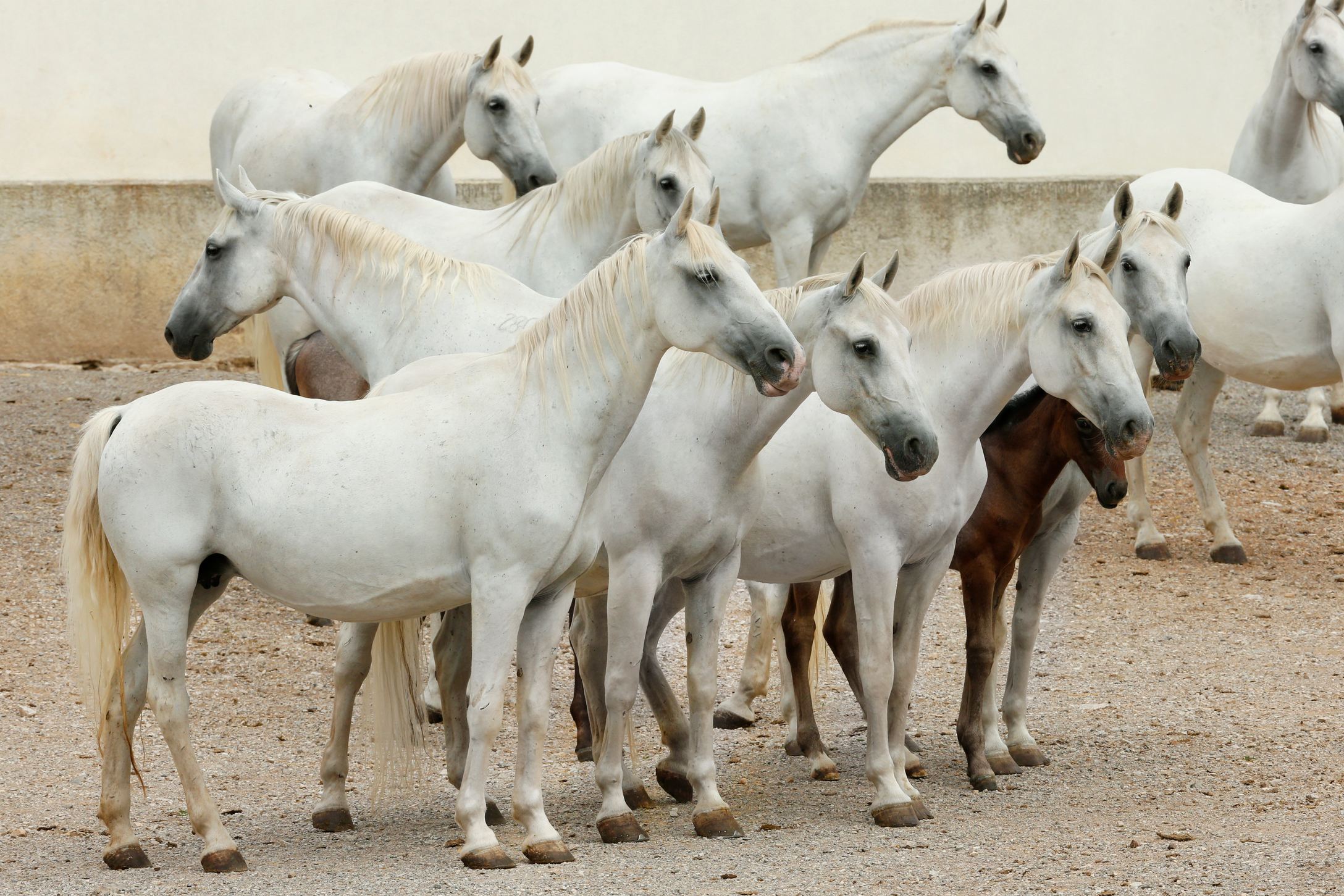
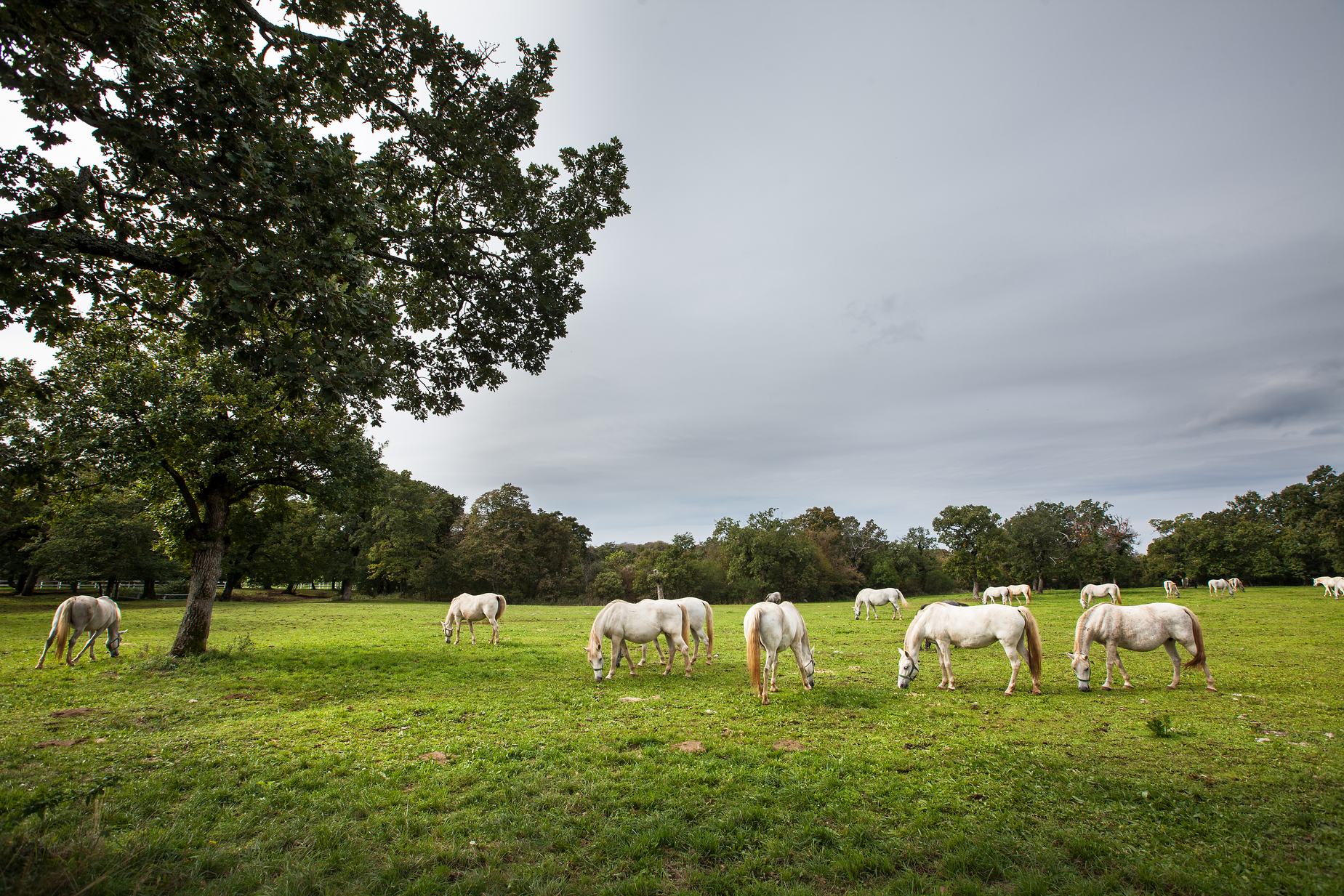
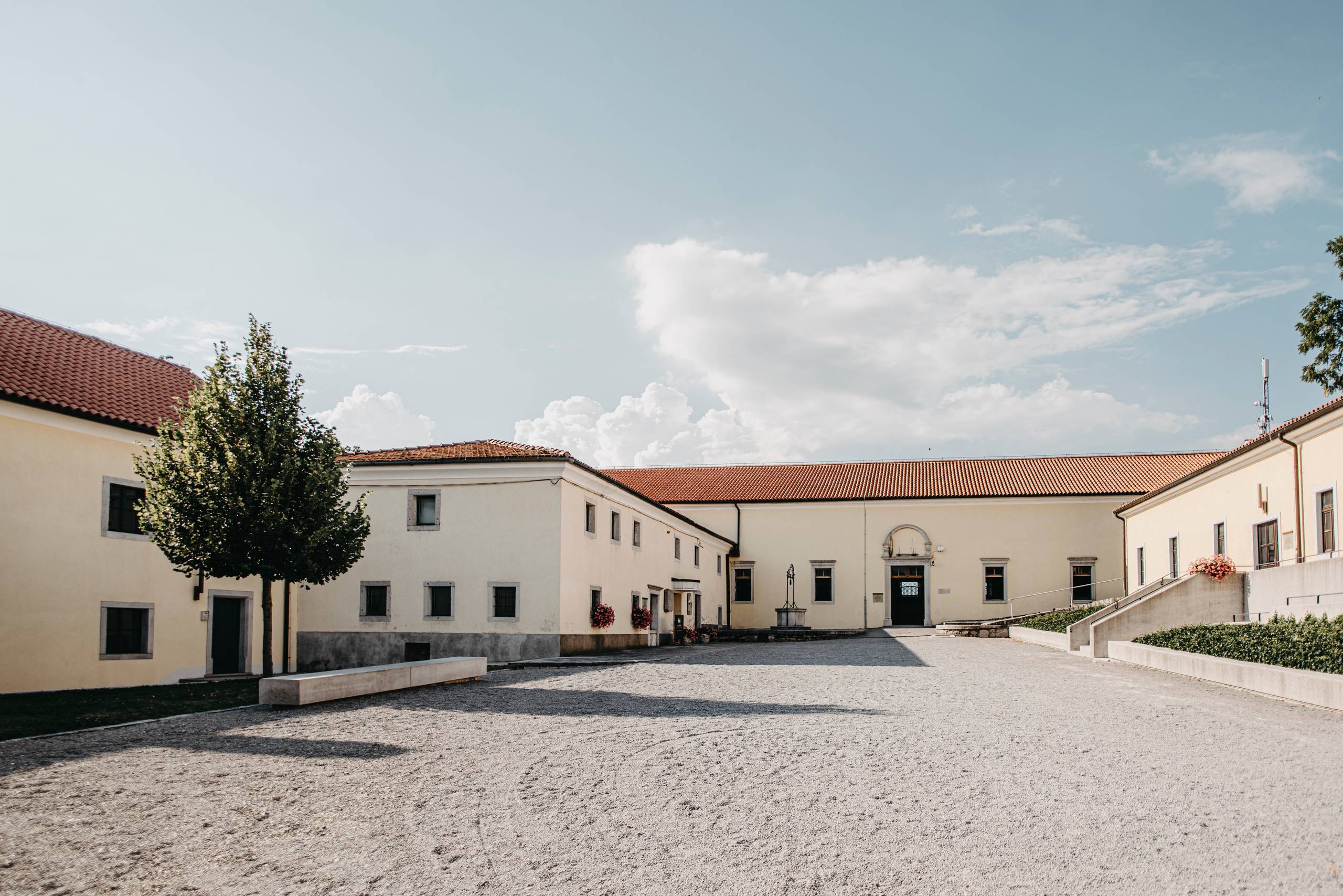
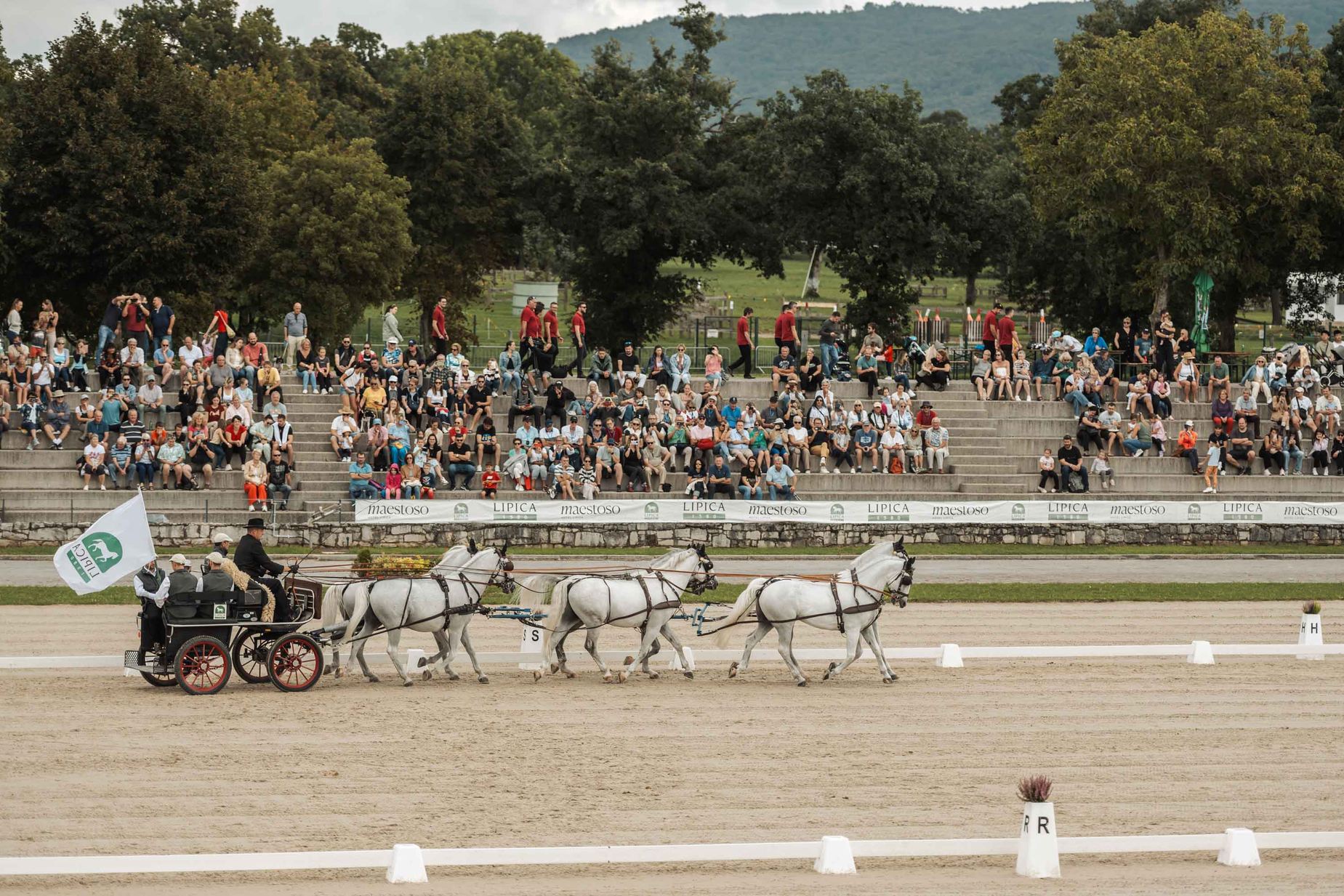
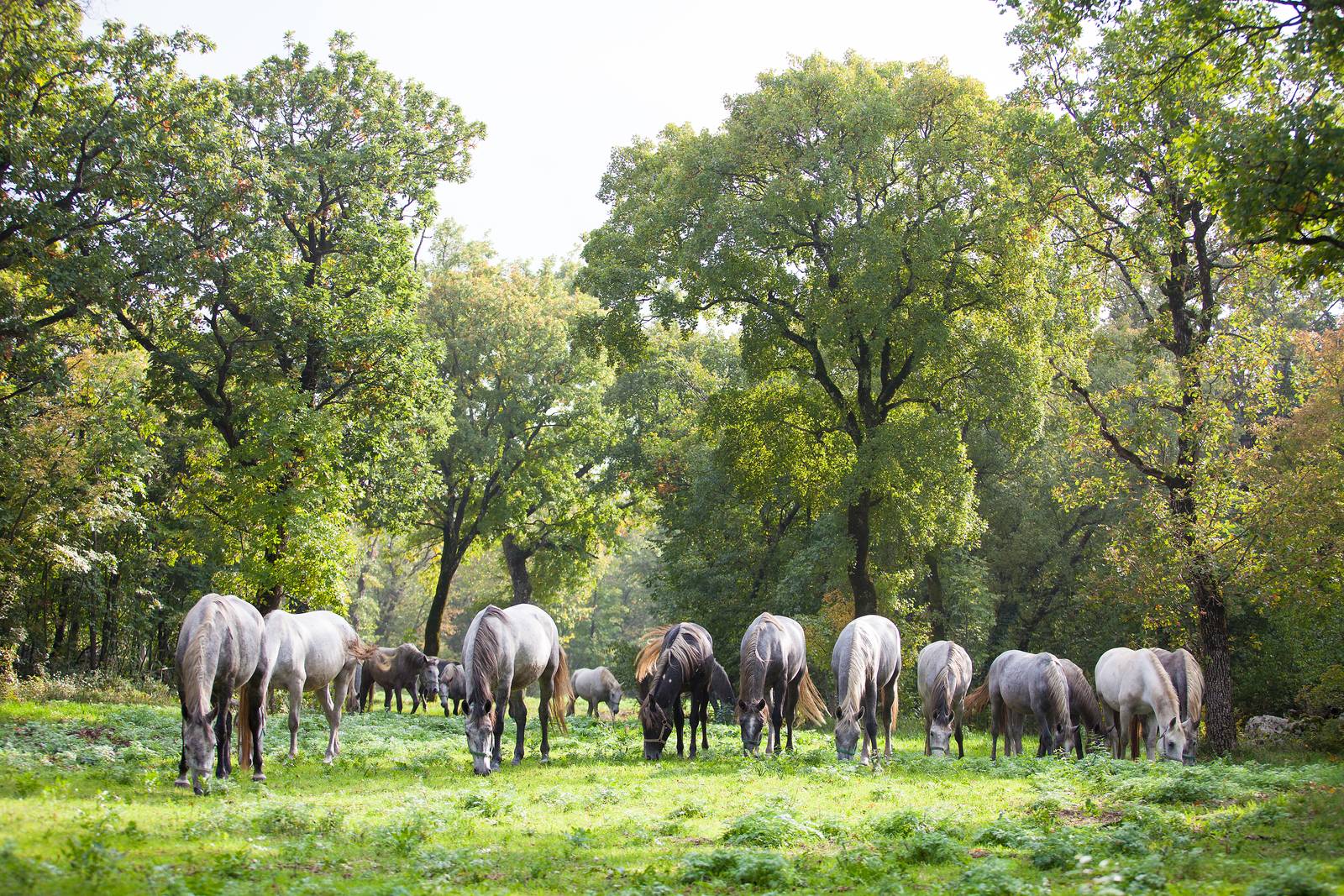

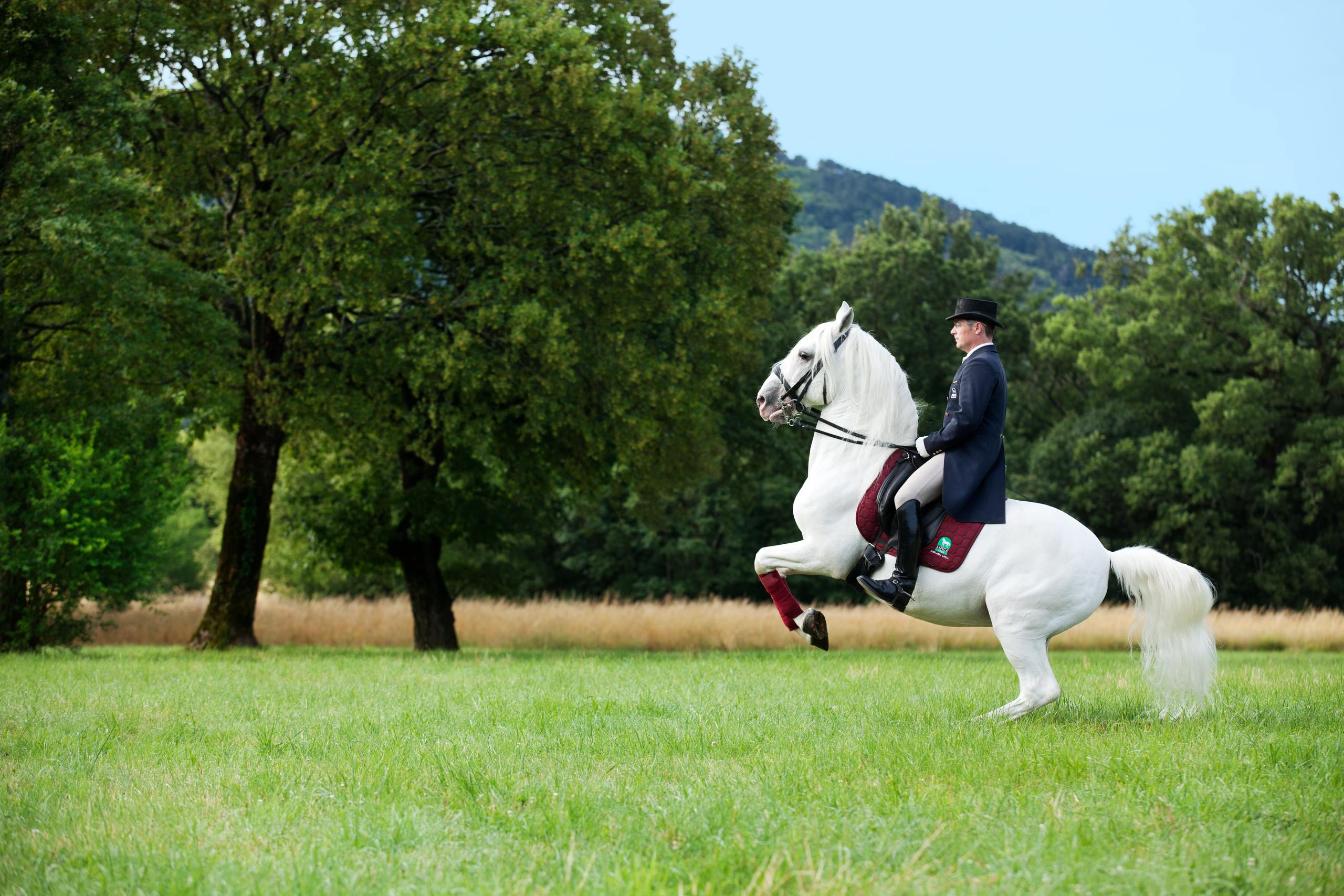
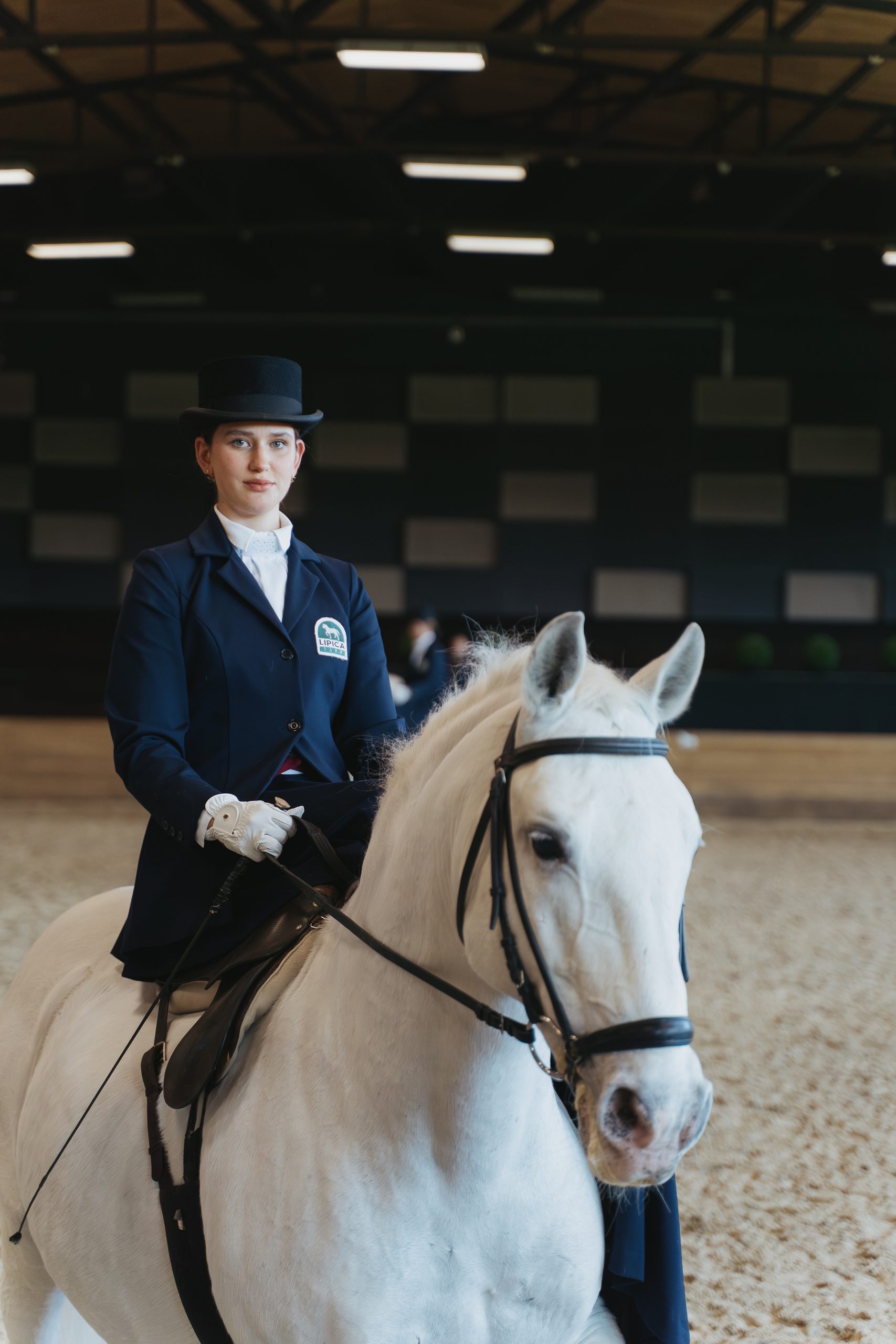
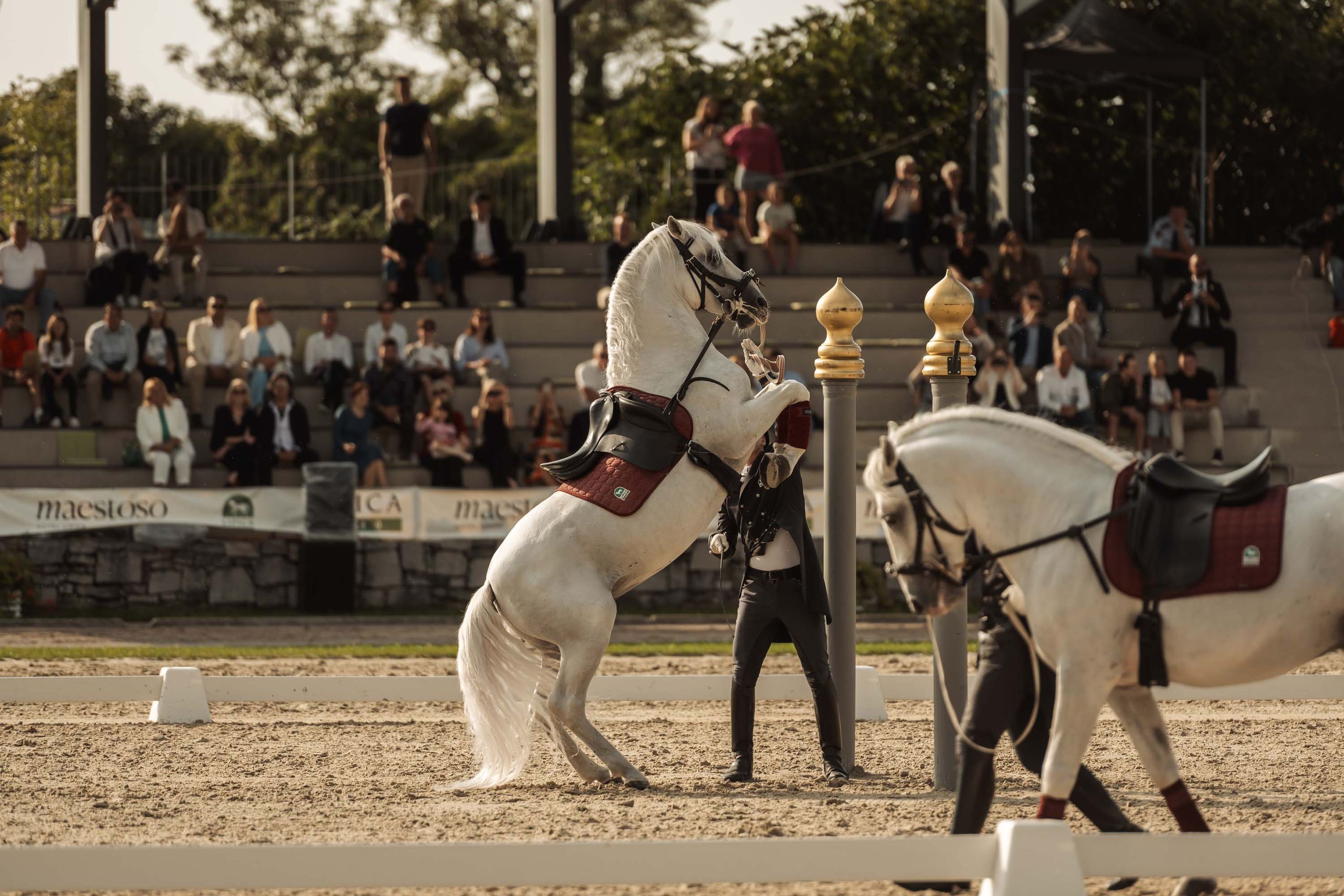

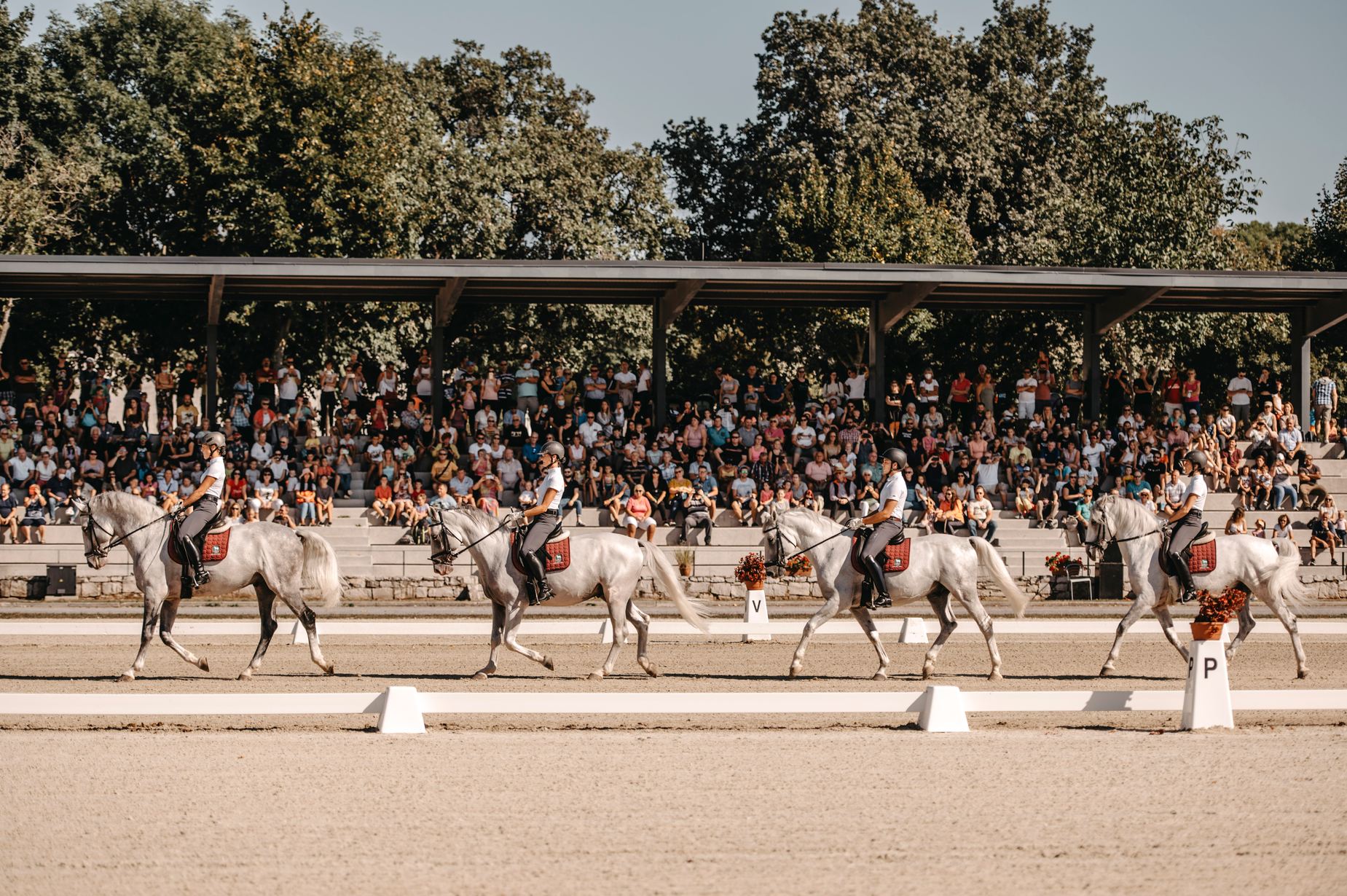


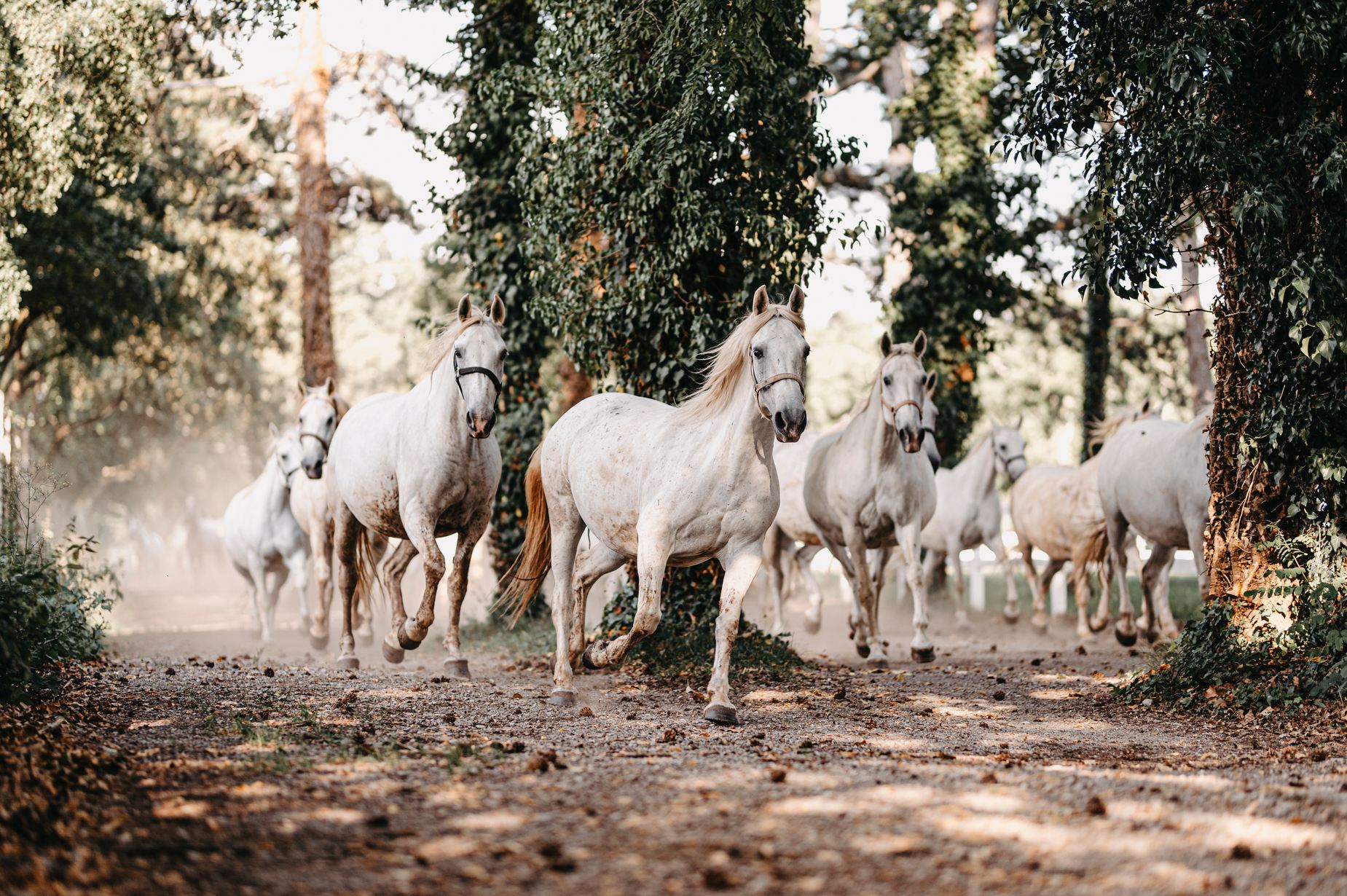

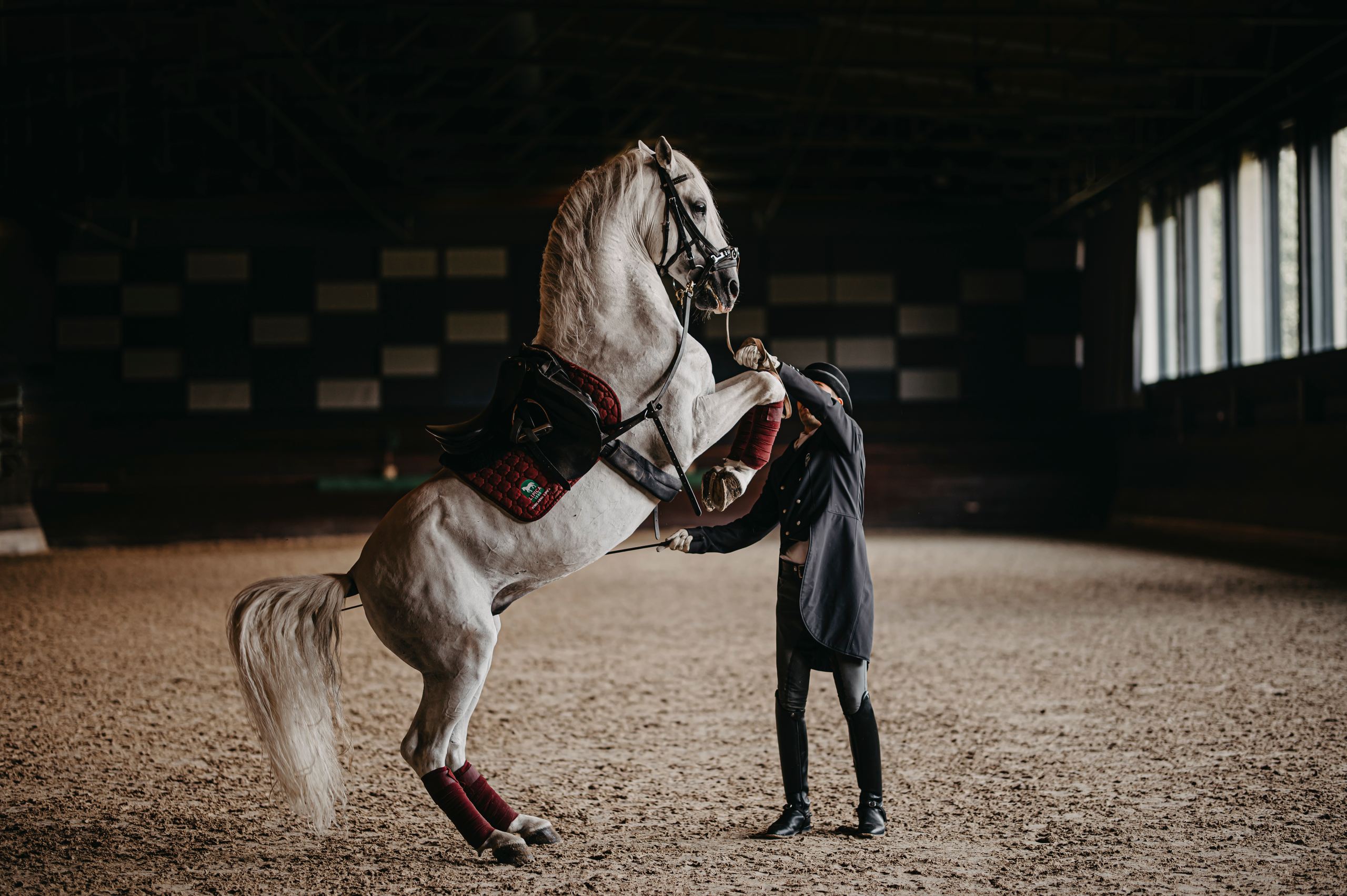


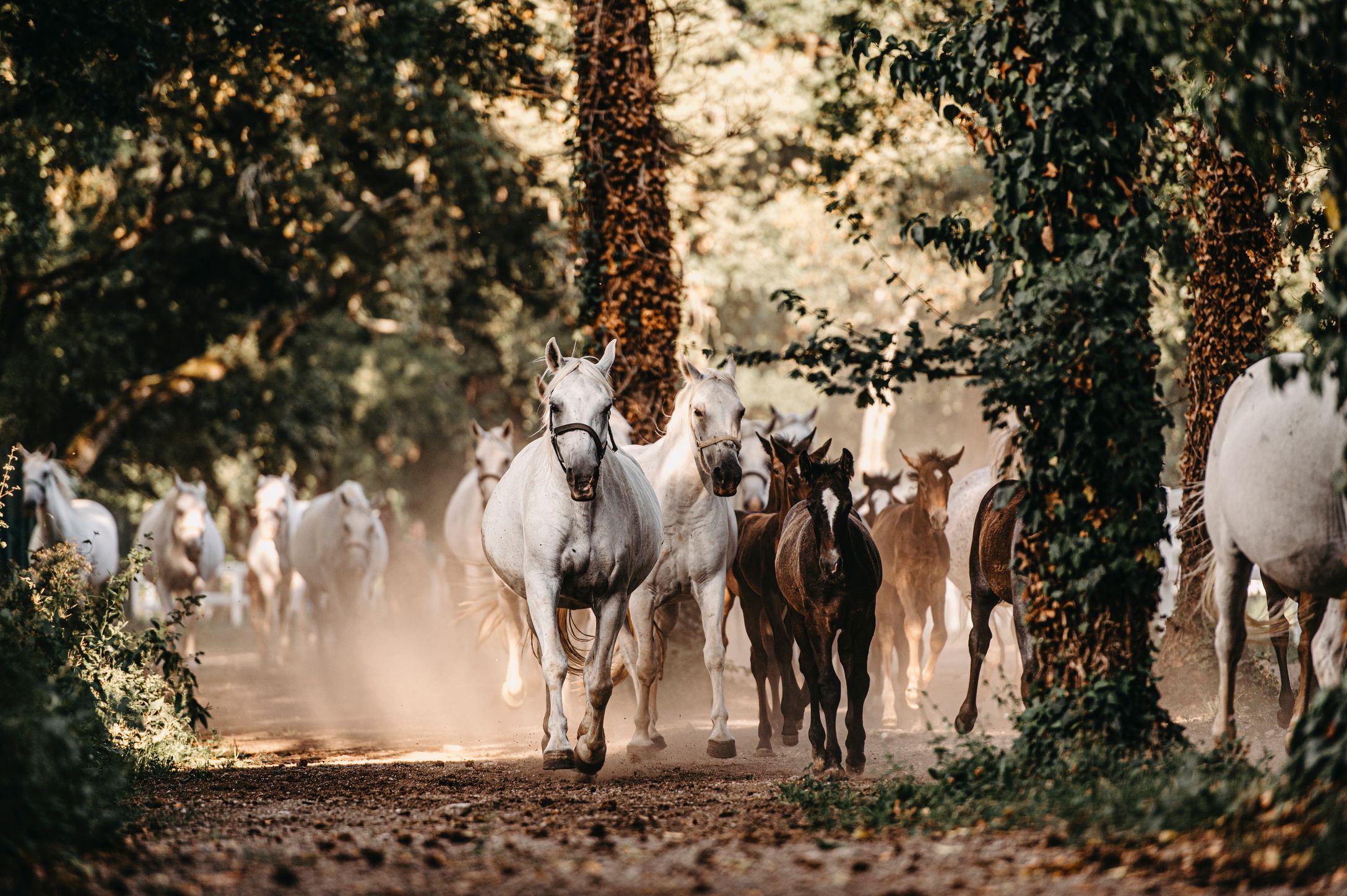
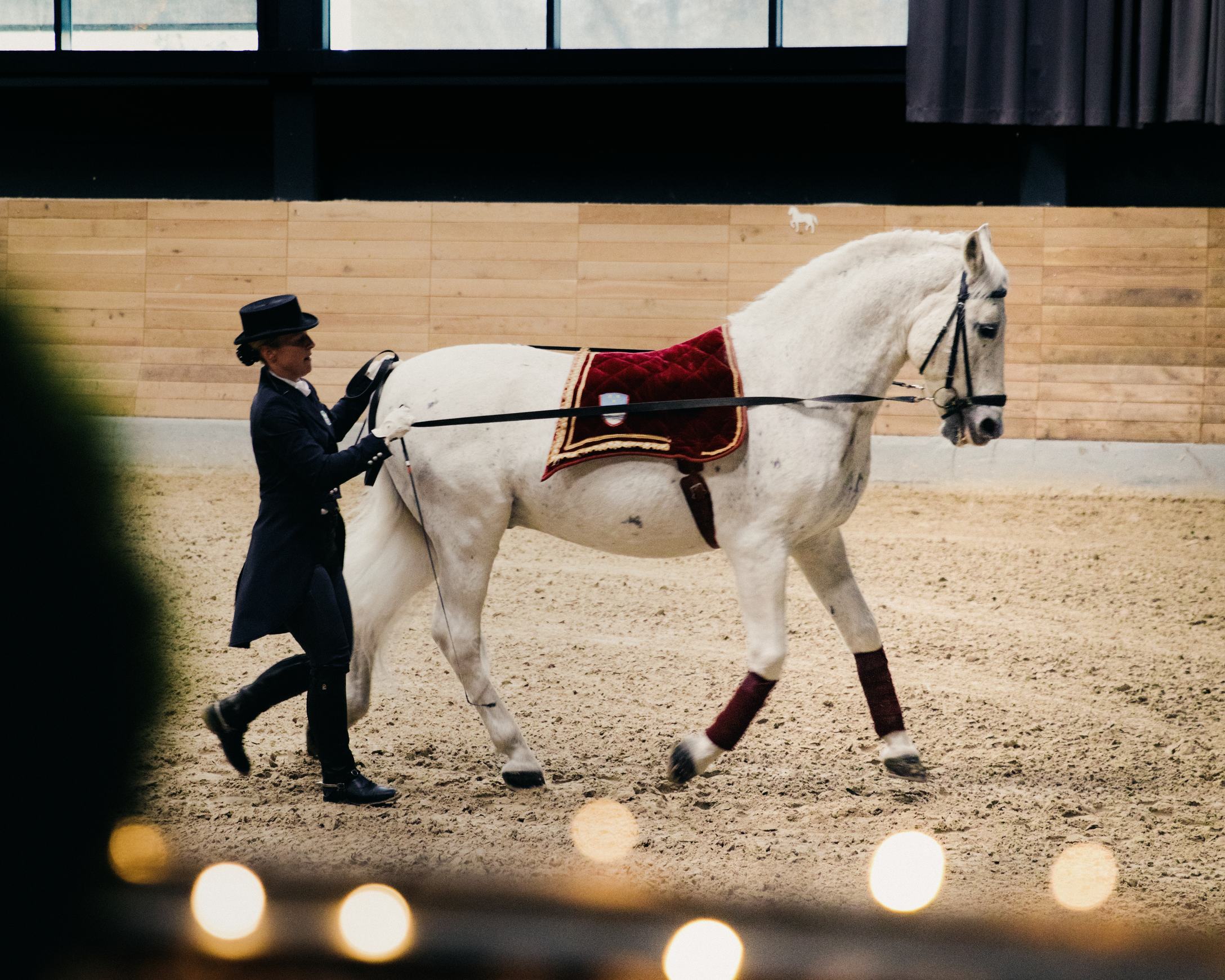
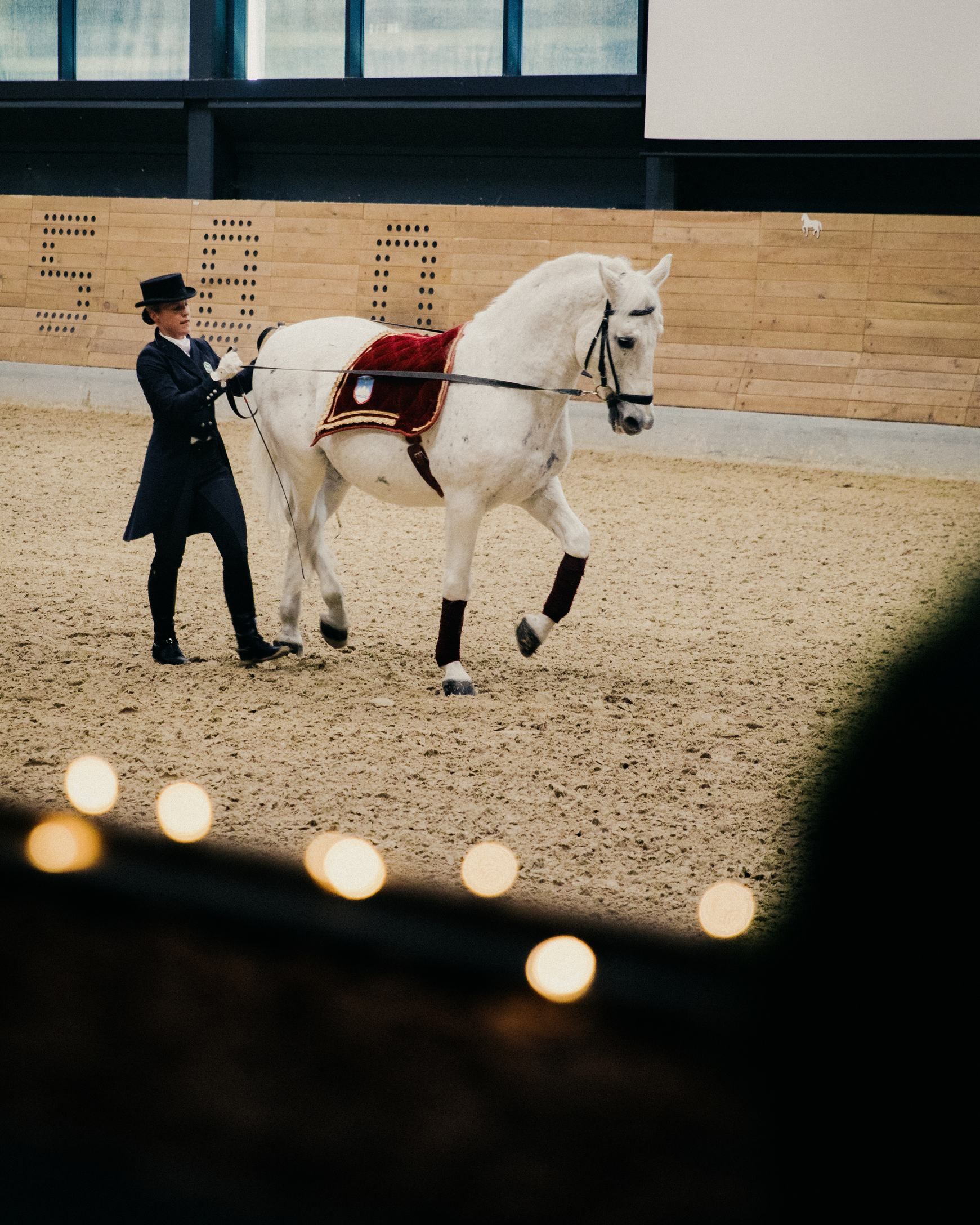
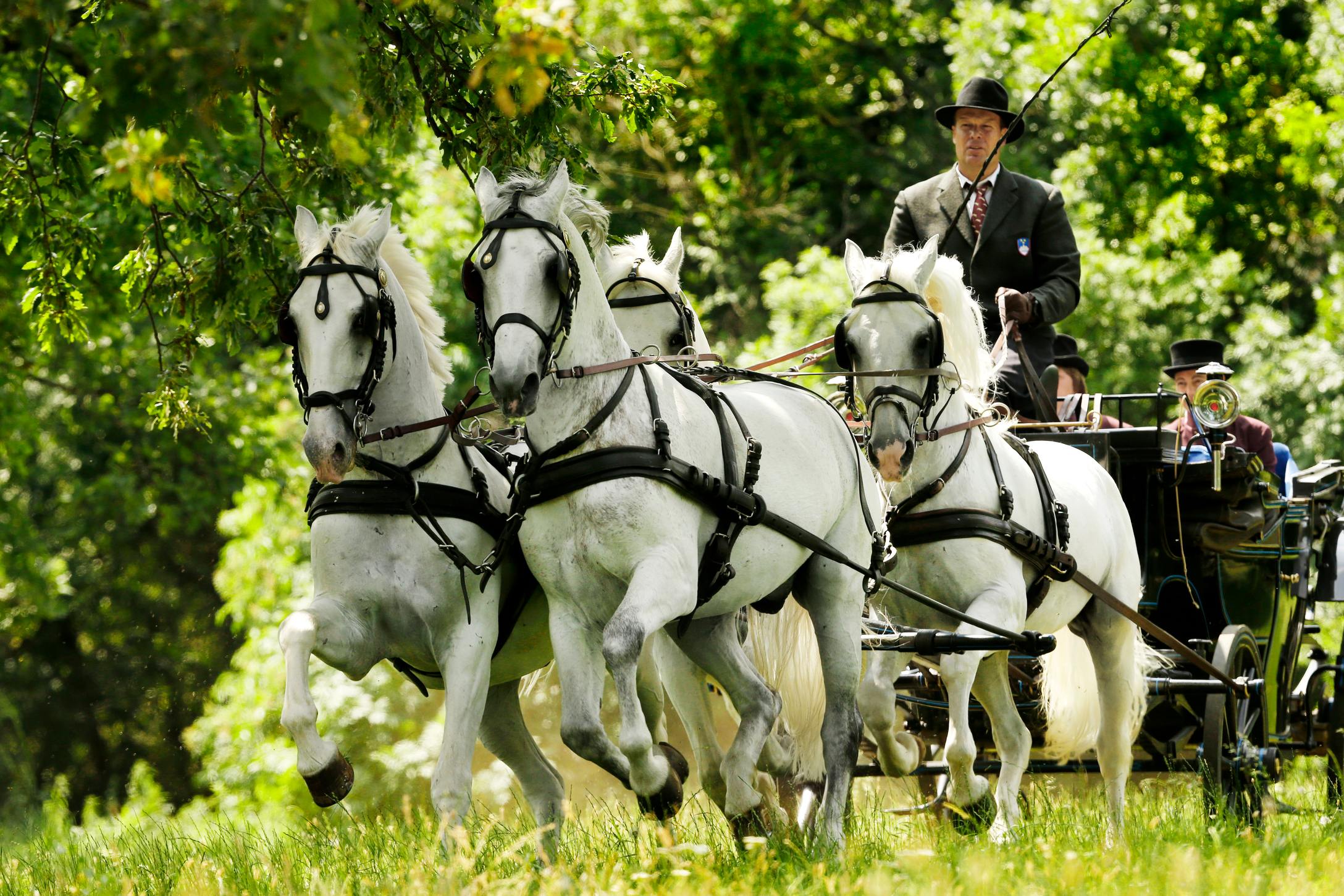
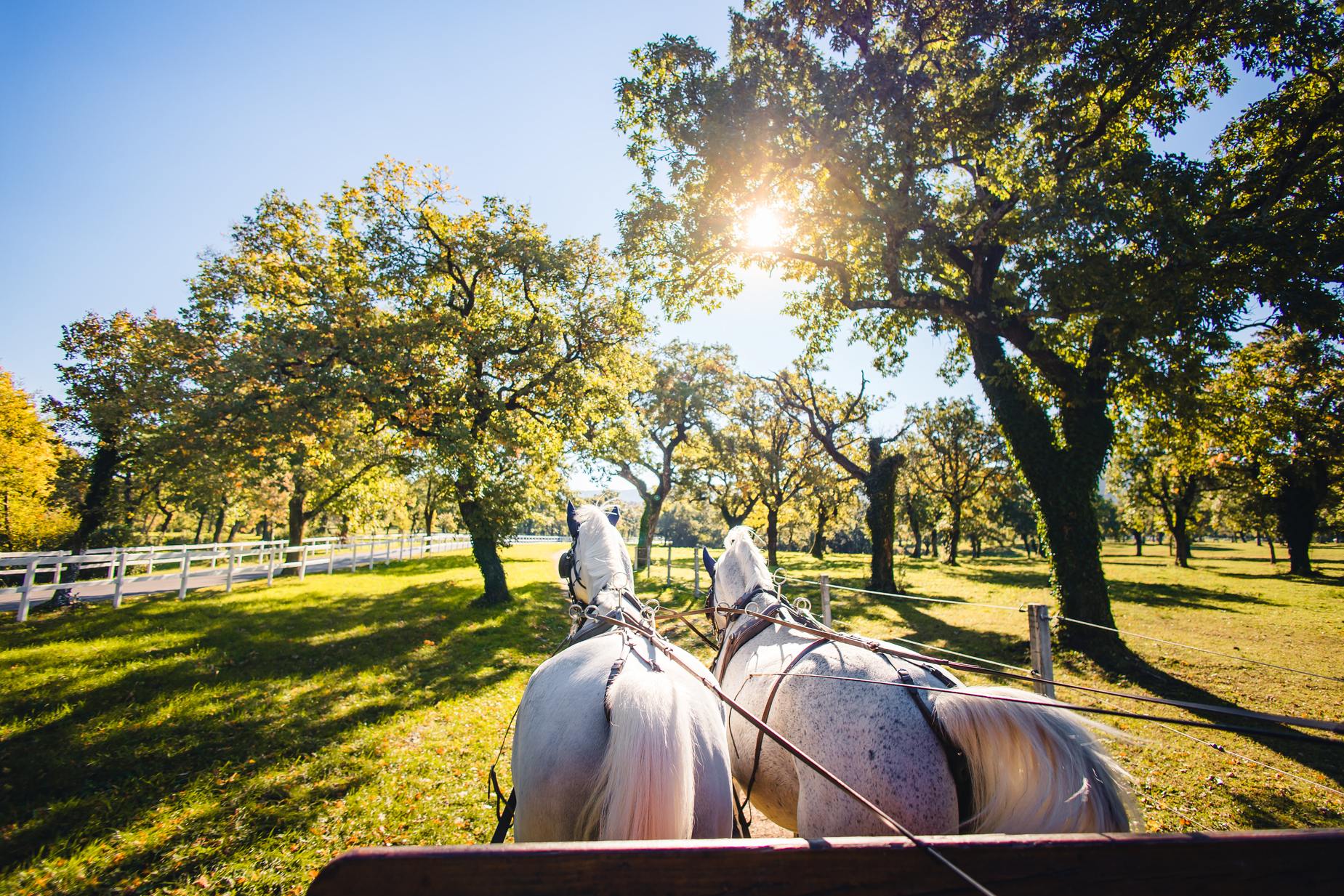


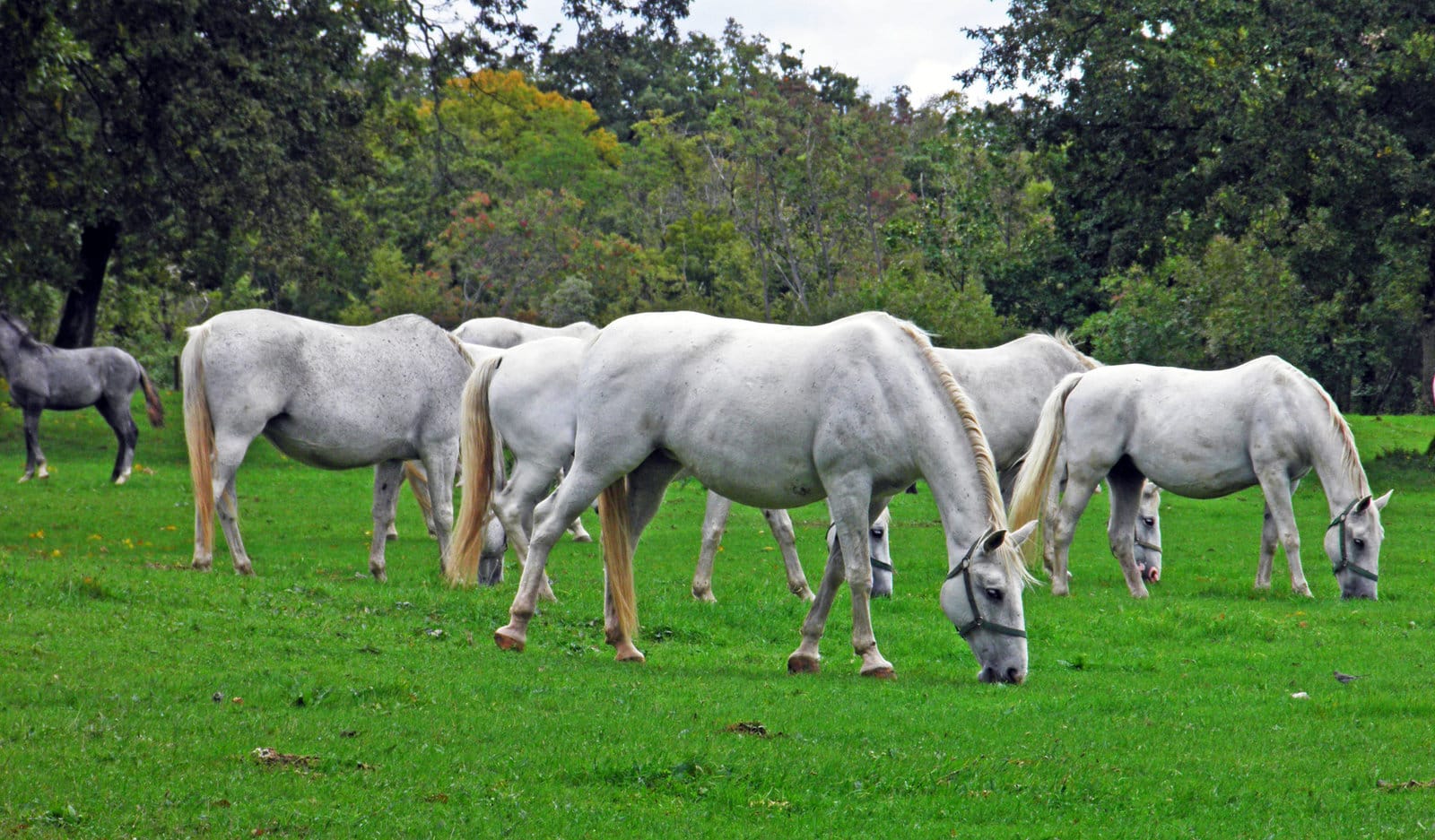

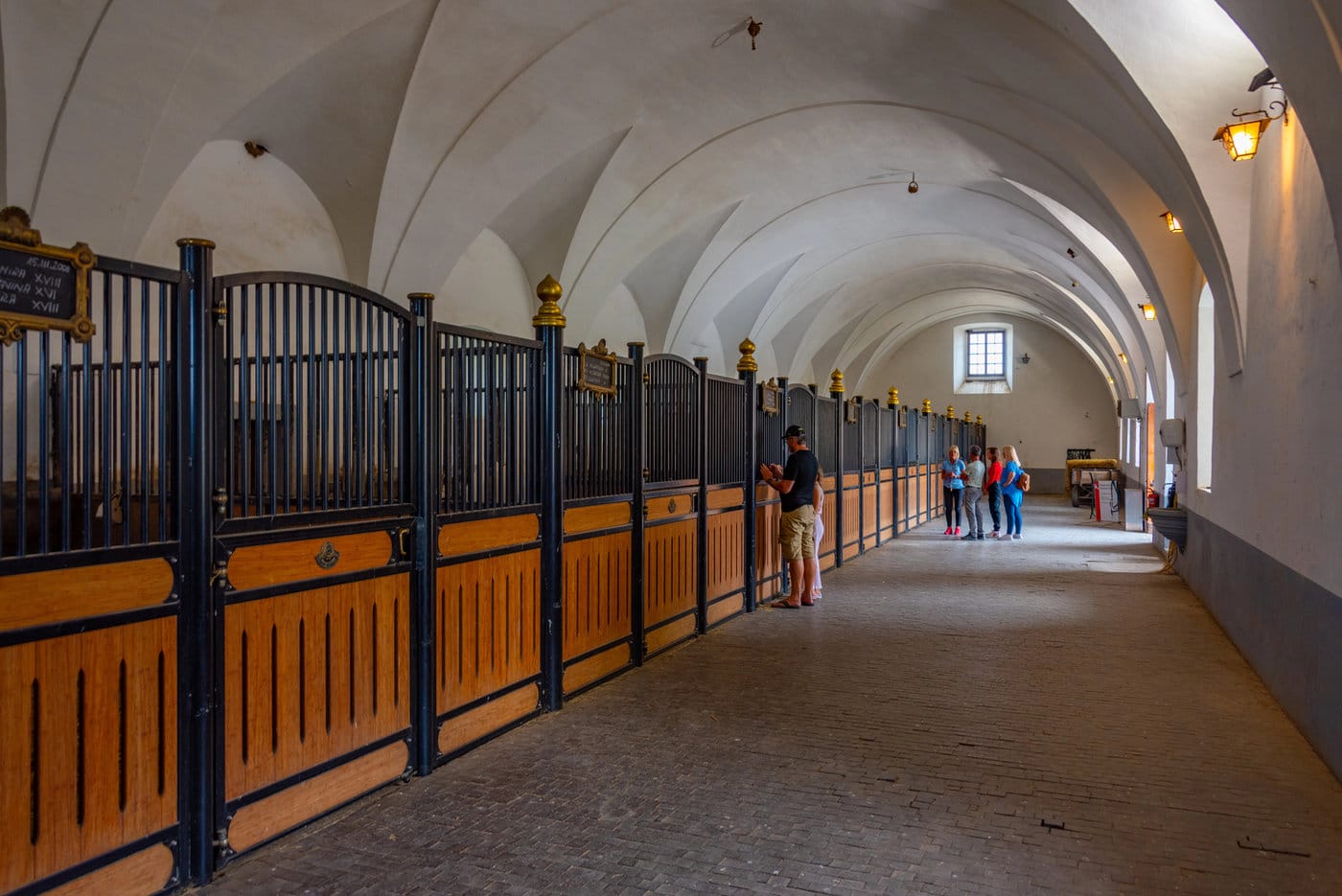
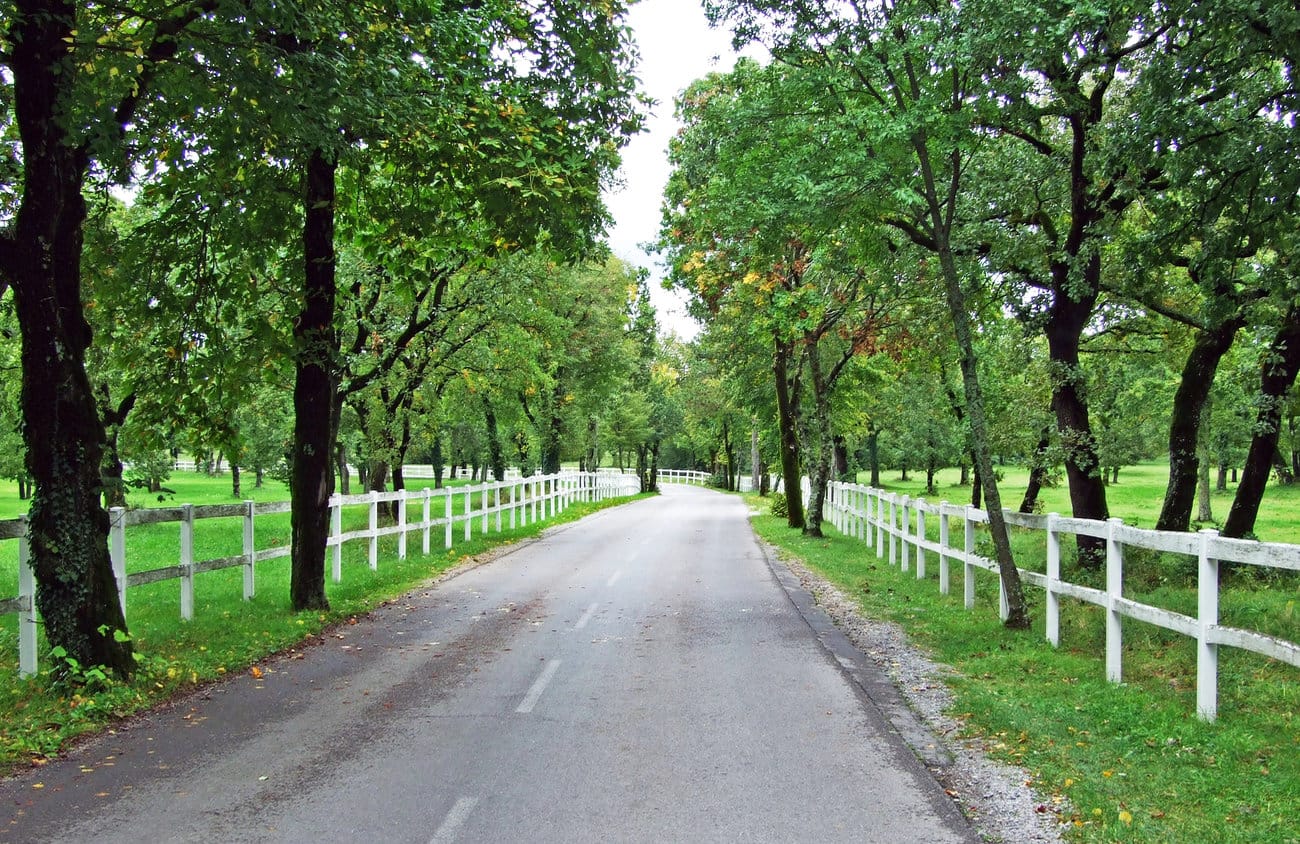
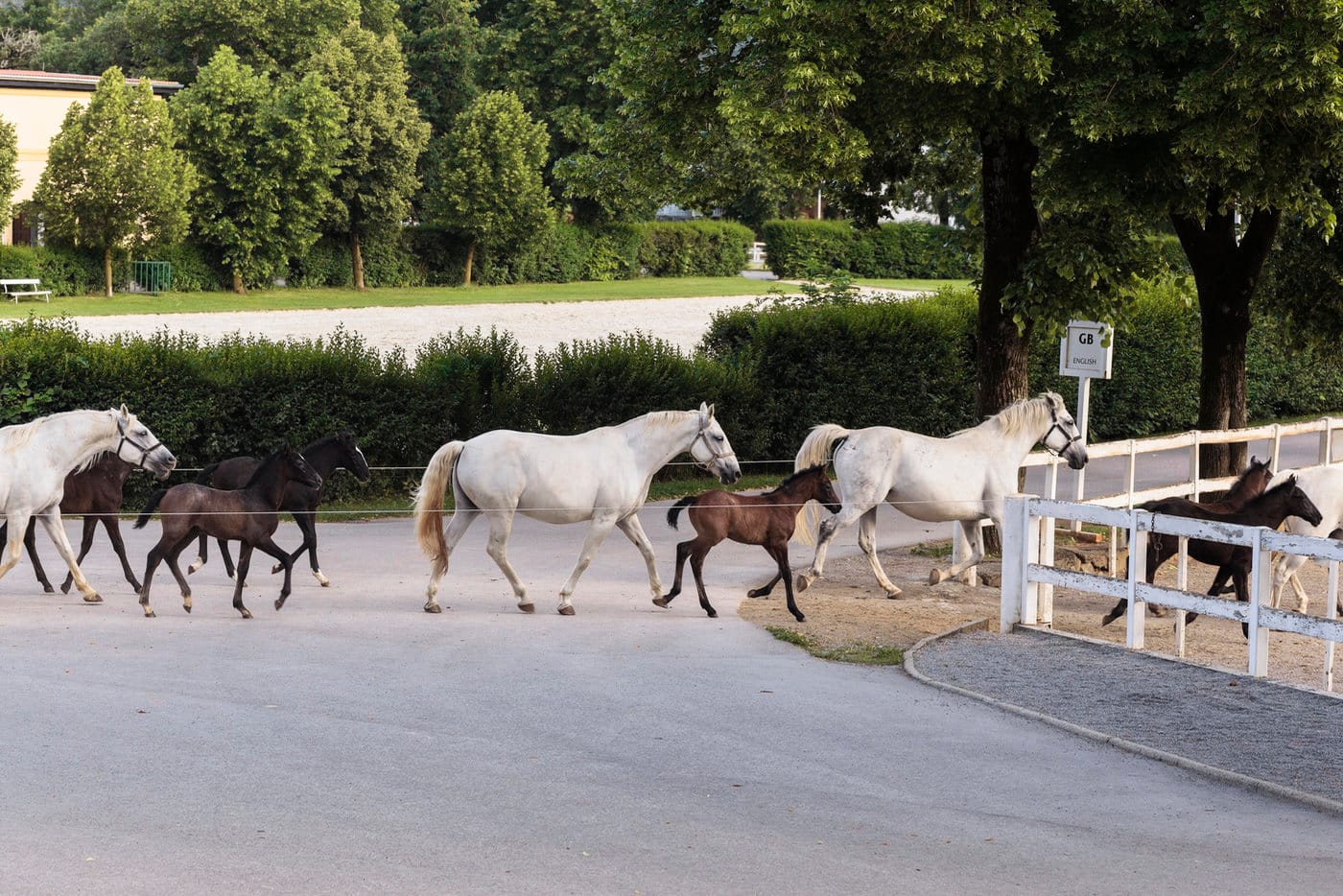
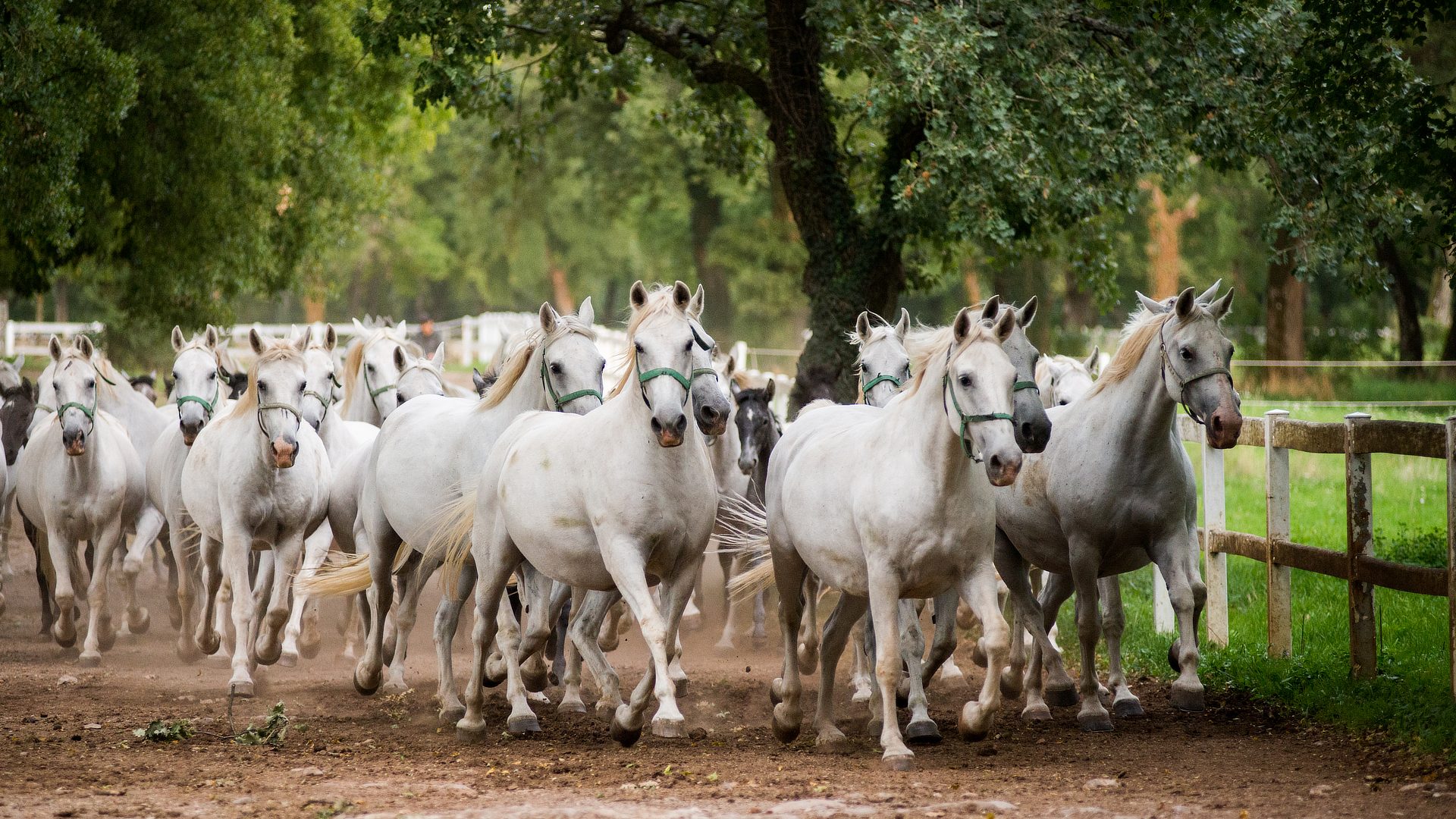
Around 300 Lipizzans live on this 300-hectare Karst estate, and the best of it happens outdoors: mares and their dark foals are turned out onto open pasture in the morning, and the herd walks back in later in the day. A guided tour covers the historic stables and courtyards where Lipizzans have been bred since 1580, and when scheduled, a riding school performance or official training session can be combined with the visit. Lipica also pairs easily with the Škocjan Caves for a full day on the Karst.
Plan Your Visit
<
>
Opening Hours
Closed now
Opens in 13h 57m
Today: 09:00–17:00
April–October — standard hours
The estate is open for self-guided visits throughout the stated opening hours; guided-tour times are departures, not the only times you can visit. Check the operator’s Daily schedule for your date; individual tours may be canceled in extreme heat. Last entry is generally 30 minutes before closing. To join a guided tour, arrive by its final departure.
Mon 09:00
April–October — standard hours (Apr 1–Oct 31)09:00–17:00
November–March — Tuesday to Friday (Nov 1–Mar 31)10:00–16:00
November–March — weekends (Nov 1–Mar 31)10:00–16:00
November–March — Mondays closed (Nov 1–Mar 31)Closed
High season 2026 (24 Jun–6 Sep 2026)09:00–18:00
Entry Fee
Paid
Adults EUR 16.00>
Ticket prices
Official source
Visit to the Stud Farm
Full-day admission to the Lipica estate. A 60-minute guided tour of the historic core is included when scheduled, and a digital guide is available for independent exploration.
Includes
- Velbanca — the oldest stable
- Lipikum Lipizzan Museum
- Carriage Exhibition
- Avgust Černigoj Gallery
- Jubilee Stable
- Church of St Anthony of Padua
1 April – 24 June 2026
Adults
€20.00
Children 0–5 years
€1.00
Children 6–14 years
€11.00
Students 14–24 years
€14.00
Family ticket
2 adults and up to 3 children.
€59.00
Discounts & supplements
Admission discount with Trail Riding
Applies to separate stud farm admission when purchasing Trail Riding.
-10%
Admission discount with a single dressage lesson
Applies to separate stud farm admission with a beginner lunge lesson or an individual dressage lesson.
-10%
25 June – 6 September 2026
Adults
€23.00
Children 0–5 years
€1.00
Children 6–14 years
€14.00
Students 14–24 years
€17.00
Family ticket
2 adults and up to 3 children.
€69.00
Discounts & supplements
Admission discount with Trail Riding
Applies to separate stud farm admission when purchasing Trail Riding.
-10%
Admission discount with a single dressage lesson
Applies to separate stud farm admission with a beginner lunge lesson or an individual dressage lesson.
-10%
7 September – 1 November 2026
Adults
€20.00
Children 0–5 years
€1.00
Children 6–14 years
€11.00
Students 14–24 years
€14.00
Family ticket
2 adults and up to 3 children.
€59.00
Discounts & supplements
Admission discount with Trail Riding
Applies to separate stud farm admission when purchasing Trail Riding.
-10%
Admission discount with a single dressage lesson
Applies to separate stud farm admission with a beginner lunge lesson or an individual dressage lesson.
-10%
2 November 2026 – 25 March 2027
Adults
€16.00
Children 0–5 years
€1.00
Children 6–14 years
€8.00
Students 14–24 years
€12.00
Family ticket
2 adults and up to 3 children.
€42.00
Discounts & supplements
Admission discount with Trail Riding
Applies to separate stud farm admission when purchasing Trail Riding.
-10%
Admission discount with a single dressage lesson
Applies to separate stud farm admission with a beginner lunge lesson or an individual dressage lesson.
-10%
Optional experiences
Carriage Ride
A guided carriage ride along the centuries-old avenues of the estate.
Small carriage, 15 minutes
Up to 5 people. Price per carriage, not per person.
€37.00
Small carriage, 30 minutes
Up to 5 people. Price per carriage, not per person.
€57.00
Large carriage, 15 minutes
Up to 7 people. Price per carriage, not per person.
€47.00
Large carriage, 30 minutes
Up to 7 people. Price per carriage, not per person.
€67.00
Workshop with Ponies
A rider presents the ponies and children may meet them. Included with stud farm admission when the workshop is on the daily schedule.
Children 0–6 years, accompanied by a parent
Included
Children 6–15 years
Included
A Show by the Lipica Riding School + Visit to the Stud Farm
A classical riding school performance in the covered arena, combined with full admission to the stud farm and a guided or self-guided tour. Check the daily schedule for programme dates. Dogs and photography or filming are not permitted in the arena.
Includes
- A Show by the Lipica Riding School
- Visit to the Stud Farm
1 April – 24 June 2026
Adults
€28.00
Children 0–5 years
€1.00
Children 6–14 years
€15.00
Students 15–24 years
€21.00
Family ticket
2 adults and up to 3 children.
€71.00
25 June – 6 September 2026
Adults
€31.00
Children 0–5 years
€1.00
Children 6–14 years
€17.00
Students 15–24 years
€25.00
Family ticket
2 adults and up to 3 children.
€89.00
7 September – 1 November 2026
Adults
€28.00
Children 0–5 years
€1.00
Children 6–14 years
€15.00
Students 15–24 years
€21.00
Family ticket
2 adults and up to 3 children.
€71.00
2 November 2026 – 25 March 2027
Adults
€24.00
Children 1–5 years
€1.00
Children 6–14 years
€12.00
Students 15–24 years
€18.00
Family ticket
2 adults and up to 3 children.
€59.00
Official Training of the Lipica Riding School + Visit to the Stud Farm
Admission to a working training session of the Lipica Riding School, combined with full stud farm admission and a guided or self-guided tour. Check the daily schedule for programme dates. Dogs and photography or filming are not permitted in the arena.
Includes
- Official Training of the Lipica Riding School
- Visit to the Stud Farm
1 April – 24 June 2026
Adults
€24.00
Children 1–5 years
€1.00
Children 6–14 years
€13.00
Students 15–24 years
€18.00
Family ticket
2 adults and up to 3 children.
€63.00
25 June – 6 September 2026
Adults
€26.00
Children 1–5 years
€1.00
Children 6–14 years
€16.00
Students 15–24 years
€20.00
Family ticket
2 adults and up to 3 children.
€77.00
7 September – 1 November 2026
Adults
€24.00
Children 1–5 years
€1.00
Children 6–14 years
€13.00
Students 15–24 years
€18.00
Family ticket
2 adults and up to 3 children.
€63.00
2 November 2026 – 25 March 2027
Adults
€20.00
Children 1–5 years
€1.00
Children 6–14 years
€10.00
Students 15–24 years
€16.00
Family ticket
2 adults and up to 3 children.
€54.00
Meet the Lipizzan Horse + Visit to the Stud Farm
A presented encounter with the Lipizzan horse, combined with full stud farm admission and a guided or self-guided tour. Check the daily schedule for programme dates. Dogs and photography or filming are not permitted in the arena.
Includes
- Meet the Lipizzan Horse
- Visit to the Stud Farm
1 April – 24 June 2026
Adults
€23.00
Children 0–5 years
€1.00
Children 6–14 years
€12.00
Students 15–24 years
€17.00
Family ticket
2 adults and up to 3 children.
€59.00
25 June – 6 September 2026
Adults
€25.00
Children 0–5 years
€1.00
Children 6–14 years
€15.00
Students 15–24 years
€19.00
Family ticket
2 adults and up to 3 children.
€73.00
7 September – 1 November 2026
Adults
€23.00
Children 0–5 years
€1.00
Children 6–14 years
€12.00
Students 15–24 years
€17.00
Family ticket
2 adults and up to 3 children.
€59.00
2 November 2026 – 25 March 2027
Adults
€19.00
Children 0–5 years
€1.00
Children 6–14 years
€9.00
Students 15–24 years
€17.00
Family ticket
2 adults and up to 3 children.
€49.00
Annual Ticket for the Stud Farm
Unlimited access to the grounds of the Lipica Stud Farm for one year from the date of purchase.
Standard prices
Individual annual ticket
€69.00
Family annual ticket
2 adults and up to 3 children.
€179.00
Full Access Annual Ticket
Unlimited access to the estate during opening hours for one year, from the date of purchase, with full access to the riding school programmes.
Standard prices
Individual annual ticket
€89.00
Family annual ticket
2 adults and up to 3 children.
€215.00
Trail Riding
A 90-minute ride through the Lipica pastures and avenues on a Lipizzan horse, for experienced riders.
Standard prices
Trail riding, 90 minutes
Stud farm admission is separate; riders receive a 10% discount on admission. Pay at the entrance reception.
€90.00
Dressage Lessons
Classical dressage tuition at the Lipica Riding School, from single lunge lessons to multi-day programmes.
Standard prices
Lunge lesson for beginners, 30 minutes
Book in advance through the official form. Stud farm admission is separate, with a 10% discount.
€50.00
Individual dressage lesson, 45 minutes
Book in advance through the official form. Stud farm admission is separate, with a 10% discount.
€70.00
Beginner programme, 10 lessons of 30 minutes
Book at least 7 days ahead. Delivered over 5 working days. Stud farm admission is included.
€400.00
Programme for experienced riders, 10 lessons of 45 minutes
Book at least 7 days ahead. Delivered over 5 working days. Stud farm admission is included.
€600.00
Official prices updated:
1 Aug 2026
- Parking costs EUR 3 per day and is paid separately.
Parking Situation
Large parking
View options
Parking Options
Official source
Situation: Large parking available
Parking info updated: 1 Oct 2026
- Parking in the large estate car park costs 3 EUR per day and isn’t included in admission.
- The car park also takes coaches and campers.
- You’ll need your vehicle registration number to pay, either at the machines in the car park or at the main ticket desk.
Visitor Requirements
Age guidance
View requirements Requirements
Visitor Requirements
Suitable child age groups
- Babies (0–1 years)
- Toddlers (2–3 years)
- Young children (4–7 years)
- Older children (8–12 years)
- Teenagers (13–17 years)

Parking Fee
Paid

Child safety note
Uneven terrain+3 more

Access Notes
Arrive 15 minutes early

Suitable For
Couples+5 more
Stroller accessibility
Partly

Wheelchair access
Partly

Estimated visit time
2–3 h

Family Friendly
Yes
Pet Friendly
Yes
Walking Difficulty
Easy

Best season
Spring, Summer, Autumn
Highlights
Birthplace of the Lipizzan horse
Classical riding school performance
Historic carriage collection
Lipizzan museum on site
Centuries-old tree-lined avenues
Europe’s oldest stud farm still breeding one breed
Historic stables and courtyards
Mares and foals on open pasture
Safety Notes
!Live animals — keep a safe distance
!Stay within visitor areas
!Supervise children
!Uneven historic surfaces
Photo Tip
Shoot outdoors rather than in the stables. Aim for the morning, when the mares and foals are turned out, or the late afternoon when they come back in, and look along the oak avenues to frame horses between the trees. Overcast light suits white coats better than midday sun. Photography is not allowed during the show or the official training.
Before You Go
!Audio guide available
!Best combined with nearby attraction
!Check opening hours
!Guided tours available
!Outdoor areas nearby
!Photography restrictions may apply
!Respect heritage site rules
!Seasonal access
!Ticket required
!Uneven historic surfaces
Access & Parking
Detailed access info in Plan Your Visit ↑
Lipica sits on the Karst plateau outside Sežana, close to the Italian border, and arriving by car is straightforward: the estate has its own large car park. Parking is paid separately from admission. From the car park it’s a short, level walk on a surfaced path to the entrance reception, where tickets are sold. If you plan to join a scheduled guided tour, give yourself time to park, pay and buy tickets before it starts.
Interesting Facts
1
The name comes from a single linden tree
Lipica is named after the linden tree, the species that shades Karst villages across this region. A popular mid-fourteenth-century tavern near Lokev, called Pr’ lipci, meaning at the small linden tree, stood on the site of the present estate. The name passed from the tavern to the settlement, then to the summer residence of the Bishops of Trieste, and finally to the horse breed.
2
A contract signed on 19 May 1580
Archduke Charles II of Inner Austria, third son of Emperor Ferdinand I, acquired the Lipica estate from the Bishop of Trieste on 19 May 1580, and Franc Jurko became the first manager. The following year the new farm bought twenty-four broodmares and six stallions in Spain for 3,693 guilders. Those animals founded the bloodlines that still define the breed, and they make Lipica the oldest European stud farm continuously breeding a single horse breed.
3
Velbanca took two years to build
Velbanca is the oldest stable at Lipica and the centrepiece of every guided tour. An inscription beside the entrance records that construction began in 1703 and finished in 1705, under Emperor Leopold I, and the name comes from the vaulted ceilings inside. It still houses the farm’s finest stallions, and it shows how much the Habsburg court invested in horses bred for the imperial stables in Vienna.
4
Six founding stallion lines
Every classical Lipizzan stallion alive today descends from six founding lines. Four date from the eighteenth century: Pluto from Denmark in 1765, Conversano from Italy in 1767, Favory from Austria in 1779 and Neapolitano from Italy in 1790. The Arabian stallion Siglavy, foaled in 1810, founded the fifth, and Maestoso arrived from Hungary in 1837 to found the sixth. The Slovenian population also carries the Tulipan line, and guides explain all of this inside Velbanca.
5
Foals are born dark and turn white slowly
Lipizzans are known for their white coats, but they are born dark, usually black, brown or deep grey. A mutated greying gene, preserved through selective breeding, lightens the coat as the horse matures, and the change normally takes between six and ten years. A small minority never lighten at all. Colour is not a measure of breed purity. Out on the pastures you’ll see white adults and dark youngsters at the same time.
6
The studbooks rebuilt after Napoleon
Lipica’s earliest studbook was lost during the French occupation, when a herd of 289 horses was withdrawn to Hungary between 1809 and 1815. The records were rebuilt afterwards and kept in duplicate, one copy at the farm and the other in the Hofburg in Vienna. The oldest surviving entries describe horses born in 1810, with notes reaching back to the mare Golomba, foaled in 1738. Lipica holds the original Lipizzan studbook today.
7
An American general helped rescue the herd in 1945
In October 1943 German forces moved 179 Lipica horses by truck to Sežana station and on by train to Hostau in the Sudetenland, with twenty-two people from Lipica travelling with them. As the war ended the herd was at risk of being lost entirely, and on 28 April 1945 General George Patton authorised the operation that moved the horses into Allied-controlled territory. Only eleven of the confiscated horses eventually came back, and rebuilding the herd took decades.
8
An eight-kilometre dry-stone wall marks the estate
Long before 1817 the estate was enclosed by a dry-stone wall roughly eight kilometres long, built in the traditional Karst technique that is itself an inscribed heritage craft. Maps from 1817 show that the layout of pastures, avenues and buildings has barely changed since. The wall kept horses in and predators out, and it marked the edge of a landscape shaped entirely around one activity.
9
A Bauhaus-trained artist spent his last years here
Avgust Černigoj, born in Trieste on 24 August 1898, was a Constructivist and the only Slovenian artist to have studied at the Bauhaus in Weimar. He came to Lipica in 1980, the year of the farm’s four-hundredth anniversary, and spent his final creative years on the estate among the white horses. The gallery devoted to his work is included in the standard admission ticket and is easy to miss after the tour.
10
UNESCO recognition for a living tradition
In December 2022 UNESCO inscribed Lipizzan horse breeding traditions on the Representative List of the Intangible Cultural Heritage of Humanity. The multinational nomination covered eight countries, with Lipica named as a participating institution. The listing protects knowledge and skills rather than buildings, so what is recognised is the daily work of breeders, riders, drivers and farriers. That makes it a different kind of recognition from World Heritage status: Lipica is not a UNESCO World Heritage Site, a distinction travel writing often confuses.
Visitor Wisdom
Traveler Insights
Combined public visitor ratings from Google and Tripadvisor. Last verified August 2026.
- The pastures are the main draw. Seeing hundreds of Lipizzans out in the open rather than in stalls is what most visitors talk about afterwards, and the mares with their dark foals get the most attention.
- The few minutes when the herd leaves for pasture or comes back in are the best of the day.
- The riding school performance wins over people who arrived with no particular interest in horses, and the avenues and old stables make the estate an easy place to spend time.
- Guided tours start in the morning and the last regular one leaves in the afternoon, so arriving late means seeing much less of the programme.
- Check the Daily schedule for the opening hours and activities on your date; the shop and some interior sections may close before the estate.
- Only part of the stable complex is open to visitors, which surprises people who expect to walk through the working farm.
- From November to March the estate is open Tuesday–Sunday, with guided tours only at weekends.
- Parking is charged separately from admission, catering can be limited or closed outside the main season, and guided tours run in Slovenian and English, with Italian, German or French only when a suitable guide is available.
- Families do well here: there’s space to walk, foals to look at and the pony workshop when it runs on the regular schedule. So does anyone interested in horses, dressage or Habsburg history, and photographers willing to work with the light on the pastures.
- Unhurried visitors get the most from a ticket that covers the whole day.
- It’s much less suited to travellers with only an hour, or to anyone hoping to wander freely through the working stables.
- If you use a wheelchair or mobility scooter, bring your own: visitors report that none are lent on site.
- The most common mistake is arriving after the day’s last useful programme slot and paying full price for a quiet afternoon.
- Check the Daily schedule for performance and official training days before planning around either, and leave enough time before closing for the museum and the shop.
- From November to March the estate is closed on Mondays and guided tours run only on Saturdays and Sundays, so don’t count on a tour on a winter weekday.
- Bring your vehicle registration number too, because you need it to pay for parking.
- The mares’ turnout and return are the best moments of the day and cost nothing extra; check the Daily schedule and estate opening hours for your date before you plan around them.
- For a quieter walk, follow one of the avenues away from the historic core.
- The Carriage Exhibition and the Černigoj Gallery are included in your ticket and are regularly missed by visitors who leave straight after the tour, and ticket holders also get a discount at the estate restaurant.
- Vilenica Cave is close enough to add on the same trip if you have the afternoon.
- The open space is the main asset: children can walk, look at horses and use up energy without being penned in.
- Foals are the highlight for younger children, and the pony workshop is included in admission when it runs on the regular schedule.
- Plan around distance for small legs, limited shade in high summer, and the constant supervision that live animals need.
- Do not feed the horses.
- The strongest material is outside: white horses against dark oak avenues, herds on open Karst pasture, and the movement of mares and foals in the morning and late afternoon.
- Overcast days work in your favour, because they hold detail in white coats that harsh midday sun blows out.
- Interiors are darker and more restricted than most photographers expect, and photography and filming are not permitted during the performance or the official training.
- Visitor impressions split mainly on preparation. Those who plan around the schedule describe a quiet estate, a working farm and horses seen at close range, and they talk about the day warmly.
- Those who turn up unprepared remember the ticket price and an afternoon with little scheduled.
- The horses themselves are almost never criticised.
Quick Facts
Estimated visit time
2–3 h
Best season
Spring, Summer, Autumn
Walking difficulty
Easy
Family friendly
Yes
Pet friendly
Yes

Entry Fee
Paid

Access type
Short paved walk
Help Improve This Listing
Found outdated information, a mistake, or a useful local tip? Let us know.
Suggest an Update →Help Improve This Listing
Your feedback helps us keep Explore In Slovenia accurate and useful for future visitors.
×Visitor Reviews
Write a review
No visitor reviews yet.
Be the first to share your experience.
No reviews yet!
Sorry! Please login first to submit reviews.