Ratings here are consistently high, but almost never separate from Anthony's Main Road. The recurring verdict is that the smelting plant finishes a story the mine only starts, and that doing them in the wrong order weakens both. It is a compact, modern, guide-led exhibition rather than a headline attraction, and it works best for people who arrive expecting the second half of one narrative.
Local name: Topilnica Hg
6
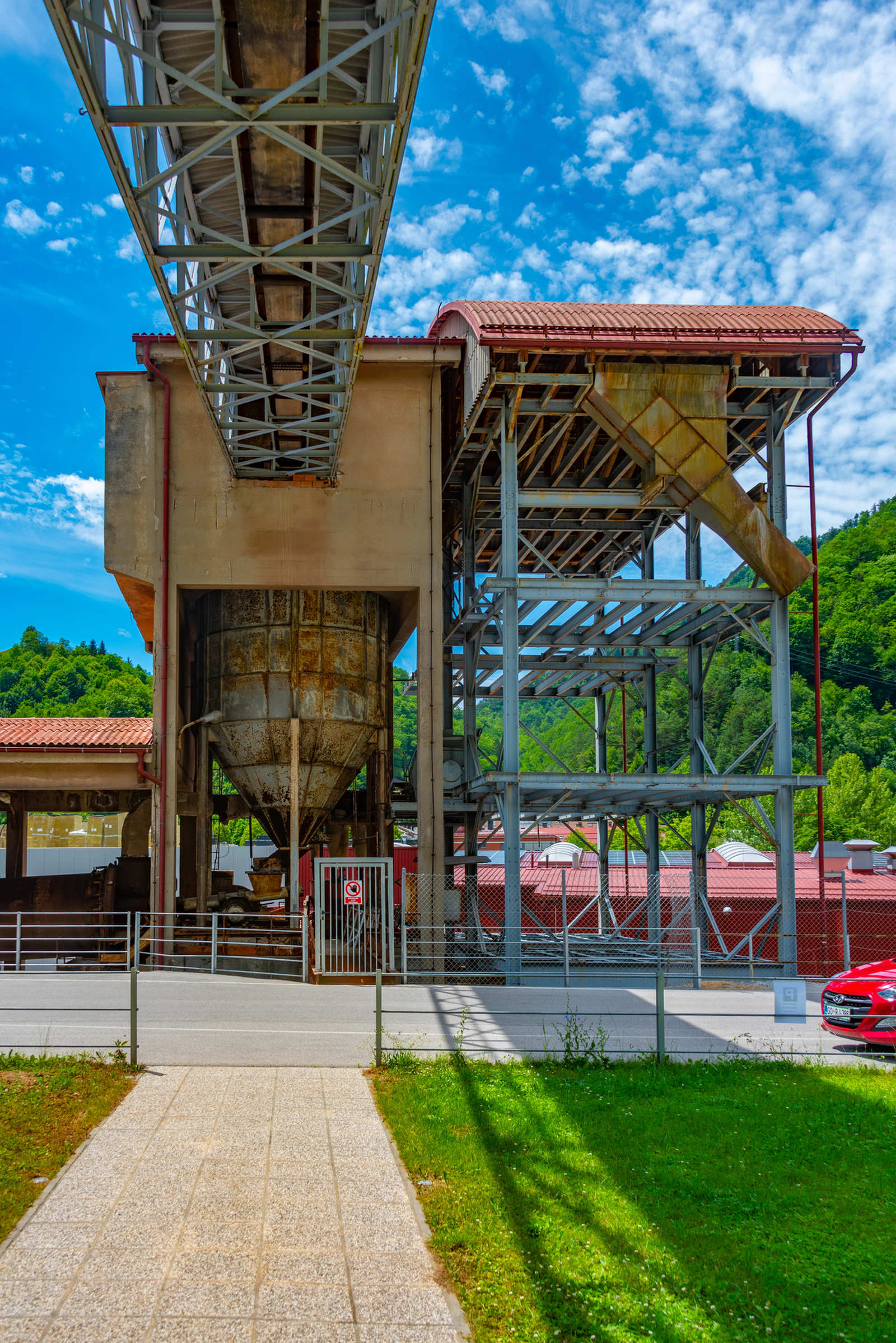
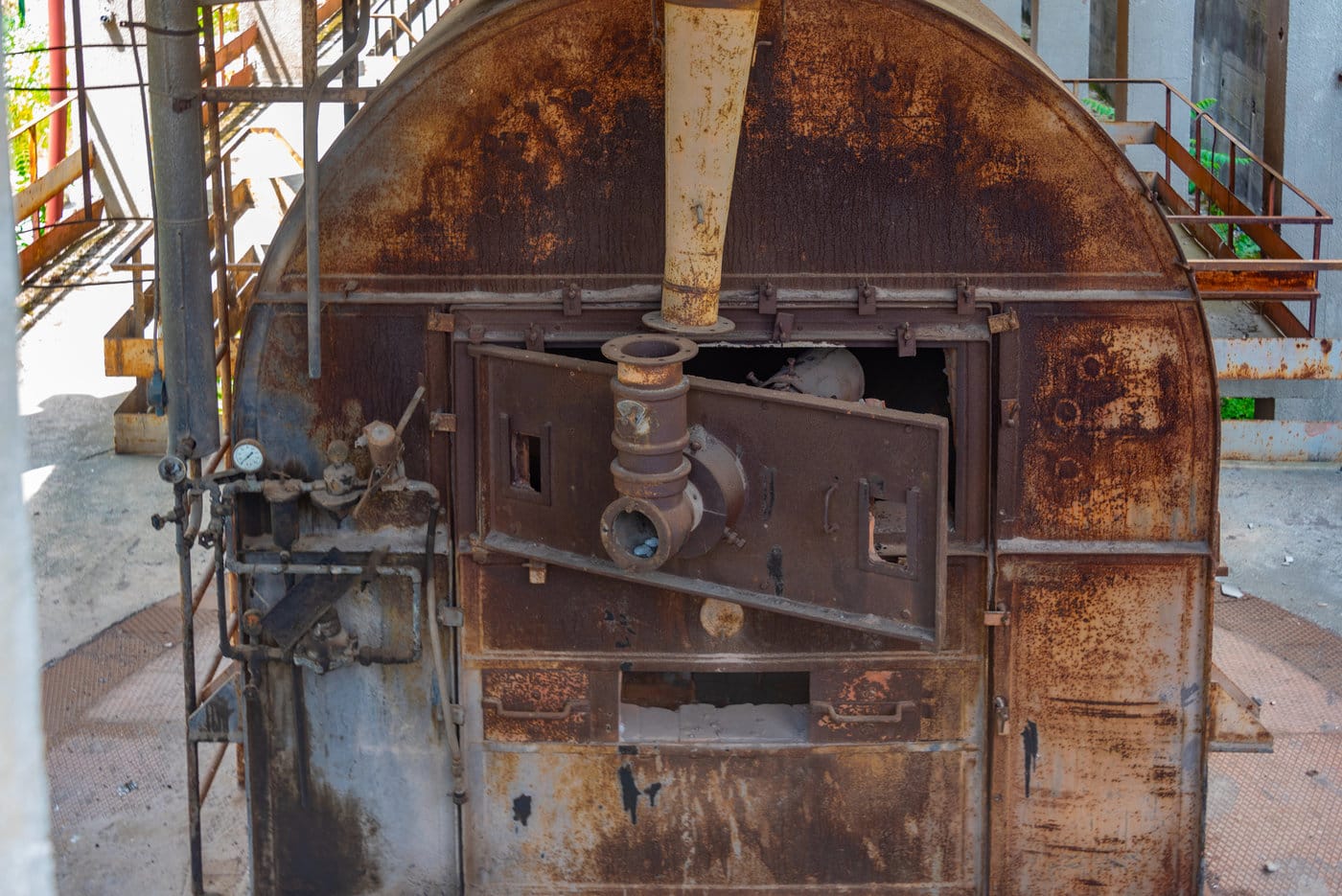
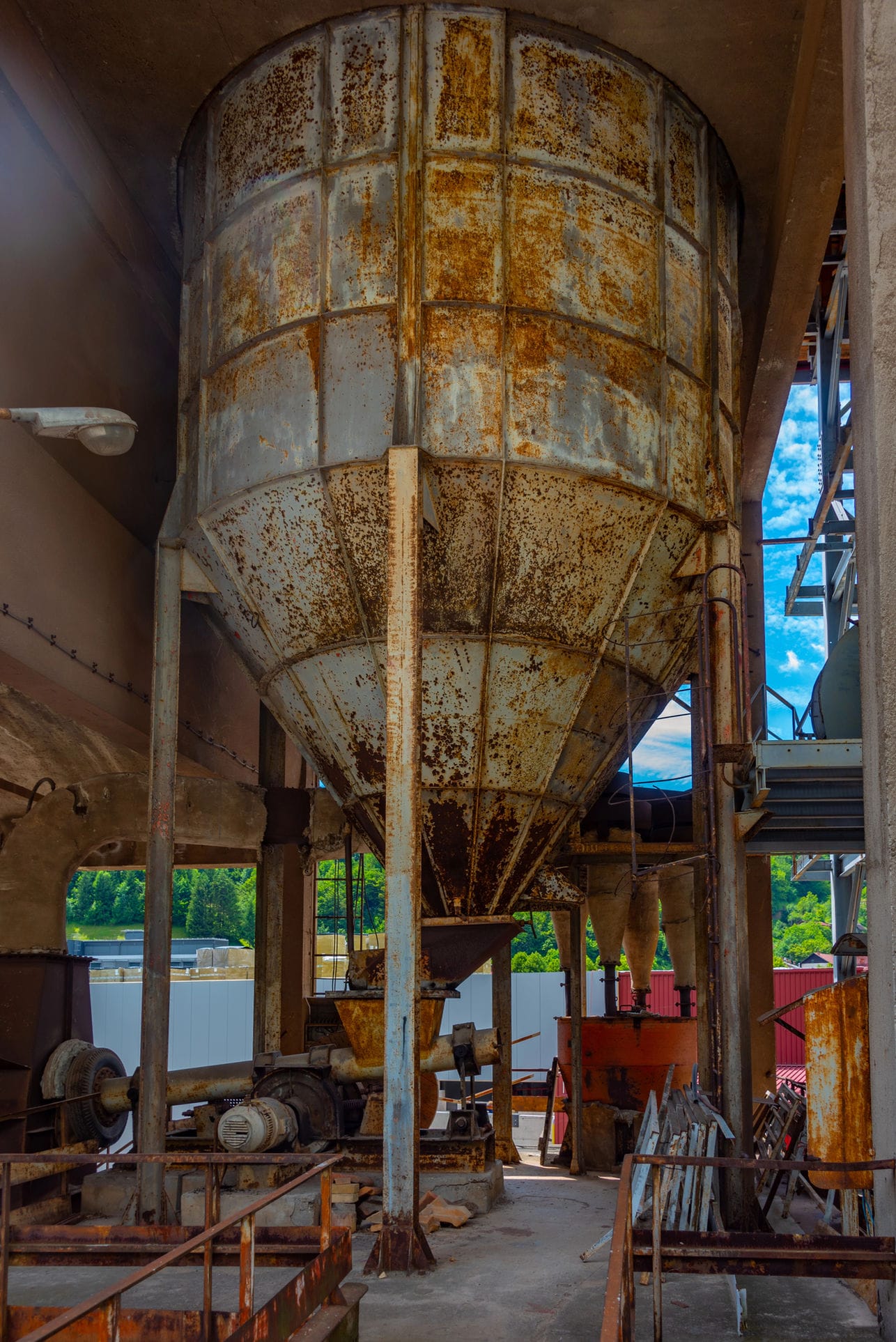
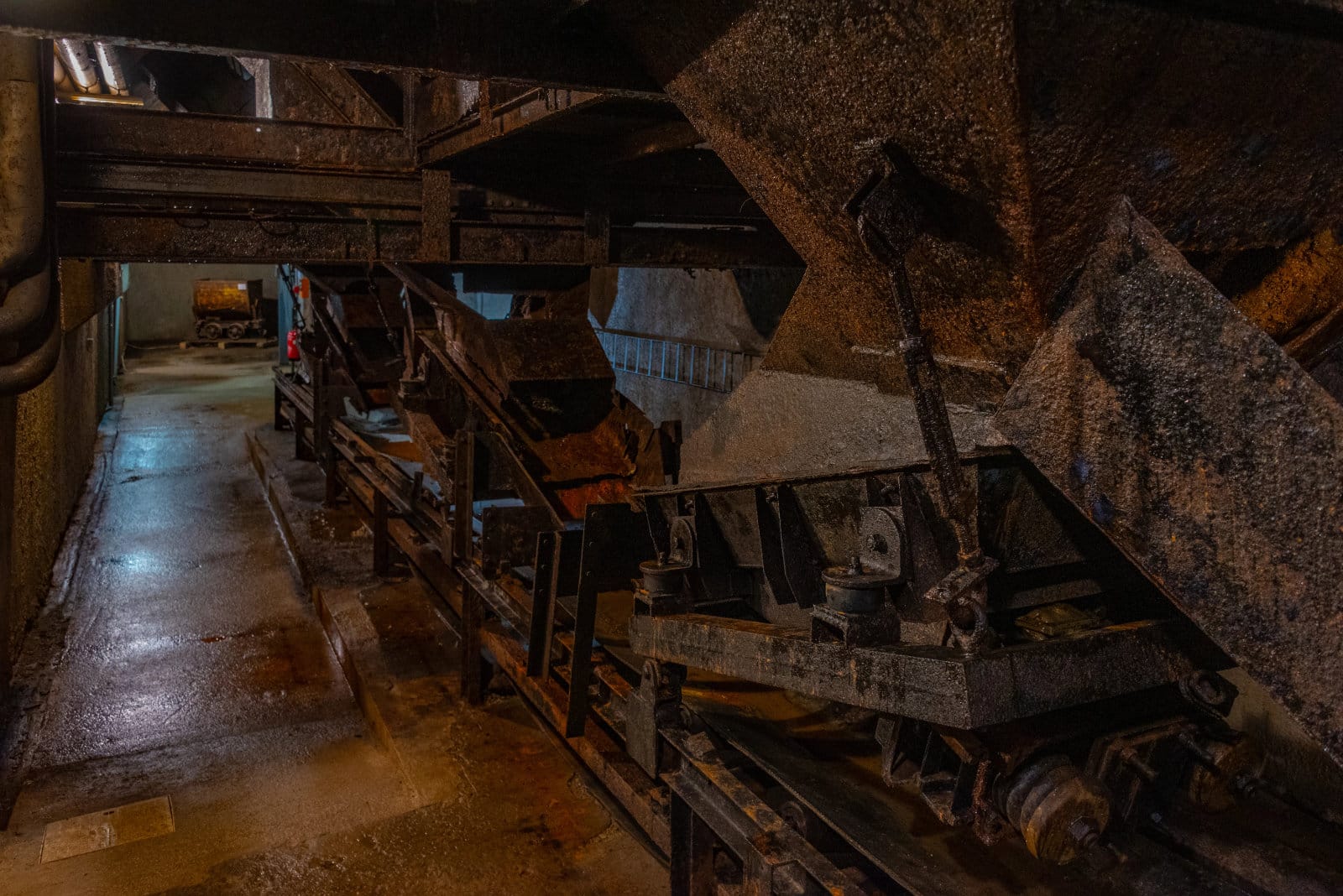
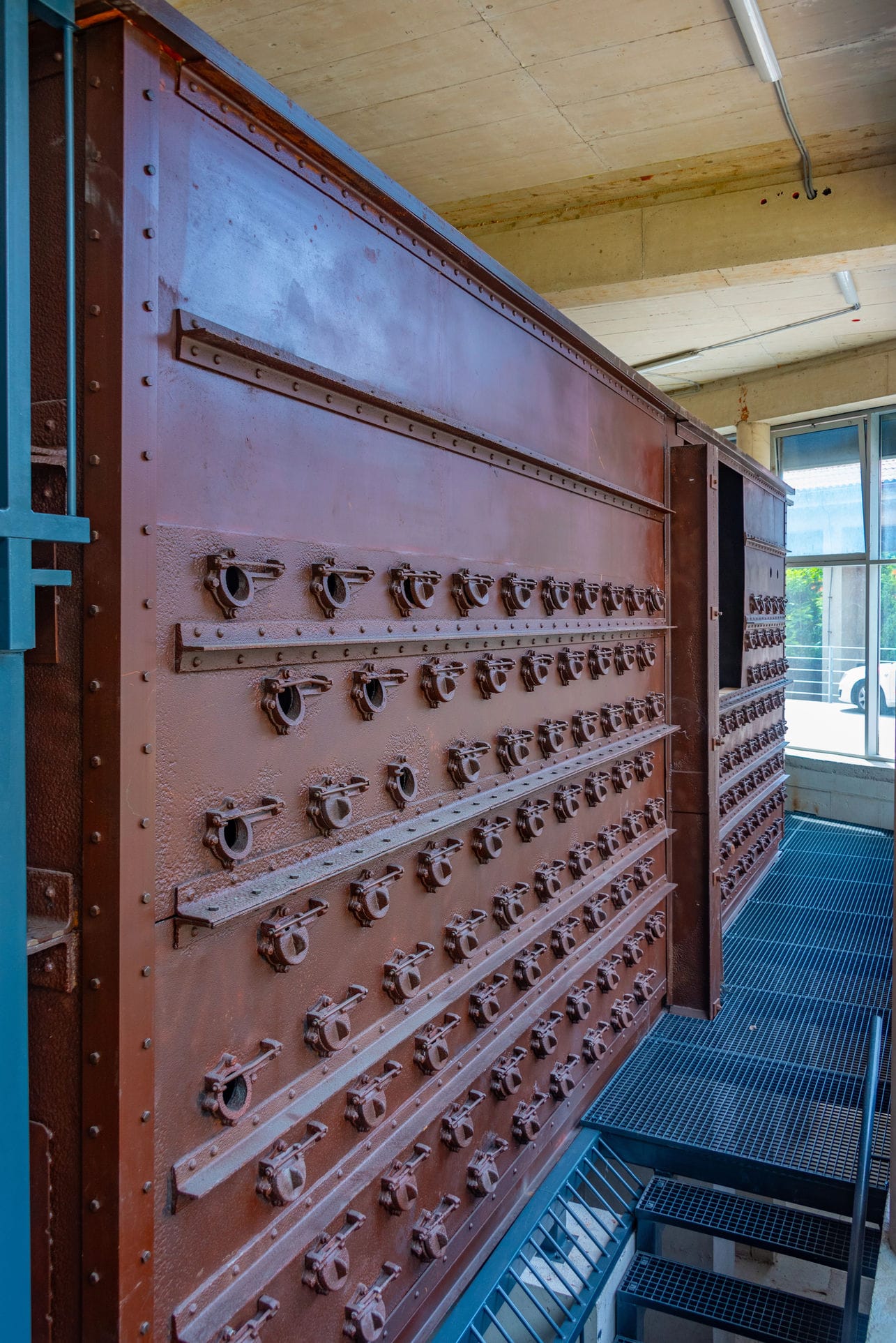
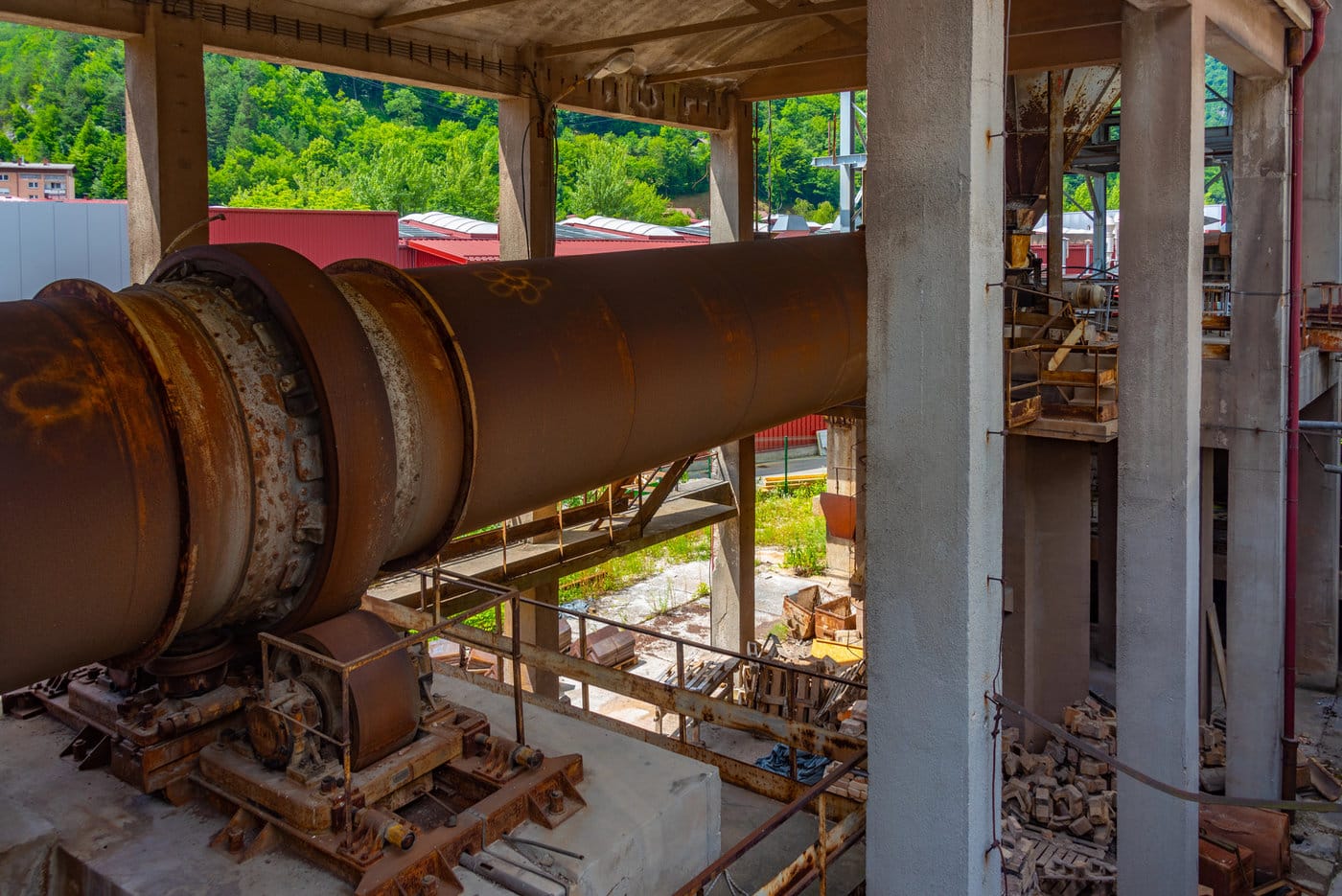
Across the valley from Idrija's old town, the restored smelting works is where the mine's red ore was turned into liquid mercury. The guided route runs indoors along the surviving production line, from the crushing plant and conveyor to the collection silo and the world's largest rotary furnace for mercury extraction, with hands-on experiments showing how the metal behaves. It makes most sense after seeing where the ore came from at Anthony's Main Road, and the two share a combined ticket. Access is barrier-free throughout.
Plan Your Visit
<
>
Opening Hours
Closed now
Opens in 11h 28m
Today: 10:00–16:00
September–October — every day
Opening times change every month. From November to March, weekday visits are possible only by prior arrangement with CUDHg Idrija; weekends and public holidays keep published hours. Closed on 1 January, 1 November and 25 December. Check the official schedule before travelling.
Mon 10:00
September–October — every day10:00–16:00
November–December — weekends and holidays10:00–16:00
November–December — weekdays by prior arrangementBy prior arrangement
January–February — weekends and holidays12:00–16:00
January–February — weekdays by prior arrangementBy prior arrangement
March — weekends and holidays10:00–16:00
March — weekdays by prior arrangementBy prior arrangement
April — weekdays12:00–16:00
April — weekends and holidays10:00–16:00
May — weekdays10:00–16:00
May — weekends and holidays10:00–18:00
June–August — every day10:00–18:00
New Year’s Day (Jan 1)Closed
Day of Remembrance for the Dead (Nov 1)Closed
Christmas Day (Dec 25)Closed
Entry Fee
Paid
Adults EUR 10.00
Ticket prices
Official source
Hg Smelting Plant
Admission to the Hg Smelting Plant exhibition and its guided visit, valid year-round at the same price.
Standard admission
Adults
€10.00
Pensioners
€8.00
Students
€8.00
Children from 6–15 yrs
€5.00
Children up to 5 yrs
€2.00
Family ticket — 2 adults + 2 children from 6–15 yrs
Composition fixed at 2 adults + 2 children aged 6–15.
€24.00
Additional child (family ticket)
Available only with the family ticket.
€2.00
Optional experiences
VR experience of the rotary furnace
A short virtual reality experience that places visitors inside the working world of Idrija’s smelters, based on the three-dimensional digital capture of the rotary furnace. Sold separately at the Hg Smelting Plant.
Adults
€5.00
Pensioners
€5.00
Students
€5.00
Children from 6–15 yrs
€3.00
Family ticket
€12.00
Idrija Mercury Mine (Anthony’s Main Road + Hg Smelting Plant)
One ticket covering both halves of the mercury story — the underground tour of Anthony’s Main Road and the exhibition at the Hg Smelting Plant — priced by season.
Includes
- Anthony’s Main Road
- Hg Smelting Plant
November–March
Adults
€17.00
Pensioners
€14.00
Students
€14.00
Children 6–15 yrs
€7.00
Children 3–5 yrs
€3.00
Family ticket — 2 adults + 2 children 6–15 yrs
Composition fixed at 2 adults + 2 children aged 6–15.
€42.00
Additional child (family ticket)
Available only with the family ticket.
€3.00
April–June and September–October
Adults
€20.00
Pensioners
€16.00
Students
€16.00
Children 6–15 yrs
€8.00
Children 3–5 yrs
€3.00
Family ticket — 2 adults + 2 children 6–15 yrs
Composition fixed at 2 adults + 2 children aged 6–15.
€46.00
Additional child (family ticket)
Available only with the family ticket.
€3.00
July–August
Adults
€22.00
Pensioners
€18.00
Students
€18.00
Children 6–15 yrs
€9.00
Children 3–5 yrs
€3.00
Family ticket — 2 adults + 2 children 6–15 yrs
Composition fixed at 2 adults + 2 children aged 6–15.
€50.00
Additional child (family ticket)
Applies only within the family ticket.
€3.00
Official prices updated:
16 Aug 2026
- Admission covers the guided visit and the permanent exhibition.
- If you plan to see the mine as well, the combined Idrija Mercury Mine ticket with Anthony's Main Road costs less than two separate tickets, and its price varies by season.
- The virtual reality experience of the rotary furnace is an optional paid extra.
Parking Situation
Street parking nearby
View options
Parking Options
Official source
Situation: Street parking nearby
Parking info updated: 16 Aug 2026
- Park on the street along Arkova ulica, a very short walk from the entrance.
- Coaches and groups have free parking provided by the operator at Joseph's Shaft, about a kilometre from the plant.
Visitor Requirements
Age guidance
View requirements Requirements
Visitor Requirements
Suitable child age groups
- Babies (0–1 years)
- Toddlers (2–3 years)
- Young children (4–7 years)
- Older children (8–12 years)
- Teenagers (13–17 years)
Important
- There is no minimum age here, and access is barrier-free. The rule differs at Anthony’s Main Road, where children under three are not admitted to the tourist mine; that restriction applies to the mine half of the combined Idrija Mercury Mine ticket, not to this exhibition.

Parking Fee
Free

Child safety note
Supervise children

Access Notes
Off-season visits by prior arrangement

Suitable For
Couples+3 more

Stroller accessibility
Yes

Wheelchair access
Yes

Estimated visit time
1–2 h

Family Friendly
Yes
Pet Friendly
Yes

Walking Difficulty
Easy

Best season
Spring, Summer, Autumn
Highlights
Authentic mining heritage
Industrial heritage story
Mercury mining history
Rare technical heritage
UNESCO World Heritage Site
Historic mining equipment
Interactive science exhibition
Preserved ore-processing plant
UNESCO Global Geopark site
Virtual reality experience
Safety Notes
!Stay within visitor areas
!Supervise children
Photo Tip
The rotary furnace is the shot: get close enough for its curve to fill the frame, then use the conveyor and silo lines, rust and rivets to build the composition. Indoor light is low but even, so keep the frame simple. Outside, use the plant structures or the raufnk chimney on the hillside for a wider view.
Before You Go
!Audio guide available
!Best combined with nearby attraction
!Check opening hours
!Guided tours available
!Indoor visit
!Respect heritage site rules
!Seasonal access
!Ticket required
Access & Parking
Detailed access info in Plan Your Visit ↑
The Hg Smelting Plant is on Arkova ulica on the eastern side of Idrija and is easiest to reach by car, especially if you are combining it with Anthony's Main Road. Roadside parking is available close to the entrance, and visitors arriving from Idrija bus station can also reach the site on foot through town. From the street to the entrance and throughout the exhibition, access is barrier-free.
Interesting Facts
1
A UNESCO site built around a furnace
Idrija's mercury heritage went onto the UNESCO World Heritage List in 2012, in a joint listing shared with Almadén in Spain, the two largest mercury mining centres the world has had. The smelting plant is one of the inscribed components, alongside the mine workings and the town's mining architecture, and the listing recognises the intercontinental trade that carried Idrija's mercury as far as the Americas.
2
The largest rotary furnace of its kind
The machine at the centre of the complex is the world's largest rotary furnace for mercury extraction, and standing beneath it gives you the scale of the operation straight away. Rotary furnaces were the last stage Idrija's smelting technology reached, and the final one stayed in service until mercury production ended in 1995.
3
The last Čermak-Špirek furnace on Earth
The restored Čermak-Špirek furnace here is the only one of its type left anywhere. It was designed by two Idrija metallurgists of Czech descent, mining councillor Josip Čermak and smelting master Vincenc Špirek, and it worked from the late nineteenth century into the first half of the twentieth, putting Idrija at the front of mercury extraction technology worldwide. The restoration was unveiled on 28 September 2023.
4
An entire production line, preserved in place
This is not one machine but a complete surviving chain of mercury production: the end station of the ore cableway, the separation and crushing plant, the conveyor belt, the collection silo and its feeder, the rotary furnace, and the smoke chamber with its flue and chimney. Because it was kept as a working sequence rather than a set of isolated exhibits, you can follow the ore's whole path from delivery to the final droplets of metal.
5
The raufnk on the hillside
Centuries of smelting had badly polluted Idrija's air, so the mine built a shared flue that carried smoke from all the furnaces up to a chimney standing 158 metres above the plant. Locals call it the raufnk, and it is still one of Idrija's most recognisable outlines, though it was lowered considerably after it fell out of use. Moving the vapour uphill measurably improved conditions for the smelter workers below.
6
From riverside furnaces to the last shift
The roasting works were moved piece by piece to the right bank of the Idrijca, and by 1880 the relocation to this site was complete. Ore processing then ran here without a break until 1995, when mercury production at Idrija stopped for good. That continuity is the point: what survives is the final state of a technology that developed in one place over roughly five hundred years, not a reconstruction put together afterwards.
7
Three million flasks of mercury
Over five centuries Idrija's furnaces filled more than three million steel flasks, and the town exported around 107,700 tonnes of mercury in total. That is well over a tenth of all the mercury ever mined anywhere, second only to Almadén in Spain. The exhibition uses those numbers to explain why a small valley town in Slovenia mattered so much to European industry for so long.
8
A ruin rescued and reopened
When production stopped, the smelting plant was abandoned and its protected features were at real risk of being lost. A restoration project running from the start of 2015 to the end of January 2017 rebuilt the klasirnica, the ore separation building, into the visitor and exhibition centre you walk into today, funded largely by the EEA Financial Mechanism Programme. There was a ceremonial opening on 20 January 2017, and the plant opened to visitors on 1 February.
9
Mercury that changed the Americas
Mercury from Idrija and Almadén was essential to the amalgamation process used to pull silver and gold out of ore in Spanish America, which gave both mines strategic international weight from the sixteenth century onwards. The connection ran deep enough that two North American mercury districts were later named New Idria and New Almaden. The exhibition follows that trade alongside mercury's uses in science, medicine, industry and everyday objects.
10
A furnace you can walk into in virtual reality
The rotary furnace was digitally captured and modelled in three dimensions between 2020 and 2021, and the result is now sold as a short optional add-on at the plant. It puts you inside the working world of Idrija's smelters, watching the furnace run and filling a virtual flask of mercury.
Visitor Wisdom
Traveler Insights
Combined public visitor ratings from Google and Tripadvisor. Last verified August 2026.
The guides come up constantly: warm, funny, genuinely knowledgeable, and often giving what amounts to a private tour because the groups are small. The interactive experiments and working mercury devices land well with anyone who enjoyed chemistry at school. The preserved industrial hardware gets a strong reaction on its own terms, and plenty of visitors mention how much the exhibition explains about mercury's global reach rather than only its local history.
The plant is across town from the mine, about five minutes by car rather than a short stroll. Outside the main season, weekday visits run by prior arrangement only, which catches people out. The visit takes about an hour and a quarter, longer than most expect from a single exhibition. And the content is genuinely technical: rewarding if you engage with it, thin if you are only browsing.
Best for anyone interested in chemistry, engineering or industrial history, for families with school-age children, and for visitors already committed to the combined mine ticket. Barrier-free access and no age limits also make it one of Idrija's easiest sites for wheelchair users, pushchairs and older visitors. Less ideal if you have under an hour, or if you came to Idrija mainly for its lace and town history, in which case Gewerkenegg Castle answers that interest far better.
Doing the two sites in reverse is the mistake people regret most, because the exhibition assumes you have already seen where the ore came from. Turning up on an off-season weekday without arranging the visit first is the second. After that: buying two separate tickets when the combined one is cheaper, underestimating the walk if you decide not to drive between the sites, and treating the visit as a fifteen-minute look around.
Visitor numbers are modest, so tours here are often near-private, and reviewers repeatedly say the guides will go well beyond the script if you ask. Look up at the hillside before you go in: the raufnk chimney is the visible end of the flue that carried smoke 158 metres above the plant. The virtual reality add-on is short and inexpensive, and it works best straight after seeing the real rotary furnace. A rainy afternoon is a genuinely good time to come.
The interactive stations carry children through the visit better than a conventional museum would, and the mercury demonstrations tend to be the part they talk about afterwards. There are no age restrictions and access is barrier-free, so pushchairs are not a problem. Parents of younger children should know that the material is explanatory rather than playful, and that the accompanying mine tour does not admit children under three.
Close and mid-range compositions give you the most here: furnace curves, conveyor lines, valves, rust and riveted steel. Indoor light is consistent but low, so a fast lens or a phone that handles low light matters more than reach. The outdoor plant elements and the chimney above the site are the only real wide shots. Guided pacing means you rarely have long in one spot, so decide your frame quickly.
The lasting impression is clarity rather than spectacle. Visitors arrive knowing Idrija mined mercury and leave understanding what that actually involved, how dangerous and ingenious it was, and how far the metal travelled. The guides are what most people name when they describe the visit afterwards. It is not the most dramatic thing to do in Idrija, but it is often the part that ties the whole day together.
Quick Facts
Estimated visit time
1–2 h
Best season
Spring, Summer, Autumn
Walking difficulty
Easy
Family friendly
Yes
Pet friendly
Yes

Entry Fee
Paid

Access type
Direct roadside access
Help Improve This Listing
Found outdated information, a mistake, or a useful local tip? Let us know.
Suggest an Update →Help Improve This Listing
Your feedback helps us keep Explore In Slovenia accurate and useful for future visitors.
×Visitor Reviews
Write a review
No visitor reviews yet.
Be the first to share your experience.
No reviews yet!
Sorry! Please login first to submit reviews.