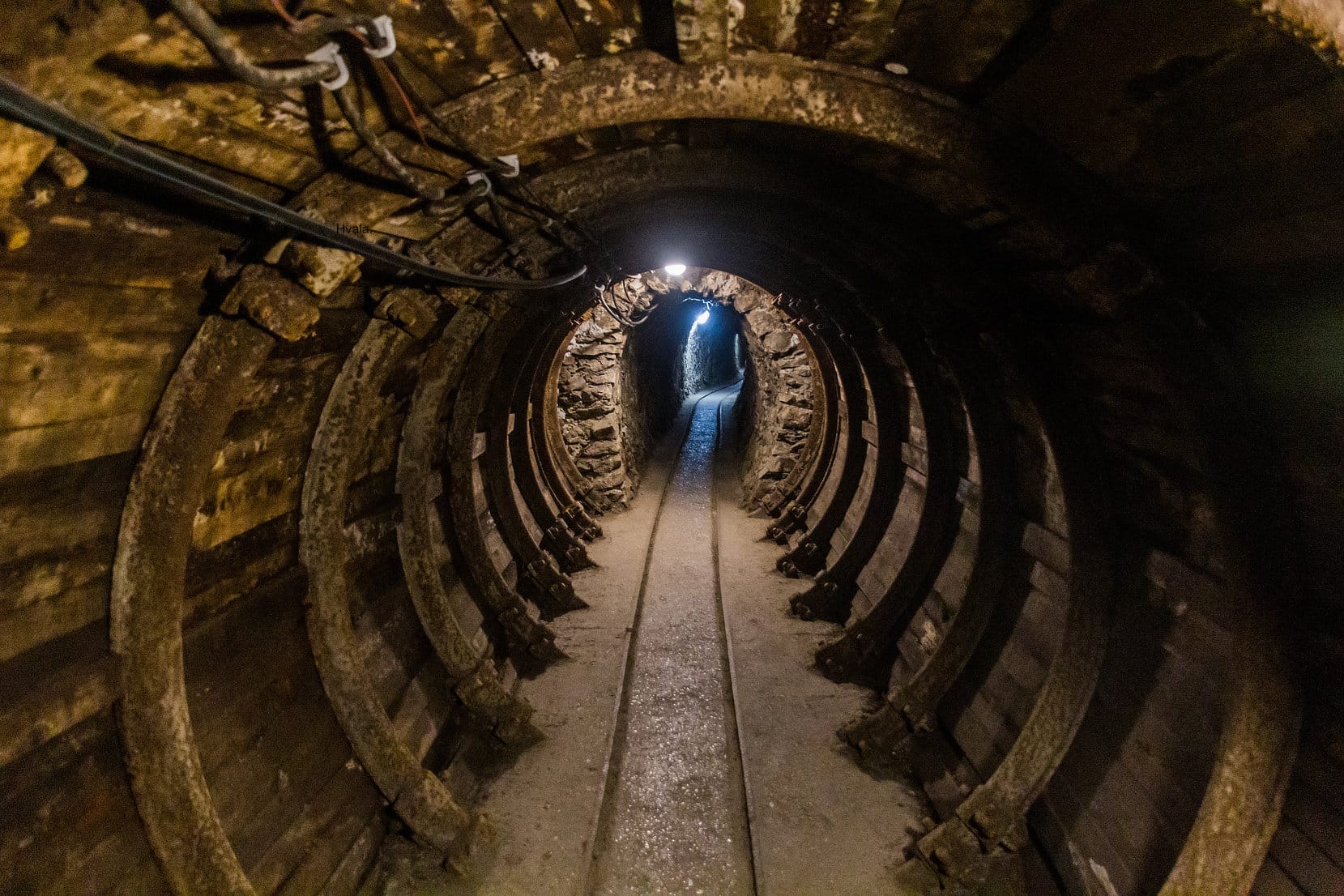
You go underground in overalls and a helmet, following a guide through stone-lined tunnels to an eighteenth-century chapel, with cinnabar ore and droplets of native mercury visible in the rock along the way. It suits anyone curious about mining, geology or industrial history, and it stays around 13°C down there all year.
Local name: Rudnik živega srebra Idrija – Antonijev rov
6


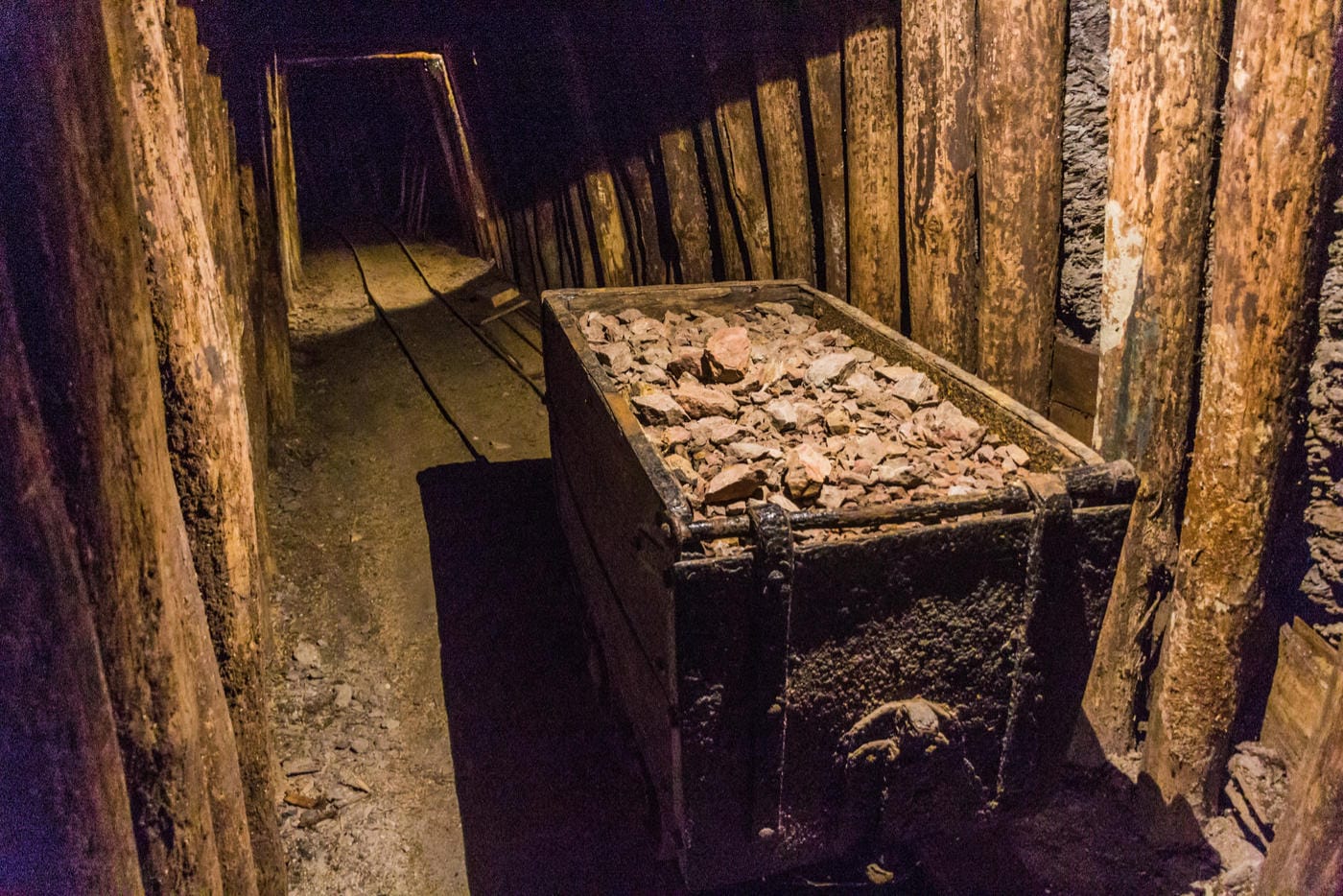
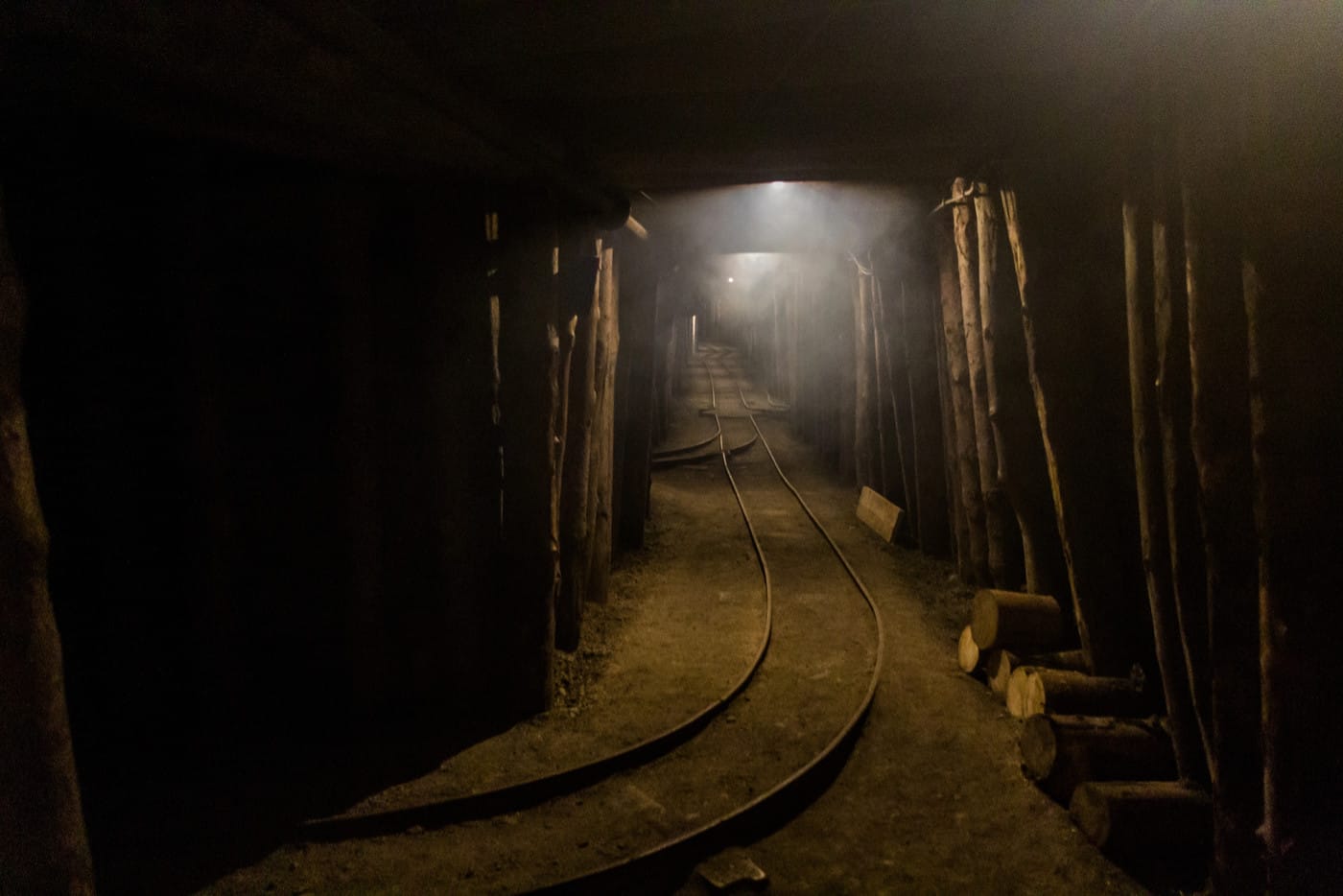

Idrija sits above the world's second-largest mercury mine, part of a UNESCO World Heritage site shared with Almadén in Spain. Guided visits go in through Anthony's Main Road, a tunnel cut in 1500 and billed as the oldest preserved mine entrance in Europe. You're handed overalls and a helmet at the door, then follow a guide past cinnabar ore, droplets of native mercury in the rock and an eighteenth-century miners' chapel. Back above ground, Gewerkenegg Castle continues Idrija's mining story — it served the mine rather than a noble household.
Plan Your Visit
<
>
Opening Hours
Hours available
Today: Check official source
October weekdays
Entry is only at fixed guided-tour departure times rather than continuous opening hours, and the departure list changes by month and between weekdays and weekends. Check the current times for your date before you travel. The mine is closed on 1 January, 1 November and 25 December.
View opening hours
January, February weekdays (Jan 1–Feb 29)Closed
January, Febury weekends (Jan 1–Feb 29)–
March weekdays (Mar 1–Mar 31)–
March weekends (Mar 1–Mar 31)–
April weekdays (Apr 1–Apr 30)–
April weekends (Apr 1–Apr 30)–
May weekdays (May 1–May 31)–
May weekends (May 1–May 31)–
June weekdays (Jun 1–Jun 30)–
June weekends (Jun 1–Jun 30)–
July and August (Jul 1–Aug 31)–
September weekdays (Sep 1–Sep 31)–
September weekends (Sep 1–Sep 30)–
October weekdays (Oct 1–Oct 31)–
October weekends (Oct 1–Oct 31)–
November weekdays (Nov 1–Nov 30)–
November weekends (Nov 1–Nov 30)–
December weekdays (Dec 1–Dec 31)Closed
December weekends (Dec 1–Dec 31)–
New Year's Day (Jan 1)Closed
Day Remembrance of the Dead (Nov 1)Closed
Christmas Day (Dec 25)Closed
Entry Fee
Paid
Adults EUR 15.00
Ticket prices
Official source
Anthony’s Main Road
Admission to the guided underground tour of Anthony’s Main Road, the historic visitor route of the Idrija Mercury Mine.
Standard prices
Adults
€15.00
Student
€12.00
Senior
€12.00
Children aged 6–15
€7.00
Children aged 3–5
€2.00
Family ticket
2 adults + 2 children up to 15 years
€36.00
Additional child
Per additional child
€2.00
Optional experiences
Perkmandeljček Treasure Hunt
Family package
Up to 2 adults + up to 2 children up to 15 years
€44.00
Additional child
Per additional child
€2.00
Video presentation
Video presentation
€2.00
Combined Ticket — Anthony’s Main Road + Hg Smelting Plant
Includes admission to Anthony’s Main Road and the Hg Smelting Plant.
November–March
Adults
€17.00
Students
€14.00
Senior
€14.00
Children aged 6–15
€7.00
Children aged 3–5
€3.00
Family ticket
2 adults + 2 children up to 15 years
€42.00
Additional child
Per additional child
€3.00
April–June and September–October
Adults
€20.00
Student
€16.00
Senior
€16.00
Children aged 6–15
€8.00
Children aged 3–5
€3.00
Family ticket
2 adults + 2 children aged 6–15
€16.00
Additional child
Per additional child
€3.00
July–August
Adults
€22.00
Student
€18.00
Senior
€18.00
Children aged 6–15
€9.00
Children aged 3–5
€3.00
Family ticket
2 adults + 2 children aged 6–15
€50.00
Additional child
Per additional child
€3.00
Official prices updated:
18 Jul 2026
- Tickets are sold for Anthony's Main Road on its own or as a combined ticket that also covers the Hg Smelting Plant.
- Combined prices vary by season, and reduced rates apply for pensioners, students, children and families.
- Children under 3 aren't admitted to the mine.
Parking Situation
Large parking
View options
Parking Options
Situation: Large parking available
Parking info updated: 14 Jul 2026
- Check the current parking signs when you arrive rather than relying on a fixed time limit beside the entrance.
- For a combined visit with the Hg Smelting Plant, plan parking for both locations before you start.
- Coach parking at Joseph's Shaft is free.
Visitor Requirements
Minimum 3 years
View requirements Requirements
Visitor Requirements
Minimum visitor age
3 years
Suitable child age groups
- Young children (4–7 years)
- Older children (8–12 years)
- Teenagers (13–17 years)

Parking Fee
Free
Camper Access
With limitations
View camper options
Camper & motorhome
Official sourceUse PZA Camperstop Inzaghi in central Idrija for the most practical visit and continue to Anthony’s Main Road on foot. The parking beside the attraction is ordinary short-stay public parking with no confirmed camper permission. Pr’ Smuku, Marjetn dom and Camp Holzer provide additional private or campsite alternatives, but they are less suitable for a direct daytime visit and some operational details require confirmation.
Camper access information verified: 23 Jul 2026

Child safety note
Uneven terrain+2 more

Access Notes
Arrive 15 minutes early

Suitable For
Couples+2 more

Stroller accessibility
No

Wheelchair access
No

Estimated visit time
1–2 h

Family Friendly
Partly

Pet Friendly
No

Walking Difficulty
Moderate

Best season
Spring, Summer, Autumn
Highlights
Atmospheric underground setting
Guided underground tour experience
Mercury mining history
UNESCO World Heritage Site
Authentic mining heritage
Historic mine tunnels
Industrial heritage story
Traditional mining life
Safety Notes
!Narrow passages
!Stairs inside
!Stay within visitor areas
!Uneven historic surfaces
Photo Tip
The best frame underground is the stone-lined tunnel with a helmeted visitor for scale; the chapel and the protective gear also photograph well. Light is low and the group moves at the guide's pace, so plan on handheld shots rather than a tripod. Check photo and flash rules with your guide before the tour starts.
Before You Go
!Audio guide available
!Best combined with nearby attraction
!Check opening hours
!Helmet provided
!Narrow passages
!Stairs inside
!Ticket required
!Warm clothing recommended
Access & Parking
Detailed access info in Plan Your Visit ↑
Anthony's Main Road is in the middle of Idrija's old town, so the simplest arrival is by car followed by a short paved walk. If you're combining the mine with the Hg Smelting Plant about 1.5 km away, allow extra time to move between the two sites and plan parking for both. Buses arrive at Idrija bus station, and coach parking at Joseph's Shaft is free.
Interesting Facts
1
The world's second-largest mercury mine
UNESCO recognises Idrija and Almadén in Spain as the two largest historic mercury mines on Earth, with Idrija second. For centuries, mercury from these two places made it possible to extract silver and gold across the Atlantic world — which handed a small Slovenian town an outsized role in global trade.
2
A mine entrance from 1500
Anthony's Main Road was cut in 1500, a decade after mercury was found in Idrija, and the operator presents it as the oldest preserved mine entrance in Europe. Visitors still go underground through that same historic passage today.
3
The tub-maker legend
Local tradition holds that mercury was discovered here in 1490, when a tub maker noticed a heavy, shining liquid pooling in a wooden vessel near a stream. It is a legend rather than a documented event, but it has stayed central to how Idrija tells its own origin story.
4
Shared UNESCO World Heritage
In 2012, the Heritage of Mercury: Almadén and Idrija was inscribed on the UNESCO World Heritage List under criteria (ii) and (iv). The designation covers far more than one tunnel — underground workings, smelting facilities, technical structures, miners' housing and parts of the town itself.
5
Cinnabar and native mercury
Idrija is geologically unusual because mercury occurs here both as red cinnabar ore and in its native liquid form. On the guided route you can see mercury-bearing rock alongside tiny silvery droplets sitting in the stone — the clearest possible illustration of why this mine mattered.
6
An underground chapel
The route passes the underground Chapel of the Holy Trinity, created in the eighteenth century for miners working in a dangerous place. Religious images and figures of patron saints gave men somewhere to pray before continuing deeper into the mine.
7
A vast network beneath the town
UNESCO documentation describes the Idrija mine as roughly 700 kilometres of galleries and shafts reaching depths of about 420 metres. The visitor route covers only a small managed part of that — around 1.2 kilometres, with its lowest point 96 metres below the surface.
8
From ore to the world's largest rotary furnace
Anthony's Main Road explains how the ore was found and removed; the nearby Hg Smelting Plant finishes the story of how it was processed. The operator presents the plant's preserved rotary furnace as the largest ever built for mercury extraction.
9
The Kamšt water pump
Water was the mine's greatest engineering problem, and Idrija answered it with the Kamšt pumping system. Powered by the Rake water channel, its enormous wooden wheel lifted mine water for around 160 years — a reminder that this heritage extends well beyond tunnels into channels, pumps and power systems.
10
Closure took decades, not a day
Mining in Idrija did not end on a single date. Extraction declined and stopped in stages, while rehabilitation, flooding of the deeper levels, maintenance and formal closure ran on into the 1990s. Parts of the mine still lie beneath the town, so drainage and structural monitoring continue today.
11
Mining shaped the whole town
Mercury shaped Idrija's administration, housing, schools, technical infrastructure and international connections for centuries. Gewerkenegg Castle served the mine rather than a noble household. The town's celebrated bobbin-lace tradition grew alongside it as a source of household income — delicate handcraft beside heavy industrial work.
12
A documentary that no longer exists
The Idrija mine and its post-war working conditions were filmed in 1947 for the Yugoslav documentary Živa iz Idrije (Mercury from Idrija), directed by Nikola Rajić. The archive record for the 29-minute film notes that it was destroyed and that no copy is known to survive.
Visitor Wisdom
Traveler Insights
Combined public visitor ratings from Google and Tripadvisor. Last verified July 2026.
Recurring feedback points to the guides, the authenticity of walking a genuine mine route, the underground chapel and the visible mercury geology. Visitors often mention that being kitted out in overalls and a helmet makes it feel like a real mine visit rather than a museum display.
The tour runs on fixed departure times rather than continuous entry, so check the day's list before you set out. Overalls and helmets are provided; bring sensible footwear and a warm layer for the roughly 13°C underground. Allow about an hour and a half for the mine itself.
This suits visitors interested in mining history, geology and industrial heritage. The operator takes individuals, families, groups and school groups, though children under 3 aren't admitted. It's a guided group walk underground, and the mine isn't wheelchair accessible — the separate Hg Smelting Plant is barrier-free.
Two easy mistakes are arriving without checking the departure list and confusing Anthony's Main Road with the Hg Smelting Plant, which is a separate site elsewhere in Idrija. If you've bought a combined ticket, allow travel time between the two and sort out parking before you start.
The official combined ticket pairs the underground mine with the Hg Smelting Plant, where the operator's preserved rotary furnace — presented as the largest ever built for mercury extraction — completes the story of how the ore became liquid metal. Between them, the two sites show the full chain from rock to marketable mercury.
Children under 3 aren't admitted. It's a guided group route of roughly 90 minutes at about 13°C, so bring warm layers for younger visitors and plan around the fixed departure times. Overalls and helmets are provided for everyone. Dogs aren't allowed in the mine, though they are permitted at the separate Hg Smelting Plant.
Underground subjects include the stone-lined tunnels, the chapel, mining detail and visitors in protective gear. Light is low and the group moves at the guide's pace, so plan for handheld shooting. Photography and flash rules aren't clearly published, so ask before you start. The Šelštev entrance building and the wider town give you a reliable exterior alternative.
The recurring impression is of a place that explains itself rather than simply displaying itself. Walking a genuine mine route with a guide, in the town the mine shaped, leaves a stronger impression than a conventional exhibition. The UNESCO World Heritage listing reflects how significant Idrija is in the global history of mercury.
Quick Facts
Estimated visit time
1–2 h
Best season
Spring, Summer, Autumn
Walking difficulty
Moderate
Family friendly
Partly
Pet friendly
No

Entry Fee
Paid

Access type
Short paved walk
Help Improve This Listing
Found outdated information, a mistake, or a useful local tip? Let us know.
Suggest an Update →Help Improve This Listing
Your feedback helps us keep Explore In Slovenia accurate and useful for future visitors.
×Visitor Reviews
Write a review
No visitor reviews yet.
Be the first to share your experience.
No reviews yet!
Sorry! Please login first to submit reviews.