- Strongly recommended if you have any interest in space, engineering or contemporary architecture
- Worth a detour in its own right, not only a stop if you happen to be passing
- The building is as much of the attraction as the exhibitions inside it
- It is more compact than a large national science centre, so come for depth rather than scale
- A guided tour or the e-guide makes a real difference; walking through unaided gives you noticeably less
Local name: Center vesoljskih tehnologij Hermana Potočnika Noordunga
8


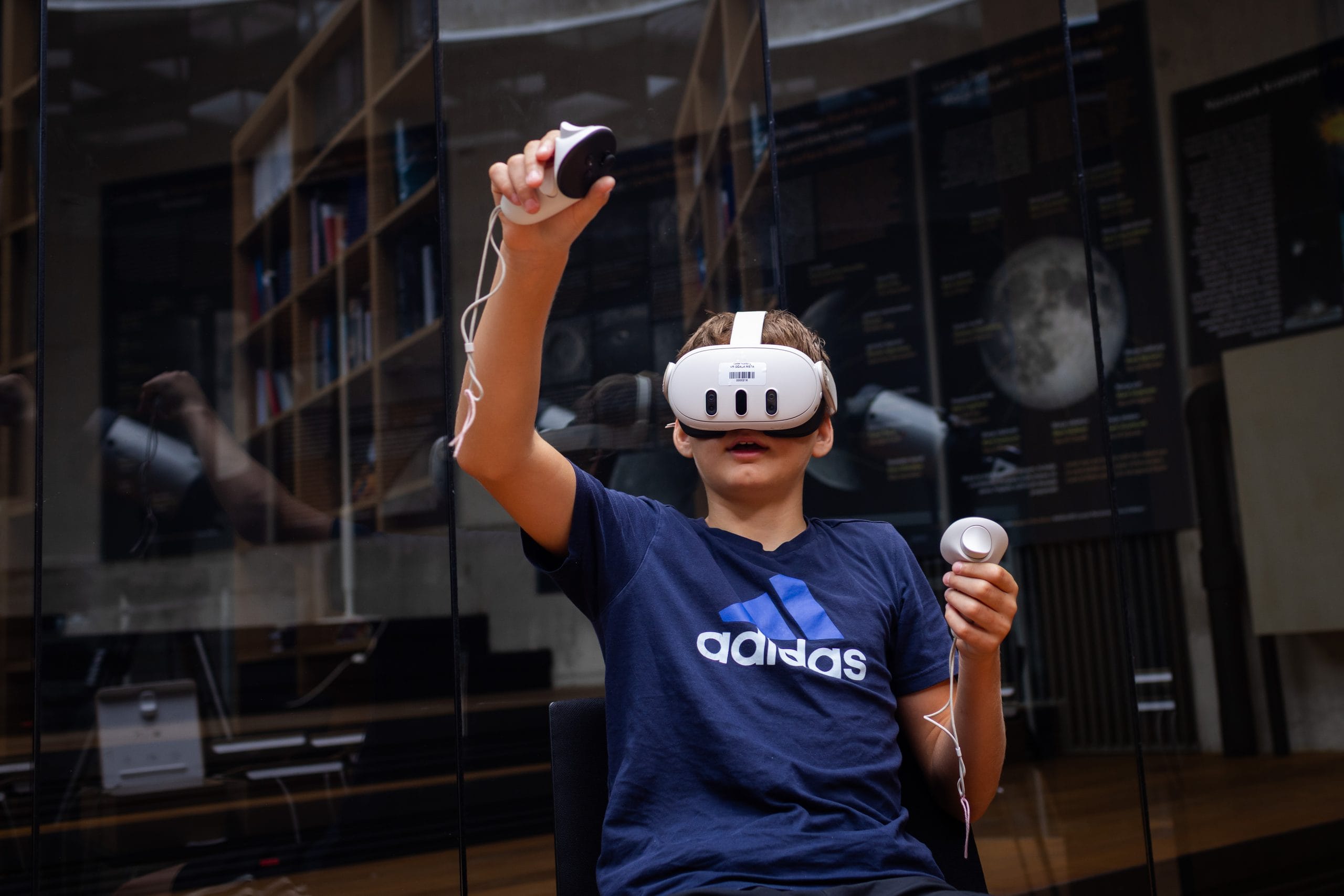
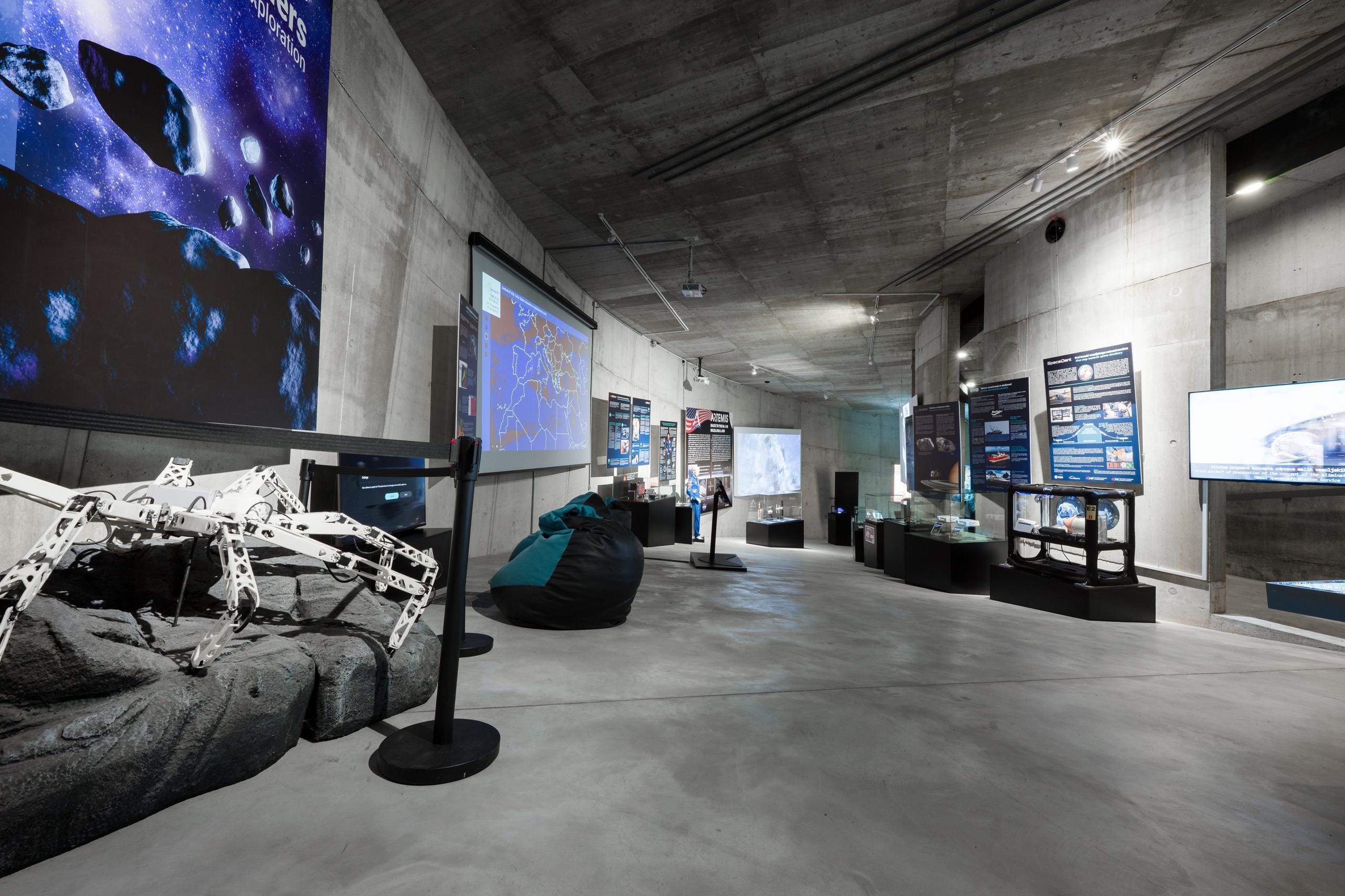
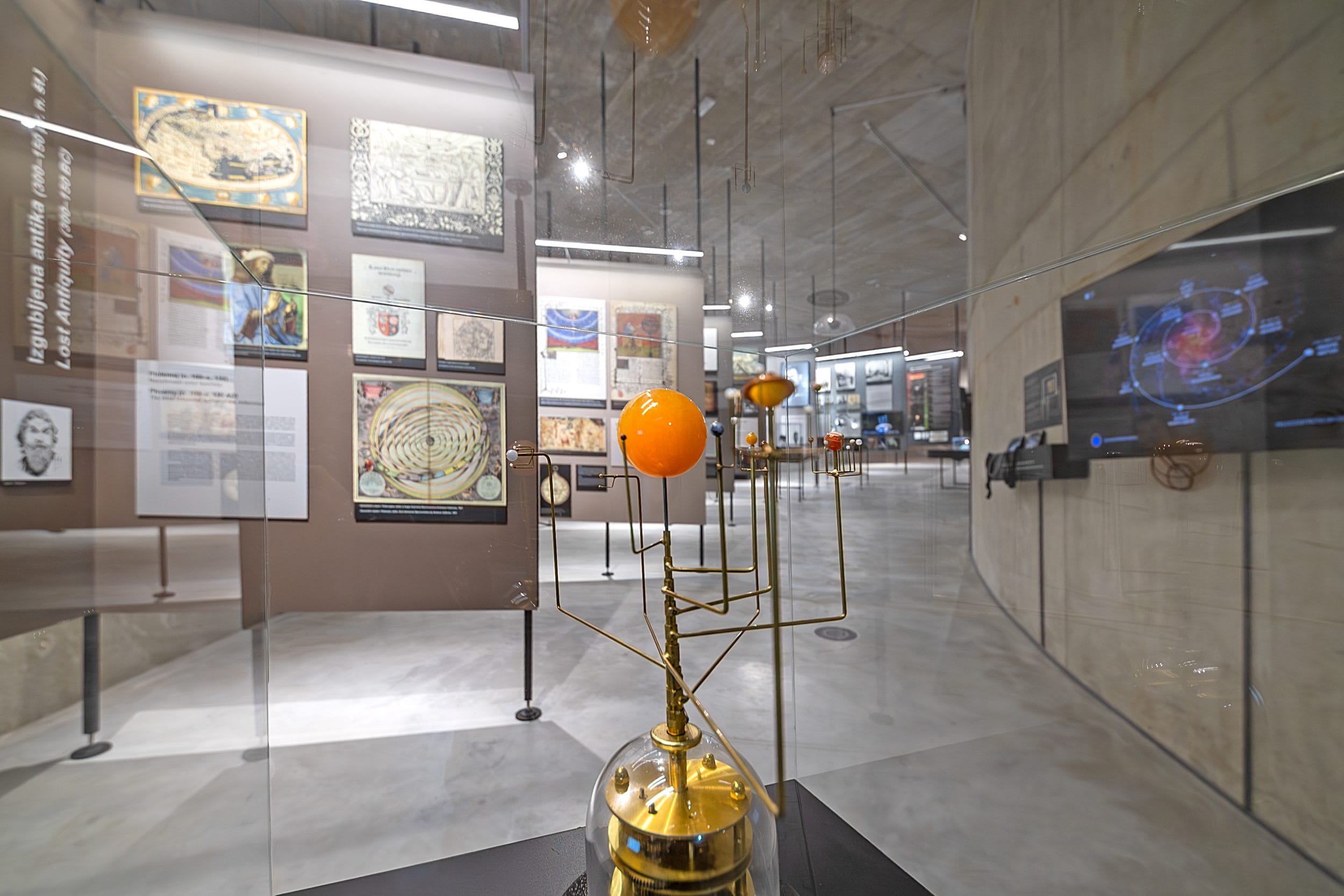
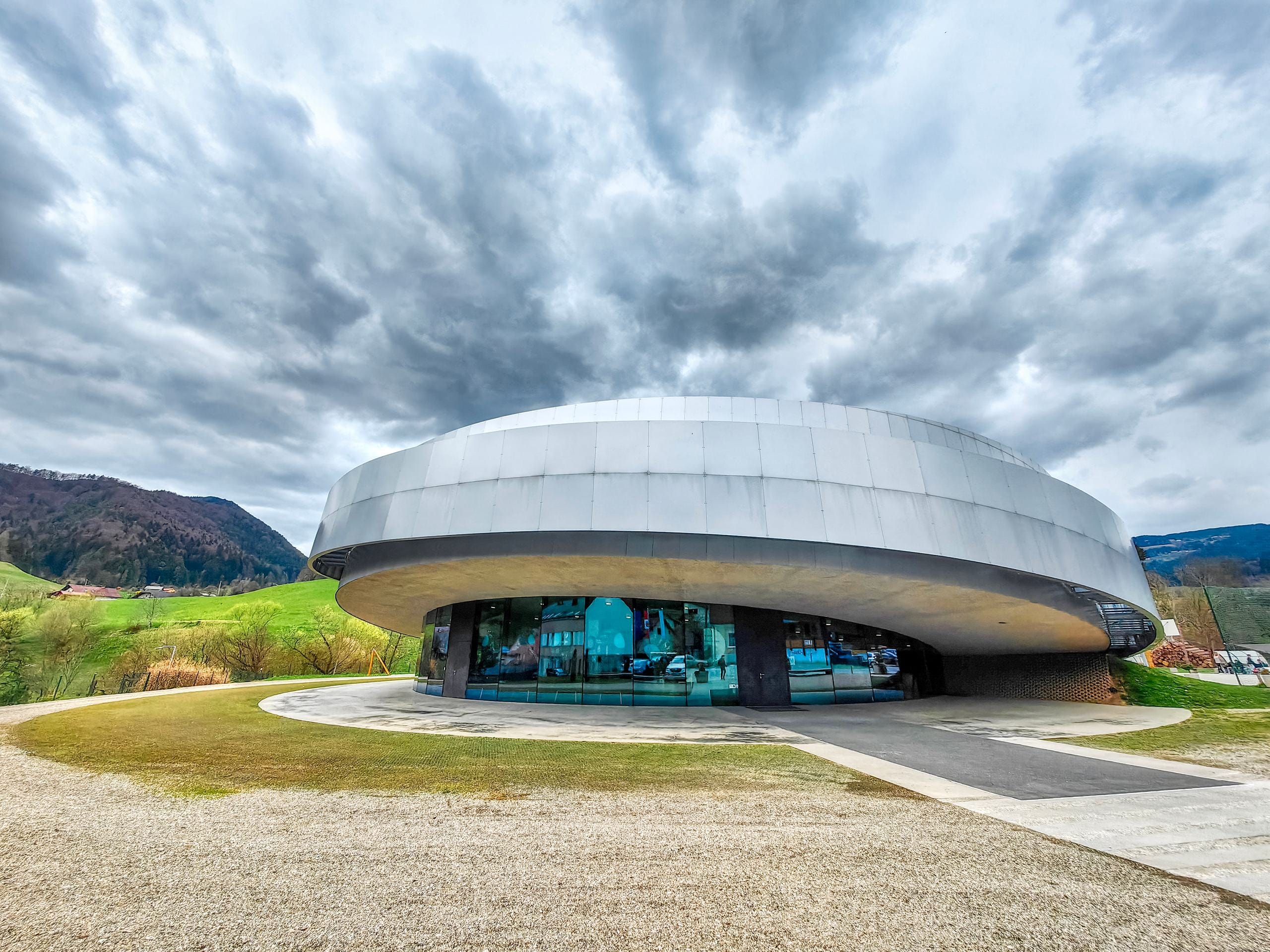
Center Noordung is Slovenia's space centre, a stack of concrete rings in a village of fewer than a thousand people. The shape follows the rotating habitation wheel Herman Potočnik Noordung designed in 1928 for a space station in geostationary orbit. Inside, seven exhibitions run from early sky-watching to the Copernicus satellites watching the Earth, and visitors can fly a simulator, take a virtual walk on the International Space Station or talk to a humanoid robot. The operator sells a combined ticket with the Žiče Charterhouse, which turns a short village stop into a full day.
Plan Your Visit
<
>
Opening Hours
Closed now
Opens in 11h 30m
Today: 09:00–16:00
Winter — Monday to Wednesday
Open every day except 1 and 2 January, Easter Sunday, 1 November and 25 December. Public holidays follow the Saturday and Sunday schedule. Recommended last entry is at least one hour before closing. Visits are not possible while a private event is being held at the Center.
Tue 09:00
Winter — Monday to Wednesday (Oct 1–Apr 30)09:00–16:00
Winter — Thursday (Oct 1–Apr 30)09:00–16:00
Winter — Friday (Oct 1–Apr 30)09:00–17:00
Winter — weekend and public holidays (Oct 1–Apr 30)10:00–18:00
Summer — Monday to Thursday (May 1–Sep 30)09:00–16:00
Summer — Friday (May 1–Sep 30)09:00–17:00
Summer — weekend and public holidays (May 1–Sep 30)10:00–18:00
New Year's Day (Jan 1)Closed
2 January (Jan 2)Closed
Easter Sunday (movable date · calculated annually)Closed
1 November (Nov 1)Closed
Christmas Day (Dec 25)Closed
Entry Fee
Paid
Adults EUR 11.00–15.00
Ticket prices
Official source
Guided Visit (50 minutes)
A 50-minute guided walk through the permanent exhibitions, led in Slovenian on a published seasonal timetable.
Valid from 1 June 2026
Adults
€15.00
High school and university students
The official price list groups students with pensioners in one category at the same price; entered as a separate row because one audience per row is required
€13.00
Pensioners
The official price list groups pensioners with high school and university students in one category at the same price; entered as a separate row because one audience per row is required
€13.00
Children from 6 to 15 years
€10.00
Children under 6 accompanied by parents
Free admission; a parent must accompany
Free
Groups over 15 persons
Per person
€12.00
Family (2 adults + 2 children)
Family composition is exactly two adults and two children
€39.00
Each additional child on a family ticket
Applies to each child beyond the two included in the 39.00 family ticket
€7.00
Residents of the Municipality of Vitanje
Free admission for local residents
Free
Discounts & supplements
European Youth Card
Applies to the guided visit for eligible European Youth Card holders.
-15%
EU Disability Card holder
Current operator rule: 50% off the visit for a visitor with a valid EU Disability Card.
-50%
Official accompanying person
Current operator rule for an official accompanying person on the visit.
-30%
Visit outside normal working hours
Current official catalogue rule for an arranged guided visit outside normal working hours.
+20%
Weekday guided tour below 10 participants
If fewer than 10 people are booked on a weekday guided tour, the price per person doubles.
×2
Optional experiences
VR ISS — virtual walk on the International Space Station
An eight-minute virtual reality visit to the International Space Station, including a spacewalk. Available every day.
All visitors
Per person, approximately 8 minutes. Recommended from age 8, though younger children may manage depending on size and dexterity, because the experience requires joystick use. No minimum height applies. Not recommended for visitors with epilepsy or heart conditions. Available with a self-guided visit as well as a guided one.
€8.00
Discounts & supplements
EU Disability Card holder
Current operator rule: 50% off simulators for a visitor with a valid EU Disability Card.
-50%
Electra VR — flight simulator
A seven-minute virtual flight simulator experience. Available every day.
All visitors
Per person, approximately 7 minutes. Recommended from age 8; suitability also depends on headset fit and on whether the simulator sensor detects the rider. No minimum height applies. Not recommended for visitors with epilepsy or heart conditions. Available with a self-guided visit as well as a guided one.
€12.00
Discounts & supplements
EU Disability Card holder
Current operator rule: 50% off simulators for a visitor with a valid EU Disability Card.
-50%
Bárány Chair
A five-minute spin on the rotating chair used to train an astronaut's balance organ against the effects of weightlessness.
All visitors
Per person, approximately 5 minutes. Recommended from age 15. No minimum height applies, but it is not recommended for visitors prone to motion sickness or who tolerate spinning poorly. Available with a self-guided visit as well as a guided one.
€5.00
Discounts & supplements
EU Disability Card holder
Current operator rule: 50% off simulators for a visitor with a valid EU Disability Card.
-50%
Mission: Space Escape
An escape-room adventure built around space technology — reach the control room, reset the computer and save Noordung's station.
Per group of 2 to 4 people
Priced per group of two to four people rather than per person.
€40.00
Guided tour in English or Croatian — language supplement
A language supplement charged per group, arranged at least 14 days in advance. Offered to groups of at least 15 people.
Per group
Charged per group on top of the guided visit price. Prior arrangement at least 14 days ahead is required.
€20.00
Individual (Self-Guided) Visit
Independent admission to all permanent exhibitions, possible every day during opening hours with no reservation.
Valid from 1 June 2026
Adults
€11.00
High school and university students
The official price list groups students with pensioners in one category at the same price; entered separately because one audience per row is required
€10.00
Pensioners
The official price list groups pensioners with students in one category at the same price; entered separately because one audience per row is required
€10.00
Children from 6 to 15 years
€8.00
Children under 6 accompanied by parents
Free admission; a parent must accompany
Free
Family (2 adults + 2 children)
Family composition is exactly two adults and two children
€29.00
Each additional child on a family ticket
Applies to each child beyond the two included in the 29.00 family ticket
€6.00
Residents of the Municipality of Vitanje
Free admission for local residents
Free
Discounts & supplements
European Youth Card
Applies to the self-guided visit for eligible European Youth Card holders.
-10%
EU Disability Card holder
Current operator rule: 50% off the visit for a visitor with a valid EU Disability Card.
-50%
Official accompanying person
Current operator rule for an official accompanying person on the visit.
-30%
Optional experiences
Gamified e-guide (tablet)
A gamified audio and quiz guide on a tablet, available in English and German. One tablet covers one to four people.
All visitors
Per guide, covering 1–4 people.
€5.00
Gamified e-guide (mobile phone)
The same gamified guide delivered to the visitor's own phone.
All visitors
Per person.
€2.00
Family Space Adventure
A bundled family package combining admission with the full set of space experiences for two adults and two children.
Includes
- Guided or self-guided visit, or audio e-guide, for a family of four
- 4 × VR ISS
- 4 × Electra VR flight simulator
- 2 × Bárány chair
Valid from 1 June 2026
Family Space Adventure (2 adults + 2 children)
Includes the visit plus 4 × VR ISS, 4 × Electra VR and 2 × Bárány chair
€110.00
Each additional child
Applies to each child beyond the two included in the package
€25.00
Center Noordung & Žiče Charterhouse
A combined ticket pairing the space centre with the medieval Carthusian monastery at Žiče, sold by the Center.
Includes
- Center Noordung
- Žiče Charterhouse (Žička kartuzija)
Valid from 1 June 2026
Individuals
Per person
€19.00
Groups over 15 persons
Per person
€16.00
School groups
Per pupil; includes a guided visit
€14.00
School groups — Between the Stars and History
Per pupil; includes a guided visit and a themed workshop at both locations. Published on the Slovenian price list only
€22.00
Center Noordung & Coal Mining Museum of Slovenia
A combined ticket with the Coal Mining Museum of Slovenia in Velenje, marketed by the Center as a single underground-and-space day.
Includes
- Center Noordung
- Coal Mining Museum of Slovenia, Velenje
Valid from 1 June 2026
Groups and individuals
Per person; the official list quotes one price for both
€33.00
School groups — Between the Underground and Space
Per pupil; includes a workshop at Center Noordung
€26.00
Center Noordung & Tehnopark Celje
A combined ticket with the Tehnopark science and technology park in Celje.
Includes
- Center Noordung
- Tehnopark Celje
Valid from 1 June 2026
Adults
Per person
€24.00
High school and university students
The official list groups students with pensioners at the same price; entered separately
€20.00
Pensioners
The official list groups pensioners with students at the same price; entered separately
€20.00
Children
Per person; the combined-ticket list does not restate the 6–15 age band
€18.00
Family ticket (2 adults + 2 children)
Family composition is exactly two adults and two children, confirmed on the Slovenian price list
€62.00
School groups
Per pupil
€20.00
Center Noordung & Velenje Castle
A combined ticket with Velenje Castle and its museum collections.
Includes
- Center Noordung
- Velenje Castle
Valid from 1 June 2026
Individuals
Per person
€18.00
Groups over 15 persons
Per person
€14.00
School groups
Per pupil; includes a workshop at Center Noordung
€18.00
School and Kindergarten Programmes
Structured educational programmes for kindergarten, primary and secondary groups, adapted to the age and prior knowledge of the pupils.
Valid from 1 June 2026
Thematic school programme — guided visit and a workshop of choice
Per pupil; 120 minutes
€13.00
Guided visit and film about the International Space Station
Per pupil; 90 minutes
€11.00
Guided visit
Per pupil; 45 minutes
€10.00
Journey into space — kindergarten programme
Per pupil; 120 minutes, for the second pre-school age period. Includes a space presentation and astronaut training
€10.00
Technical day — guided visit, virtual space experience and workshops
Operator-confirmed 01/09/2026. Base guided visit: 10.00 EUR per pupil; each selected workshop adds 3.00 EUR per pupil. Example: guided visit + 2 workshops = 16.00 EUR per pupil. Programme content and workshop selection may be agreed individually and adapted to the school’s time and preferences.
From €10.00
Official prices updated:
1 Sep 2026
- Admission covers the exhibitions, Noordung's Observatory, the humanoid robot Vita and a conversation with Noordung AI.
- The flight simulator, the virtual walk on the International Space Station and the Bárány chair are charged separately, so allow for them if you want to try them.
- Guided tours in English or Croatian must be arranged at least 14 days in advance and carry a fixed supplement per group.
- Reductions apply for the European Youth Card and the EU Disability Card, and for an official accompanying person.
- The current price list is valid from 1 June 2026.
Parking Situation
Parking at the entrance
View options
Parking Options
Official source
Situation: Parking at the entrance
Parking info updated: 24 Aug 2026
- Parking is free at every option the operator lists.
- The main car park is in front of the building and has four marked disabled bays and two electric-vehicle charging points, though its capacity is not published.
- If it is full, there is overflow parking at the Mercator store, 160 m and about two minutes away on foot, and at Vitanje Elementary School, 280 m and about four minutes away; both routes are mostly flat, and availability at the school can vary during school hours.
- A separate area below the Center takes coaches and motorhomes.
Visitor Requirements
Age guidance
View requirements Requirements
Visitor Requirements
Suitable child age groups
- Young children (4–7 years)
- Older children (8–12 years)
- Teenagers (13–17 years)
Important
- Children under 6: Free when accompanied by a parent; the paid child ticket applies from 6 to 15 years.
- Electra VR: Recommended age 8+; this is guidance, not a hard minimum. Younger children may be unsuitable if the headset does not fit or the simulator sensor does not detect them; staff advise individually at ticket purchase.
- VR ISS: Recommended age 8+; this is guidance, not a hard minimum. Younger children may try depending on size and dexterity because the experience requires joystick use.
- Bárány Chair: Recommended age 15+; no official minimum height. Not recommended for visitors prone to motion sickness or who tolerate spinning poorly.
- VR health caution: Electra VR and VR ISS are not recommended for visitors with epilepsy or heart conditions.
- Noordung Observatory: Flashing lights and lighting effects may affect visitors with photosensitive epilepsy; leave the room immediately if discomfort, dizziness or other health symptoms occur.

Parking Fee
Free

Child safety note
Stairs

Suitable For
Couples+6 more

Stroller accessibility
Partly

Wheelchair access
Partly

Estimated visit time
1–2 h

Family Friendly
Yes
Pet Friendly
Yes
Walking Difficulty
Easy

Best season
Spring, Summer, Autumn, Winter
Highlights
Award-winning contemporary architecture
Hands-on interactive exhibits
Rooftop panorama over the town
Virtual reality experience
Earth observation and satellites
Flight simulator experience
Humanoid robots and robotics
Space travel pioneer heritage
Safety Notes
!Sloping exhibition floor
!Stairs inside
!Supervise children
!Use handrails where available
Photo Tip
The building is the strongest subject, and it reads best from the road below rather than the car park, where the stacked concrete rings separate into distinct bands against the village roofs. Low, angled light early or late in the day gives the cleanest separation. The roof terrace adds the widest view over Vitanje toward Pohorje.
Before You Go
!Best combined with nearby attraction
!Check opening hours
!Hands-on interactive exhibits
!Indoor visit
!Last entry one hour before closing
!Outdoor areas nearby
!Stairs inside
!Ticket required
Access & Parking
Detailed access info in Plan Your Visit ↑
Center Noordung stands on the main street through Vitanje, with free parking in front of the building, including four marked disabled bays and two electric-vehicle charging points. Two further free car parks in the village take the overflow. The intercity bus stop is in front of the Center, so arriving without a car is possible. The main entrance is level, and a lift serves the basement and first floor. Inside, the exhibition route follows a continuous 23° concrete incline.
Interesting Facts
1
A blueprint turned into a building
Center Noordung is a drawing made into architecture. Its interlocking concrete rings echo the rotating habitation wheel that Herman Potočnik Noordung designed in 1928 as the living quarters of a three-part geostationary space station, alongside a power station and an observatory. The wheel was meant to turn, generating artificial gravity by centrifugal force. The station was never built, but the design became a foundational reference for later space-station concepts, and the building in Vitanje is the closest thing to seeing it stand.
2
Four rival studios who refused to compete
Four of Slovenia's leading architecture practices were invited to compete for the commission and decided instead to design it together, forming the Architectural Union for Vitanje. Bevk Perović, Dekleva Gregorič, OFIS and SADAR+VUGA collaborated on the project. The completed building received Slovenia's 2013 Plečnik Award and the 2013 Golden Pencil for Outstanding Realisation.
3
Why a space centre stands in a village
Herman Potočnik was born in Pula in 1892 and died in Vienna in 1929 at the age of thirty-six, and he never lived in Vitanje. The connection runs through his mother's family: her father, the Maribor wine merchant and local councillor Jožef Kokošinek, was born here. That single thread was enough for the village to open a memorial room in December 2006, in the house where his grandfather had worked, and it grew over the following decade into the centre standing today.
4
One book, one hundred hand-drawn illustrations
Potočnik published exactly one book, and it changed how engineers thought about spaceflight. Das Problem der Befahrung des Weltraums — der Raketen-Motor reached Berlin bookshops at the end of 1928, though the publisher printed 1929 on the title page to keep it looking new through the following year. In 188 pages and 100 hand-drawn illustrations he set out a complete plan for reaching space and staying there. The Center displays a collection of translations and editions, including an original German first edition.
5
The man who worked out where to park a space station
Potočnik placed his station in a geostationary orbit roughly 35,900 kilometres above the equator, where it would circle the Earth once a day and hold its position above a fixed point on the ground. He described using orbiting craft for detailed observation of the surface, and argued that the special conditions of space would be uniquely valuable for scientific experiments. He also suggested the orbit could carry a telecommunications relay, seventeen years before Arthur C. Clarke's celebrated 1945 paper.
6
Three owners in fourteen years
The building has changed hands twice since it opened. From 2012 until the end of 2013 it was run by the private KSEVT institute; in 2014 the Municipality of Vitanje took it over as a municipal public institution; and in 2017 a national act converted it into a state public institute co-founded by the Republic of Slovenia and the municipality. A full renovation of the exhibitions opened on 20 February 2019.
7
A Slovenian instrument still flying
One permanent exhibition belongs to Dr Anton Mavretič, the Slovenian engineer who helped develop a scientific instrument carried by both Voyager probes. The spacecraft launched in 1977, crossed the outer solar system and are still transmitting, carrying humanity's message outward into interstellar space. Mavretič donated his archive to Slovenia's National and University Library. For a museum in a village of under a thousand people, it is an unusually direct link to a mission still under way.
8
Seven exhibitions, a library and a circular hall
The Center holds seven permanent exhibitions, running from the earliest human attempts to understand the sky, through Potočnik's own work, to the six families of Copernicus Sentinel satellites now watching the Earth. The ground floor of the same building holds Vitanje's municipal library and a circular hall seating 300, which the municipality uses as its house of culture. A mobile Micro Museum takes a compact version of the story out to schools and events elsewhere.
9
The machines cost extra
Admission covers the exhibitions, Noordung's Observatory, the humanoid robot Vita and a conversation with Noordung AI. The machines are charged separately: an eight-minute virtual walk on the International Space Station, a seven-minute flight in the Electra VR simulator, and five minutes in the Bárány chair — the rotating seat used to train an astronaut's balance organ against the effects of weightlessness.
10
A museum that lets the dog come in
Center Noordung is an unusual thing among indoor museums: a dog-accessible one. Dogs may accompany their owners through every exhibition space, which makes the Center a practical stop for travellers touring Slovenia with a pet.
Visitor Wisdom
Traveler Insights
Combined public visitor ratings from Google and Tripadvisor. Last verified August 2026.
- The building, which is astonishing and completely unexpected in a village this size
- The virtual walk on the International Space Station, the most praised of the paid experiences
- Discovering that Slovenia has a space story of its own, from its companies to engineers who worked on NASA missions
- Staff who are friendly, knowledgeable and quick to answer questions
- The flight simulator, which adults queue for as readily as children
- Admission covers the exhibitions; the VR, the simulator and the Bárány chair are each charged on top and add up quickly
- The exhibitions are text-rich, so allow more than the 50-minute guided tour if you want to read properly
- Scheduled guided tours run in Slovenian; English or Croatian tours must be arranged at least 14 days ahead
- Recommended last entry is a full hour before closing, not the usual thirty minutes
- There is a roof terrace, and it is easy to leave without ever going up
- Best for families with school-age children, space and science enthusiasts, and travellers who go out of their way for buildings
- One of very few all-weather attractions in the Rogla–Pohorje area, and a strong choice on a wet or cold day
- Less ideal for toddlers, and for anyone expecting a hands-on children's science playground
- If you are unsure the visit fills a day, the Center sells a combined ticket with the Coal Mining Museum of Slovenia in Velenje and markets the pair as a single underground-and-space day
- Arriving in the last hour before closing, which leaves no time for both the exhibitions and the extras
- Assuming an English-language guided tour can be joined on the day — it cannot
- Budgeting for admission only, then being caught out by the cost of the space experiences
- Leaving without going up to the roof terrace
- Visiting Monday to Wednesday between October and April and expecting a scheduled Slovenian tour
- Take the e-guide tablet; one tablet covers up to four people and it is the cheapest way to add depth to a self-guided visit
- Go up to the roof terrace for the view across Vitanje toward the Pohorje ridge
- Photograph the building from the road below rather than from the car park, because the rings only separate properly from lower ground
- Bring the dog; dogs are welcome throughout the exhibition spaces, which is unusual for an indoor museum
- The family ticket and free admission for under-sixes keep a half-day affordable
- Children head straight for the humanoid robot and the VR experiences; the operator recommends age 8 and up for Electra VR and VR ISS, though younger children may still manage depending on headset fit, size and dexterity
- The Family Space Adventure package bundles the visit with four VR sessions and two turns on the chair
- Under-fives tend to lose interest in the text-heavy sections
- The Bárány chair is recommended from age 15 and is a poor fit for anyone sensitive to spinning or motion sickness
- Buggies manage most of the route; the gallery and the roof terrace are reached by stairs only
- The strongest image is the building itself, shot from the road below in low, angled light
- The stacked concrete rings separate cleanly early in the morning and in the last hour of daylight
- Personal, non-commercial photography and personal video are allowed indoors, including flash
- The exhibition lighting is dim and directional, so low-light capability helps
- The curving exhibition ramp makes strong leading-line compositions indoors
- The roof terrace gives the widest clean view over the village and the ridge behind it
- Most visitors arrive with modest expectations and leave talking about two things: a building that looks as though it landed here, and the discovery that a small country has a space story of its own. The exhibitions are more thoughtful than flashy and reward those who read.
- Visitors who add one or two of the virtual experiences tend to rate the visit highly; those who rush it in forty minutes tend not to.
Quick Facts
Estimated visit time
1–2 h
Best season
Spring, Summer, Autumn, Winter
Walking difficulty
Easy
Family friendly
Yes
Pet friendly
Yes

Entry Fee
Paid

Access type
Direct roadside access
Help Improve This Listing
Found outdated information, a mistake, or a useful local tip? Let us know.
Suggest an Update →Help Improve This Listing
Your feedback helps us keep Explore In Slovenia accurate and useful for future visitors.
×Visitor Reviews
Write a review
No visitor reviews yet.
Be the first to share your experience.
No reviews yet!
Sorry! Please login first to submit reviews.