- Worth visiting if you are spending more than a few hours at Bled. The island is worth an unhurried look: the church interior often surprises people who expect something more modest, the bell tower gives a wide view over the lake, and the small museum is well put together.
- Walking around the island itself is free.
- For the full heritage visit, the boat crossing and the ticket for the church, bell tower and museum are charged separately by different operators.
Local name: Blejski otok
6

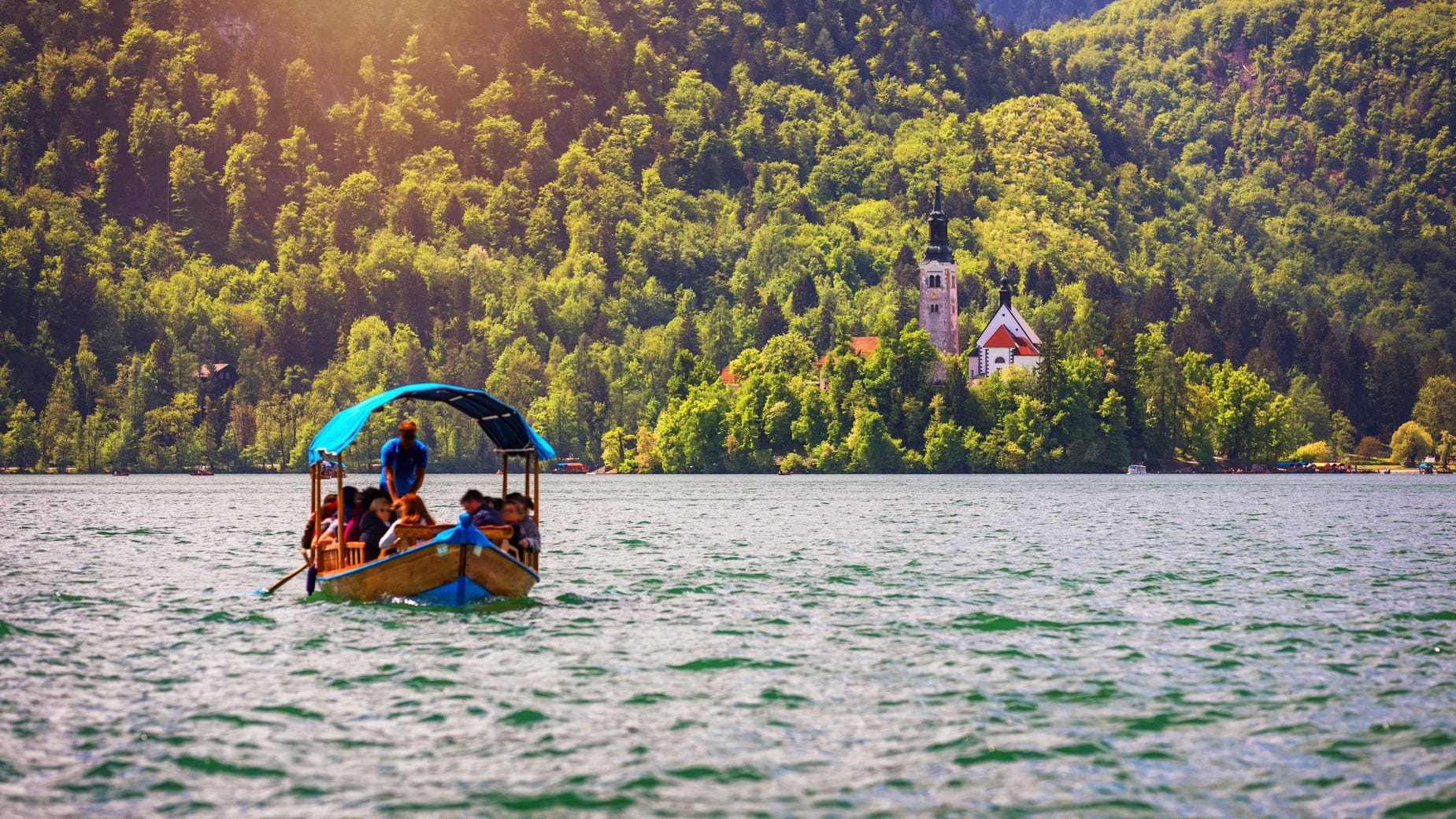


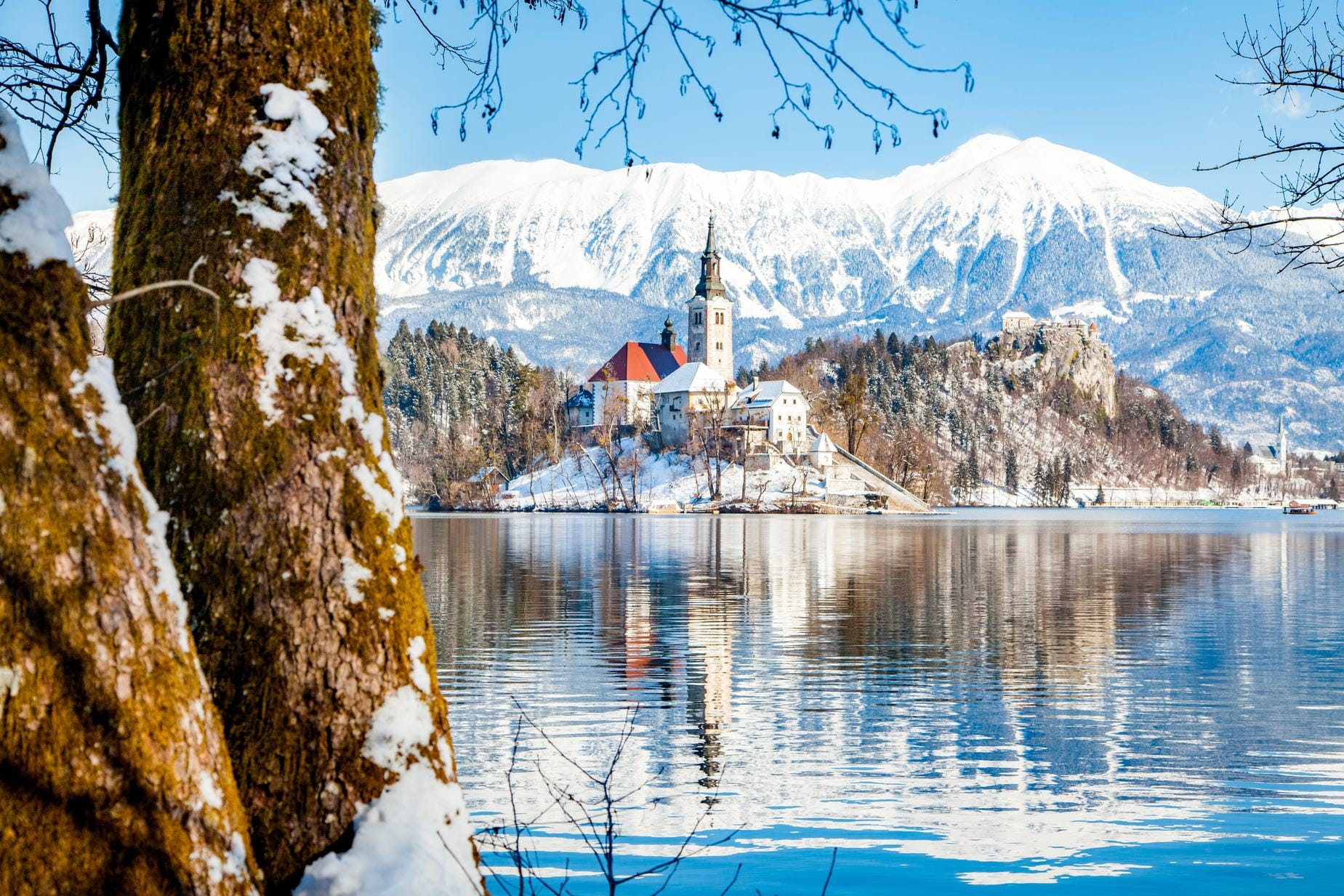
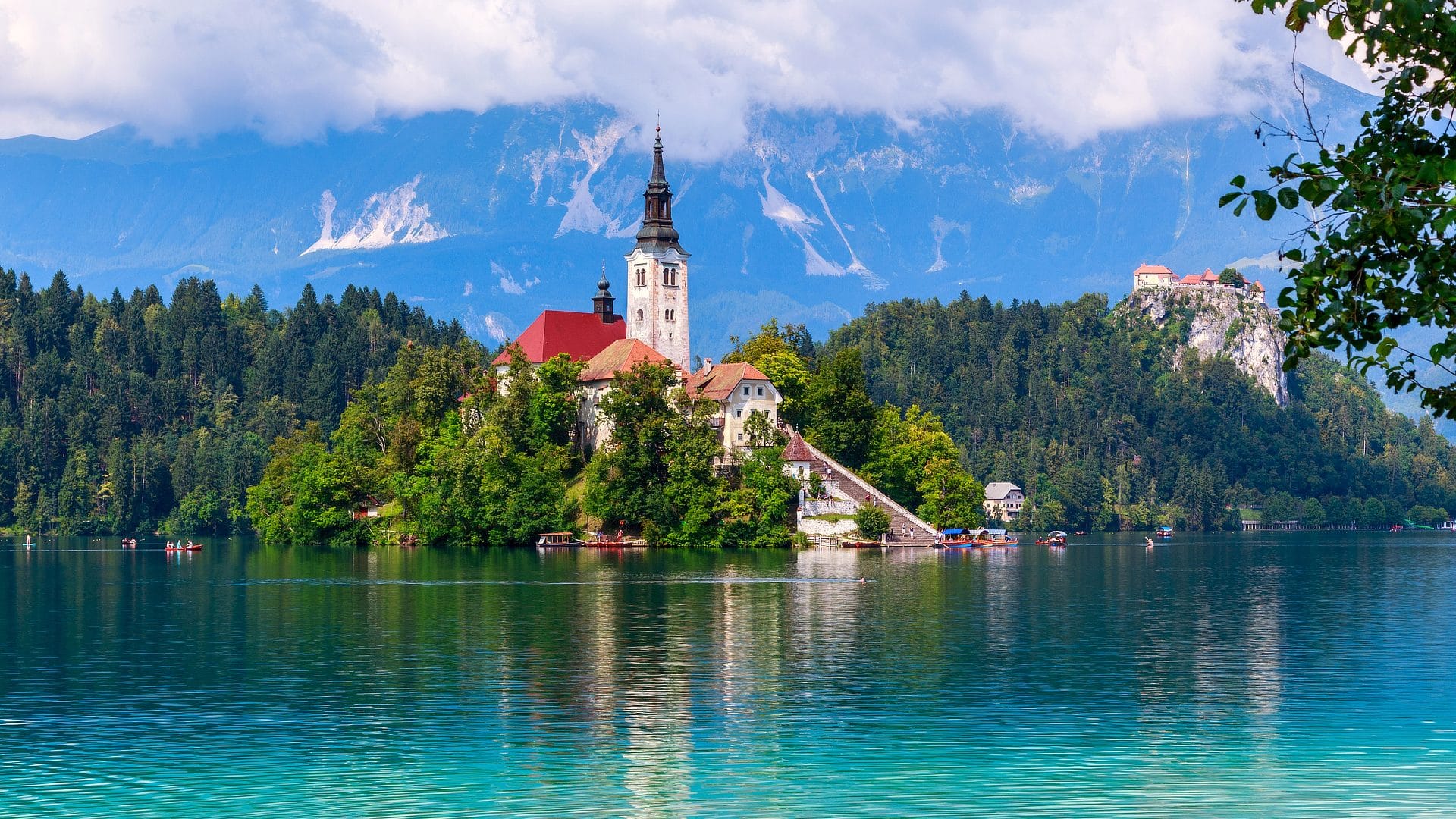
Bled Island is Slovenia's only natural island, and many visitors first see it from the terraces of Bled Castle. The traditional way over is a pletna, a wooden boat rowed standing up, which lands at the foot of ninety-nine stone steps. At the top, you can queue to ring the wishing bell in the Church of the Assumption of Mary and climb the freestanding bell tower for a view across the lake. The island has been a place of worship for well over a thousand years, and the church is still used for weddings.
Plan Your Visit
<
>
Opening Hours
Closed now
Opens in 13h 28m
Today: 08:30–18:00
October
The island is open every day of the year. These hours apply to the church, the Potičnica and the gallery. Boat crossings are suspended in strong wind or severe weather.
Mon 08:30
October08:30–18:00
Winter — Monday to Thursday08:30–16:00
Winter — Friday to Sunday08:30–17:00
March08:30–17:00
April08:30–18:00
May to September08:30–19:00
Entry Fee
Free
Paid extras available
Ticket prices
Official source
Church, Bell Tower & Museum Admission
Visit the Church of the Assumption of Mary and its wishing bell, the lookout bell tower and the museum. Buy this ticket in front of the church on the island.
Includes
- Church of the Assumption of Mary
- Lookout Bell Tower
- Museum exhibition in the Provost's House
Standard prices
Adults
€12.00
Students (with presentation of official proof)
€10.50
Seniors (with presentation of official proof)
€10.50
Disabled persons (with presentation of official proof)
€10.50
Children up to and including 15 years
€5.00
Family ticket — 2 adults + 1 child up to 15 years
€24.00
Groups over 20 persons
Per person.
€10.50
Optional experiences
Out-of-hours opening for organized groups
Organized groups can arrange a visit outside the published hours at least five days in advance.
Out-of-hours opening supplement
Per hour for the whole group, in addition to normal admission.
€90.00
Official prices updated:
10 Sep 2026
- Walking around the island is free.
- Boat transport across the lake is charged separately and is not included in this ticket.
Parking Situation
Limited parking
View options
Parking Options
Official source
Situation: Limited parking
Parking info updated: 23 Aug 2026
- There is no parking on the island; drivers park on the mainland near the boat piers.
- Lakeside parking is paid and fills quickly in summer and at weekends, so arriving early is worthwhile.
- Rates differ between lots, so check the tariff board before leaving the car.
Visitor Requirements
Age guidance
View requirements Requirements
Visitor Requirements
Suitable child age groups
- Young children (4–7 years)
- Older children (8–12 years)
- Teenagers (13–17 years)
Important
- General visit: Children of all ages may visit; no general minimum age is published.
- Paid child ticket: Applies to children up to and including 15 years.
- Pushchairs: The island is reached only by boat and the church platform is reached by stone staircases, so a carrier is more practical than a pushchair.
- Supervision: Children should be supervised on the boat, on the steps and near the unfenced shoreline.

Parking Fee
Paid

Child safety note
Near water+4 more

Access Notes
Best visited early

Suitable For
Couples+3 more

Stroller accessibility
No

Wheelchair access
No

Estimated visit time
1–2 h

Family Friendly
Yes

Pet Friendly
Partly

Walking Difficulty
Moderate

Best season
Spring, Summer, Autumn
Highlights
Baroque interior
Freestanding bell tower
Monumental stone staircase
Pilgrimage church
Climbable bell tower viewpoint
Historic wishing bell
Museum exhibition in a historic building
Traditional boat arrival
Safety Notes
!Slippery stone surfaces possible
!Stairs inside
!Supervise children
!Use handrails where available
Photo Tip
The classic shot is taken from the shore, with the church and its freestanding bell tower against the Julian Alps. Early morning gives the stillest water and the cleanest reflection. On the island itself, try the stone staircase framed by trees, or climb the bell tower and photograph the lake from above.
Before You Go
!Best combined with nearby attraction
!Can be busy in summer
!Check opening hours
!Guided tours available
!Reachable only by boat
!Respect heritage site rules
!Stairs inside
!Uneven historic surfaces
Access & Parking
Detailed access info in Plan Your Visit ↑
Bled Island can only be reached by boat: a traditional pletna from Mlino and other lakeside piers, the electric boat line from Bled centre, or a licensed small boat hired on the shore. If you drive, park on the mainland near the boat piers. Boat fares are separate from the optional church, bell tower and museum ticket, and crossings may be suspended in strong wind or severe weather. In summer, parking and boats fill quickly, so it's worth arriving early.
Interesting Facts
1
Slovenia's only natural island
Bled Island sits toward the western end of Lake Bled on a ridge of hard dolomite that the Bohinj Glacier could not carve away. When the ice retreated and the basin filled with water, the ridge was left standing above the surface. Slovenia has artificial islands on its reservoirs, but no second natural one.
2
Ninety-nine steps and a wedding test
The southern stone staircase was built in 1655 and climbs ninety-nine wide steps of breccia, a local conglomerate rock, from the boat landing to the church platform. Local tradition holds that a groom who carries his bride the whole way will be rewarded with a lasting marriage. Weddings are still held in the church, so on summer weekends the climb is made in wedding dress. Centuries of use have worn the steps smooth, and they can be slippery after rain.
3
The wishing bell and the widow's story
Inside the church hangs a bell that visitors queue to ring, each pull carrying a wish. Legend tells of a young widow at Bled Castle who gathered her silver and gold and had a bell cast in memory of her late husband. According to the story, a storm sank the boat carrying it, the grieving widow withdrew to a convent in Rome, and after her death the Pope sent a replacement bell to the island.
4
Worship here predates the church by centuries
Excavations in the 1960s beneath the present church uncovered the foundations of wooden dwellings and an Old Slavic graveyard of the Köttlach cultural group, with about one hundred and twenty graves. Written sources mention a chapel here as early as 1185, long before the church took its present form. The island has been a place of ritual for well over a thousand years.
5
A bell tower that stands apart
The bell tower is freestanding rather than attached to the church, and that separation is what gives the island its recognisable double silhouette from the shore. Its lower section is still Gothic, while the central part was rebuilt after the earthquake of 1511 left it severely damaged and only crudely patched with timber. It was thoroughly renovated in 1680. With the heritage admission ticket you can make the fifty-two-metre climb and come back down by a two-way staircase.
6
The golden altar and two surrendered crowns
The Church of the Assumption of Mary, also known by its devotional name, the Church of the Mother of God on the Lake, has a golden main altar from 1747. The altar holds a statue of Mary flanked by Emperor Henry II and his wife Kunigunda, both shown having surrendered their crowns. Three further stone altars came from a Ljubljana workshop. The building changed over the centuries: Romanesque features gave way to Gothic in the middle of the fifteenth century, major renovations followed the earthquakes of 1511 and 1622, and the church took its present Baroque form at the end of the seventeenth century.
7
A rowing right passed down through families
The pletna is a flat-bottomed wooden boat with a canvas awning, rowed standing up from the stern with two long oars. The right to operate one has passed down through particular Bled families rather than being sold openly, and it traces back to the eighteenth century, when villagers were granted the right to ferry pilgrims across the lake. The boats are still rowed entirely by hand, which is part of why the crossing is so quiet.
8
Potica is baked on the island itself
The Potičnica, set between the Sexton's House and the Provost's House, is a working potica house rather than a souvenir counter. Potica is a rolled Slovenian cake built around a spiral of filling, and several varieties are baked and sold on the island. The island's operator also runs ethnological workshops on preparing and baking it.
9
Private craft may no longer land here
Under a Bled municipal ordinance introduced in June 2024, landing on the island by stand-up paddleboard, kayak, canoe or smaller private boat is prohibited, and electric surfboards are banned on the lake altogether. In practice this means arrival is now by pletna, by the electric motorboat line, or by a licensed small boat hired on the shore. Anyone planning to paddle across should check the current rules before setting out.
10
More to see than the church
Bled Island's cultural heritage was declared a cultural monument of national importance in 1999, and several buildings around the church are easy to walk past. The Provost's House, once used by priests caring for pilgrims, now holds a gallery and the museum exhibition included in the heritage admission ticket. A building known as the Hermitary was built for solitary prayer. On the northern shore, a spring rises beside the small stone Chapel of Our Lady of Lourdes.
Visitor Wisdom
Traveler Insights
Combined public visitor ratings from Google and Tripadvisor. Last verified August 2026.
- The pletna crossing, rowed standing up, is often described as the most memorable part of the day.
- Ringing the wishing bell is a favourite, and you hear it sound across the water all afternoon.
- From the bell tower, the panorama takes in the lake, the shore and the surrounding peaks.
- Many visitors are surprised by the church interior, which is finer than they expected.
- Those who find it enjoy the quiet perimeter path, which is easy to miss if you head straight up the steps.
- The boat fare is separate from the optional ticket for the church, bell tower and museum, and walking around the island itself is free.
- Pletnas generally leave when full rather than at fixed times, and payment methods can vary, so confirm at the pier and carry cash as a fallback.
- The climb from the southern landing is ninety-nine stone steps; a smaller northern staircase is the alternative.
- There is no time limit on the island, but if you book an organized crossing, confirm the return arrangement before you set off.
- Mainland parking is paid and fills early in summer.
- Best for first-time visitors to Slovenia, couples, photographers, families with children old enough to manage steps, and anyone interested in religious heritage.
- Less suited to wheelchair users and families with pushchairs, because the church platform can only be reached by staircases. The electric boat line is described as accessible with advance notice, so the crossing itself is possible.
- It is also less ideal on a tight budget if you plan both the paid crossing and the ticketed church, bell tower and museum.
- Try to avoid arriving around midday in high summer, when boats, queues and the bell all back up at once.
- Don't assume every pletna takes cards: confirm payment at the pier and carry cash as a fallback.
- The boat fare does not include the church, bell tower and museum, and you don't need a ticket just to walk around the island.
- Don't just climb straight up: the perimeter path, the spring and the Chapel of Our Lady of Lourdes are easy to miss.
- If you were planning to paddle over, note that landing on the island by paddleboard, kayak or canoe has been prohibited since June 2024.
- Cross early in the morning, before the main day-trip crowds arrive and while the lake is often calmer.
- Go up by the smaller northern staircase and come down the ninety-nine steps, so you move against the flow of people.
- On the northern shore, many visitors miss the spring beside the small stone Chapel of Our Lady of Lourdes.
- The island visit is short, so it pairs well with Vintgar Gorge, a few kilometres away, for a contrasting outdoor afternoon.
- For children, the boat crossing and the wishing bell usually carry the visit: the boat is an event in itself, and the bell gives them something to do at the top.
- Older children often cope with the ninety-nine steps more easily, while smaller ones may need carrying, so bring a carrier rather than a pushchair.
- Keep a close eye on children in the open boat and near the unfenced shoreline.
- Potica and ice cream at the Potičnica can make the return crossing easier with tired children.
- The classic picture, with the church, its separate bell tower and the Julian Alps behind, is taken from the lakeside path or a viewpoint above the lake rather than on the island itself.
- Early morning gives the stillest water and the cleanest reflection.
- On the island, the staircase framed between the trees and the panorama from the tower are the two strongest compositions.
- Inside the church the light is low and warm, so keep the framing simple.
- Most visitors leave with a mixed verdict. The island is smaller and more crowded than the postcards suggest, and the combined cost of the crossing and the ticketed church, bell tower and museum is a steady complaint, even though walking the island is free.
- Against that, the crossing, the bell and the view from the tower still stand out.
- Very few say they regret going, and many describe it as the one image they take away from Slovenia.
Quick Facts
Estimated visit time
1–2 h
Best season
Spring, Summer, Autumn
Walking difficulty
Moderate
Family friendly
Yes
Pet friendly
Partly

Entry Fee
Free with paid extras

Access type
No car access
Help Improve This Listing
Found outdated information, a mistake, or a useful local tip? Let us know.
Suggest an Update →Help Improve This Listing
Your feedback helps us keep Explore In Slovenia accurate and useful for future visitors.
×Visitor Reviews
Write a review
No visitor reviews yet.
Be the first to share your experience.
No reviews yet!
Sorry! Please login first to submit reviews.