Strunjan rates highly with visitors, and many are surprised that entry is free when they expect a coastal attraction to charge. The appeal is variety in a small area: a high cliff, open sea, a quiet lagoon and working salt pans, all within about 5 km of walking. It suits walkers, photographers and families planning a half-day outdoors. It is less rewarding if you expect a built attraction with facilities.
Local name: Krajinski park Strunjan
9
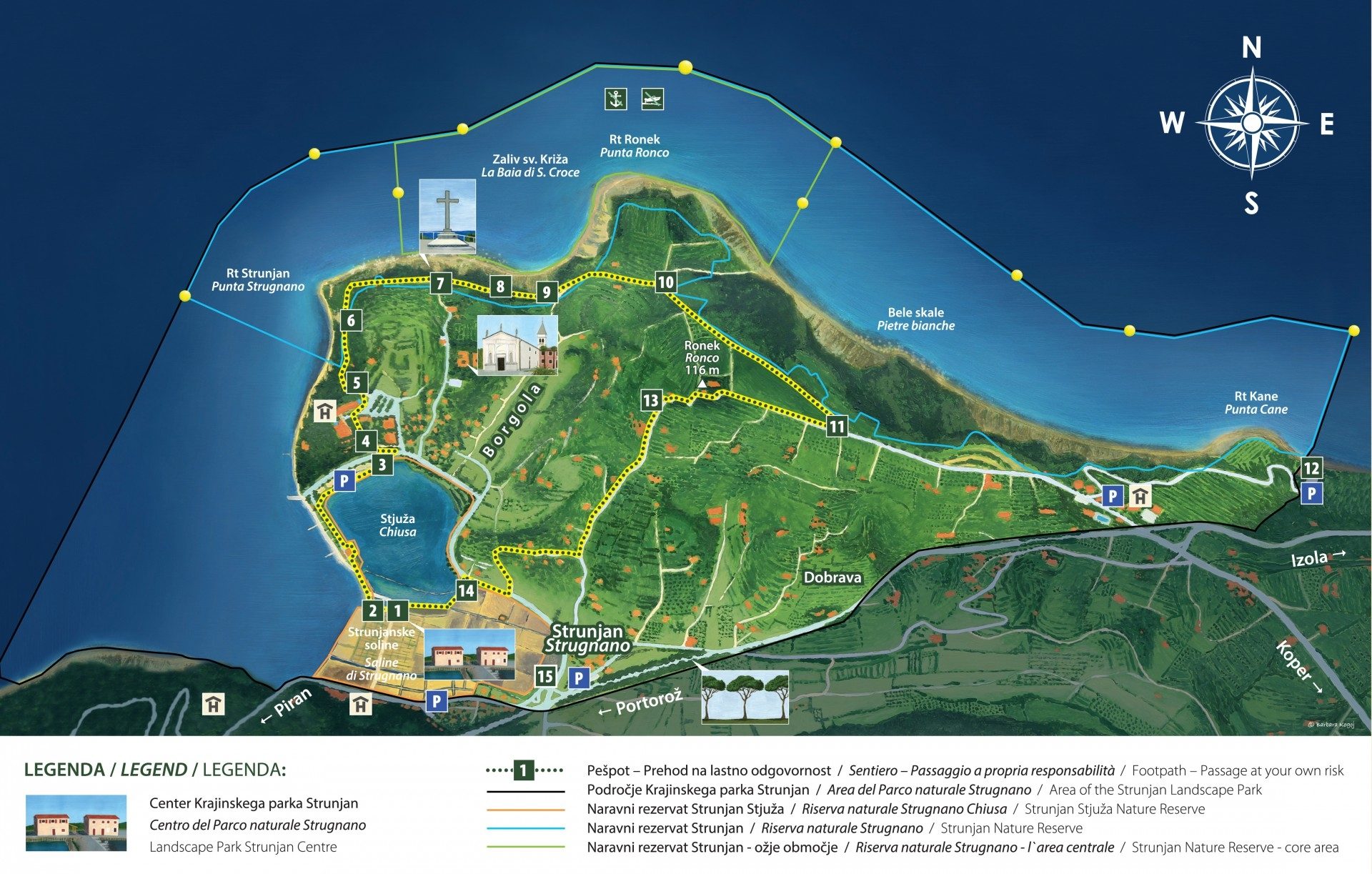
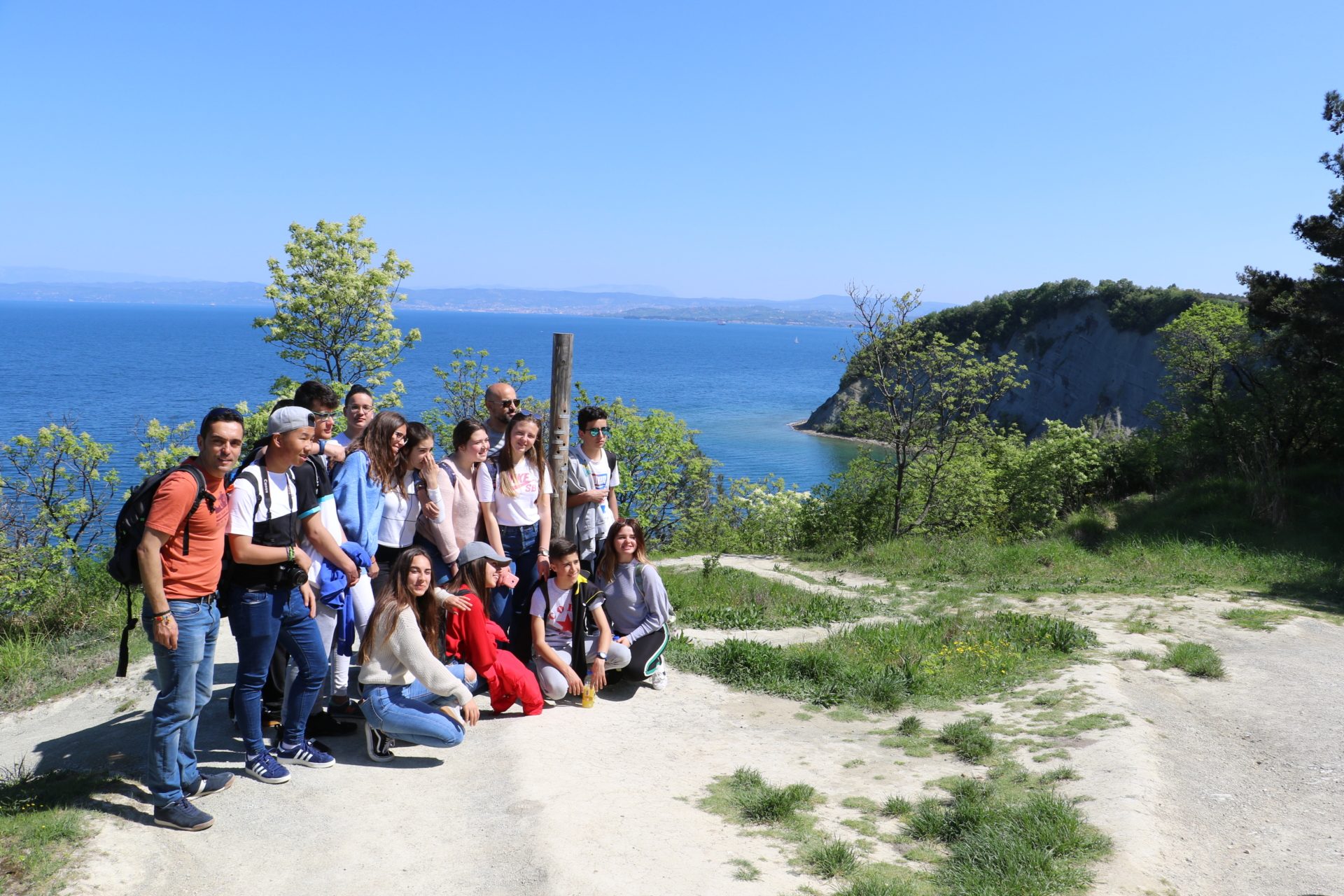
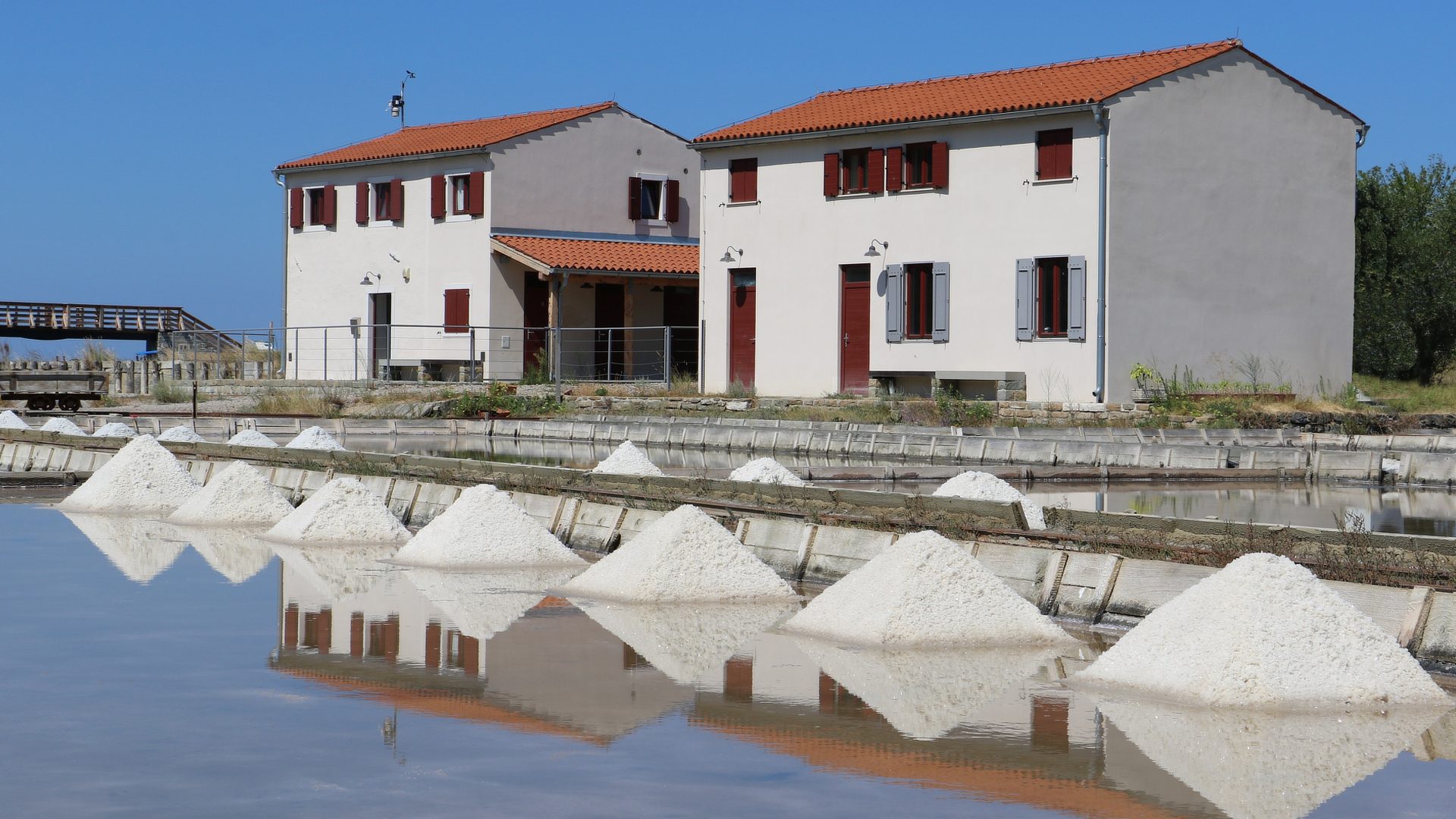
Strunjan Landscape Park takes in the Adriatic's highest flysch cliff and, below it, the longest natural shoreline left on the Gulf of Trieste. From the cliff-top path you can see across the gulf and, on clear days, to the Julian Alps. Behind the cliff, terraced slopes step down to Stjuža, Slovenia's only sea lagoon, and to salt pans still worked by hand. An easy 5.3 km circuit links the cliff, the lagoon and these pans, which are smaller than Sečovlje Salt Pans further south.
Plan Your Visit
<
>
Opening Hours
Closed now
Opens in 13h 12m
Today: 09:00-15:00
Staffed visitor-centre hours. These hours apply to the Saltpan House exhibition. The centre is closed on public holidays. Opening times may vary in poor weather; groups with a booked guided tour may visit outside regular hours by arrangement.
Thu 09:00
New Year's Day (Jan 1)Closed
New Year holiday (Jan 2)Closed
Prešeren Day (Feb 8)Closed
Day of Uprising Against Occupation (Apr 27)Closed
Labour Day (May 1)Closed
Labour Day holiday (May 2)Closed
Statehood Day (Jun 25)Closed
Assumption Day (Aug 15)Closed
Reformation Day (Oct 31)Closed
Remembrance Day (Nov 1)Closed
Christmas Day (Dec 25)Closed
Independence and Unity Day (Dec 26)Closed
Easter Sunday (movable date · calculated annually)Closed
Easter Monday (6 Apr 2026)Closed
Whit Sunday (24 May 2026)Closed
Easter Monday (29 Mar 2027)Closed
Whit Sunday (16 May 2027)Closed
Easter Monday (17 Apr 2028)Closed
Whit Sunday (4 Jun 2028)Closed
Easter Monday (2 Apr 2029)Closed
Whit Sunday (20 May 2029)Closed
Easter Monday (22 Apr 2030)Closed
Whit Sunday (9 Jun 2030)Closed
Monday09:00-15:00
Tuesday09:00-15:00
Wednesday09:00-15:00
Thursday09:00-15:00
Friday09:00-15:00
Saturday09:00-17:00
Sunday09:00-17:00
Entry Fee
Free
Paid extras available
Ticket prices
Official source
Park Access and Saltpan House Exhibition
Free access to the park, its walking trails and the Park of the Sea exhibition with film at the Saltpan House visitor centre.
Standard prices
Park access and exhibition
The park has no gate and no admission charge. The exhibition and film at the Saltpan House are free of charge.
Free
Guided Tour - 2 Hours: Cliffs, Lagoon and Saltpans
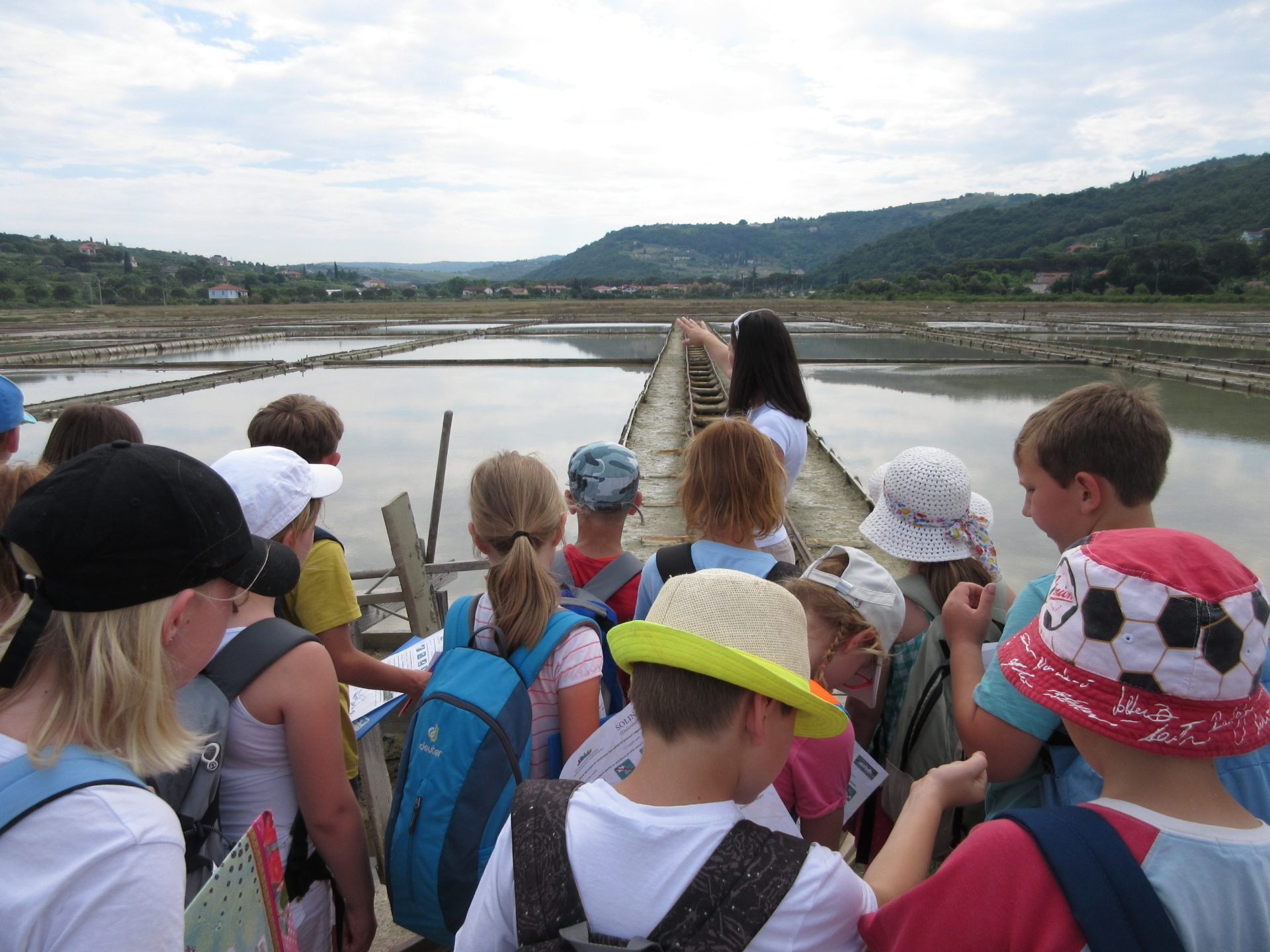
This guided walk covers about 4 km through the salt pans, past Stjuža lagoon and along the cliffs and shore, and takes at least two hours.
Standard prices
Adults - tour in Slovene
Price per person. Accompanying persons are not charged.
€10.00
Adults - tour in other languages
Price per person. Guiding available in English, Italian and German.
€12.00
Children and youth up to 18 years - tour in Slovene
Price per person.
€7.00
Children and youth up to 18 years - tour in other languages
Price per person.
€8.00
Students - tour in Slovene
Price per person.
€7.00
Students - tour in other languages
Price per person.
€8.00
Seniors - tour in Slovene
Price per person.
€6.00
Seniors - tour in other languages
Price per person.
€7.00
Guided Tour - 1 Hour: Cliffs, or Lagoon and Saltpans
For this guided walk of about 1.5 km, meet at the start of the main car park below Hotel Krka (Svoboda) for the cliff route, or at the Saltpan House for the salt-making walk beside Stjuža lagoon.
Standard prices
Adults - tour in Slovene
Price per person.
€4.00
Adults - tour in other languages
Price per person.
€5.00
Children and youth up to 18 years - tour in Slovene
Price per person.
€4.00
Children and youth up to 18 years - tour in other languages
Price per person.
€5.00
Students - tour in Slovene
Price per person.
€4.00
Students - tour in other languages
Price per person.
€5.00
Seniors - tour in Slovene
Price per person.
€5.00
Seniors - tour in other languages
Price per person.
€6.00
Guided Tour for Individuals and Groups of up to 10 People
A flat-rate one-hour or two-hour guided tour for individual visitors and for groups of up to and including ten people, charged per group rather than per person.
Standard prices
Individuals and groups of up to 10 people - tour in Slovene
Flat rate per group for a one-hour or two-hour tour, up to and including ten people.
€50.00
Individuals and groups of up to 10 people - tour in other languages
Flat rate per group for a one-hour or two-hour tour, up to and including ten people.
€70.00
Official prices updated:
25 Aug 2026
- Entry to the park and to the Saltpan House exhibition is free.
- Guided tours are optional, must be booked at least five days in advance and are charged separately.
- Tour prices differ according to the language of guiding.
- Accompanying persons are not charged.
Parking Situation
Large parking
View options
Parking Options
Official source
Situation: Large parking available
Parking info updated: 19 Nov 2026
- Strunjan Stjuža and the 14 marked car spaces in Strunjan centre are in municipal parking zone 103.
- There is no free first hour.
- From 1 March to 31 October, each started hour costs €1.80 for stays of up to 10 hours; longer stays cost €18 a day.
- From 1 November to 28 February, each started hour costs €1 for stays of up to 10 hours; longer stays cost €10 a day.
- The 14 centre spaces are signed 0-24.
Visitor Requirements
Age guidance
View requirements Requirements
Visitor Requirements
Suitable child age groups
- Young children (4-7 years)
- Older children (8-12 years)
- Teenagers (13-17 years)
Important
- No minimum visit age is published.
- On school tours, accompanying adults remain responsible for the group.
- A guide may shorten or cancel a tour if conditions put participants at risk.
EV charging
165 m on foot from a car park+3 more
Distances by road or on foot from each car park of this place, the nearest first, the straight line in brackets · 18 public chargers within 5 km by air, the nearest 15 listed
- Petrol · Piran - Soline StrunjanStrunjan 31a, Portorož - Portorose DirectionsPower2 × 22 kW AC · Type 2CableBring your own Type 2 cableAccessPublic charger (national register) · 24/7 per register, hours not confirmedStart & payNo contract needed - pay in the OneCharge web app, at an e-payment terminal where fitted, or prepay at the Petrol shop till (ad-hoc price). · Helpdesk +386 1 471 46 66 (24/7)Price€0.41/kWh · idle fee €0.04/min after 180 min (7:00-20:00) · Petrol price list, valid from 1 Nov 2025, checked 23 Oct 2026 price listLiveChecking live status…VisitorsNo problems reported
- Voltris · Marina Portoroz Fast DCCesta Solinarjev 8, Portorož DirectionsPower78 × 50 kW DC · Type 2 / CCS2CableBring your own Type 2 cableAccessPublic charger (national register) · 24/7 per register, hours not confirmedStart & payNo app, RFID card or card terminal - charging is started with a phone call to the number on the charger. · Card terminal: not confirmed · Helpdesk +386 65 603 270Price€0.20-€0.35/kWh per the national register - may differ from the operator's current price listLiveChecking live status…VisitorsNo problems reported
- MOON · Hostel PanoramaŠentjane 25, Portorož DirectionsPower2 × 11 kW AC · Type 2CableBring your own Type 2 cableAccessPublic charger (national register) · 24/7 per register, hours not confirmedStart & payPay by card at the charger's POS terminal or via the QR code (ad-hoc price list), or register in the MOONcharge app (Visa/Mastercard). · Helpdesk +386 80 18 98 (24/7)Price€0.50/kWh · session fee €0.50 · idle fee €0.025/min after 180 min (6:00-21:00) · MOON price list, valid from 1 Jul 2026, checked 23 Oct 2026 price listLiveChecking live status…VisitorsNo problems reported
- Petrol · Portorož Hotel PalaceObala 45, Portorož - Portorose DirectionsPower4 × 22 kW AC · Type 2CableBring your own Type 2 cableAccessPublic charger (national register) · 24/7 per register, hours not confirmedStart & payNo contract needed - pay in the OneCharge web app, at an e-payment terminal where fitted, or prepay at the Petrol shop till (ad-hoc price). · Helpdesk +386 1 471 46 66 (24/7)Price€0.41/kWh · idle fee €0.04/min after 180 min (7:00-20:00) · Petrol price list, valid from 1 Nov 2025, checked 23 Oct 2026 price listLiveChecking live status…VisitorsNo problems reported
- Petrol · Piran - LucijaObala 114, Portorož - Portorose DirectionsPower2 × 22 kW AC · Type 2CableBring your own Type 2 cableAccessPublic charger (national register) · 24/7 per register, hours not confirmedStart & payNo contract needed - pay in the OneCharge web app, at an e-payment terminal where fitted, or prepay at the Petrol shop till (ad-hoc price). · Helpdesk +386 1 471 46 66 (24/7)Price€0.41/kWh · idle fee €0.04/min after 180 min (7:00-20:00) · Petrol price list, valid from 1 Nov 2025, checked 23 Oct 2026 price listLiveChecking live status…VisitorsNo problems reported
- MEGA M · Hipermarket SPAR IzolaPrešernova cesta 49, Izola DirectionsPower2 × 22 kW AC · Type 2CableBring your own Type 2 cableAccessPublic charger (national register) · 24/7 per register, hours not confirmedStart & payStart charging in the Mega Mobility app (pay by card in the app) or with an RFID card. · Card terminal: not confirmedPrice€0.32/kWh per the national register - may differ from the operator's current price listLiveChecking live status…VisitorsNo problems reported
- Petrol · Izola San SimonTomažičeva Ulica 18, Izola - Isola DirectionsPower2 × 22 kW AC · Type 2CableBring your own Type 2 cableAccessPublic charger (national register) · 24/7 per register, hours not confirmedStart & payNo contract needed - pay in the OneCharge web app, at an e-payment terminal where fitted, or prepay at the Petrol shop till (ad-hoc price). · Helpdesk +386 1 471 46 66 (24/7)Price€0.41/kWh · idle fee €0.04/min after 180 min (7:00-20:00) · Petrol price list, valid from 1 Nov 2025, checked 23 Oct 2026 price listLiveChecking live status…VisitorsNo problems reported
- Petrol · Portorož - MarinaCesta solinarjev 6, Portorož - Portorose DirectionsPower2 × 11 kW AC · Type 2CableBring your own Type 2 cableAccessPublic charger (national register) · 24/7 per register, hours not confirmedStart & payNo contract needed - pay in the OneCharge web app, at an e-payment terminal where fitted, or prepay at the Petrol shop till (ad-hoc price). · Helpdesk +386 1 471 46 66 (24/7)Price€0.41/kWh · idle fee €0.04/min after 180 min (7:00-20:00) · Petrol price list, valid from 1 Nov 2025, checked 23 Oct 2026 price listLiveChecking live status…VisitorsNo problems reported
- Petrol · Izola DelfinTomažičeva Ulica 10, Izola - Isola DirectionsPower2 × 22 kW AC · Type 2CableBring your own Type 2 cableAccessPublic charger (national register) · 24/7 per register, hours not confirmedStart & payNo contract needed - pay in the OneCharge web app, at an e-payment terminal where fitted, or prepay at the Petrol shop till (ad-hoc price). · Helpdesk +386 1 471 46 66 (24/7)Price€0.41/kWh · idle fee €0.04/min after 180 min (7:00-20:00) · Petrol price list, valid from 1 Nov 2025, checked 23 Oct 2026 price listLiveChecking live status…VisitorsNo problems reported
- MEGA M · Boutique Hotel PortoroseObala 89, Portorož DirectionsPower1 × 11 kW AC · Type 2CableCable attachedAccessPublic charger (national register) · 24/7 per register, hours not confirmedStart & payStart charging in the Mega Mobility app (pay by card in the app) or with an RFID card. · Card terminal: not confirmedPrice€0.32/kWh per the national register - may differ from the operator's current price listLiveChecking live status…VisitorsNo problems reported
- MEGA M · SPAR PortorožObala 30, 6320 Portorož, Slovenia, Portorož DirectionsPower2 × 30 kW DC · CCS2CableCable attachedAccessPublic charger (national register) · 24/7 per register, hours not confirmedStart & payStart charging in the Mega Mobility app (pay by card in the app) or with an RFID card. · Card terminal: not confirmedPrice€0.40/kWh per the national register - may differ from the operator's current price listLiveChecking live status…VisitorsNo problems reported
- Petrol · Portorož - Marina Ii Fast DCCesta Solinarjev 6, Portorož - Portorose DirectionsPower2 × 50 kW DC · CHAdeMO / CCS2CableCable attachedAccessPublic charger (national register) · 24/7 per register, hours not confirmedStart & payNo contract needed - pay in the OneCharge web app, at an e-payment terminal where fitted, or prepay at the Petrol shop till (ad-hoc price). · Helpdesk +386 1 471 46 66 (24/7)Price€0.51/kWh · idle fee €0.08/min after 60 min · Petrol price list, valid from 1 Nov 2025, checked 23 Oct 2026 price listLiveChecking live status…VisitorsNo problems reported
- Petrol · IZOLA MARINA - DantejevaDantejeva ulica, Izola DirectionsPower2 × 17.3 kW AC · Type 2CableBring your own Type 2 cableAccessPublic charger (national register) · 24/7 per register, hours not confirmedStart & payNo contract needed - pay in the OneCharge web app, at an e-payment terminal where fitted, or prepay at the Petrol shop till (ad-hoc price). · Helpdesk +386 1 471 46 66 (24/7)Price€0.41/kWh · idle fee €0.04/min after 180 min (7:00-20:00) · Petrol price list, valid from 1 Nov 2025, checked 23 Oct 2026 price listLiveChecking live status…VisitorsNo problems reported
- Petrol · Izola LonkaUlica Prekomorskih Brigad 12, Izola - Isola DirectionsPower2 × 22 kW AC · Type 2CableBring your own Type 2 cableAccessPublic charger (national register) · 24/7 per register, hours not confirmedStart & payNo contract needed - pay in the OneCharge web app, at an e-payment terminal where fitted, or prepay at the Petrol shop till (ad-hoc price). · Helpdesk +386 1 471 46 66 (24/7)Price€0.41/kWh · idle fee €0.04/min after 180 min (7:00-20:00) · Petrol price list, valid from 1 Nov 2025, checked 23 Oct 2026 price listLiveChecking live status…VisitorsNo problems reported
- MEGA M · DINIT d.o.o.Industrijska cesta 23, Izola DirectionsPower3 × 11 kW AC · Type 2CableCable attachedAccessPublic charger (national register) · 24/7 per register, hours not confirmedStart & payStart charging in the Mega Mobility app (pay by card in the app) or with an RFID card. · Card terminal: not confirmedPrice€0.25/kWh per the national register - may differ from the operator's current price listLiveChecking live status…VisitorsNo problems reported
Good to know
LawMarked EV charging bays are for vehicles that are charging - parking there without charging is fined €80 (Road Traffic Rules Act, Art. 65, as reported). source
PetrolOne DC session may last at most 120 minutes and the bay must be left within 15 minutes after charging. Registered OneCharge users pay less (€0.37/0.47/0.66); chargers Petrol runs for municipalities (e.g. Postojna) and Ljubljana Airport have their own prices (exceptions list of 16 Sep 2026). source
VoltrisPrices are dynamic (based on day-ahead and intraday energy markets); no public price list.
MOONAd-hoc prices (card at the terminal or QR code) include a session fee of €0.50 on AC and DC ≤50 kW and €1.00 on DC >50 kW; the idle fee on AC and DC ≤50 kW applies after 180 min between 6:00 and 21:00. Registered MOONcharge users pay €0.35/0.45/0.65 per kWh plus €0.50/€1.00 per session; the price shown in the app prevails. source
Plug-in hybrids and single-phase cars draw 3.7-7.4 kW from these posts, whatever the post can give.
Source: national charger register (NAP Slovenia, CC BY-SA 4.0), refreshed nightly · operator price lists as dated.
Distances by road and on foot: OSRM routing (FOSSGIS), map data © OpenStreetMap contributors · report a map error
Parking Fee
Paid
Child safety note
Near water+3 more
Access Notes
Best visited early
Facilities
Toilets+1 more
Suitable For
Couples+5 more
Stroller accessibility
Partly
Wheelchair access
Partly
Estimated visit time
2-3 h
Family Friendly
Yes
Pet Friendly
Yes-on leash
Walking Difficulty
Easy
Best season
Spring, Autumn
Highlights
Circular interpretive nature trail
Sea cliff landscape
Terraced cultural landscape
Visitor centre with exhibition
Coastal lagoon
Marine protected area
Statutory protected landscape
Undeveloped natural coastline
Safety Notes
!No shade - strong sun exposure
!Stay on marked paths
!Steep path
!Unprotected drops and cliff edges
Photo Tip
The widest view is from the cliff-top path, across the Gulf of Trieste and, on clear days, to the Julian Alps; clear morning air suits it best. Photograph the salt pans late in the afternoon, when low light picks out the basins and embankments, ideally from slightly above. Drones may not be flown over the salt pans.
Before You Go
!Can be busy in summer
!Check opening hours
!Free entry
!Guided tours available
!Protected area
!Respect nature protection rules
!Sturdy footwear recommended
!Tick protection recommended
Access & Parking
Detailed access info in Plan Your Visit ↑
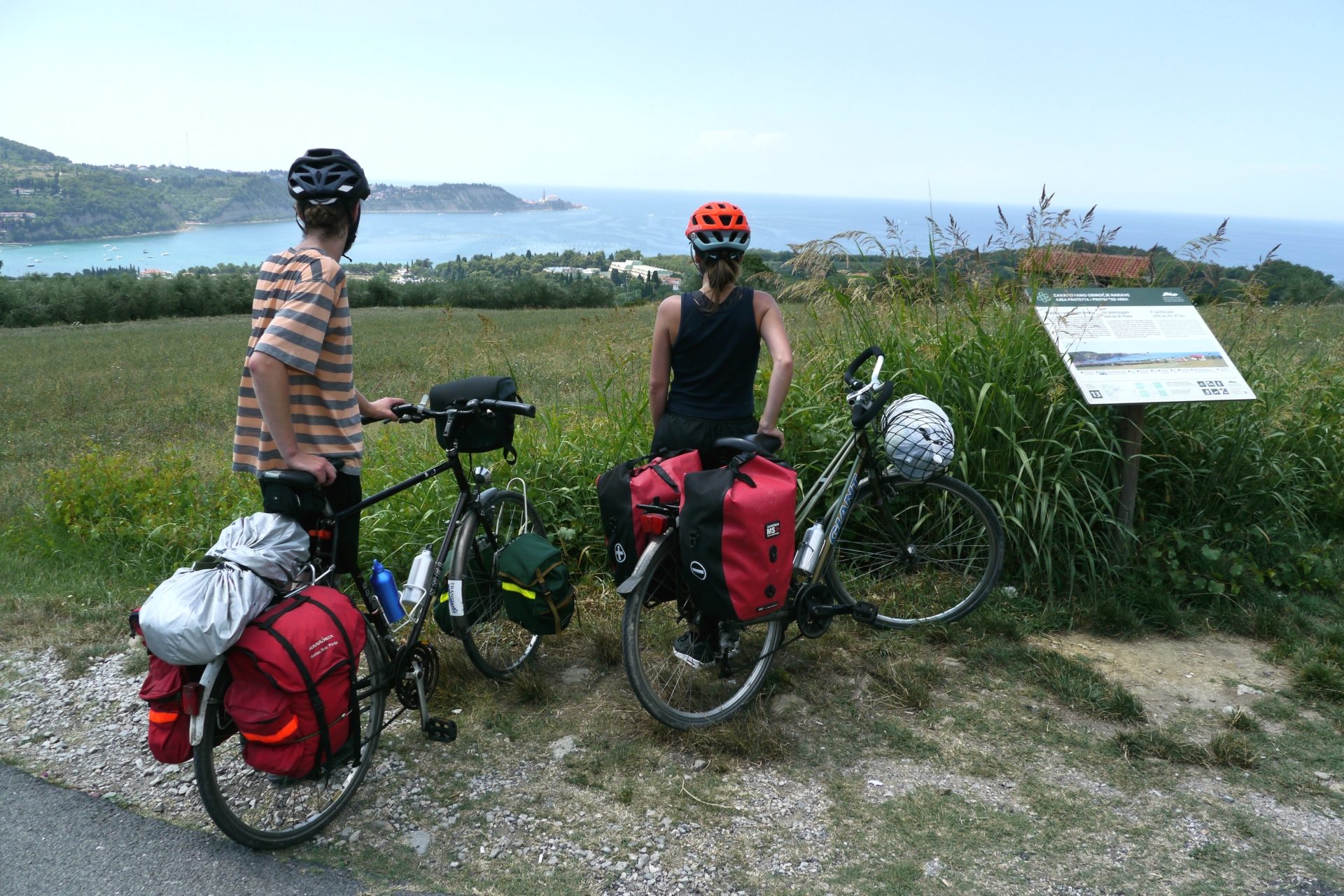
The main approach is from the large Strunjan Stjuža car park, a short, mostly level walk from the Saltpan House. The last stretch follows a gravel embankment through the salt pans. The walk from the Strunjan bus stop is a little longer, and walking and cycling routes lead in from Portorož, Piran and Izola. The exhibition and toilets have step-free access, but the full nature trail is unsuitable for wheelchairs and strollers. On summer weekends the car park fills early.
Interesting Facts
1
The Adriatic's highest flysch cliff
The cliff above the northern shore rises about 80 m, the highest flysch cliff on the Adriatic. Flysch is made of alternating layers of marl and sandstone. The softer layers wear away faster than the harder ones above them, so the face keeps crumbling and changing shape. Conservation rules here protect that process instead of trying to engineer it away, which is why the shore below stays unbuilt. From the cliff-top path you are looking at a landform that is still changing.
2
The longest natural shoreline left on the Gulf of Trieste
The coast between Grado in Italy and Savudrija in Croatia runs for about 130 km, and almost all of it has been built on, filled in or embanked. The roughly 4 km below the Strunjan cliff is the longest continuous stretch that has escaped this. There are no promenades, no sea walls and no development on the shore itself. The pebble beach at the foot of the cliff is shaped only by rain, wind and sea.
3
A protected area that reaches into the sea
Strunjan is the only state-level protected area in Slovenia whose boundary extends into the sea, taking in a belt of water roughly 200 m wide along the shore. The marine part covers about 124.4 hectares, close to 29 percent of the park. That is what makes the park unusual rather than simply scenic. Navigation and anchoring are prohibited in the central reserve around Holy Cross Bay and Ronek.
4
Stjuža, Slovenia's only sea lagoon
Stjuža is the only sea lagoon on the Slovenian coast. It was an open bay until local people built a dam to enclose it for fish farming, leaving it linked to the sea only by a narrow channel. The name comes from the Italian chiusa, meaning closed. The shallow water moves with the tide but has no waves or currents. That is why wading birds come here to feed, shelter and nest, and why wooden observation points stand along its edge.
5
Protected Piran salt, harvested the traditional way
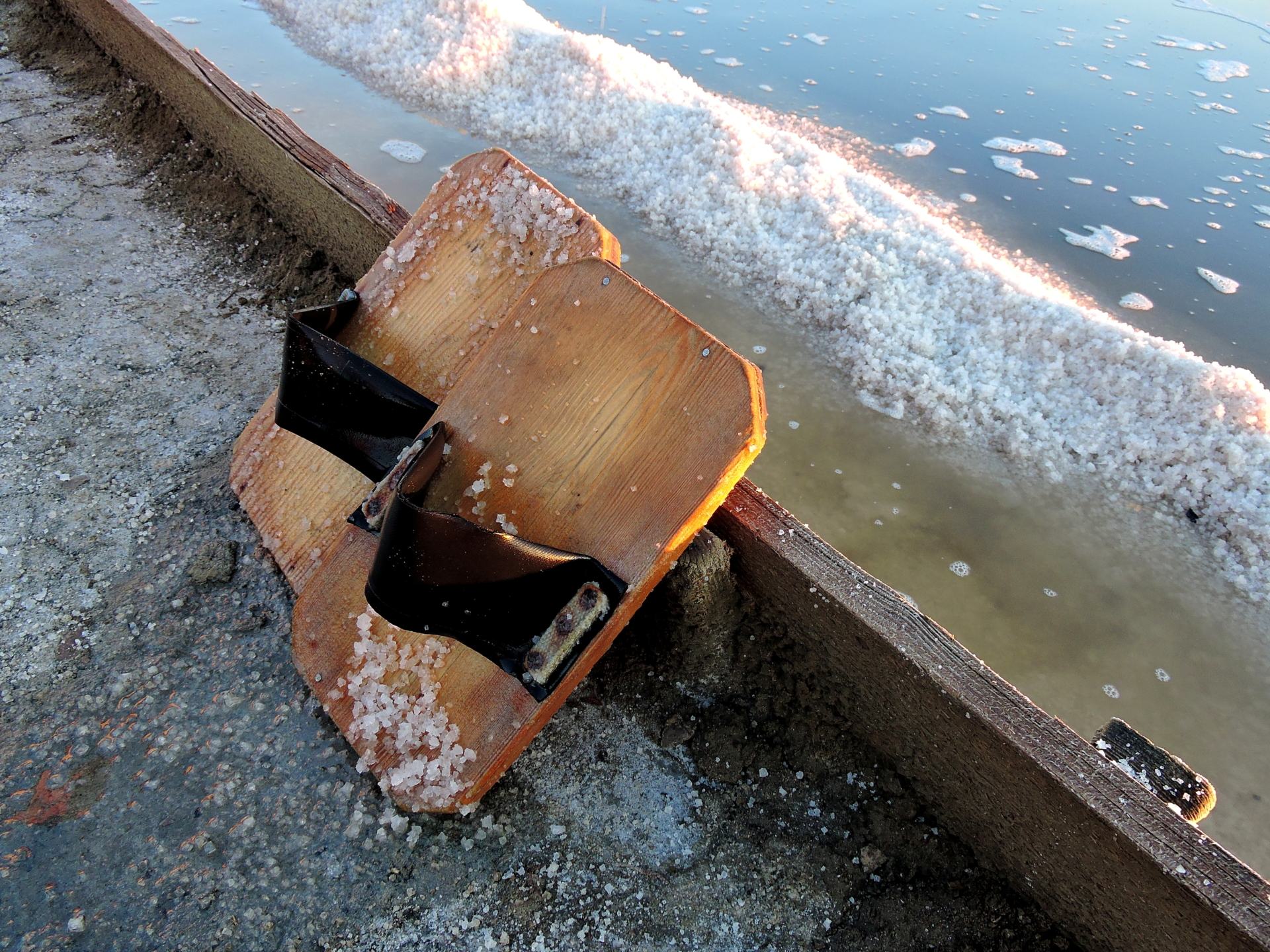
Piran salt (Piranska sol) has held EU Protected Designation of Origin status since 2014. Every production step takes place in Sečovlje Salina Nature Park and Strunjan Nature Reserve, so the Strunjan pans are part of the protected production area. The salt is still harvested almost entirely by hand, using methods developed over seven centuries. Beneath the brine lies petola, a cultivated biological layer that keeps the crystals from mixing with the mud and acts as a natural filter.
6
Four Natura 2000 areas in one small park
The park covers only 428.6 hectares, yet four Natura 2000 areas lie within it: three under the EU Habitats Directive and one under the Birds Directive. The bird area covers the entire marine part of the park, including the lagoon and the salt pans. Declared in 2013 as Slovenia's first marine Natura 2000 site, it protects roosting sites used by the Mediterranean shag.
7
An exhibition in a saltworker's house
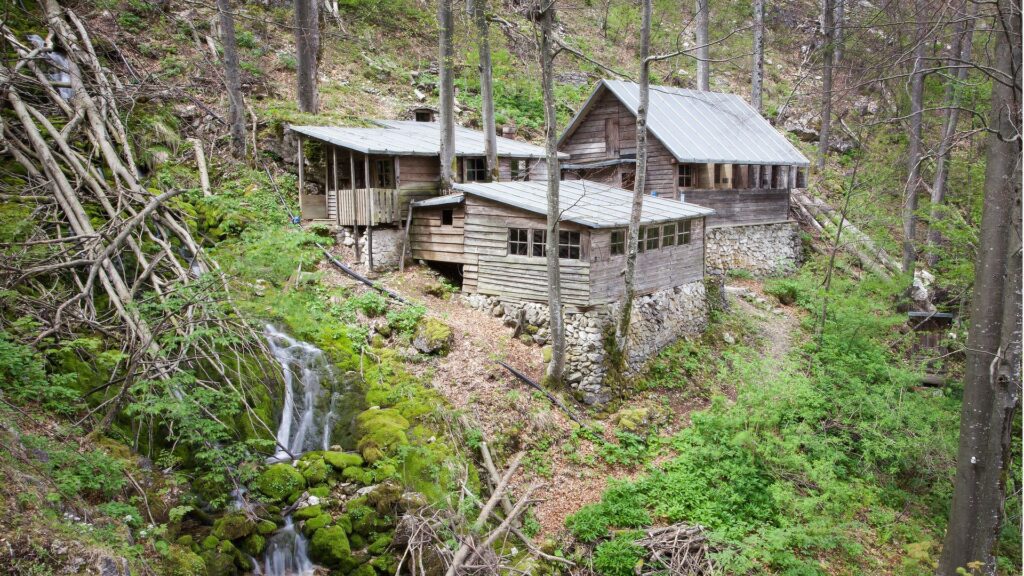
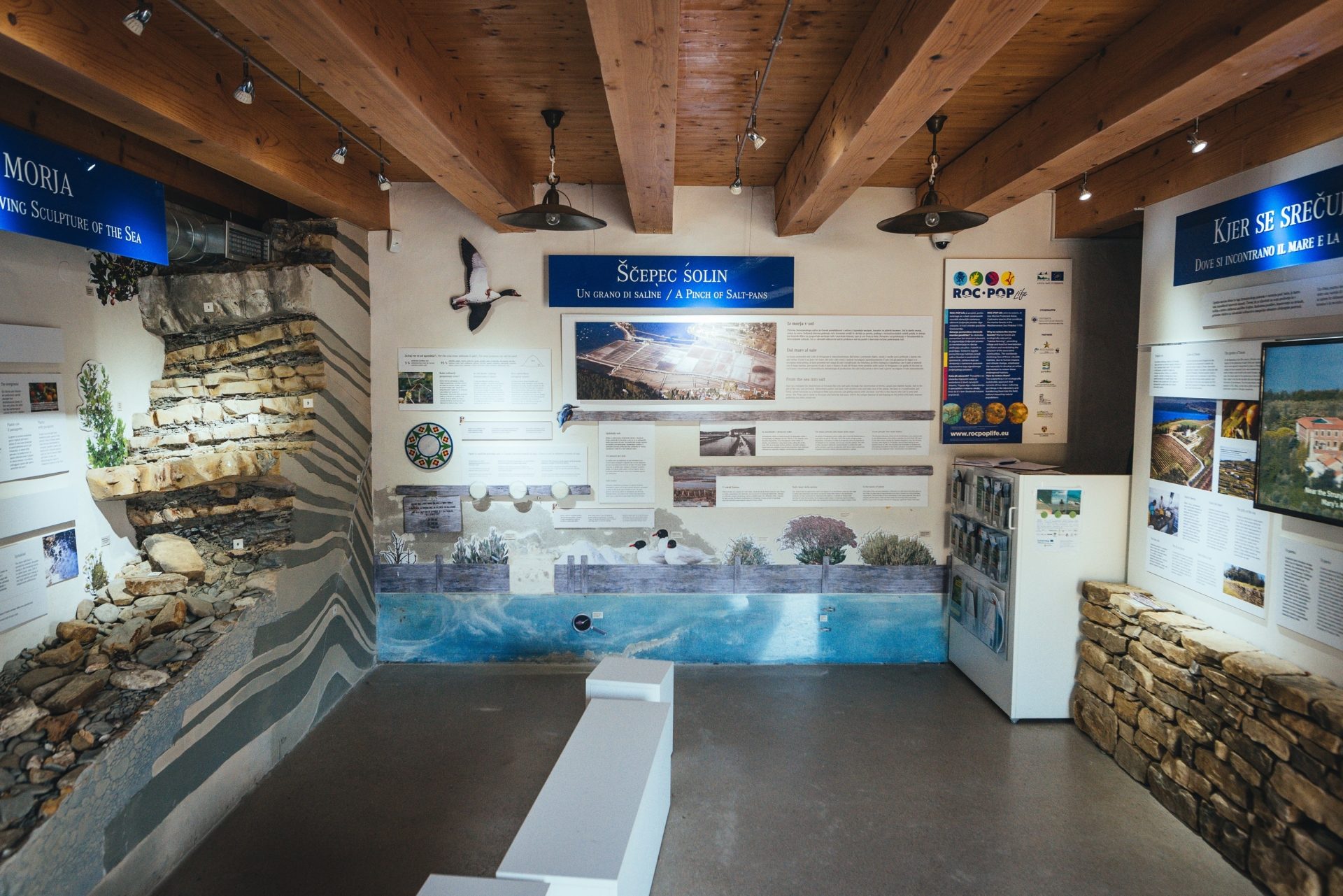
The Landscape Park Strunjan Centre occupies restored saltpan buildings in the middle of the working pans. The older building is a textbook example of saltpan architecture, with the salt store on the ground floor and the saltworker's family home above it. Inside, the free Park of the Sea exhibition and a short film explain how the sea, the geology of the cliffs and the salt-making tradition are linked. The exhibition is presented in Slovenian, Italian and English.
8
A landscape of terraces and dry-stone walls
The Strunjan Peninsula never developed the dense hilltop villages typical of Istria. Instead, houses stand scattered across large areas of farmland, separated by terraces, dry-stone walls and hedges. Local farmers built the terraces to make use of the mild sea climate and the flysch soil for early vegetables and fruit. This scattered pattern is a protected part of the park in its own right, not just a backdrop to the natural features.
9
A cross on the cliff since 1600
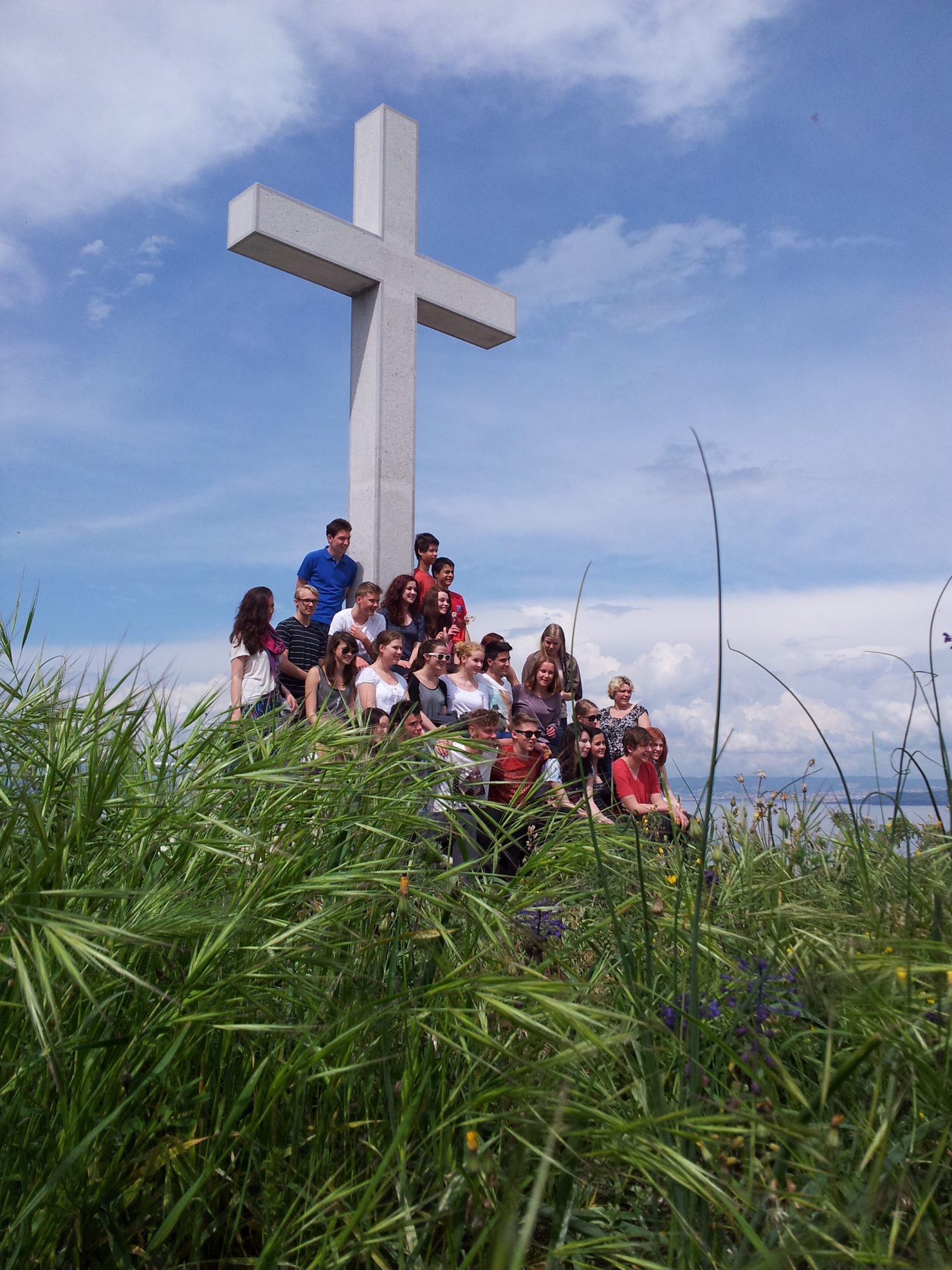
A cross has stood on the cliff edge above Moon Bay since 1600. It was put there to warn sailors that land was close and to mark the position of the Church of the Apparition of the Virgin Mary. Local tradition says a storm once threatened ships below until the Virgin appeared and the sea calmed. Stories still circulate of tears and footprints pressed into the rock nearby. The cross is a stop on the cliff route and the point where the steep path down to the bay begins.
10
Summer departures for the cliff tours
From 1 June to 15 September, the park does not run its two-hour tour or its one-hour cliff tour after 12:00. The longer route covers about 4 km with little shade, and extreme heat makes the walk strenuous. The one-hour tour of the salt pans and lagoon continues.
Visitor Wisdom
Traveler Insights
Combined public visitor ratings from Google and Tripadvisor. Last verified August 2026.
Visitors often mention the views across the Gulf of Trieste. On a clear day you can see Trieste, Miramare and the Julian Alps. The steep path down to Moon Bay leads to a pebble beach known for its clear water. Walkers appreciate the shade in the woodland on the cliff-top section. At the salt pans, the small exhibition helps explain what visitors see in the working basins.
The Stjuža car park and the 14 municipal spaces in Strunjan centre charge year-round. The olive-grove stretch has little shade, and the steep descent to Moon Bay includes steps. Night visits to the nature reserves are not allowed. From the Strunjan bus stop, it is about 850 m to the Saltpan House. The exhibition and toilets have step-free access, but the full circuit is unsuitable for wheelchairs and strollers. Salt is not sold on site.
Best for walkers who want a scenic half-day circuit, photographers chasing coastal light, birdwatchers heading for the lagoon, and families with children old enough to walk 5 km. For a fuller day, combine it with Piran City Walls nearby. Less ideal for visitors with strollers or limited mobility: the approach and much of the circuit are unpaved, and the cliff path has roots and uneven forest ground. It is not a quick stop either, since the shortest worthwhile loop is still about 1.5 km, and midsummer afternoons are best avoided.
Allow for the heat on the exposed cliff route. From 1 June to 15 September, the park does not run its two-hour tour or its one-hour cliff tour after 12:00; the one-hour lagoon and salt-pan tour continues. Wear suitable shoes for the steep descent to Moon Bay. The Saltpan House normally closes at 15:00 on weekdays and is closed on public holidays. Salt is not sold there. Book guided visits at least five days ahead, and check that you are heading to Strunjan rather than the larger saltworks at Sečovlje.
On a warm day, walk the circuit counterclockwise: you reach the shaded cliff-top section first and finish the exposed olive-grove stretch before the heat builds. If you can, save the salt pans for late afternoon, when low light picks out the shapes of the basins and the birds are most active. And go inside the Saltpan House even if the exhibition looks small from outside. The short film explains what you have just walked through better than the trail boards do, and there are free toilets and a drinking fountain.
Children tend to enjoy hunting for shells and unusual stones on the pebble shore and spotting lizards and water birds from the lagoon observation points. Salt-making works well too: children grasp it quickly once they see the basins. The walk is the harder part. The full circuit is a genuine 5 km with about 100 m of climbing, the descent to the beach needs supervision, and long stretches have no shade. Younger children do better on the shorter lagoon and salt-pan loop.
In clear morning air, the cliff-top path gives a wide view across the Gulf of Trieste, sometimes as far as the Julian Alps. Late afternoon light picks out the shapes of the salt-pan basins and embankments. A longer lens helps with birds on the lagoon. Midday light can be harsh on the exposed sections. Keep well back from the unfenced cliff edge.
Visitors remember the scale of the cliff seen from below and the stretch of shore without a promenade. Inland, the quiet of the lagoon and the sight of salt still being harvested by hand make a different impression. Some find the visit less rewarding in the summer heat or arrive expecting a built attraction. Many would choose a cooler month for another walk.
Visitor Reviews
Write a review
No visitor reviews yet.
Be the first to share your experience.
No reviews yet!
Sorry! Please login first to submit reviews.