- Visitors consistently rate this among the strongest short nature walks in Slovenia.
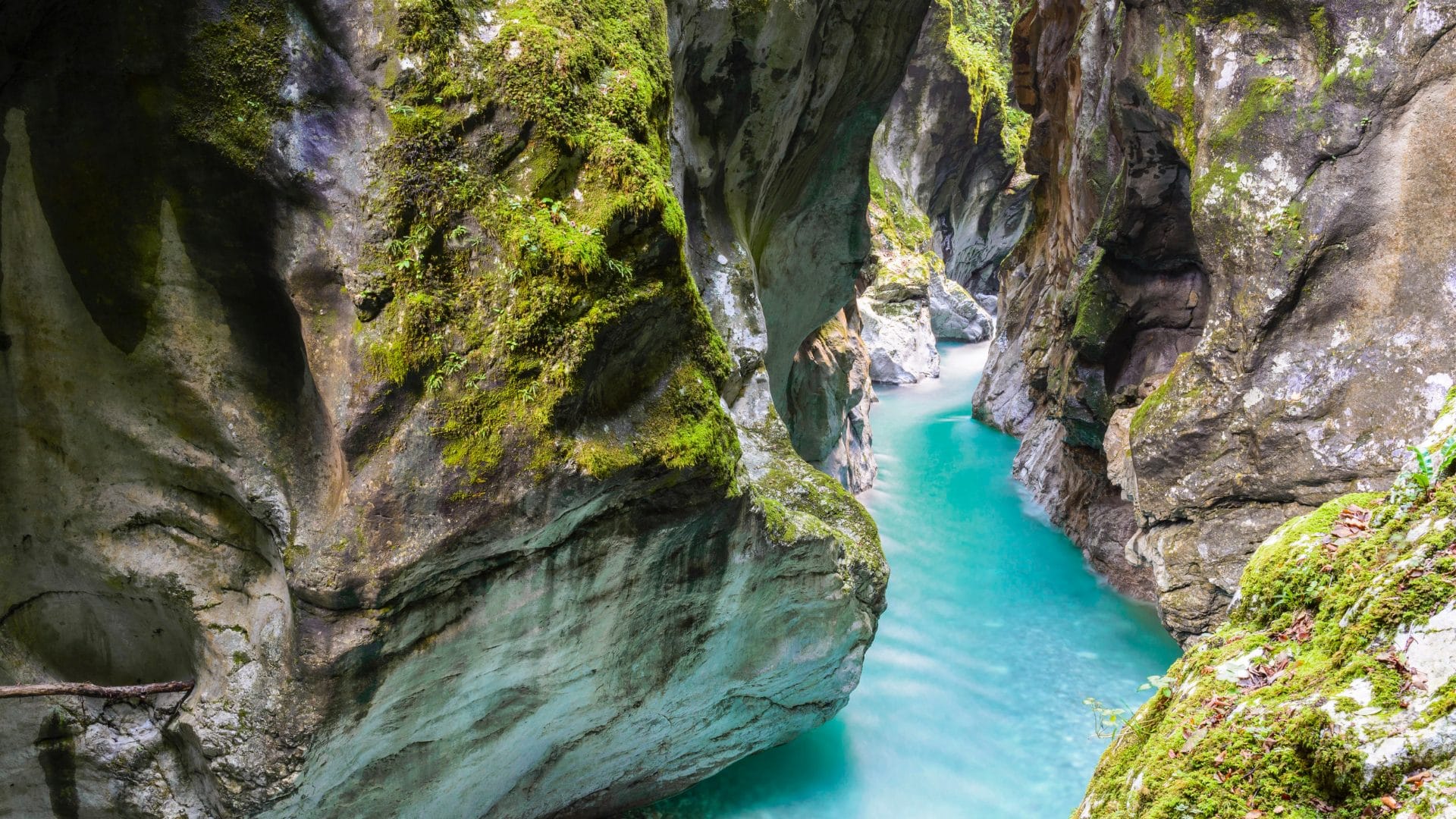
- The loop is only about 2 km, but it packs a lot into that distance: turquoise pools, hand-cut paths through the rock and the Devil’s Bridge high above the river.
- Allow one and a half to two hours and expect around 500 steps, most of them on the climb out.
- If you need a level path or a quick photo stop, plan something else.
Local name: Tolminska korita
6
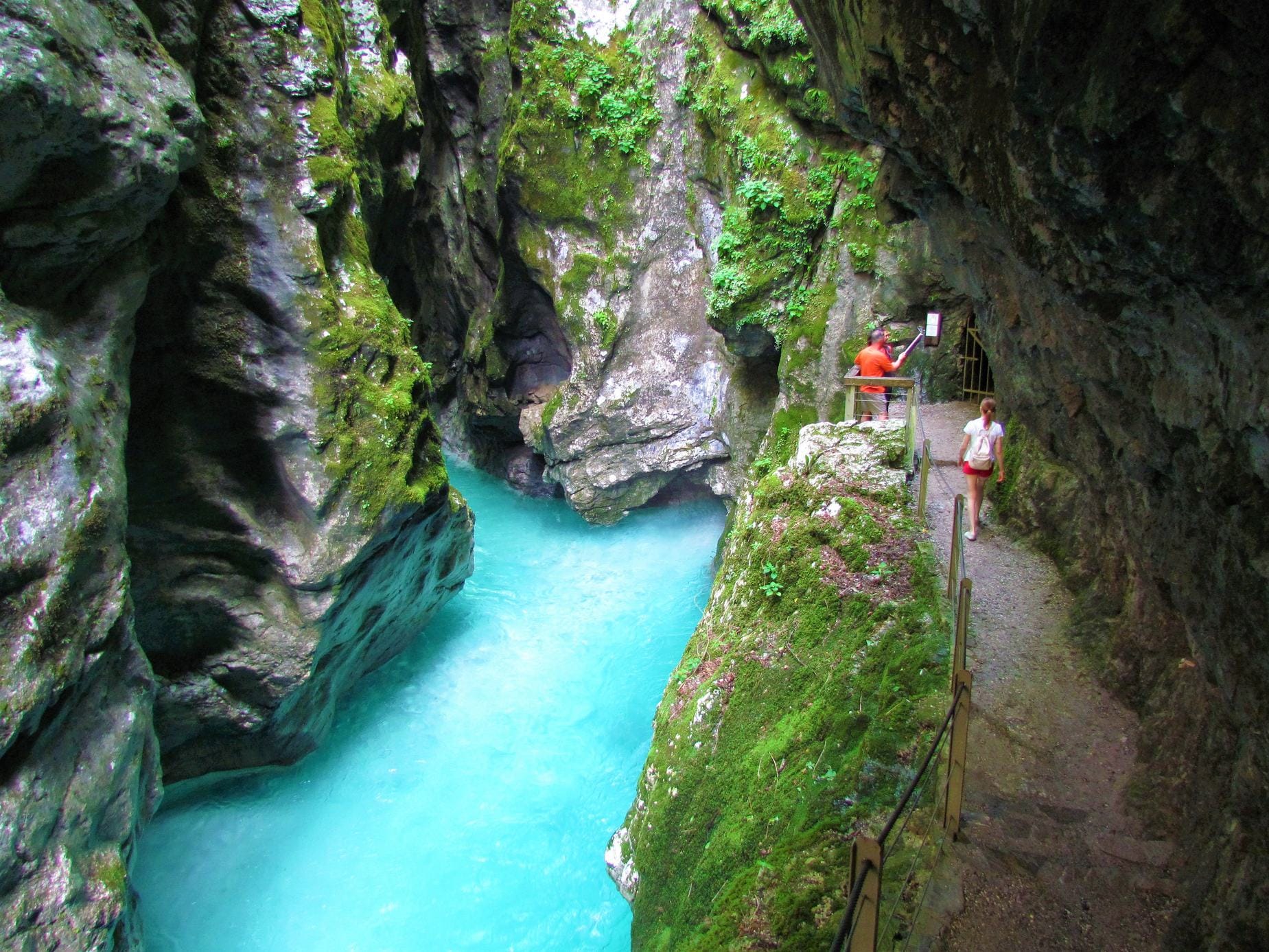

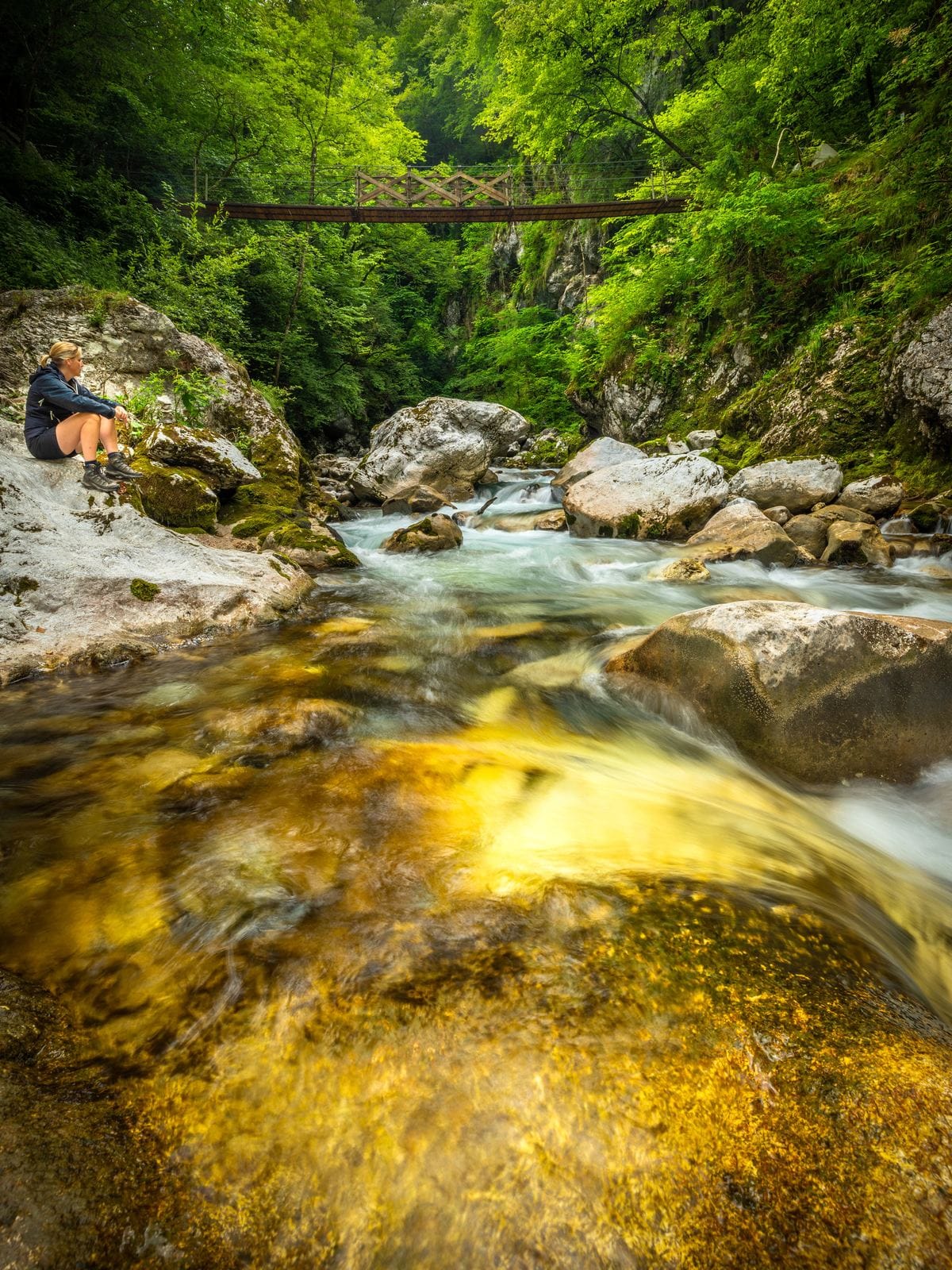
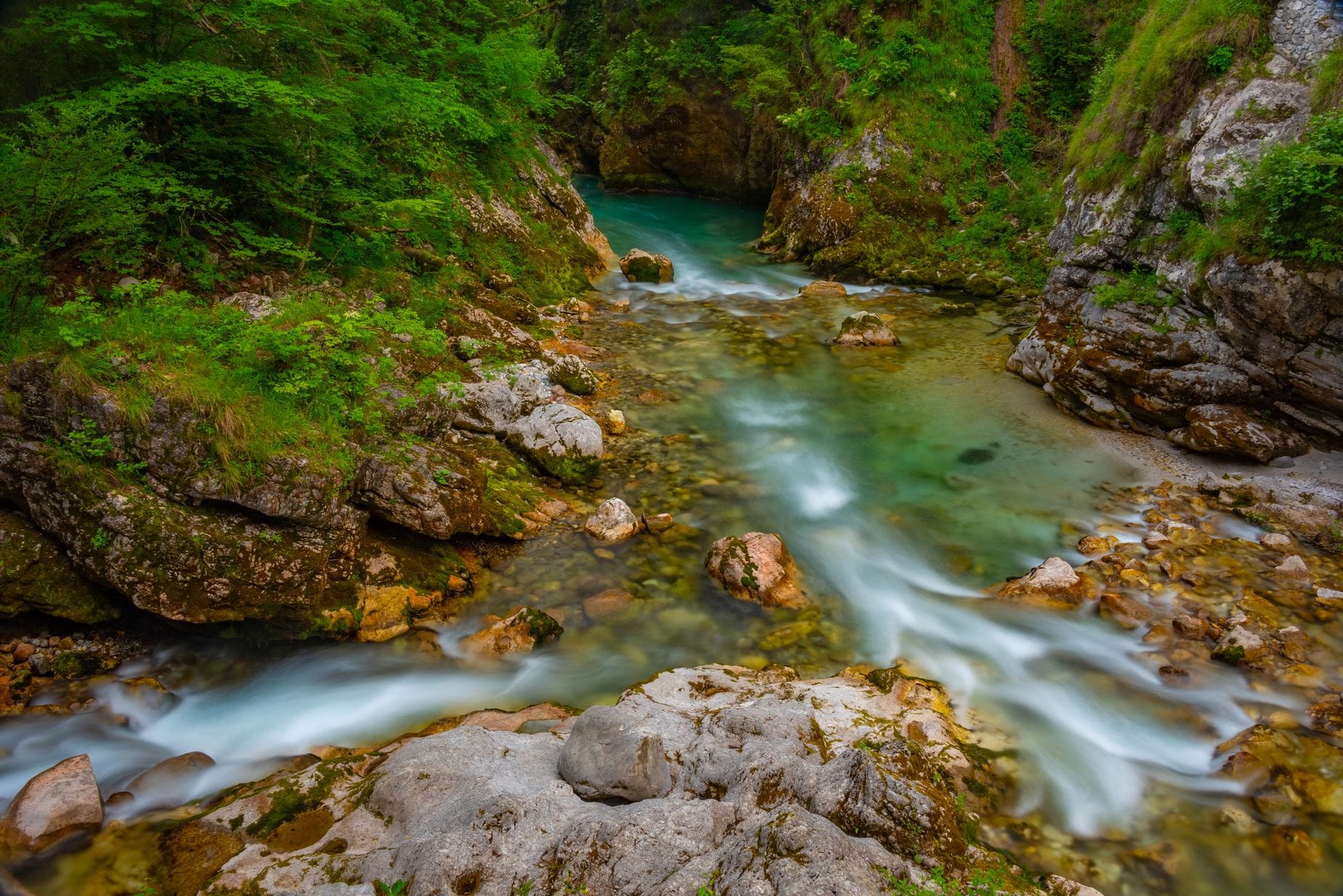
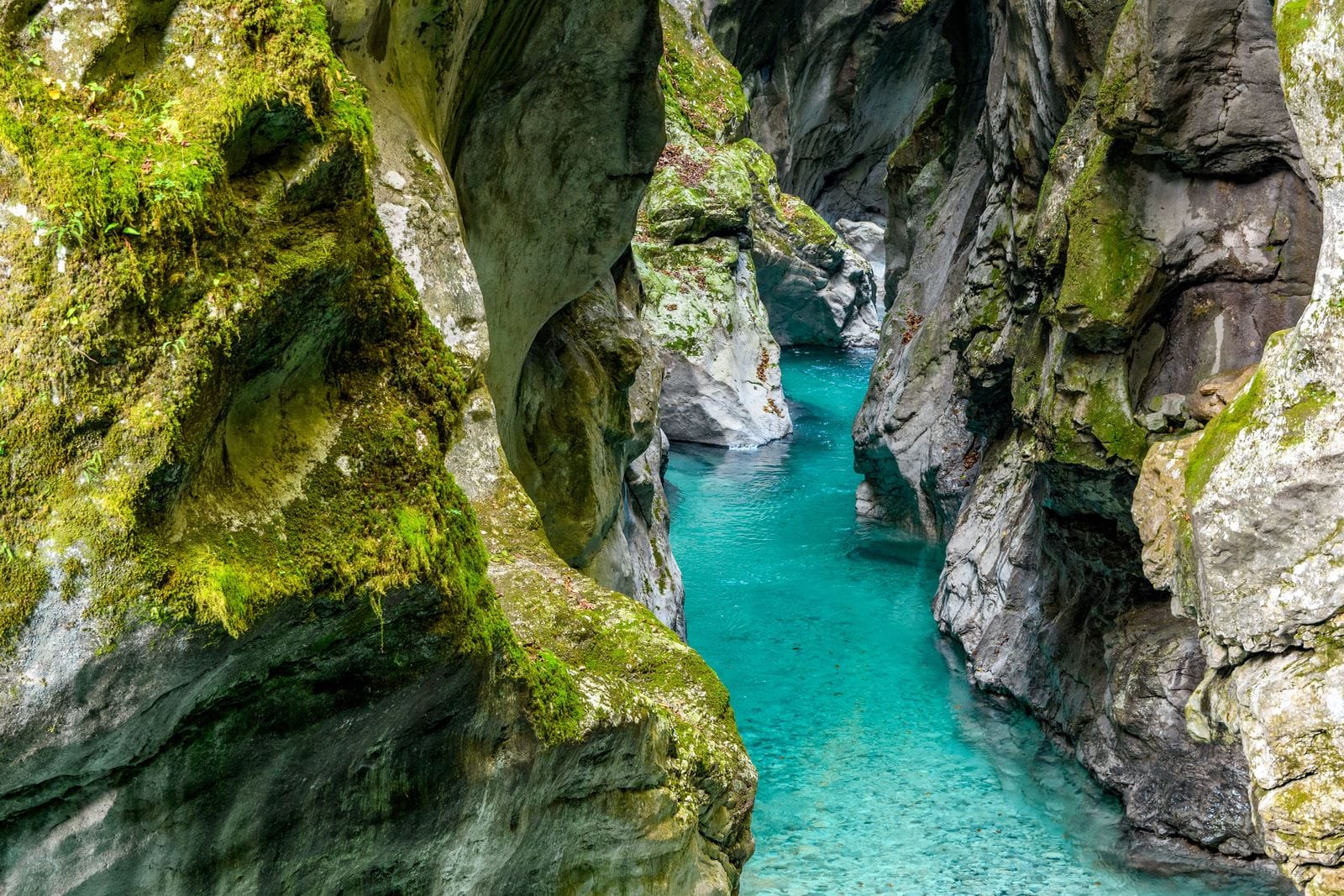
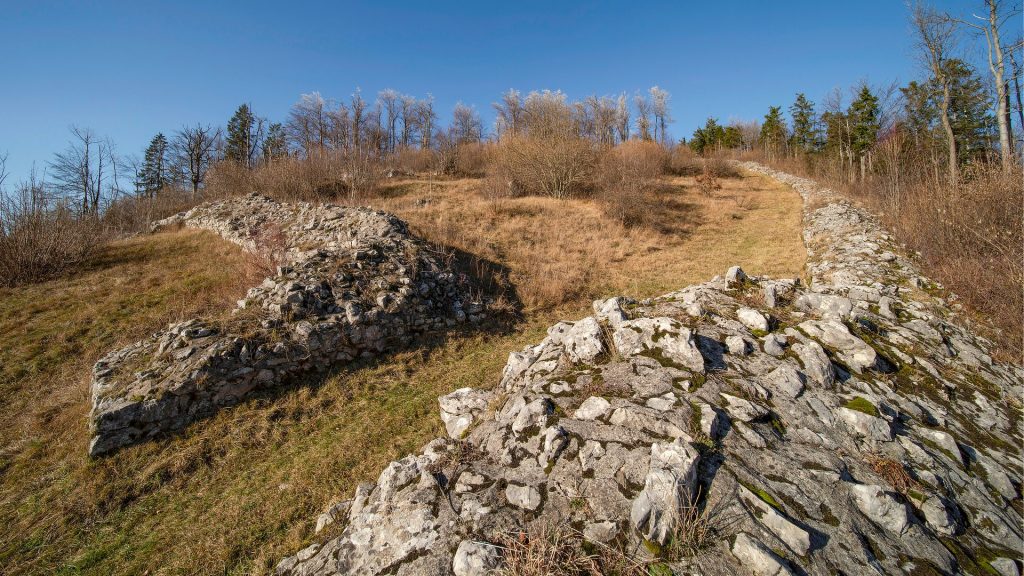
Just north of Tolmin, the Tolminka and Zadlaščica rivers run through two narrow limestone gorges, with turquoise water between moss-covered walls. A loop of about 2 km leads down to where the rivers meet, the lowest point in Triglav National Park, past a boulder wedged high between the cliffs and back up across the Devil’s Bridge, about 60 m above the water. Entry is by timed slot and busy slots sell out, so it is worth booking ahead. Javorca, the memorial church deeper in the Tolminka Valley, makes a natural second stop the same day.
Plan Your Visit
<
>
Opening Hours
Closed now
Opens in 13h 4m
Today: 09:00–18:00
Early autumn
Opening hours change through the season. In 2026 the gorges stay open until 23 December, then close for winter until they reopen in March 2027; the exact reopening date is set anew each year. Entry numbers are capped by the hour, so busy slots can sell out before you arrive.
Mon 09:00
Early autumn09:00–18:00
Mid autumn09:00–17:00
Late autumn09:00–15:00
Pre-holiday winter opening09:00–14:00
Spring opening09:00–18:00
May09:00–19:00
Summer08:00–19:00
Entry Fee
Paid
Adults EUR 8.00–12.00
Ticket prices
Official source
Tolmin Gorges Entrance Ticket
Admission to the circular route through the Tolminka and Zadlaščica gorges. Entry is by one-hour time slot and the price depends on the season.
March–May and October–December
Adults
€8.00
Students up to 26 years
Valid student ID required.
€6.00
Seniors over 65 years
Valid ID required.
€6.00
Children aged 6–15
€4.00
Children aged 0–5
€1.00
Visitors with disabilities
Valid disability card required.
€1.00
Julian Alps card: Soča Valley holders
Free entry on presentation of a valid card.
Free
June–September
Adults
€12.00
Students up to 26 years
Valid student ID required.
€10.00
Seniors over 65 years
Valid ID required.
€10.00
Children aged 6–15
€6.00
Children aged 0–5
€1.00
Visitors with disabilities
Valid disability card required.
€1.00
Julian Alps card: Soča Valley holders
Free entry on presentation of a valid card.
Free
Optional experiences
Guided tour for individual visitors
Runs every Monday in July and August at 13:00 and lasts about ninety minutes. The guide fee is charged on top of the entrance ticket.
Guide fee per person
Charged in addition to the entrance ticket.
€2.00
Guided tour for groups
Booked in advance for the whole group and charged on top of entrance tickets. The tour lasts up to two hours. Registration is required at least three working days before arrival.
Groups up to 9 persons
Price per group. Cancellation less than 24 hours before arrival is charged in full.
€60.00
Groups 10–25 persons
Price per group.
€100.00
Groups 26–50 persons
Price per group.
€140.00
Waiting hour or each additional hour
Price per group.
€25.00
Group Entrance Ticket
Reduced admission for groups of at least 15 booked by a legal entity, such as a school, association, public institution or company. Register at least three working days before arrival; payment is by voucher or advance invoice.
March–May and October–November
Group ticket — adults
€7.00
Group ticket — children aged 6–15
€3.50
Children aged 0–5
€1.00
Visitors with disabilities
Valid disability card required.
€1.00
June–September
Group ticket — adults
€11.00
Group ticket — children aged 6–15
€5.50
Children aged 0–5
€1.00
Visitors with disabilities
Valid disability card required.
€1.00
Official prices updated:
26 Sep 2026
- Admission costs less from March to May and from October to December than from June to September.
- Students, seniors, children and visitors with disabilities pay reduced prices, and entry is free with the Julian Alps card: Soča Valley.
- Guided tours are charged on top of admission.
- Groups of at least 15 booked through a legal entity, such as a school, association, public institution or company, pay reduced group rates from March to November.
Parking Situation
Large parking
View options
Parking Options
Official source
Situation: Large parking available
Parking info updated: 22 Aug 2026
- Three car parks serve the gorges.
- P1, beside the entrance, is small and is charged by the hour from 08:00 to 19:00 between Easter Sunday and 30 September; outside that period it is free.
- P2, at the edge of Tolmin, and P3, at the entrance to the town, are free and open to cars and motorhomes from 08:00 to 22:00.
- P2 takes pre-booked buses and P3 has more bus spaces.
- Free disabled spaces are just before the entrance, and up to five motorcycles can park free beside the P1 parking meter.
Visitor Requirements
Age guidance
View requirements Requirements
Visitor Requirements
Suitable child age groups
- Toddlers (2–3 years)
- Young children (4–7 years)
- Older children (8–12 years)
- Teenagers (13–17 years)
Important
- No minimum age or height applies.
- The route includes about 500 steps and is not suitable for strollers, so the operator recommends carrying small children in a child carrier. The walk suits children who can manage stairs.

Parking Fee
Free and paid options

Child safety note
Near water+4 more

Access Notes
Best visited early

Suitable For
Couples+4 more

Stroller accessibility
No

Wheelchair access
Partly

Estimated visit time
1–2 h

Family Friendly
Partly
Pet Friendly
Yes
Walking Difficulty
Moderate

Best season
Spring, Summer, Autumn
Highlights
Cave entrance on the route
Gateway into a national park
Natural bridge formed by a wedged boulder
River-carved limestone gorge
Confluence of two gorges
Historic bridge high above the gorge
Natural warm spring in the gorge
Turquoise river pools
Safety Notes
!Near water
!Slippery stone surfaces possible
!Steep path
!Wear suitable footwear
Photo Tip
The best shots are on the low path beside the Tolminka, where moss-covered walls frame turquoise water in soft light. Overcast days work better than hard midday sun, which leaves the walls in deep shadow. On the Devil’s Bridge, shoot straight down for scale. Flying a drone here needs prior permission from Triglav National Park.
Before You Go
!Can be busy in summer
!Check opening hours
!Dogs must be kept on a leash
!Drone use requires prior permission
!Many steps on the route
!Protected area
!Seasonal access
!Suitable footwear required
!Swimming prohibited
!Ticket required
Access & Parking
Detailed access info in Plan Your Visit ↑
The drive runs through Tolmin and Zatolmin, where the last stretch is narrow. In summer the small car park at the entrance is paid and fills quickly, so the free P2 car park at the edge of town is usually the easier choice, with a short walk or a free seasonal shuttle to the gate. P3, at the entrance to Tolmin, is the main car park for motorhomes and buses, and you can also walk in from Tolmin bus station.
Interesting Facts
1
Two rivers, one gorge system
The name Tolmin Gorges covers two separate canyons that meet just north of the town. The Tolminka has cut the deeper and more open of the two, while the Zadlaščica carves a narrower, more overgrown slot beside it. The rivers join inside the gorges themselves, which the site managers describe as the only confluence of its kind inside a gorge anywhere in Slovenia. That junction is why the marked route works as a loop rather than an out-and-back walk.
2
The lowest point in Triglav National Park
Where the Tolminka and the Zadlaščica meet, the ground sits at about 180 metres above sea level. That makes this the lowest point in Triglav National Park and its southernmost regular entry point. The park is better known for its high limestone summits, so arriving at river level among moss and hardwood can come as a surprise. The low altitude also explains the mild air and the dense vegetation crowding the water.
3
A warm spring hidden in cold water
Part-way along the Tolminka path a small cave in the rock releases water averaging between 18.8 and 20.8 degrees Celsius, noticeably warmer than the river it feeds. Rain sinks deep through the limestone, is warmed at depth and rises again along fractures. The spring is easiest to see when the Tolminka runs low, so late summer and autumn are the reliable months. The spring cave itself is fenced and is viewed from the path.
4
The Devil’s Bridge and the road to Čadrg
The Devil’s Bridge crosses about 60 metres above the Tolminka and carries the road that links Tolmin with the high villages of Zadlaz-Čadrg and Čadrg. It is working local infrastructure rather than a viewing platform built for visitors. Slovenian tradition attaches the name Devil’s Bridge to crossings over narrow, dangerous chasms.
5
Bear’s Head, a boulder caught in mid-fall
In the narrowest part of the Zadlaščica canyon a large rock sits jammed between the two walls, high above the water. It came loose from the cliff and wedged before it reached the river, forming a natural bridge across the slot. Seen from the viewing point on the trail, its moss-covered outline resembles the head of a bear, which is how it got its local name.
6
Dante’s Cave and a persistent literary legend
Above the gorges, the marked route reaches the entrance to Zadlaška Cave, named after the nearby village of Zadlaz. Its second name honours Dante Alighieri, who by local tradition was hosted in Tolmin in the early fourteenth century and found inspiration here for the Inferno; the connection remains a legend rather than documented history. The cave runs about 1,140 metres through three chambers and reaches 41 metres deep, and members of the Krpelj mountaineering club first surveyed it in 1922. Exploring inside is a separate guided caving trip.
7
Paths cut by hand in the 1950s
The routes visitors follow today were cut into the rock between 1953 and 1958 by Turistično društvo Tolmin, the local tourist society, which then looked after them for decades. Two branches were opened: one along the Tolminka to the warm spring, the other along the Zadlaščica to Bear’s Head. The work was done by hand, and the trail still passes through the short galleries and tunnels cut into the cliff faces at the time.
8
Duga baba, the guardian at the cave mouth
A carved wooden figure stands beside the entrance to Dante’s Cave. She represents Duga baba, one of the wise women of Tolmin folklore who, in local tradition, made sure that nobody entered the underground world uninvited. The Soča Valley tourist board commissioned the sculpture and unveiled it in 2021 to bring local storytelling back to the site.
9
The Zadlaščica shelters a rare native trout
The two rivers carry cold, highly oxygenated water, and that makes them important well beyond the scenery. The Zadlaščica is among the upper Soča tributaries known to hold genetically pure marble trout, Salmo marmoratus, a fish native to the Adriatic basin, and these populations are used as source stock for conservation work. Visitors rarely see the fish from the path, but they are one reason the water is protected rather than used for recreation.
10
Why entry is timed
Visitor numbers rose so sharply that the managers now cap how many people may enter during each hour. Tickets carry a one-hour entry slot and can be bought online, at the Tolmin tourist office or at the gate, and busy slots do sell out. A one-way walking direction was introduced at the same time. Two free car parks and a free summer shuttle were added to keep traffic out of the narrow village road through Zatolmin.
Visitor Wisdom
Traveler Insights
Combined public visitor ratings from Google and Tripadvisor. Last verified August 2026.
- The colour of the Tolminka comes up again and again, and many visitors describe it as looking unreal.
- They also love the moss-covered walls, the cool air on a hot summer day and the feeling of walking inside the rock rather than looking down on it.
- There is a lot to find on one short loop, and the hourly entry cap keeps the paths from feeling crowded, even in August.
- The climb out is longer and steeper than the walk in, and it comes at the end of the loop.
- Your ticket is for a one-hour entry slot, so arriving well before it will not get you in sooner.
- In summer the car park at the entrance fills by mid-morning, and the free shuttle is a summer-only service.
- An hour is enough to rush the loop; two hours lets you enjoy it.
- The water is genuinely cold, and the air deep in the gorge is noticeably cooler than in town, so a light extra layer is worth carrying.
- Best for: couples and solo travellers who want a couple of hours in real landscape, families with school-age children, photographers working in low light, anyone based in the Soča Valley, and visitors who like a site where hourly entry limits keep the paths from feeling crowded.
- Less ideal for: wheelchair users and visitors with substantial mobility limitations, who can reach the Devil’s Bridge but not complete the loop; families relying on a stroller; visitors uneasy with heights on the bridge; and anyone looking for a five-minute roadside stop.
- If you want an easier, busier and more photographed Slovenian gorge, Vintgar Gorge near Bled is the better fit.
- A frequent mistake is driving straight to the car park at the entrance in August instead of parking free at P2.
- Arriving without a booked slot on a busy day can mean losing an hour at the ticket window.
- Trainers or sandals are a poor choice on a route where suitable hiking footwear is compulsory.
- Some visitors turn back at the end of the low path and miss Bear’s Head and the Devil’s Bridge entirely.
- And if you bring a dog, plan to walk from P2, because dogs are not carried on the shuttle.
- Take the first slot of the day or come in the last two hours before closing, when the light is better and the narrow sections are quieter.
- Look for the warm spring when the river is low; in high water it disappears under the surface.
- On the Devil’s Bridge, look straight down rather than along the gorge.
- And leave time for the benches by the confluence, where locals like to stop for a picnic.
- Parents say children enjoy the tunnels, the high bridge and hunting for the bear-shaped rock, and the marked points along the route keep younger walkers going.
- The hard part is the climb out at the end, which is steep and long for short legs.
- Strollers are not suitable because of the stairs, so bring a child carrier for small children.
- Water runs beside the path for most of the route, so keep children within reach.
- The best frames are close and vertical: water against moss, the carved passages and the wedged boulder seen from the viewing point.
- Overcast days work better than bright sun, which blows out the water and leaves the walls in shadow.
- A polarising filter helps cut the glare off the pools, and the Devil’s Bridge is the place to shoot straight down for scale.
- Carry a lens cloth for the spray, and keep your kit light on a route with this many steps.
- The lasting impression is of colour and closeness: turquoise water running between narrow rock walls, in air that stays cool when the valley outside is hot.
- Many arrive planning half an hour and stay for two hours.
- The climb out is hard work, but reviews usually treat it as part of the experience rather than a complaint, and most describe the gorges as worth the detour.
Quick Facts
Estimated visit time
1–2 h
Best season
Spring, Summer, Autumn
Walking difficulty
Moderate
Family friendly
Partly
Pet friendly
Yes

Entry Fee
Paid
Access type
Stairs or steps
Help Improve This Listing
Found outdated information, a mistake, or a useful local tip? Let us know.
Suggest an Update →Help Improve This Listing
Your feedback helps us keep Explore In Slovenia accurate and useful for future visitors.
×Visitor Reviews
Write a review
No visitor reviews yet.
Be the first to share your experience.
No reviews yet!
Sorry! Please login first to submit reviews.