Most people arrive expecting a modest local collection and find something several times that size. Allow more time than you think you need; visitors who plan for two hours often say they wanted three or four. The standard of restoration across the vehicles, aircraft and artillery is unusually high for a museum of this size, and foreign visitors regularly single out the Road to Independence exhibition as the part that made recent Slovenian history make sense. Value for money comes up often, and rarely as a complaint.
Local name: Park vojaške zgodovine Pivka
11
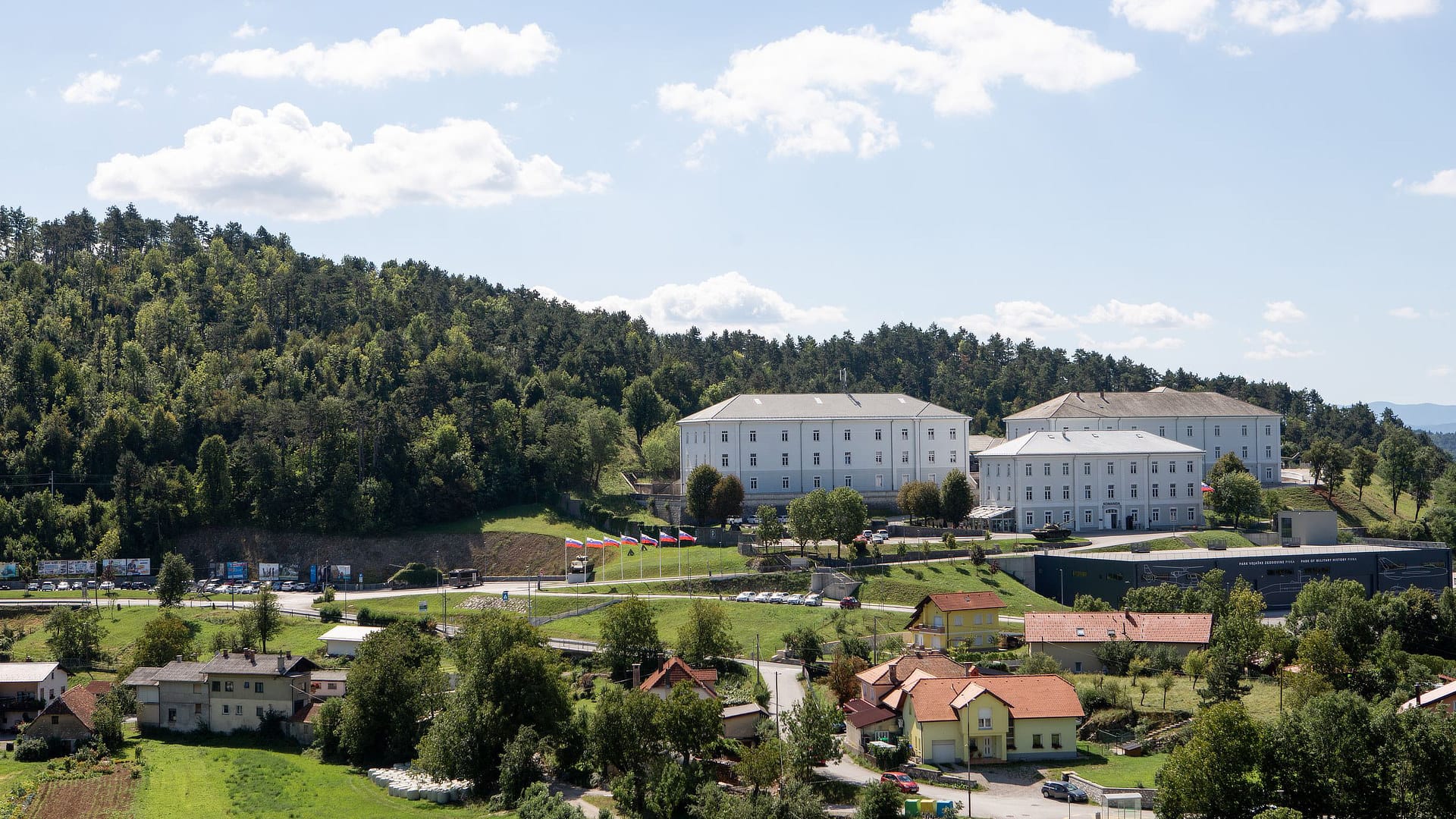
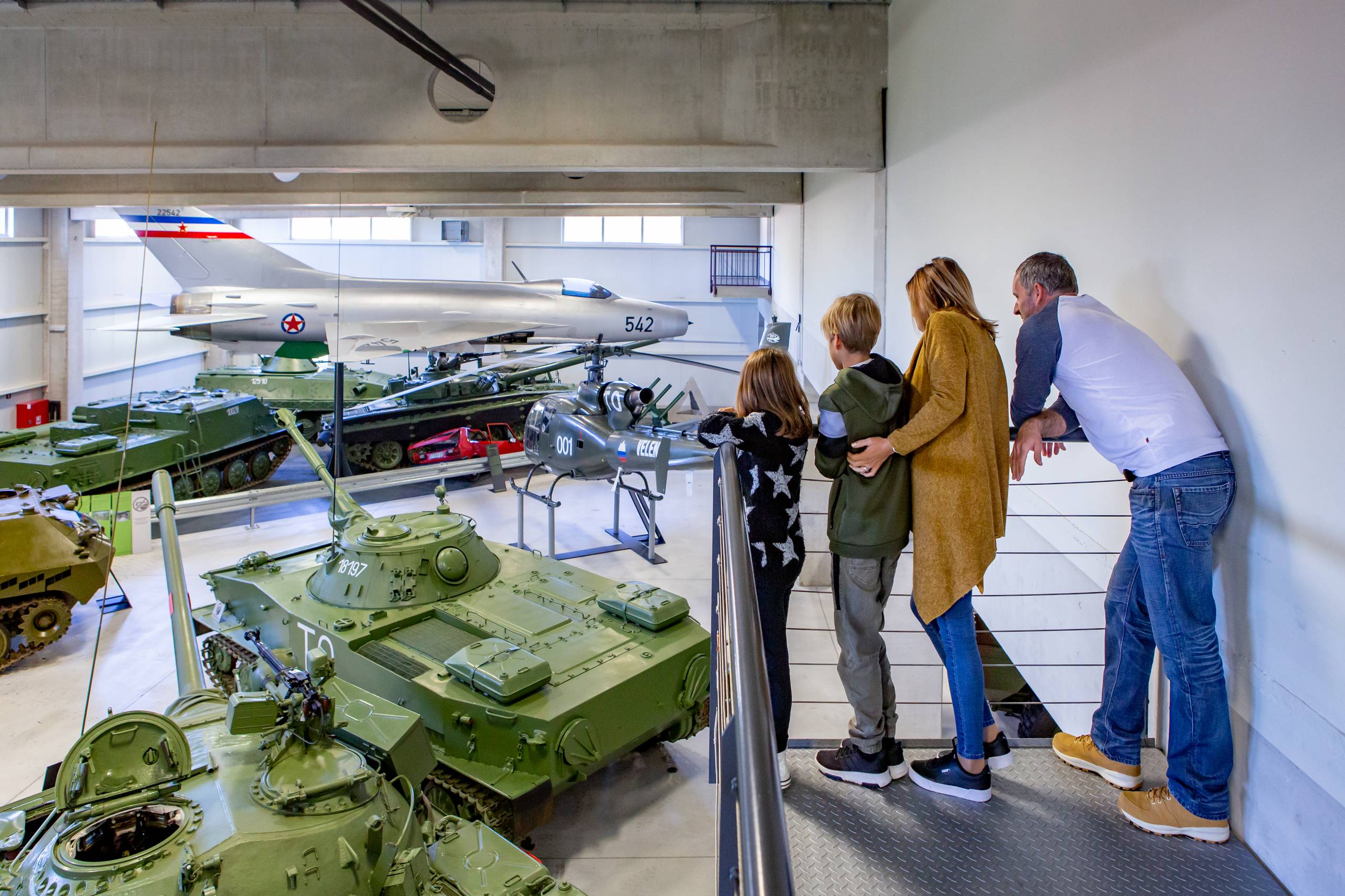
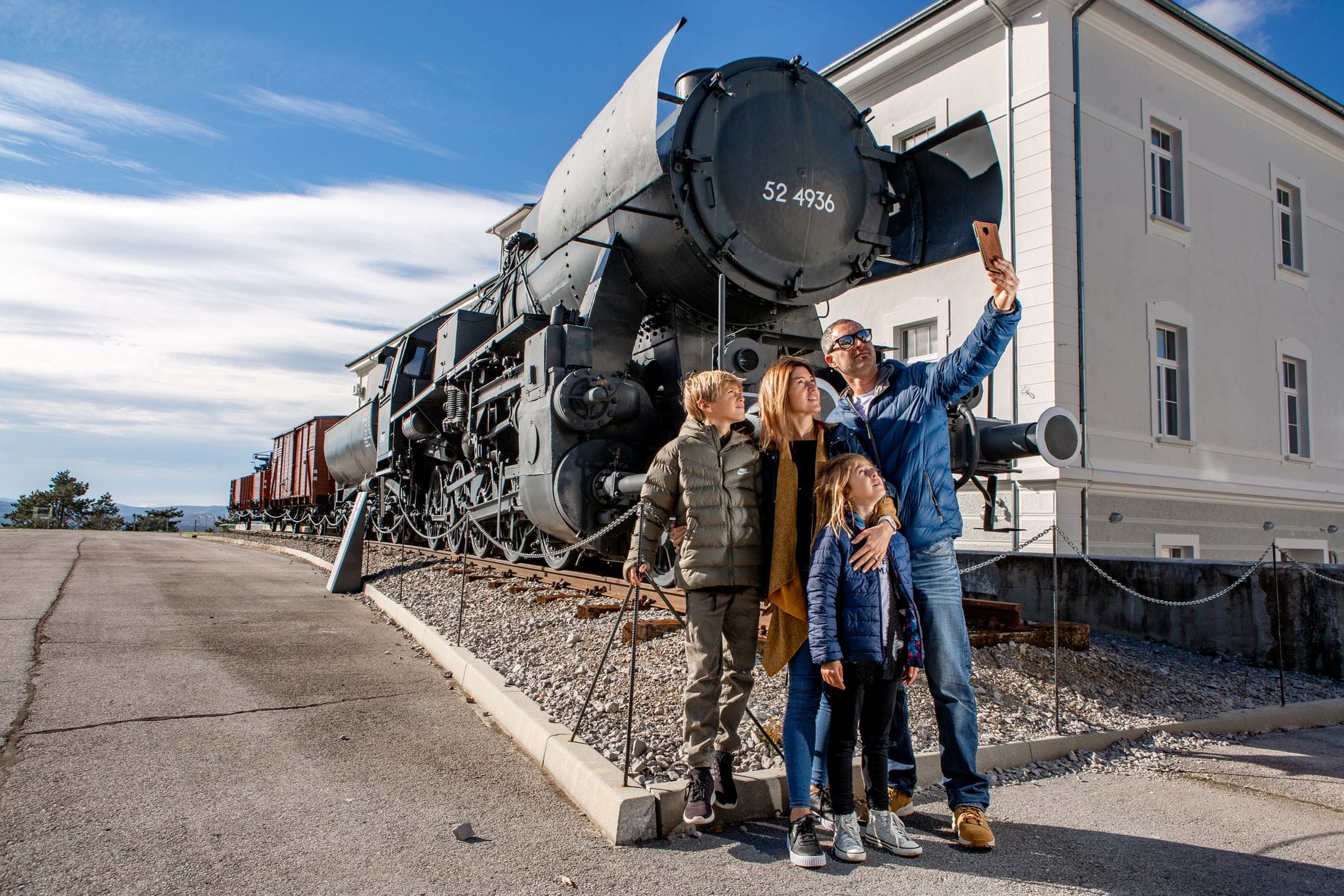
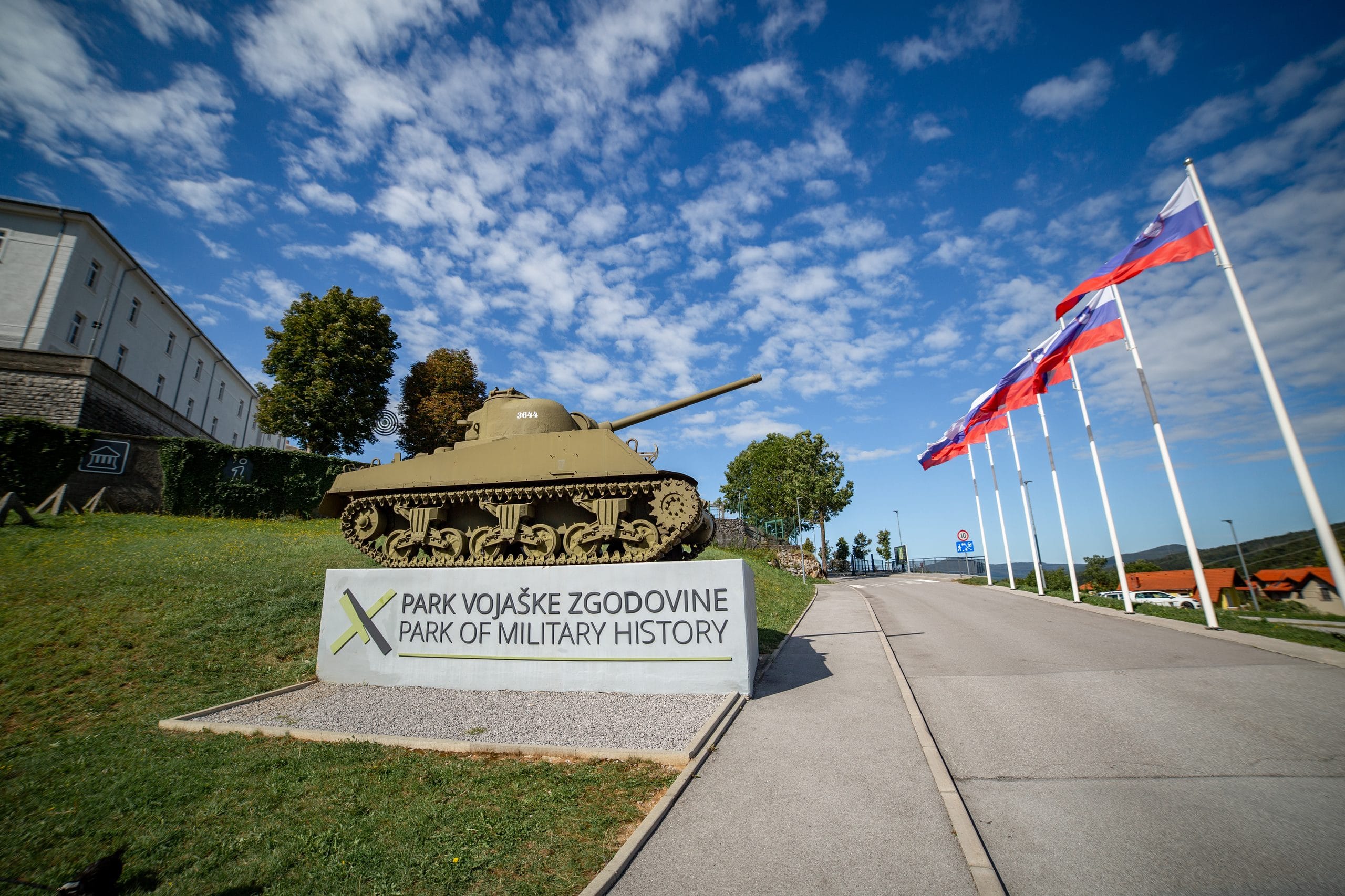
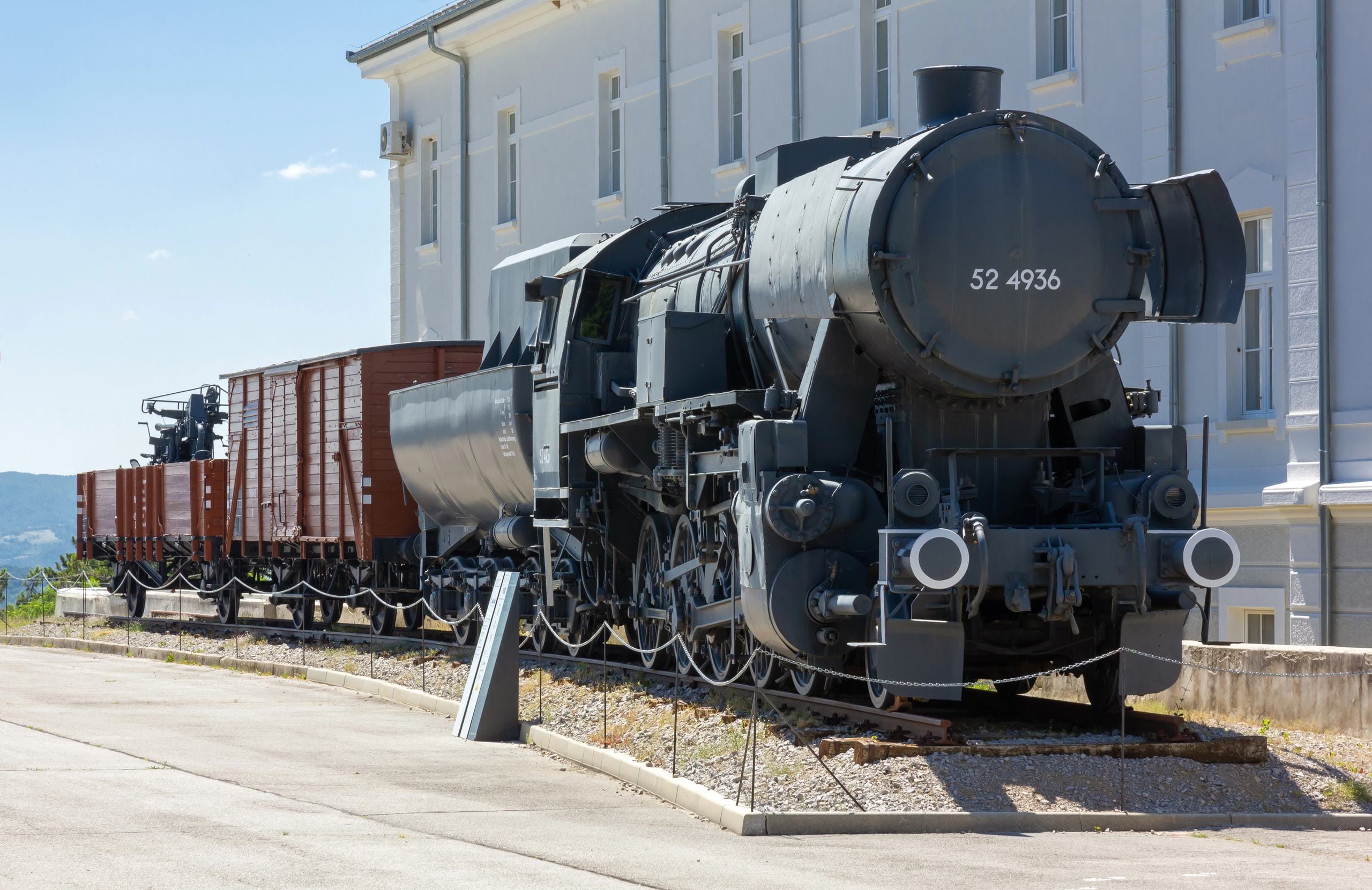
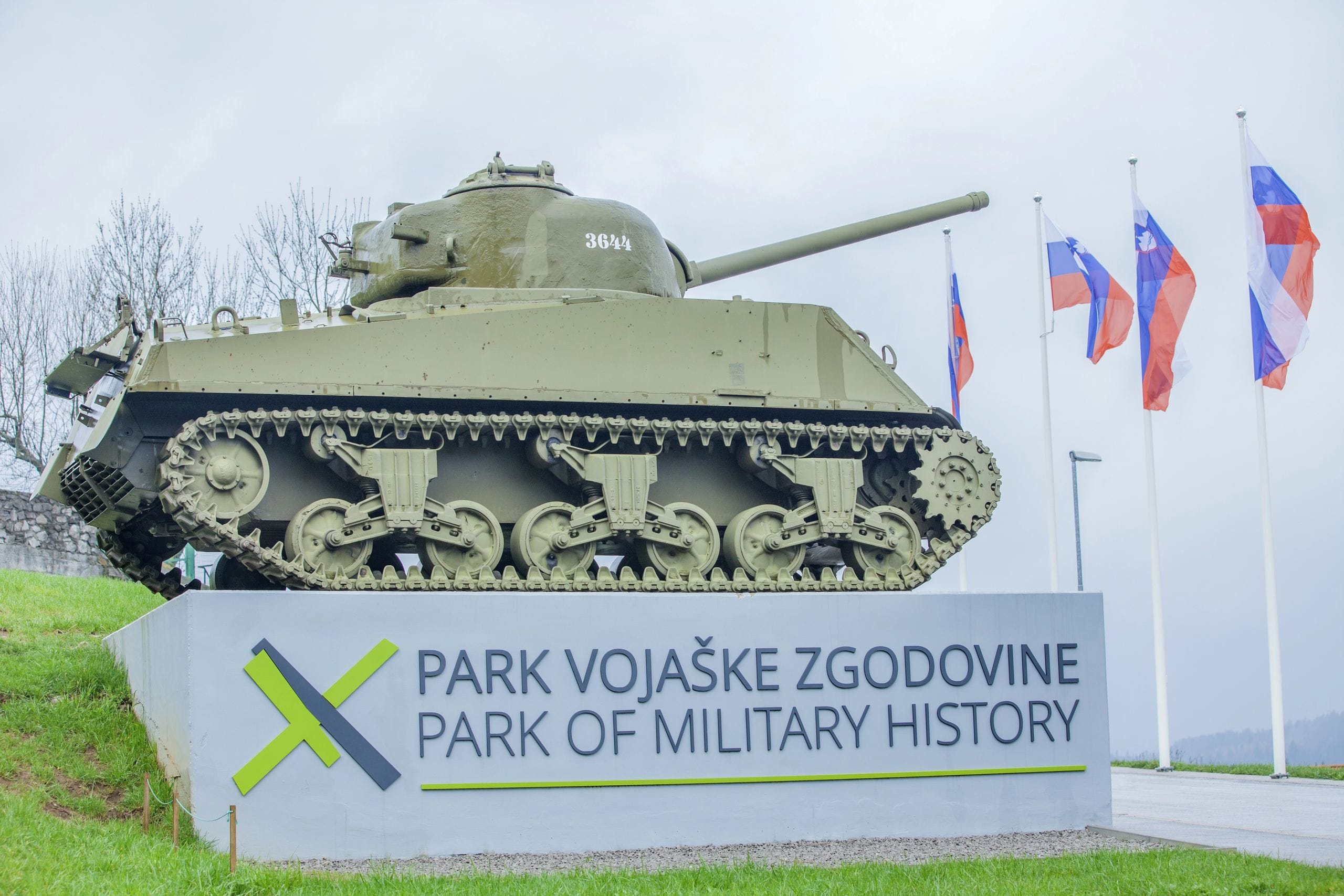
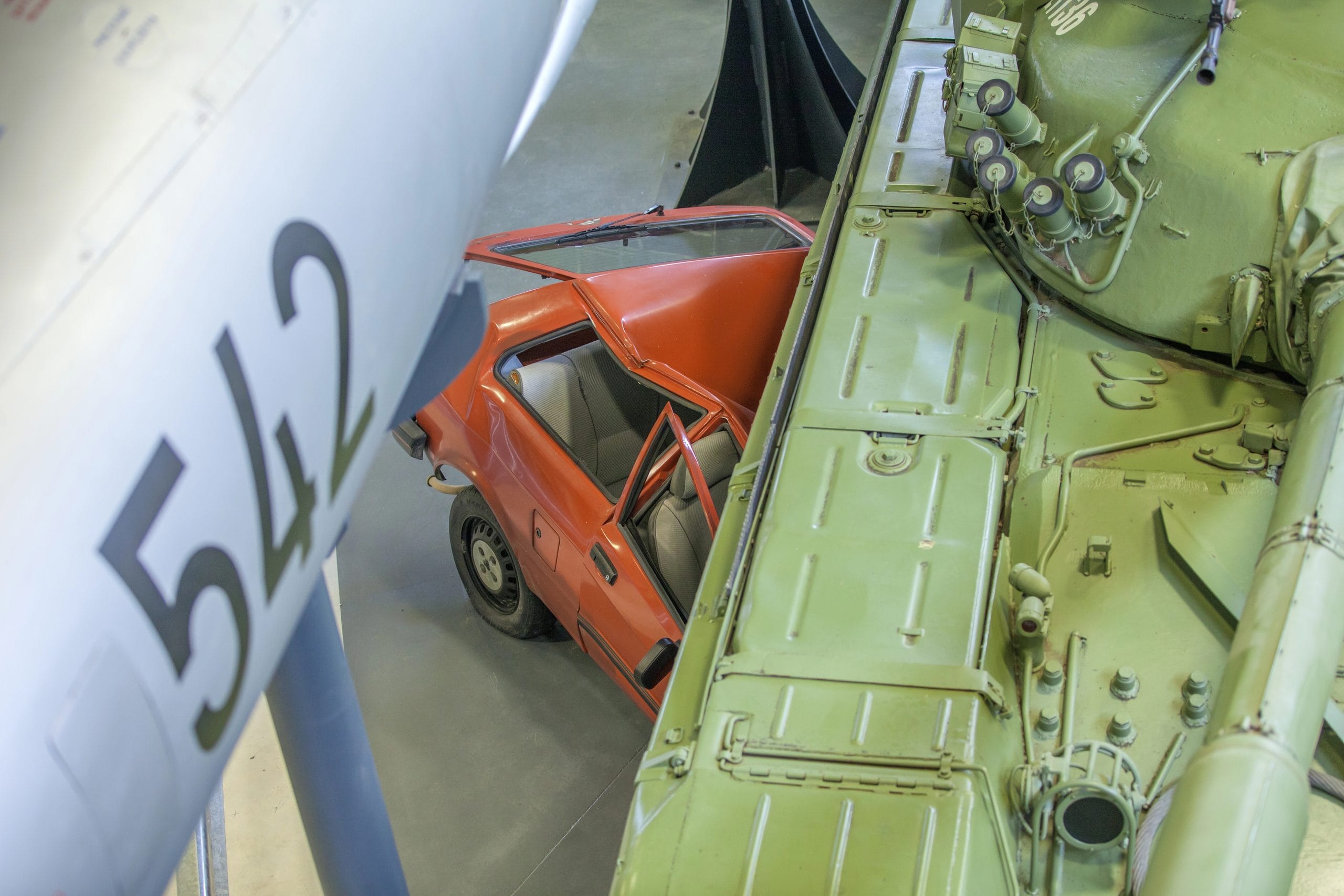
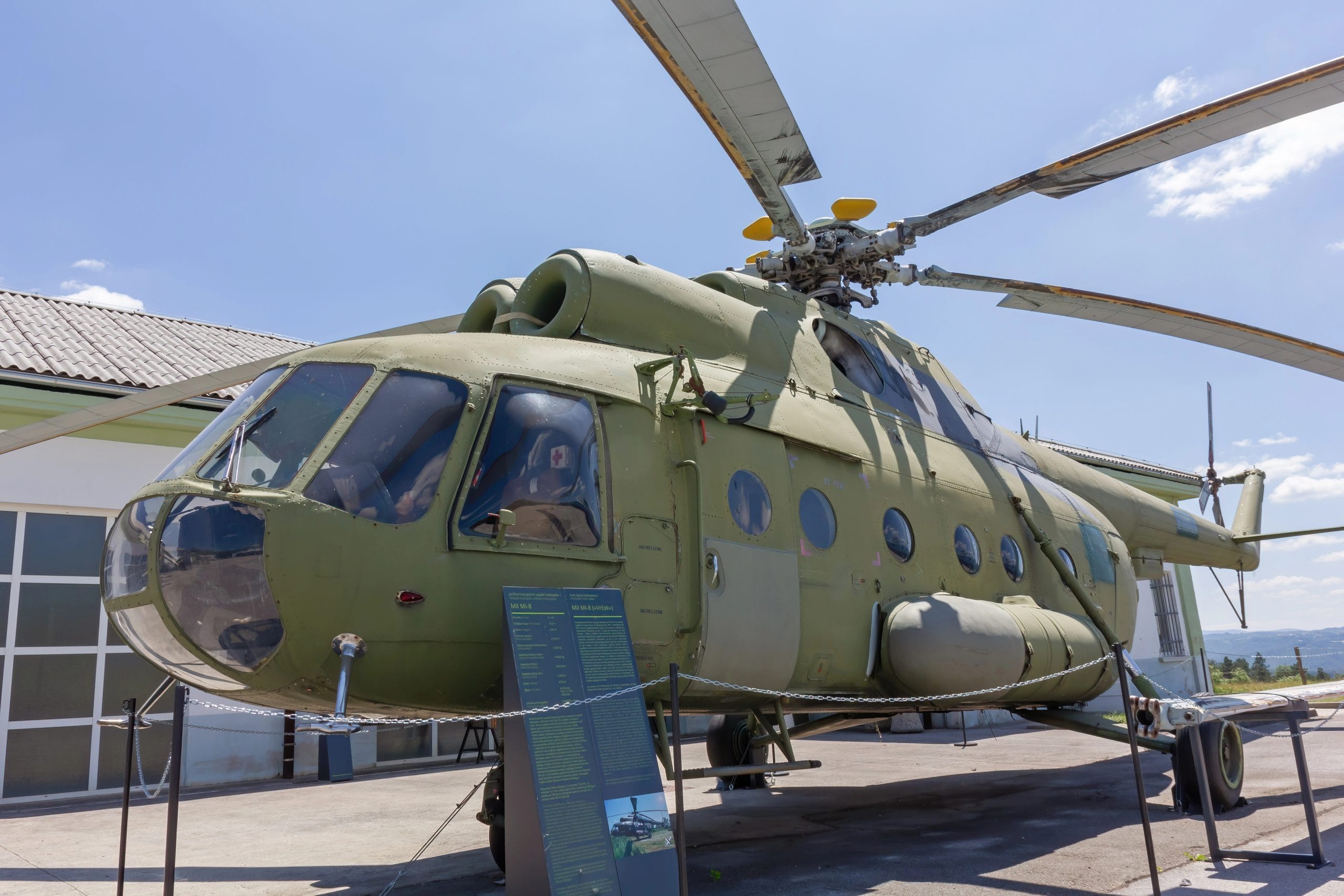
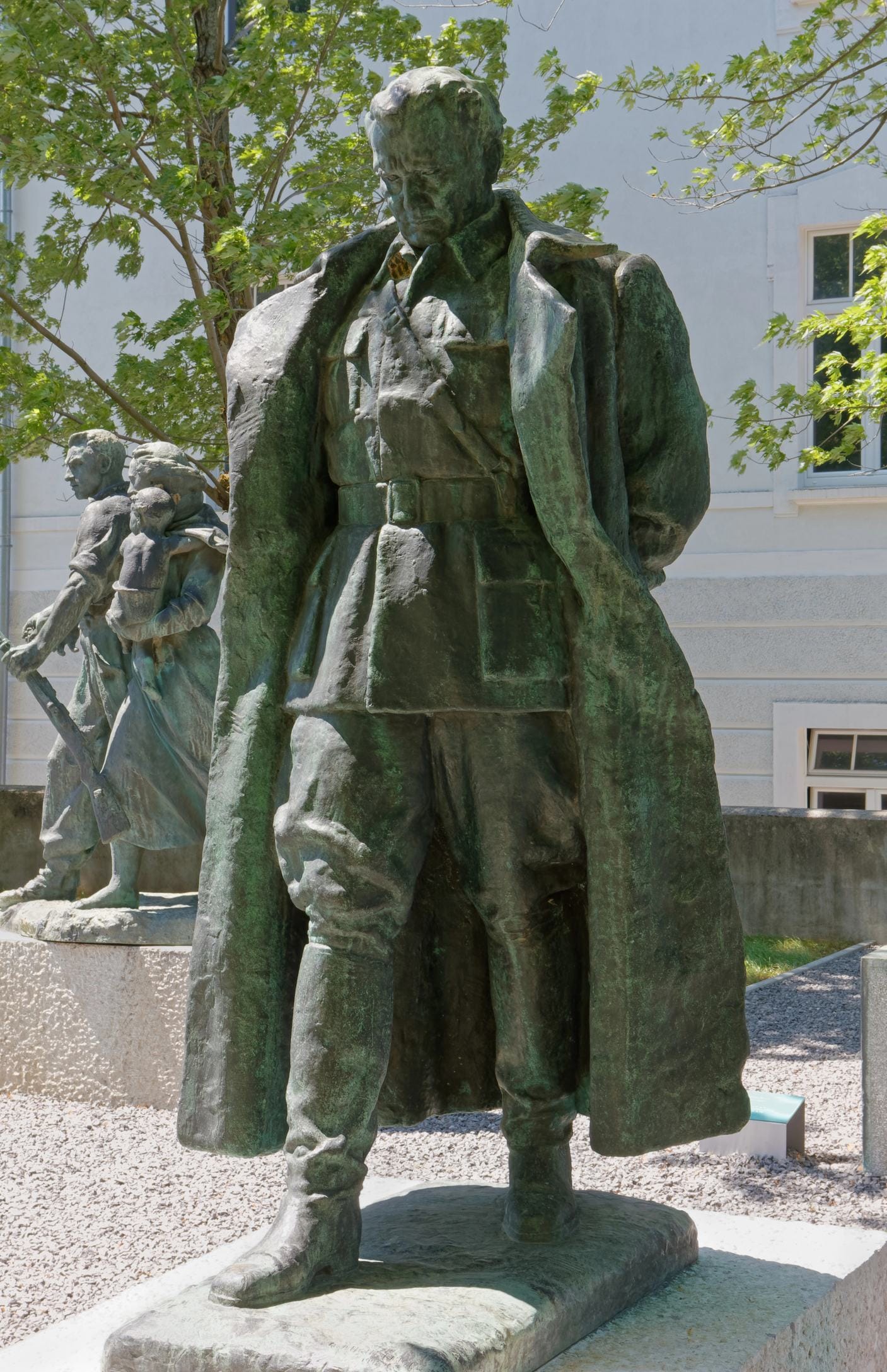
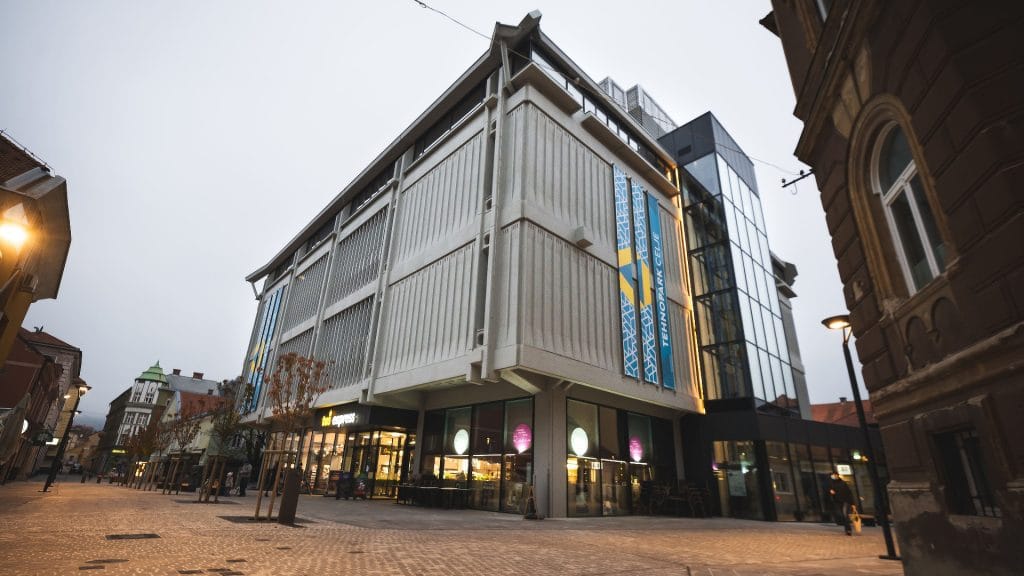
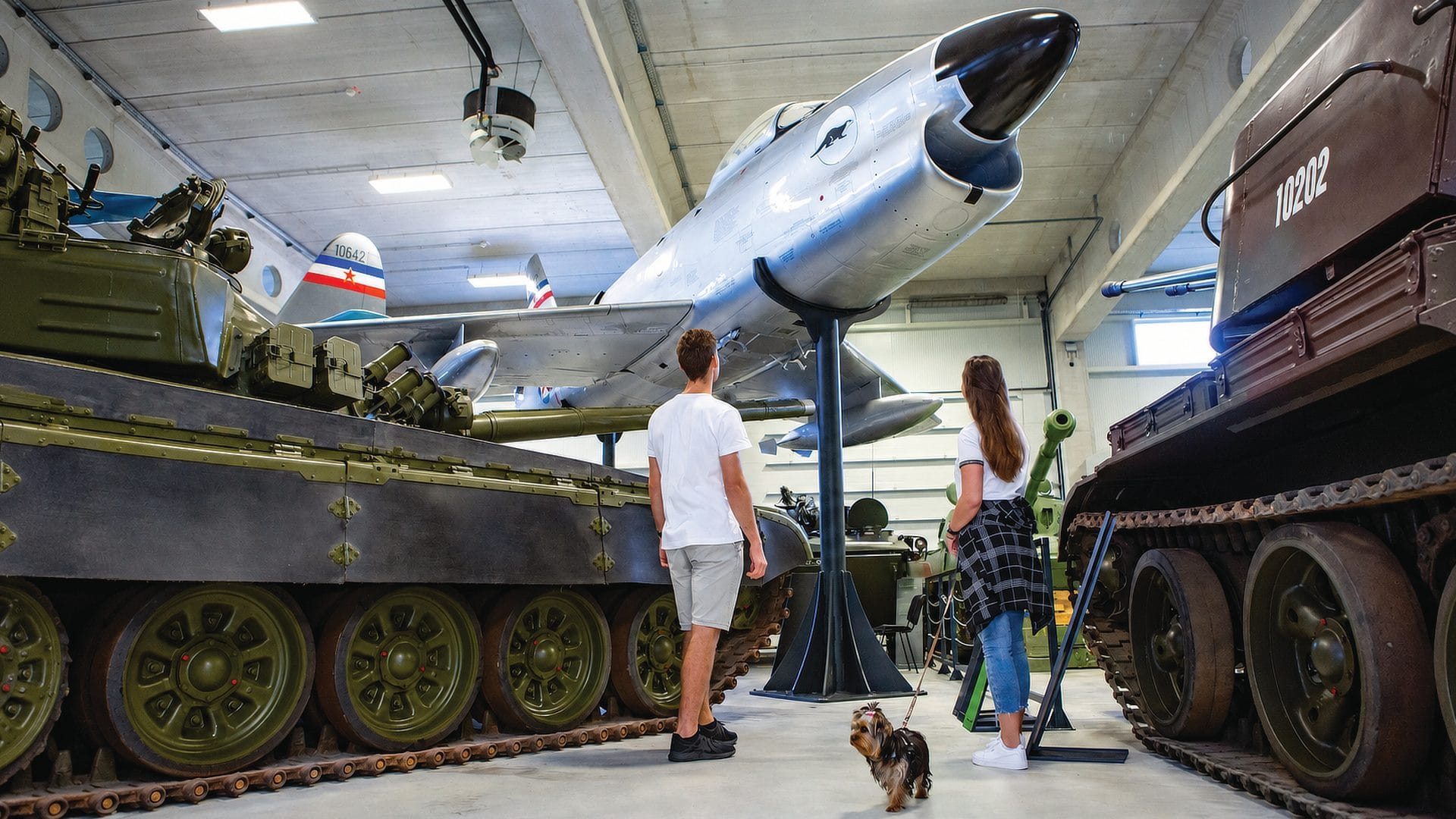
Slovenia’s largest museum complex fills a 1930s barracks on the edge of Pivka, where pavilion after pavilion holds tanks, artillery and historic aircraft. A 95-tonne wartime steam locomotive stands outside on the Plaza, and the pocket submarine P-913 Zeta can be entered on a guided tour booked in advance. The central exhibition, Road to Independence, is built around vehicles that took part in the events of 1991. The museum is on the Postojna–Reka road less than ten minutes from Postojna Cave", which makes the two easy to combine in one day.
Plan Your Visit
<
>
Opening Hours
Closed now
Opens in 11h 44m
Today: 10:00–18:00
Early autumn — weekends and holidays
Opening hours change by month, and Saturdays, Sundays and public holidays keep the longer schedule; announced groups of more than fifteen people can visit all year by prior arrangement.
Mon 10:00
Early autumn — weekends and holidays10:00–18:00
Late autumn and winter — weekdays10:00–15:00
Late autumn and winter — weekends and holidays10:00–16:00
Winter and spring — weekdays10:00–15:00
Winter and spring — weekends and holidays10:00–16:00
Late spring — weekdays10:00–16:00
Late spring — weekends and holidays10:00–18:00
Summer — every day09:00–18:00
Early autumn — weekdays10:00–16:00
Christmas Day (Dec 25)Closed
New Year’s Day (Jan 1)Closed
Entry Fee
Paid
Adults EUR 12.00
Ticket prices
Official source
Museum collections and exhibitions — individual visitors
Standard admission to the whole museum complex: the Komanda building with the Regio Carsica Militaris and To Hell and Back exhibitions and the archery collection, Pavilion A with Road to Independence, Pavilions B and C with the tank, artillery and aircraft collections, and the outdoor Plaza. The ticket is valid for the entire day.
Includes
- Komanda building exhibitions
- Road to Independence (Pavilion A)
- tank and artillery collection (Pavilions B and C)
- aircraft collection
- steam locomotive 33-110
- outdoor Plaza exhibits
Always applicable
Adult
€12.00
Pensioner
Official source groups pensioners and students at one shared price; recorded as separate rows.
€10.00
Student
Official source groups pensioners and students at one shared price; recorded as separate rows.
€10.00
Veterans and firefighters
Proof required before purchase.
€9.00
Schoolchildren and secondary-school students
Proof required before purchase.
€7.00
Persons with disabilities
Proof required before purchase.
€6.00
Pre-school children
€0.50
Family ticket
Two adults and children up to 18 years.
€31.00
Optional experiences
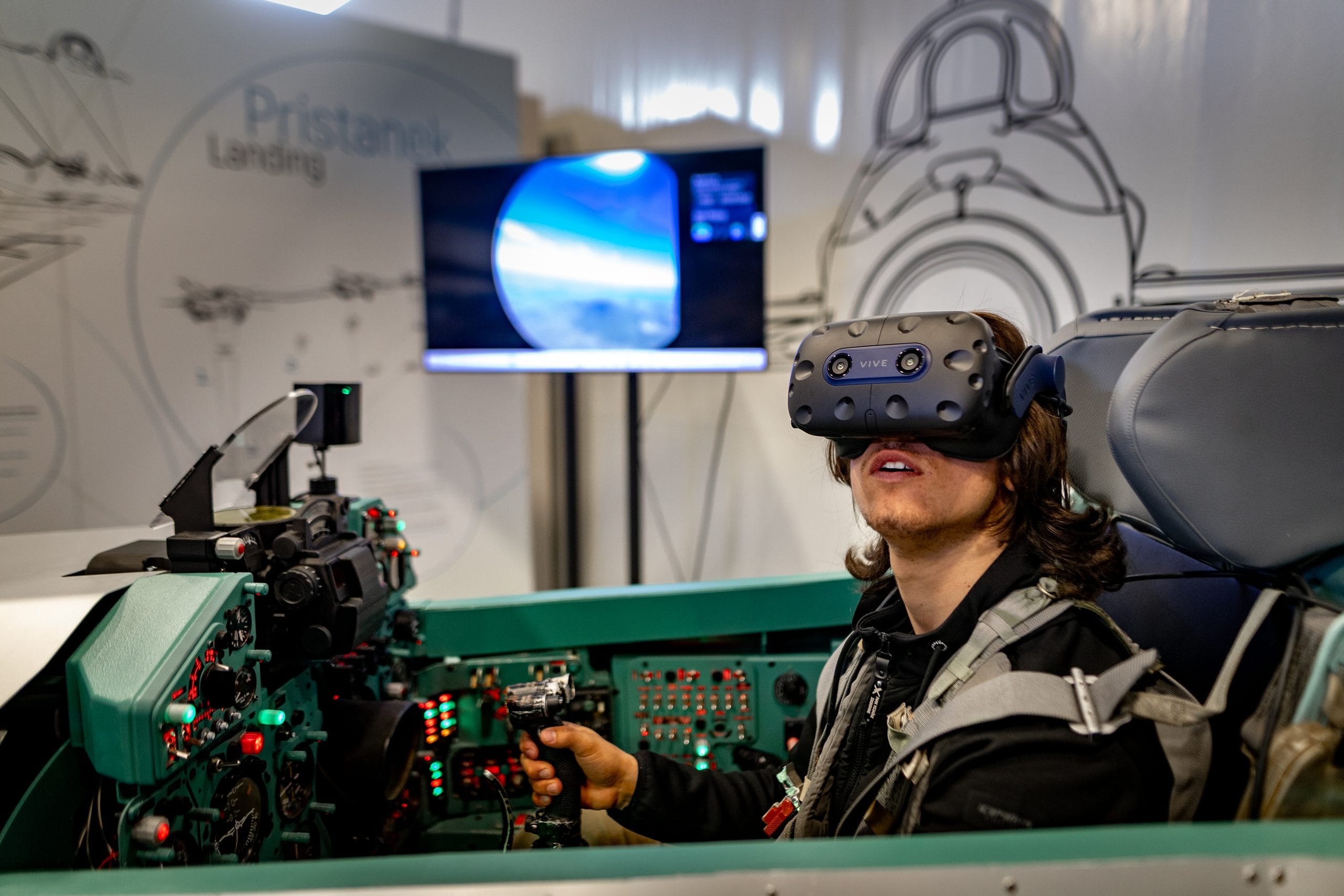
MiG-21 / Spitfire IX flight simulator
Session, 15 minutes
Reservation obligatory. One person at a time. Cannot be used without a guide. Confirmed minimum height 135 cm. Current accepted price is EUR 15 for one 15-minute session; the older English FAQ value of EUR 10 is superseded.
€15.00
Submarine P-913 Zeta interior
Per person
Reservation obligatory; guided only.
€5.00
Child
€3.00
Family
€14.00
Police boat P-111 interior
Per person
Reservation obligatory; guided only.
€4.00
Child
€2.00
Family
€10.00
Personal guide hire — up to 50 people
In the museum, up to 2 hours
Applies to parties of fewer than fifteen people; reserve at least five days ahead.
€50.00
In the museum, foreign language
€65.00
Outside the museum, up to 1 hour
€40.00
Outside the museum, 1 to 3 hours
€60.00
Outside the museum, 3 to 8 hours
€110.00
Outside the museum, more than 8 hours
€140.00
Outside the museum, foreign language, up to 3 hours
€75.00
Museum collections and exhibitions — groups of more than 15
Group admission for parties of more than fifteen people. The published duration is two hours and a guide is included in the price provided the guide is reserved at least five working days in advance. Individual discounts and coupons do not apply when a guide is hired.
Includes
- Komanda building exhibitions
- Road to Independence (Pavilion A)
- tank and artillery collection (Pavilions B and C)
- aircraft collection
- steam locomotive 33-110
- outdoor Plaza exhibits
- Guide
Always applicable
Adult
Duration two hours; guide included when reserved at least five working days in advance.
€10.00
Pensioner
Official source groups pensioners and students; recorded separately.
€8.00
Student
Official source groups pensioners and students; recorded separately.
€8.00
Veterans and firefighters
€7.50
Schoolchildren and secondary-school students
€6.00
Persons with disabilities
€5.00
Pre-school children
€3.00
Collections and exhibitions with submarine interior — groups of more than 15
Group admission combined with a guided visit inside the sabotage submarine P-913 Zeta. Prior reservation is required; the submarine interior cannot be visited without a guide.
Includes
- Komanda building exhibitions
- Road to Independence (Pavilion A)
- tank and artillery collection (Pavilions B and C)
- aircraft collection
- steam locomotive 33-110
- outdoor Plaza exhibits
- Guide
- Guided interior visit to submarine P-913 Zeta
Always applicable
Adult
Prior reservation required.
€14.00
Pensioner
Official source groups pensioners and students; recorded separately.
€12.00
Student
Official source groups pensioners and students; recorded separately.
€12.00
Veterans and firefighters
€11.00
Schoolchildren and secondary-school students
€8.50
Persons with disabilities
€7.50
Pre-school children
€6.00
Collections and exhibitions with police boat interior — groups of more than 15
Group admission combined with a guided visit inside the police boat P-111. Prior reservation is required.
Includes
- Komanda building exhibitions
- Road to Independence (Pavilion A)
- tank and artillery collection (Pavilions B and C)
- aircraft collection
- steam locomotive 33-110
- outdoor Plaza exhibits
- Guide
- Guided interior visit to police boat P-111
Always applicable
Adult
Prior reservation required.
€13.00
Pensioner
Official source groups pensioners and students; recorded separately.
€11.00
Student
Official source groups pensioners and students; recorded separately.
€11.00
Veterans and firefighters
€10.00
Schoolchildren and secondary-school students
€7.50
Persons with disabilities
€6.50
Pre-school children
€5.00
Collections and exhibitions with submarine and police boat interiors — groups of more than 15
Group admission combined with guided visits inside both the submarine P-913 Zeta and the police boat P-111. Prior reservation is required.
Includes
- Komanda building exhibitions
- Road to Independence (Pavilion A)
- tank and artillery collection (Pavilions B and C)
- aircraft collection
- steam locomotive 33-110
- outdoor Plaza exhibits
- Guide
- Guided interior visit to submarine P-913 Zeta
- Guided interior visit to police boat P-111
Always applicable
Adult
Prior reservation required.
€16.50
Pensioner
Official source groups pensioners and students; recorded separately.
€14.50
Student
Official source groups pensioners and students; recorded separately.
€14.50
Veterans and firefighters
€13.50
Schoolchildren and secondary-school students
€10.00
Persons with disabilities
€9.50
Pre-school children
€8.00
Alpine Wall fortification interior on Primož Hill
Separate Primož attraction, booked through the Park. Public sources support a guided interior/themed-trail admission of EUR 7 per person and EUR 5 for children, schoolchildren and secondary-school students, including announced groups of 15 or fewer. Visits require prior arrangement. Solo/couple/family booking eligibility, minimum booking size, the exact private/small-group guide fee and discount interaction remain to be resolved only in the separate Primož listing workflow.
Includes
- Guided interior visit to the Alpine Wall artillery fort on Primož Hill
Always applicable
Adult
Separate Primož attraction, booked through the Park. Standard guided interior/themed-trail rate; reserve at least five working days ahead. Small/private-group booking and discount interaction remain in the separate Primož workflow.
€7.00
Children, schoolchildren and secondary-school students
Separate Primož attraction, booked through the Park. Guided only; small/private-group guide-fee and discount details remain in the separate Primož workflow.
€5.00
Official prices updated:
23 Aug 2026
- Reduced rates for pensioners, students, veterans, firefighters, schoolchildren, visitors with disabilities and pre-school children are granted only against valid proof shown before purchase, and the family ticket covers two adults with children up to eighteen.
- The submarine interior, the police boat interior, the flight simulator and the Alpine Wall fortification on Primož Hill are priced separately and must be booked at least five working days ahead.
- Groups of more than fifteen pay group rates and have a guide included when the guide is reserved in advance.
- A ticket is valid for the whole day, so you can leave and come back.
Parking Situation
Parking at the entrance
View options
Parking Options
Official source
Situation: Parking at the entrance
Parking info updated: 23 Aug 2026
- Parking at the entrance is free for all visitors, and so are the toilets.
- Two electric-vehicle charging points are provided at 13 kW and need a Petrol charging card.
- Bicycle racks stand immediately before the door of the Komanda building.
- Motorhomes may park in the same area during a visit, and coaches carrying organised groups park at the foot of the slope in front of the complex.
Visitor Requirements
Age guidance
View requirements Requirements
Visitor Requirements
Suitable child age groups
- Young children (4–7 years)
- Older children (8–12 years)
- Teenagers (13–17 years)
Important
- Museum admission: No minimum age applies to the museum itself.
- Flight simulator: Minimum height 135 cm; one person at a time for a 15-minute session; advance booking and a guide are required.
- Child tickets: Pre-school children have a reduced admission category; the family ticket covers two adults with children up to 18 years of age.
- Dogs: Welcome on a leash everywhere except inside the submarine.

Parking Fee
Free

Child safety note
Supervise children

Access Notes
Well-signposted access from main road

Suitable For
Couples+5 more

Stroller accessibility
Yes

Wheelchair access
Yes

Estimated visit time
2–3 h

Family Friendly
Yes
Pet Friendly
Yes
Walking Difficulty
Easy

Best season
Spring, Summer, Autumn, Winter
Highlights
Alpine Wall (Vallo Alpino) fortification
Former barracks converted to a museum
Independence war exhibition
Military steam locomotive on display
Underground tunnel system
Command post of a fortification group
Historic military aircraft collection
Military history education trail
Museum submarine you can enter
National tank and artillery collection
Safety Notes
!Narrow passages
!Stay within visitor areas
!Supervise children
Photo Tip
The best frame is on the outdoor Plaza, where the steam locomotive and the police boat stand under open sky; late afternoon light rakes across the armour rather than flattening it. Inside the pavilions, crouch close to a track or a gun barrel and let the row of vehicles recede behind it. Photography is allowed throughout.
Before You Go
!Advance booking required
!Best combined with nearby attraction
!Check opening hours
!Guided tours available
!Indoor visit
!Outdoor areas nearby
!Sturdy footwear recommended
!Ticket required
Access & Parking
Detailed access info in Plan Your Visit ↑
The Park sits directly beside the main Postojna–Reka road on the edge of Pivka, with its own free car park at the entrance. Most visitors arrive by car: Pivka is under ten minutes from Postojna and about an hour from Ljubljana. Direct trains reach Pivka station from Ljubljana, Koper and Rijeka, and the walk from there takes about fifteen minutes. Coaches park at the foot of the slope in front of the complex.
Interesting Facts
1
Built to guard the Rapallo border
The complex started life around 1930 as a frontier barracks of the Kingdom of Italy, when the border drawn by the Treaty of Rapallo ran through what is now south-western Slovenia. The hills above Pivka were fortified in the same years and folded into the Alpine Wall, the Italian defensive system built along the eastern frontier. Barracks and hilltop forts were designed as parts of one scheme, which is why the museum and the fortification above it still belong to the same story.
2
The barracks nobody wanted to be posted to
After 1945 the Yugoslav People’s Army took the site over and held it until 1991. Among soldiers and officers the Pivka barracks had a reputation as a punishment posting, somewhere you were sent rather than somewhere you asked to go. That reputation helps explain what happened next: once the Yugoslav army withdrew, the complex was abandoned completely, and much of the original 1930s fabric survived precisely because nobody had bothered to modernise it.
3
The tanks that rolled out on 26 June 1991
On 26 June 1991 the first Yugoslav army tanks left these barracks and moved onto the roads in an attempt to suppress Slovenian independence. The museum now displays a T-55 from the very unit that spearheaded that advance, standing a short distance from the gate it drove out of. Few museums can place a vehicle that precisely in relation to the ground it stands on, and the Road to Independence exhibition is built around that connection.
4
A pocket submarine built for sabotage
The P-913 Zeta is a 19-metre, 76-tonne Una-class sabotage submarine, one of six built at Split in the 1980s. Beyond its crew of four it could carry up to six combat divers together with underwater vehicles or naval mines. Slovenian engineers and industry contributed substantially to its construction, and generations of Slovenian submariners served in the Yugoslav fleet. The interior can be visited on a guided tour booked in advance.
5
The last steam locomotive in regular Slovenian service
The heaviest exhibit is a German military steam locomotive of class 33, number 33-110: 95 tonnes and 23 metres long. Built to serve the German war effort, it arrived in Yugoslavia after 1945 and then spent decades hauling ordinary traffic while Europe was being rebuilt. It was the last steam locomotive in Slovenia used in regular railway service, working until its retirement in 1978.
6
The helicopter that changed sides
The Gazelle helicopter marked TO-001 Velenje was the first aircraft to defect from the Yugoslav air force to the Slovenian Territorial Defence in 1991, which made it the first air asset of what became the Slovenian Armed Forces. The Slovenian army handed it to the museum in 2012. A MiG-21 stands beside it, the type flown by the opposing side during the same ten days, so the exhibition can show both halves of the story at once.
7
A film crew added to the ruin
Between the army’s departure and the museum’s founding, the buildings were stripped by scrap collectors and used by the Slovenian army as an urban-combat training ground. The feature film Zvenenje v glavi, directed by Andrej Košak and released in 2002, was shot here in 2000 and caused considerable further damage to structures that were already deteriorating. The Park’s own history of the site records the shoot alongside the looting as a cause of the complex’s decline.
8
A separate Alpine Wall fort above the Park
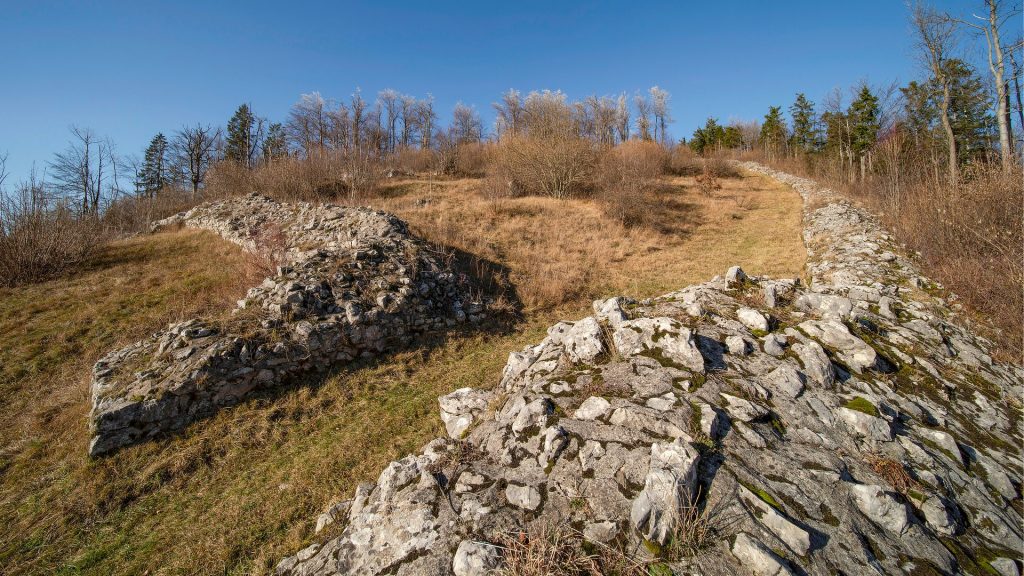
On the summit of Primož Hill, at 718 metres, stands an underground Italian artillery fortification that served as the command post for a group of forts around Pivka. Roughly 500 metres of tunnels survive, together with combat positions, ammunition stores and living quarters. The Park is the operator, booking point, guide provider and recommended trailhead for it, and interior visits are guided and must be arranged in advance.
9
Trenches dug for the Soča Front
The thematic trail between the museum and Primož crosses the former military training ground at Kot 110, at 613 metres, where a system of trenches and a cavern was cut during the First World War. These were training works rather than battle positions, dug so that units could rehearse the kind of fighting they would meet on the Soča Front. Five large and five small interpretation boards along the route explain the natural and military history of the Pivka basin.
10
Three national museums keep their reserves here
Pavilion D holds the shared storage depots of the National Museum of Slovenia, the Museum of Contemporary History of Slovenia and the Technical Museum of Slovenia, together the largest museum depot complex in the country. Behind the doors are computers, telecommunications devices, radios and televisions, along with objects connected to post, transport, agriculture, woodworking and steam power. They are run separately, keep their own monthly hours and charge an extra EUR 2 per person.
Visitor Wisdom
Traveler Insights
Combined public visitor ratings from Google and Tripadvisor. Last verified August 2026.
Going inside the pocket submarine is the single most praised part of a visit, and people who book it almost always say the extra charge was worth it. The tank and artillery halls draw strong reactions simply for how many vehicles are lined up and how well kept they are. Guides are described again and again as knowledgeable and relaxed, including with children who want to touch switches and handles. The restaurant’s military bean stew has its own following, and the shop is unusually well stocked for a museum of this scale.
The most common regret by a wide margin is turning up without a reservation and finding that the submarine interior, the police boat interior and the flight simulator can only be done with a guide and by prior arrangement. The starred programmes need five working days’ notice, so a same-day request usually fails. The second recurring regret is time: people who allow two hours frequently say they wanted a third or a fourth. It also helps to know that the ticket is valid all day, so you can leave for lunch and come back.
This suits history-minded travellers, families with school-age children, technical-heritage enthusiasts and anyone breaking the drive between Ljubljana and the Croatian coast. It also works as a rainy-day plan, because almost everything is under cover. It is less ideal for visitors expecting a hands-on vehicle park: climbing on the exhibits is not permitted and interiors are viewed through the openings provided, with a sectioned T-55 in Pavilion A as the exception. There is no driving or riding in military vehicles here.
- The costliest mistake is arriving in the last hour or two, because the complex cannot be seen properly in that time and the restaurant often closes before the museum does.
- The second is treating the Alpine Wall fortification on Primož Hill as a walk-in attraction. The thematic trail to the summit is open to anyone, but the fortification gates are locked and the interior can only be entered with a guide arranged in advance, which leaves unprepared walkers looking at a closed door after a climb of thirty to forty-five minutes.
- Fewer visitors realise that Pavilion D houses the shared reserve depots of three national museums, shown separately for a small additional fee and holding everything from computers and radios to agricultural and printing equipment.
- For a completely different experience after the military collections, Križna Cave offers a naturally preserved cave environment with no built lighting or paved paths and an underground lake boat ride.
- The free Wi-Fi at Pivka also opens online exhibitions, a virtual escape room and a 360-degree view inside the submarine, and there are free lockers at reception.
Parents consistently describe the museum as family-friendly, and the layout works as a circular route through the collections, which keeps younger children moving. Guides come up often for being patient with children who want to press and turn things. The reconstructed nineteen-eighties living room in the Road to Independence exhibition tends to interest the adults and amuse the children in equal measure. Buggies are straightforward across the site and there are lifts and ramps throughout; the submarine interior is the exception, as it is genuinely confined and not suitable for prams.
Unusually for a museum, photography and filming are permitted throughout, which makes this a rewarding stop if you travel with a camera. The outdoor Plaza carries the largest exhibits, including the steam locomotive and the police boat, and works best in late afternoon light. Indoors the pavilions are lit for viewing rather than for photography, so a fast lens or a steady hand helps. The repeated lines of armour in Pavilions B and C give the strongest compositions if you shoot low and close rather than stepping back.
The pattern in visitor feedback is surprise at the quality and scale of a museum in a small town, followed by a recommendation to allow more time than planned. Ratings are high and remarkably consistent across platforms and languages, including from people who say they have no particular interest in military subjects. Criticism is rare and mostly concerns restricted access to vehicle interiors, which the operator explains as a conservation and safety measure. Most reviewers say they would return.
Seen on Screen
1. Zvenenje v glavi (2002)
Main cast / actor:
Jernej Šugman; Ksenija Mišič; Uroš Potočnik; Radko Polič
Status:
Confirmed
Production type:
Feature film
Connection to this place:
Filming location
Filming at the abandoned Pivka barracks took place in 2000, after the Yugoslav army withdrew and before the museum was created. The Park’s own site history records the shoot and the damage caused to already deteriorating buildings. Directed by Andrej Košak from Drago Jančar’s novel and released in 2002 as Zvenenje v glavi / Headnoise.
The buildings have since been fully restored, so the complex no longer resembles its appearance in the film.
SourceQuick Facts
Estimated visit time
2–3 h
Best season
Spring, Summer, Autumn, Winter
Walking difficulty
Easy
Family friendly
Yes
Pet friendly
Yes

Entry Fee
Paid

Access type
Short paved walk
Help Improve This Listing
Found outdated information, a mistake, or a useful local tip? Let us know.
Suggest an Update →Help Improve This Listing
Your feedback helps us keep Explore In Slovenia accurate and useful for future visitors.
×Visitor Reviews
Write a review
No visitor reviews yet.
Be the first to share your experience.
No reviews yet!
Sorry! Please login first to submit reviews.