Most visitors arrive expecting a conventional castle and leave talking about the museum. The building is handsome - the frescoed arcaded courtyard, the well, the carved dates above the portals - but the substance is the exhibition inside, spread across almost 2,000 square metres. Reviewers describe it as unusually well presented for a small-town museum, with English text throughout rather than as an afterthought, and they repeatedly say they planned an hour and stayed closer to two. If you want furnished period rooms and a noble family's story, this is not that castle. If you want to understand how mercury shaped a whole town for five centuries, start here.
Local name: Grad Gewerkenegg
12
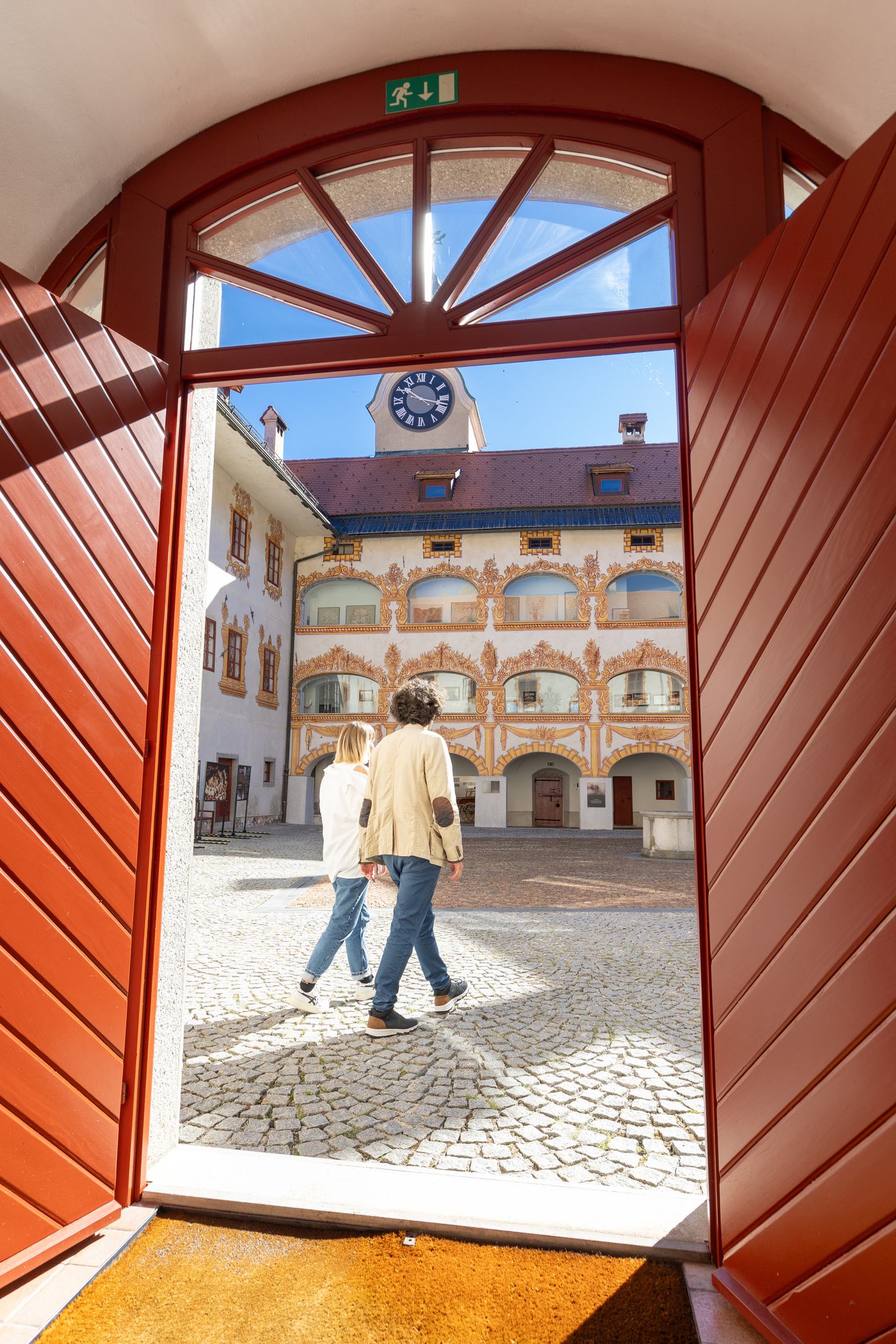
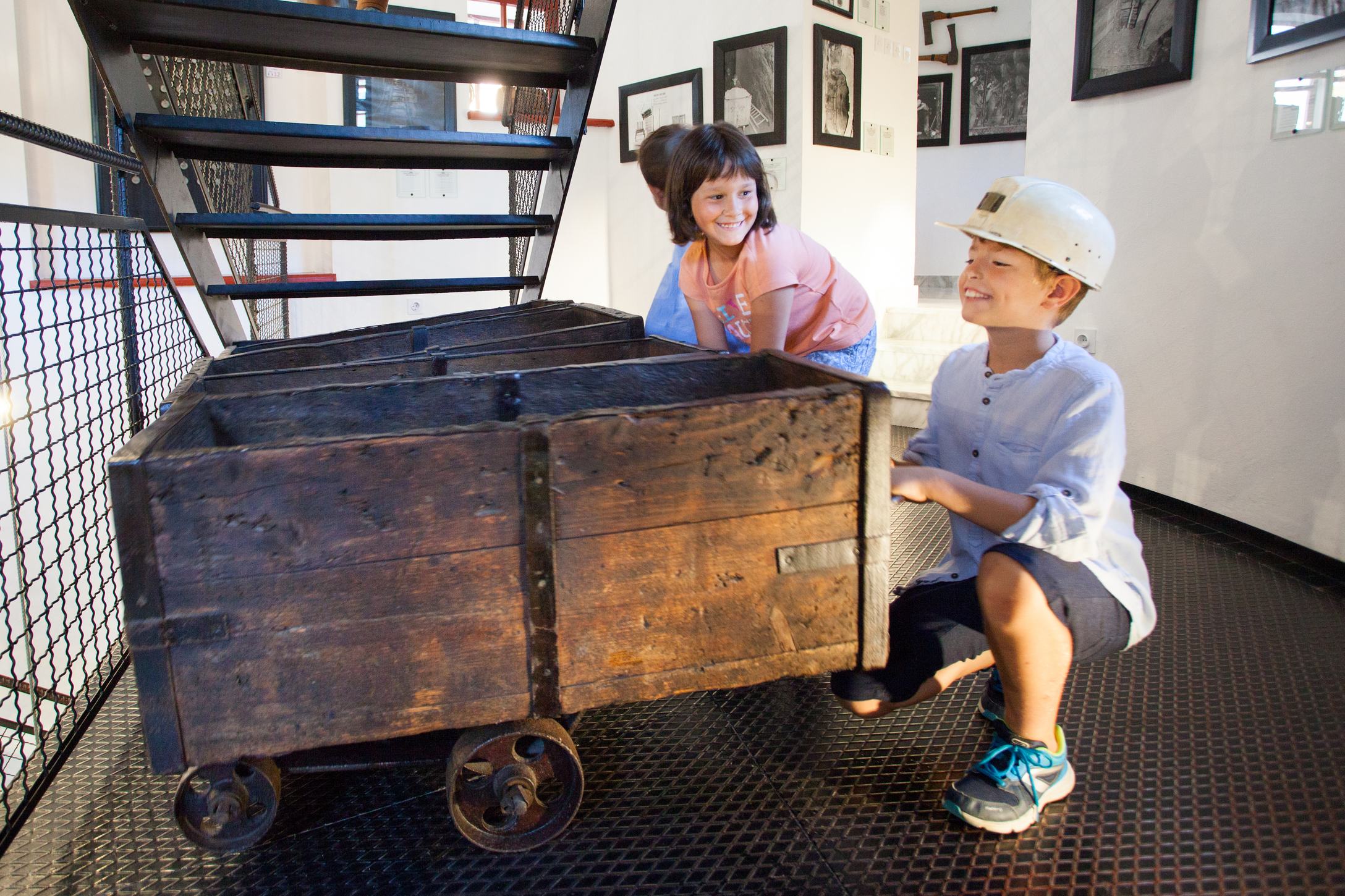
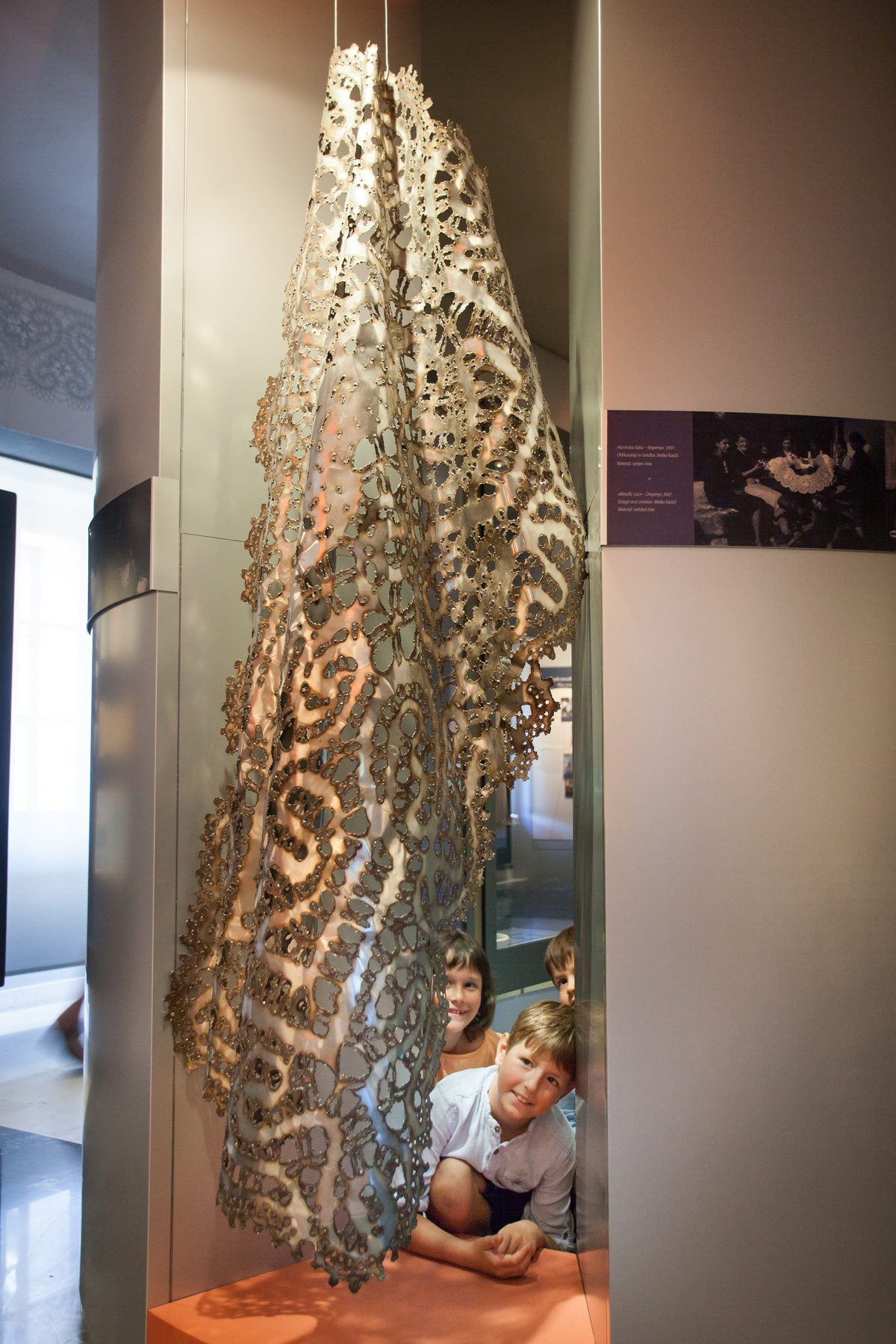
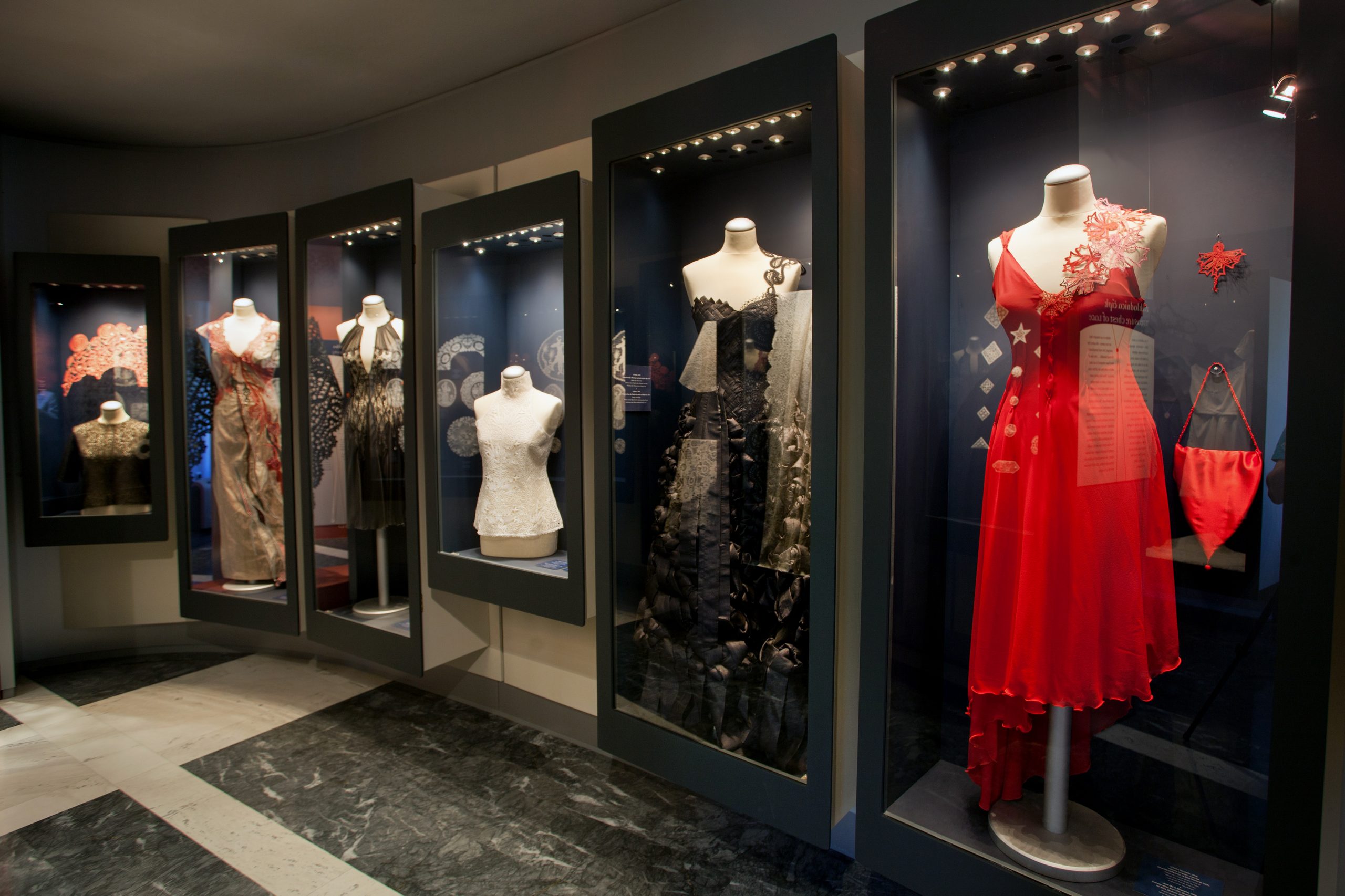
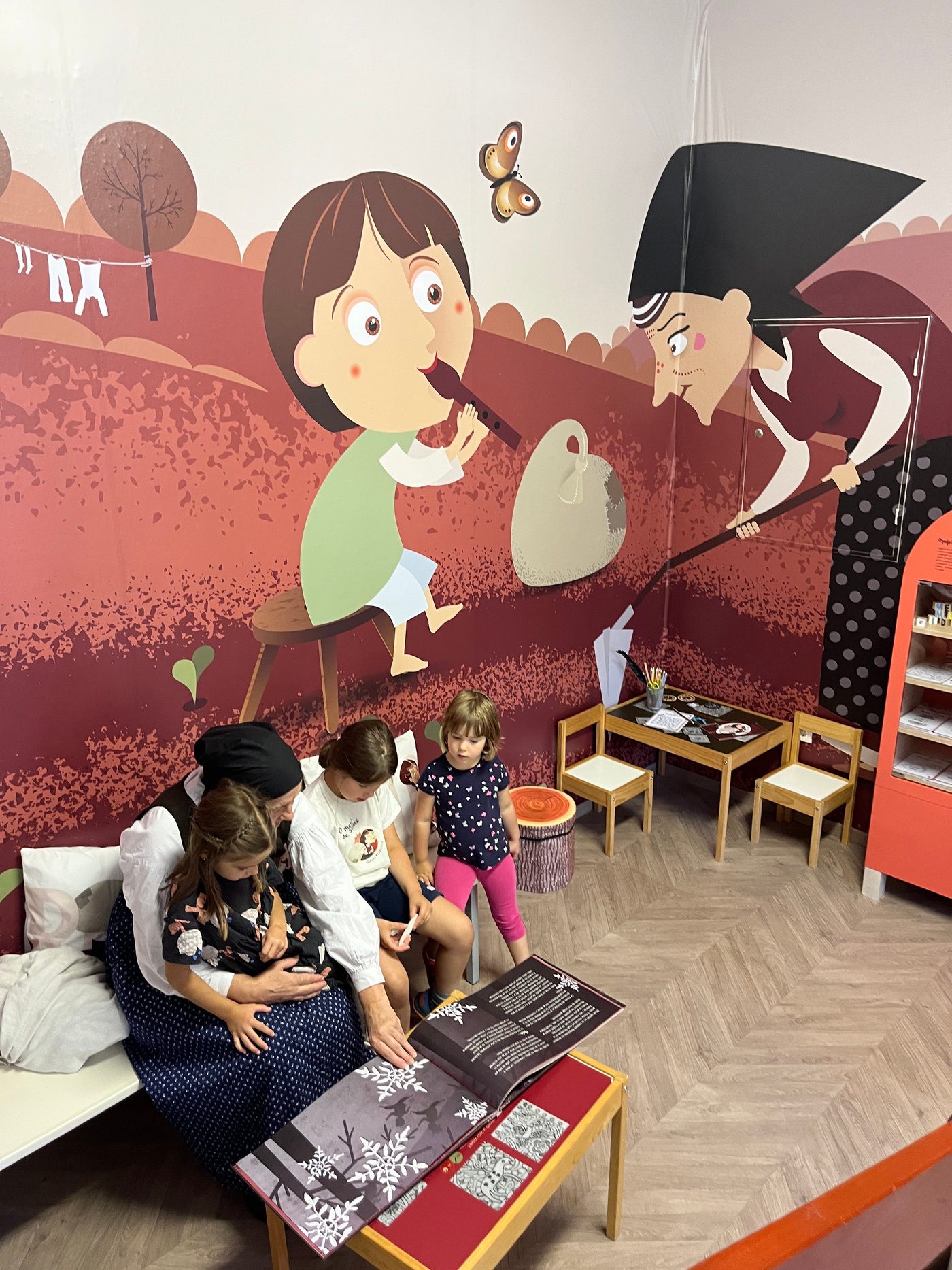
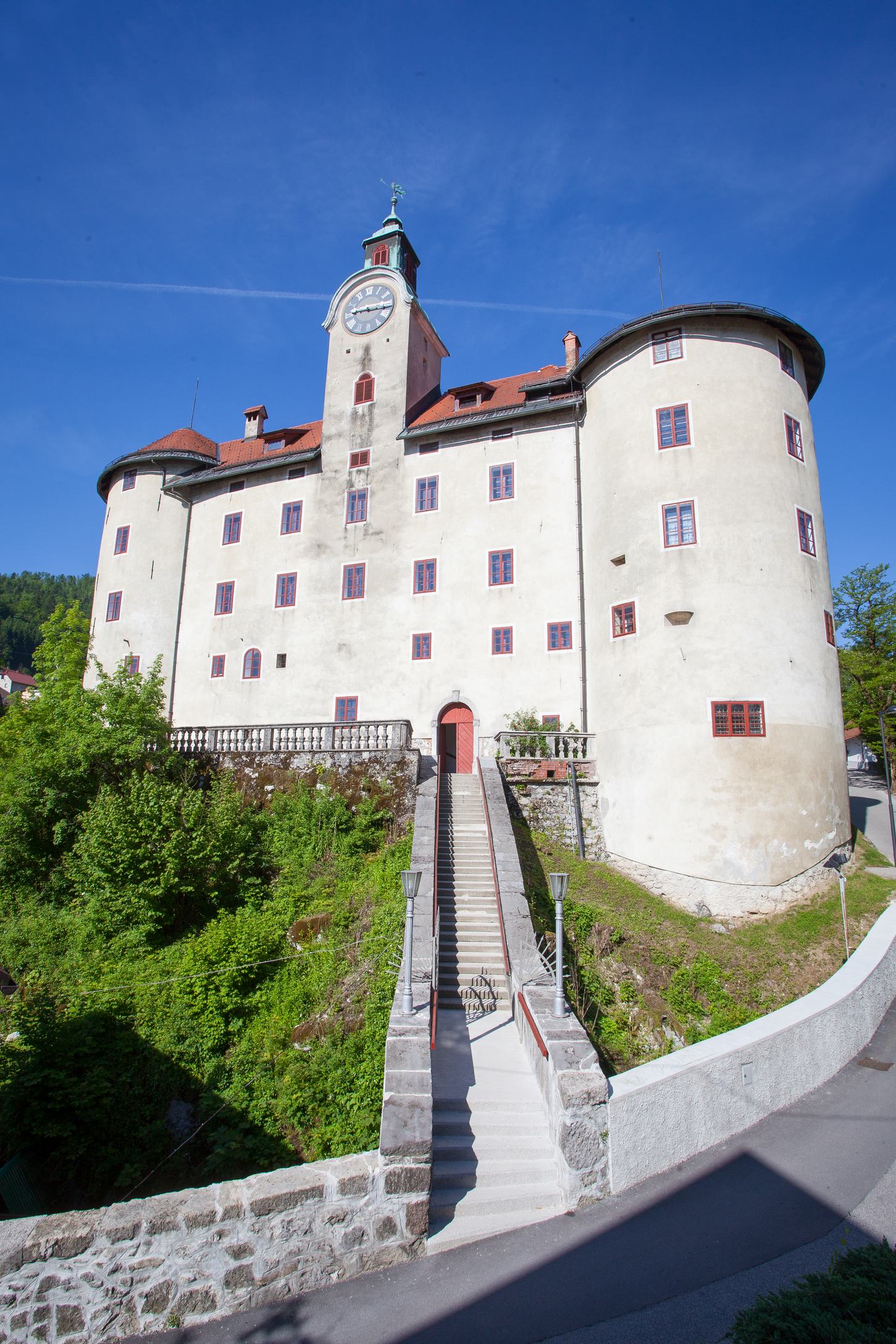
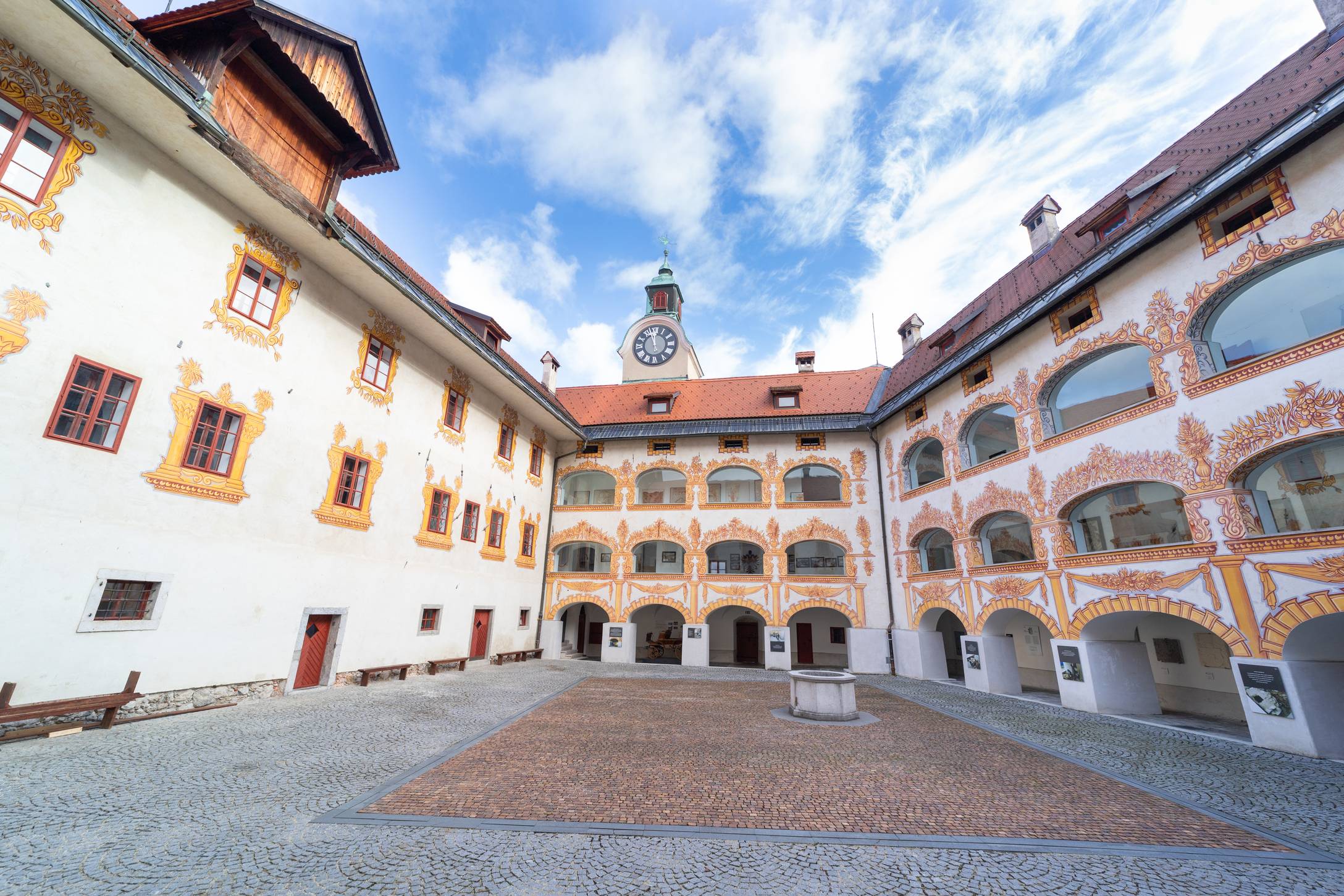
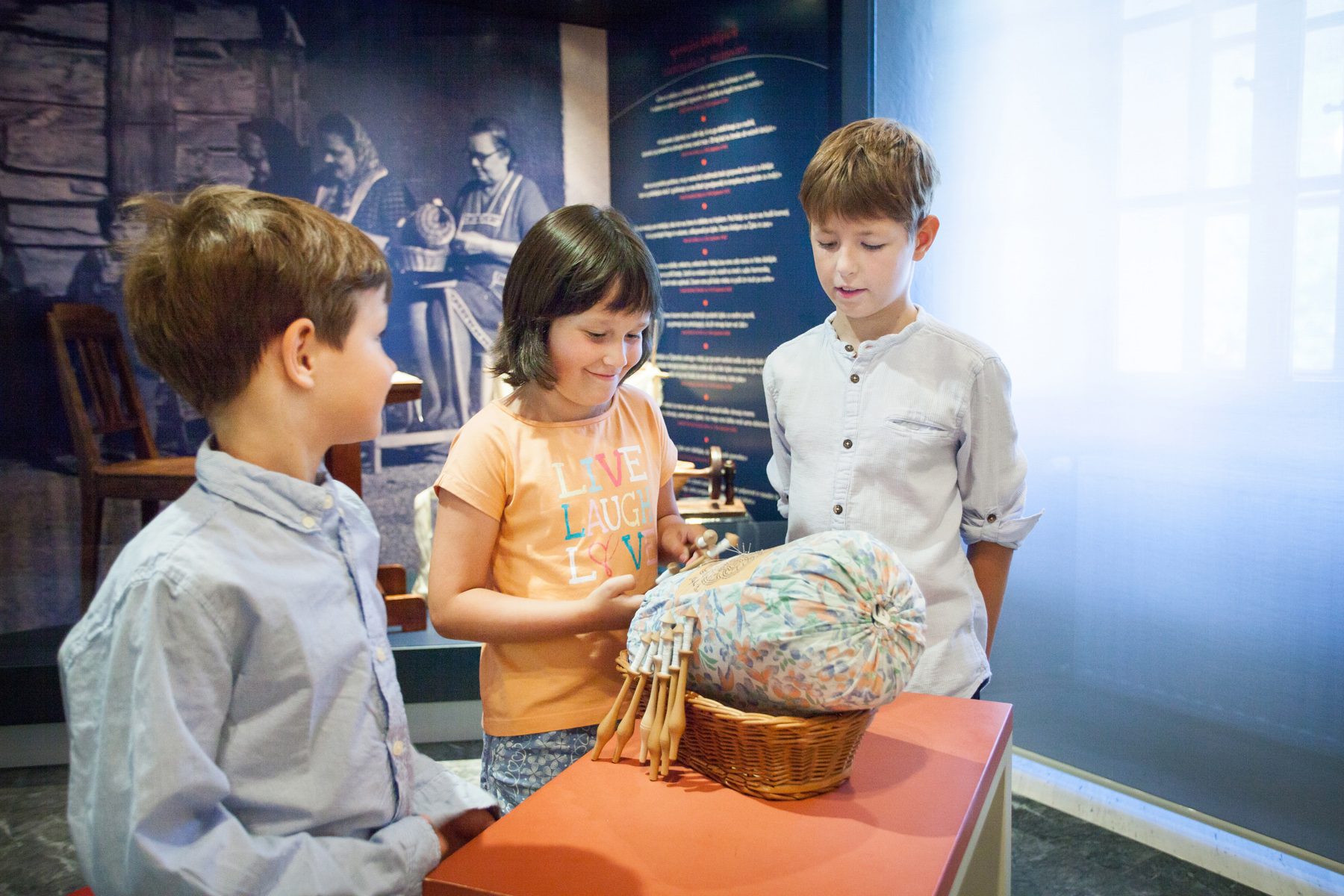
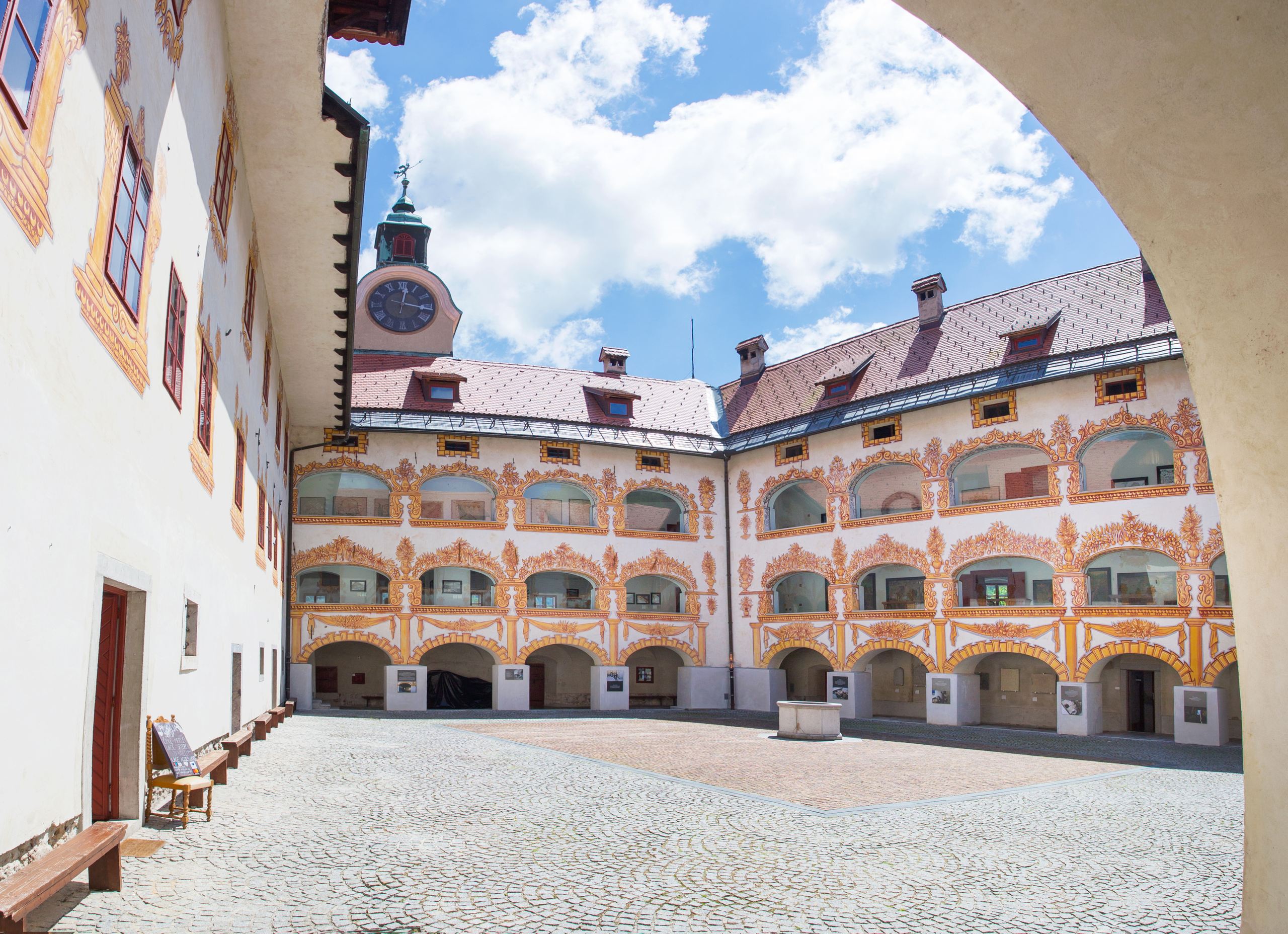
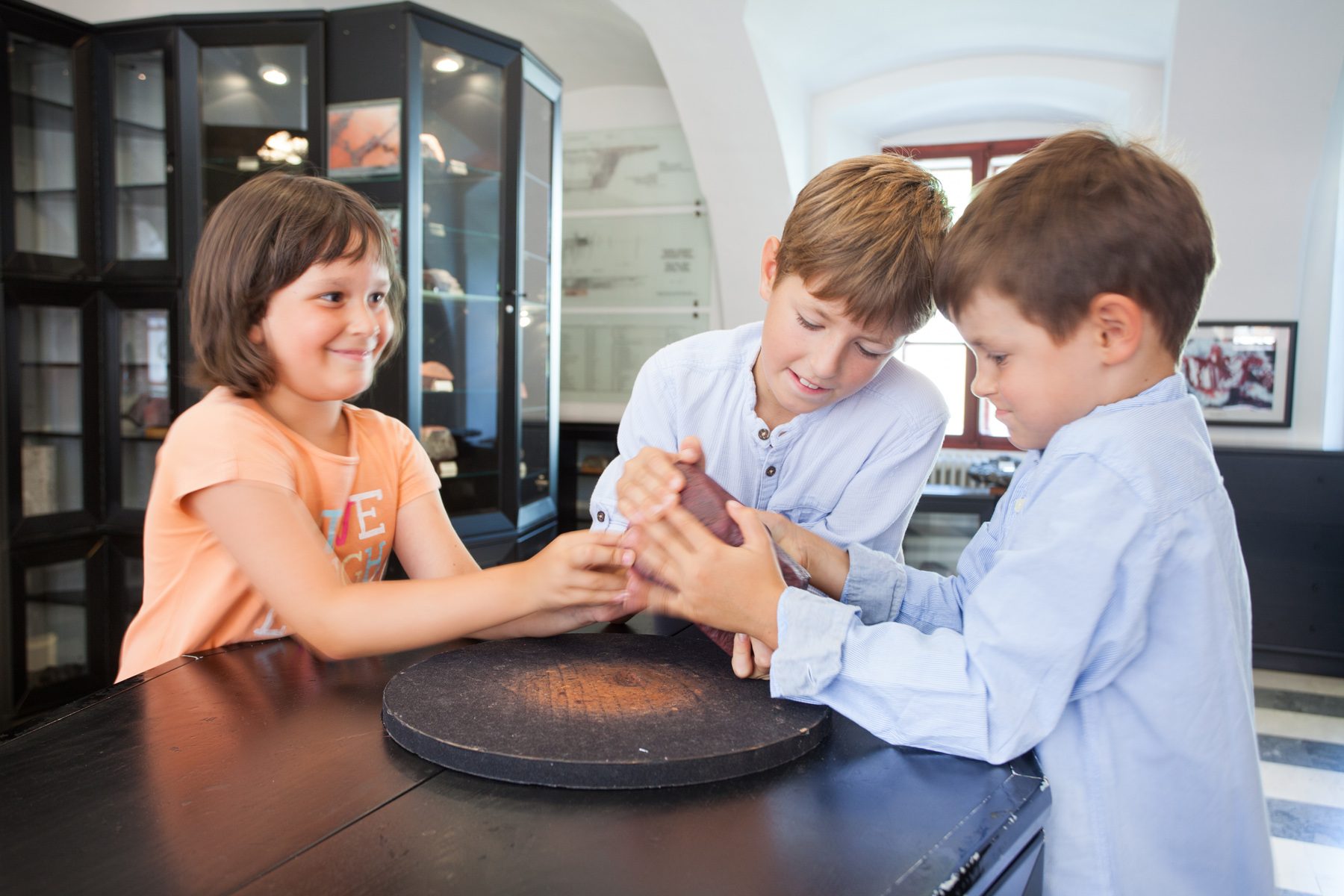
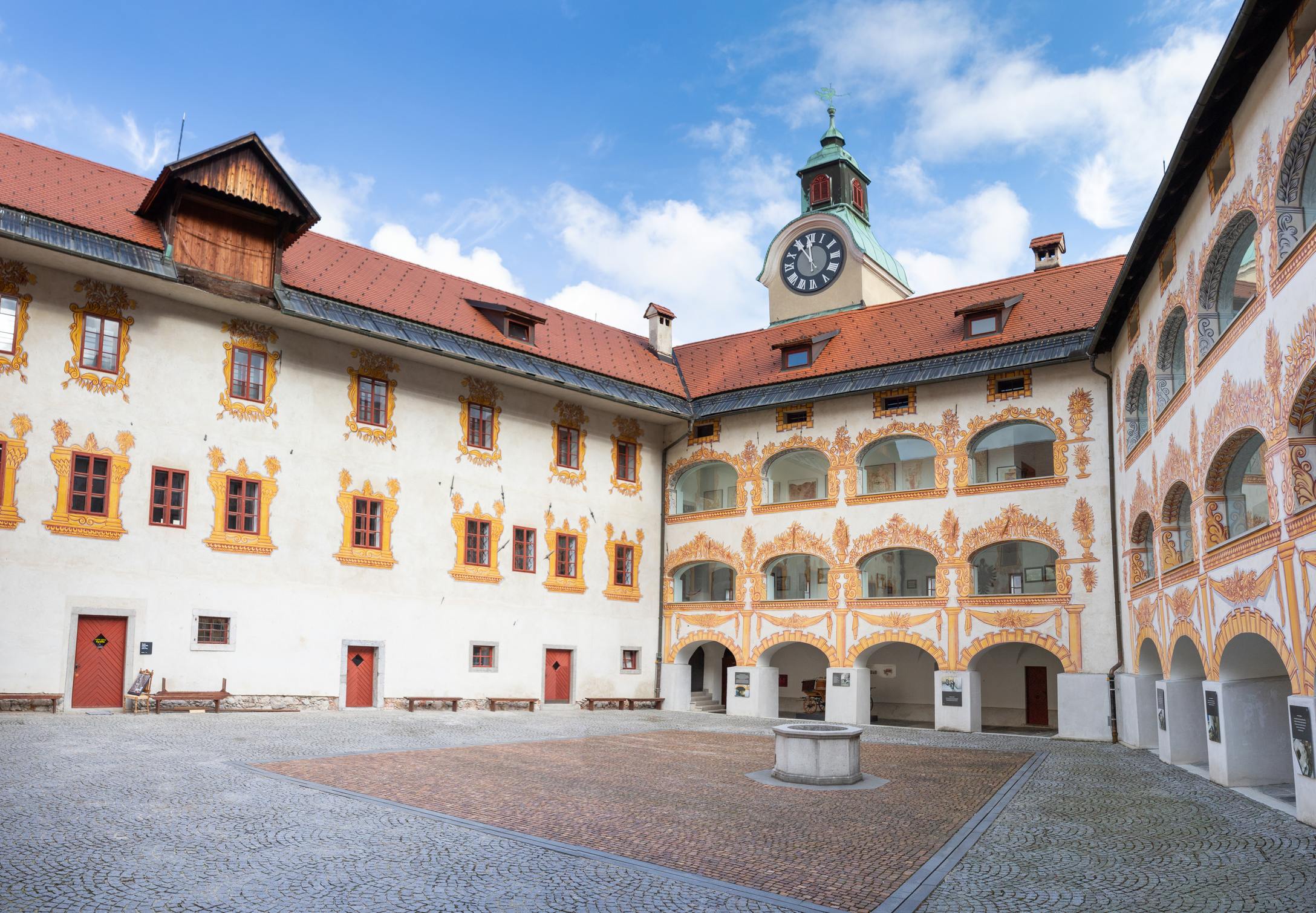
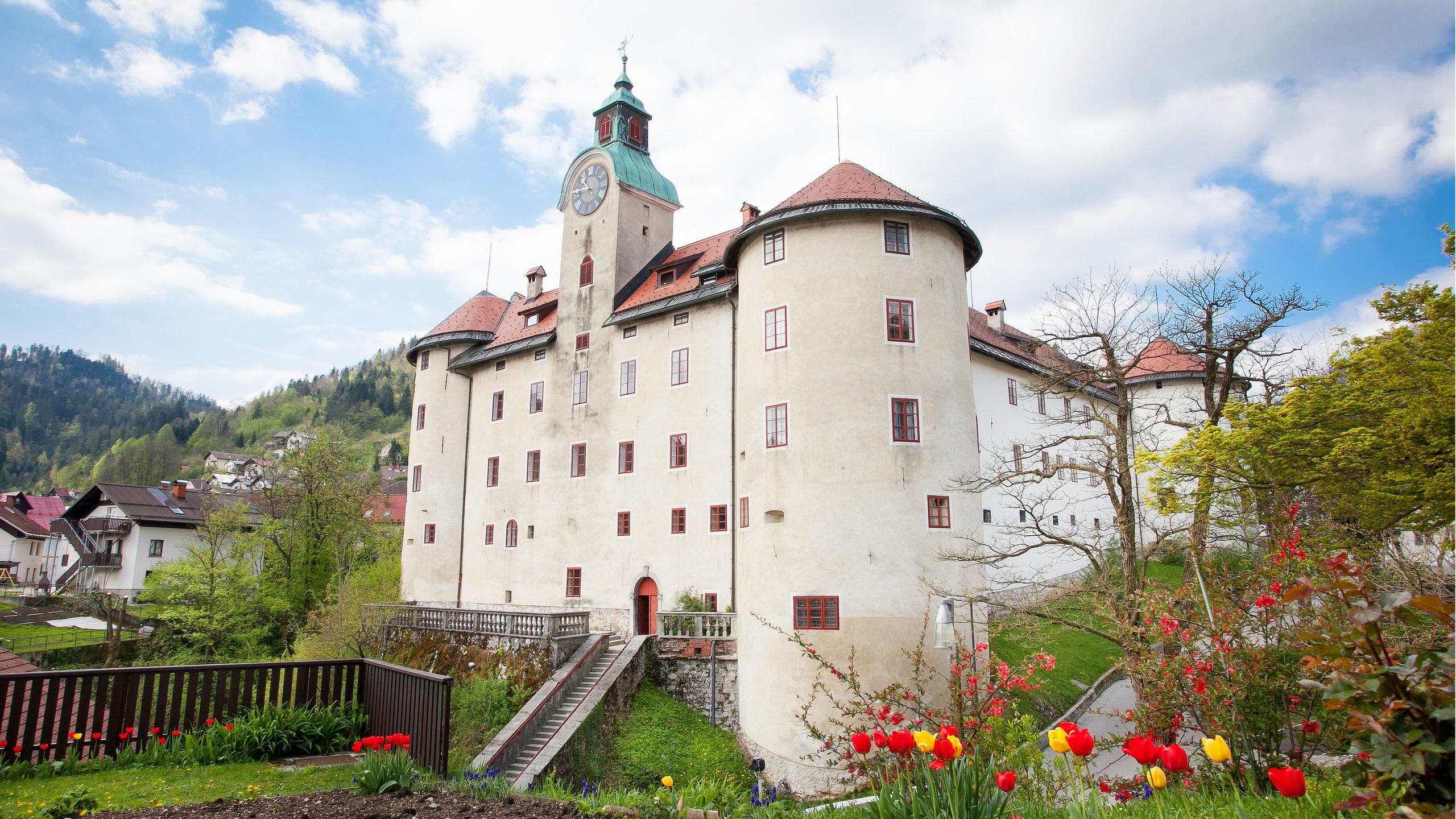
Gewerkenegg is a castle the Idrija mine owners built for themselves; no noble family ever lived here. You come in through an arcaded courtyard painted with Baroque frescoes, then into the Idrija Municipal Museum, where almost 2,000 square metres of exhibitions trace five centuries of mercury history alongside more than 300 years of Idrija bobbin lace. A steel ball floats on liquid mercury, cinnabar ore sits out to be lifted, and a whole exhibition is given to the lace tradition. The castle also introduces the true smuggling story of Marina Melhiorca, adding a more personal thread to Idrija’s mining history. For first-time visitors, Gewerkenegg is the best place to start: it provides the wider context for understanding the Idrija Mercury Mine and the other heritage sites shaped by mercury across Idrija and its surroundings.
Plan Your Visit
<
>
Opening Hours
Open now
Closes in 2h 5m
Today: 09:00-17:00
Winter season
Open daily within the published seasonal hours except on 1 January and 25 December, when the museum is closed. Organised groups can arrange visits outside the published schedule in advance. There is no fixed last-entry cutoff; tickets are sold until the official closing time, but the museum advises allowing at least 45 minutes for the visit.
Thu 09:00-17:00
Winter season09:00-17:00
Summer season09:00-19:00
New Year’s Day - closed (Jan 1)Closed
Christmas Day - closed (Dec 25)Closed
Entry Fee
Paid
Adults EUR 11.00
Ticket prices
Official source
Gewerkenegg Castle
Admission to all permanent exhibitions of the Idrija Municipal Museum in Gewerkenegg Castle.
Standard prices
Adults - individual
€11.00
Adults - group
10 or more people
€10.00
Adults - group with guided tour
Guided group tour of the whole museum lasts 1 hour 30 minutes.
€12.00
Pensioners - individual
€9.00
Pensioners - group
10 or more people
€8.50
Pensioners - group with guided tour
€10.00
Primary- and high-school pupils and students - individual
€5.00
Primary- and high-school pupils and students - group
€4.50
Primary- and high-school pupils and students - group with guided tour
€6.00
Family ticket
Valid for one or two adults and children up to 18 years. If a guided visit is requested, a separate guide-service charge applies; the official price list does not publish a family-specific guide-service amount.
€25.00
Children under 6
Free
Optional experiences
Theatre performance about the smuggler Melhiorca / Gledališka predstava o tihotapki Melhiorci
An optional staged performance based on the story of the Idrija smuggler Melhiorca.
Adults
€10.00
Pensioners
€8.00
Primary- and high-school pupils and students
€5.00
Family ticket
€22.00
Melhiorca programme with theatre performance / Program Melhiorca in gledališka predstava
Combined guided programme and performance, priced per group rather than per person.
Group of 5 to 20 persons
Total price for the group, not per person.
€40.00
Group of more than 20 persons
Total price for the group, not per person.
€20.00
Educational programmes - lesson and workshop / Učna ura in delavnica
Two distinct pre-arranged museum programmes with separate official prices: Lesson / Učna ura EUR 6.00; Workshop / Delavnica EUR 4.00.
Lesson / Učna ura
Official operator price list valid from 01/03/2026.
€6.00
Workshop / Delavnica
Official operator price list valid from 01/03/2026.
€4.00
Single Exhibition - Gewerkenegg Castle
Reduced admission to one chosen permanent exhibition in the castle instead of the full museum visit.
Standard prices
Adults - individual
€6.00
Adults - group
€5.50
Adults - group with guided tour
Guided tour of an individual exhibition lasts 30 minutes.
€7.00
Pensioners - individual
€5.00
Pensioners - group
€4.50
Pensioners - group with guided tour
€6.00
Primary- and high-school pupils and students - individual
€4.00
Primary- and high-school pupils and students - group
€3.50
Primary- and high-school pupils and students - group with guided tour
€4.50
Special Offer - 2 Museum Locations
Admission to Gewerkenegg Castle plus one further Idrija Municipal Museum location of your choice.
Includes
- Gewerkenegg Castle
- One further Idrija Municipal Museum location of the visitor’s choice
Standard prices
Adults - individual
€14.00
Adults - group
€13.00
Adults - group with guided tour
€15.00
Pensioners - individual
€12.00
Pensioners - group
€11.50
Pensioners - group with guided tour
€13.00
Primary- and high-school pupils and students - individual
€7.00
Primary- and high-school pupils and students - group
€6.50
Primary- and high-school pupils and students - group with guided tour
€8.00
Family ticket
Valid for one or two adults and every child up to 18 years.
€35.00
Museum PASS - All Idrija Municipal Museum Locations
Admission to all Idrija Municipal Museum locations of your choice, valid for three days from the date of purchase.
Includes
- Gewerkenegg Castle
- Idrija “Kamšt”
- Idrija Miner’s House
- Cerkno Museum
- Slovenia Partisan Printing Shop
- Homestead of the writer France Bevk
- Technical department of the museum in the Francis’ Shaft
Standard prices
Adults - individual
€17.00
Adults - group
€16.00
Adults - group with guided tour
€18.00
Pensioners - individual
€16.00
Pensioners - group
€15.50
Pensioners - group with guided tour
€17.00
Primary- and high-school pupils and students - individual
€10.00
Primary- and high-school pupils and students - group
€9.50
Primary- and high-school pupils and students - group with guided tour
€11.00
Family ticket
Valid for one or two adults and every child up to 18 years. Ticket valid three days from purchase.
€40.00
Official prices updated:
20 Aug 2026
- Prices are valid from 1 March 2026.
- Individual visitors buy at reception; groups of 10 or more pay the group rate.
- Guided tours are priced separately, and for parties smaller than 10 a guide-service fee applies: EUR 60.00 for adults, pensioners and students, EUR 40.00 for school pupils.
- The family ticket covers one or two adults and children up to 18.
- The 2-location offer and the 3-day Museum PASS are separate combined products.
- Discounts do not combine.
- Card payment is accepted.
Parking Situation
Small parking
View options
Parking Options
Official source
Situation: Small parking
Parking info updated: 20 Aug 2026
- A few free spaces sit right at the castle's rear entrance, but capacity is very limited.
- The larger free car park in the centre of Idrija is the more reliable choice for most visitors, about a 10-minute walk away.
- Coaches should use Idrija bus station.
Visitor Requirements
Age guidance
View requirements Requirements
Visitor Requirements
Suitable child age groups
- Young children (4-7 years)
- Older children (8-12 years)
- Teenagers (13-17 years)
Important
- Admission is free for children under 6. The family ticket is valid for one or two adults and includes children up to 18 years of age. There is no minimum visitor age; the exhibitions are text-rich and suit school-age children and older best.
EV charging
188 m on foot from a car park+3 more
Distances by road or on foot from each car park of this place, the nearest first, the straight line in brackets · 8 public chargers within 5 km by air
- MEGA M · Idrija-OlimpIdrija, Idrija DirectionsPower2 × 11 kW AC · Type 2CableBring your own Type 2 cableAccessPublic charger (national register) · 24/7 per register, hours not confirmedStart & payStart charging in the Mega Mobility app (pay by card in the app) or with an RFID card. · Card terminal: not confirmedPrice€0.32/kWh per the national register - may differ from the operator's current price listLiveChecking live status…VisitorsNo problems reported
- Efrend · Kolektor Idrija guestsVojkova ulica 10, 5280 Idrija, Slovenija, Idrija DirectionsPower4 × 22 kW AC · Type 2CableBring your own Type 2 cableAccessPublic charger (national register) · 24/7 per register, hours not confirmedStart & payStart charging in the free eFrend charge app (iOS/Android); it also covers Petrol, Gremo na elektriko, Mega Mobility and Ionity chargers. · Card terminal: not confirmed · Helpdesk +386 80 26 46Price€0.16/kWh per the national register - may differ from the operator's current price list operator price listLiveChecking live status…VisitorsNo problems reported
- Allego · HOFER Idrija Fast DCVojkova ulica 41, Idrija DirectionsPower2 × 200 kW DC · CCS2CableCable attachedAccessPublic charger (national register) · 24/7 per register, hours not confirmedStart & payAllego chargers take the Allego app or, where fitted, contactless bank cards, Apple Pay and Google Pay (check the charger). · Card terminal: not confirmedPrice€0.50/kWh per the national register - may differ from the operator's current price list operator price listLiveChecking live status…VisitorsNo problems reported
- Efrend · Kolektor SistehSpodnja Idrija- Godovič 8, Idrija DirectionsPower1 × 22 kW AC · Type 2CableBring your own Type 2 cableAccessPublic charger (national register) · 24/7 per register, hours not confirmedStart & payStart charging in the free eFrend charge app (iOS/Android); it also covers Petrol, Gremo na elektriko, Mega Mobility and Ionity chargers. · Card terminal: not confirmed · Helpdesk +386 80 26 46PricePrice not published - see the operator (eFrend charge) operatorLiveChecking live status…VisitorsNo problems reported
- MOON · MPI IdrijaVojkova 14, Idrija DirectionsPower2 × 33 kW DC · Type 2 / CCS2CableCable attachedAccessPublic charger (national register) · 24/7 per register, hours not confirmedStart & payPay by card at the charger's POS terminal or via the QR code (ad-hoc price list), or register in the MOONcharge app (Visa/Mastercard). · Helpdesk +386 80 18 98 (24/7)Price€0.55/kWh · session fee €0.50 · idle fee €0.25/min after 180 min · MOON price list, valid from 1 Jul 2026, checked 23 Oct 2026 price listLiveChecking live status…VisitorsNo problems reported
- Petrol · Kendov Dvorec - E3Na Griču 2, Spodnja Idrija DirectionsPower2 × 22.1 kW AC · Type 2CableBring your own Type 2 cableAccessPublic charger (national register) · 24/7 per register, hours not confirmedStart & payNo contract needed - pay in the OneCharge web app, at an e-payment terminal where fitted, or prepay at the Petrol shop till (ad-hoc price). · Helpdesk +386 1 471 46 66 (24/7)Price€0.41/kWh · idle fee €0.04/min after 180 min (7:00-20:00) · Petrol price list, valid from 1 Nov 2025, checked 23 Oct 2026 price listLiveChecking live status…VisitorsNo problems reported
- Petrol · Hidria Rotomatika 2Spodnja Kanomlja 23, Spodnja Idrija DirectionsPower2 × 22.1 kW AC · Type 2CableBring your own Type 2 cableAccessPublic charger (national register) · 24/7 per register, hours not confirmedStart & payNo contract needed - pay in the OneCharge web app, at an e-payment terminal where fitted, or prepay at the Petrol shop till (ad-hoc price). · Helpdesk +386 1 471 46 66 (24/7)Price€0.41/kWh · idle fee €0.04/min after 180 min (7:00-20:00) · Petrol price list, valid from 1 Nov 2025, checked 23 Oct 2026 price listLiveChecking live status…VisitorsNo problems reported
- Petrol · Hidria Rotomatika 1Spodnja Kanomlja 23, Spodnja Idrija DirectionsPower2 × 22.1 kW AC · Type 2CableBring your own Type 2 cableAccessPublic charger (national register) · 24/7 per register, hours not confirmedStart & payNo contract needed - pay in the OneCharge web app, at an e-payment terminal where fitted, or prepay at the Petrol shop till (ad-hoc price). · Helpdesk +386 1 471 46 66 (24/7)Price€0.41/kWh · idle fee €0.04/min after 180 min (7:00-20:00) · Petrol price list, valid from 1 Nov 2025, checked 23 Oct 2026 price listLiveChecking live status…VisitorsNo problems reported
Good to know
LawMarked EV charging bays are for vehicles that are charging - parking there without charging is fined €80 (Road Traffic Rules Act, Art. 65, as reported). source
MEGA MNo public price list found; the Mega Mobility app shows the charging fee per station.
EfrendThe public price list covers only occasional charging at HIT (Nova Gorica) sites: AC €0.36/kWh + €0.025/min after 180 min, DC 60 kW €0.50/kWh + €0.25/min after 60 min, all excluding VAT; other chargers' prices are shown in the eFrend charge app. source
AllegoAllego's public pricing page does not list Slovenia; prices are shown in the Allego app. A €40 pre-authorisation is placed before a session and overstay fees apply after a grace period. source
Plug-in hybrids and single-phase cars draw 3.7-7.4 kW from these posts, whatever the post can give.
Source: national charger register (NAP Slovenia, CC BY-SA 4.0), refreshed nightly · operator price lists as dated.
Distances by road and on foot: OSRM routing (FOSSGIS), map data © OpenStreetMap contributors · report a map error
Parking Fee
Free
Child safety note
Stairs+1 more
Access Notes
Very limited parking at entrance
Suitable For
Couples+4 more
Stroller accessibility
Partly
Wheelchair access
Partly
Estimated visit time
1-2 h
Family Friendly
Yes
Pet Friendly
No data
Walking Difficulty
Moderate
Best season
Spring, Summer, Autumn
Highlights
Baroque frescoed courtyard
Castle museum experience
Lace-making heritage collection
Renaissance castle architecture
Castle lapidarium
Historic courtyards and terraces
Mining administration castle
UNESCO World Heritage Site
Safety Notes
!Limited accessibility in historic areas
!Stairs inside
!Supervise children
!Uneven historic surfaces
Photo Tip
Start in the arcaded courtyard: stand under the arches so the restored Baroque frescoes and the paved walkway lead toward the well. Midday light reaches the enclosed courtyard best, while late afternoon suits the exterior seen from the town square below, with the clock tower rising above the roofline. Check photography rules at reception.
Before You Go
!Audio guide available
!Best combined with nearby attraction
!Check opening hours
!Guided tours available
!Indoor visit
!Stairs inside
!Ticket required
!Uneven historic surfaces
Access & Parking
Detailed access info in Plan Your Visit ↑
The castle sits on a low hill just above the town centre. A few free spaces sit at the rear entrance, but capacity is very limited, so most visitors park in the larger free car park in the centre of Idrija and walk up in about 10 minutes. The standard walking route finishes with a stair climb. Coaches are directed to the bus station rather than up to the castle.
Interesting Facts
1
A castle built by miners, not nobles
Gewerkenegg was raised between 1522 and 1533 by the private owners of the Idrija mercury mine, and its German name translates simply as “the mining castle”. No noble family ever lived here. A mine manager stood in for the feudal lord, and the rooms held mine offices, a library, storerooms and the manager's own apartment. The museum still poses the question on its own walls: is it a castle, or isn't it?
2
Mercury was stored behind these walls
The mine owners needed a defensible place for the most valuable thing they produced, and the castle's ground floor and cellars were built to hold liquid mercury alongside food reserves for the workforce. Storage remained a central function until a dedicated mercury warehouse was built down in the town at the end of the eighteenth century. In the last quarter of the seventeenth century the same cellars also held a two-year grain supply for every mine worker.
3
Built partly from used ore retorts
Among the materials worked into the walls were spent clay vessels called retorts, the containers in which mercury ore was roasted. The builders were reusing the mine's own discarded equipment as construction material. It is an unusual detail, and it says plainly what Gewerkenegg was: an industrial building first and a fortress second.
4
A drawbridge left one stone clue
When construction finished, the Renaissance castle was protected by external earthworks, three round corner towers and the Nikova creek along its southern side. The main western entrance is thought to have carried a wooden drawbridge, and the surviving evidence is a single stone “tooth” preserved above the portal of today's main entrance. Look up as you walk through the main entrance and you can still see it.
5
The year 1527 above the staircase
A date carved into the portal keystone at the top of the inner wooden staircase reads 1527. It may mark the completion of one construction phase, but the museum considers it more likely to record the building authorisation that Ferdinand I granted to the private mine owners on 2 May 1527. Another carved year, 1758, appears on the eastern outer portal and beside a surviving fresco on the second floor.
6
Baroque frescoes around the courtyard
The arcaded courtyard was remodelled in the eighteenth century with semicircular arcades and painted decoration, most likely completed under the mine manager Anton Sartori around 1758. The artist is unknown, but the stylised motifs and choice of colours resemble the rural frescoes of the surrounding countryside, and the Idrija cartographer and dam builder Jožef Mrak has been suggested as a possible contributor. The frescoes were whitewashed in the nineteenth century and have since been restored.
7
Nearly thirty years of restoration
The castle's most recent programme of repair and restoration ran from 1988 to 2017, and the original German name returned to everyday use around the town's five-hundredth anniversary and the major renovation of the early 1990s. Today the courtyard shows open arcades, a paved walkway, a well and the recovered Baroque painting. Portals around the building carry carved dates from several different stylistic periods, and they are easy to find once you start looking.
8
Protected at three different levels
Gewerkenegg was declared a cultural heritage monument in 1986 and a monument of national importance in 1999. In 2012 it was recognised among the most important monuments of Idrija's technical heritage inscribed on the UNESCO World Heritage List as part of Heritage of Mercury: Almadén and Idrija. It is a joint Slovenian and Spanish property, shared with Almadén in Spain.
9
An award-winning industrial museum
The Idrija Municipal Museum has occupied the castle since 1954 and spreads across almost two thousand square metres of interior. In 1997 it received the Luigi Micheletti Award as the best European museum of industrial and technical heritage. Four permanent exhibitions cover five centuries of the mine and town, the Idrija-Almadén mercury connection, the milestones of the twentieth century and Idrija bobbin lace, alongside a memorial room for the writer France Bevk.
10
Lace made in the shadow of the mine
While the men worked underground, women and girls in Idrija made bobbin lace at home for extra income, a tradition more than three hundred years old. The museum's lace exhibition traces that history from European lace-making and the founding of the lace school through to the annual Idrija Lace Festival. Together the rooms show that the mine shaped life above ground as much as below it.
11
A smuggler’s story inside the castle
Marina Melhiorca brings a very different human story into Gewerkenegg’s mining world. Her true smuggling story is used by the museum to lead visitors into the castle’s past from a more personal angle, adding character and intrigue to the administrative, industrial and social history told throughout the exhibitions.
Visitor Wisdom
Traveler Insights
Combined public visitor ratings from Google and Tripadvisor. Last verified August 2026.
The arcaded courtyard draws the most photographs: open arches on every side, a paved walkway, a well and restored Baroque painting. Inside, the mercury material is the surprise. Visitors single out the cast-iron vessel where a steel ball floats on liquid mercury, the heavy cinnabar ore sample you are invited to lift, and the mineral cases. The lace exhibition then pulls the story in a completely different direction, and it is regularly named as the highlight people did not expect, particularly the enormous tablecloth made for Jovanka Broz. Reception staff are described warmly and often, and the English labelling throughout is repeatedly praised.
Two things come up again and again. The first is the approach: from the town centre the route finishes with a genuine stair climb, and there are only a few free spaces at the rear entrance. The second is density. The exhibitions are text-rich and spread over several floors connected by narrow historic staircases, so an hour gets you a walk-through but not the detail. Wheelchairs and strollers can reach the courtyard by the rear approach, but not the exhibition floors. There is an izi.TRAVEL audio guide, and it is worth loading before you arrive.
Best for visitors who like industrial and social history, geology or textile craft, and for anyone who wants the context that makes the rest of Idrija make sense. It also works as a wet-weather or cold-day option, since the visit is indoors and the museum opens almost every day of the year. Less ideal for visitors who want furnished historic interiors, castle theatre or a quick photo stop: the interiors are exhibition spaces rather than period rooms, and a real visit takes an hour or two. Families with toddlers should expect to do most of the reading themselves.
The most common planning error is treating the castle and the underground mine tour as interchangeable stops. The mine runs on fixed guided departures and the castle does not, so choose the mine time first and build the castle around it. The second mistake is counting on the few spaces at the rear entrance; the larger free car park in the centre of town is the dependable choice. The third is buying a single-attraction ticket without checking the 2-location offer or the 3-day Museum PASS, which are worth it if you plan to see more of the Idrija Municipal Museum network.
Two details reward attention on the way in. Above the main entrance portal sits a single stone “tooth”, the surviving evidence of the wooden drawbridge thought to have protected the western approach; at the top of the inner wooden staircase, the portal keystone carries the carved year 1527. The castle lapidarium is easy to walk past and holds the mining-era carved stones and a reconstructed heraldic panel of Ferdinand I. In summer the courtyard becomes a venue in its own right, with concerts and open-air screenings. If the exhibitions leave you wanting the physical side of the story, the Hg Smelting Plant on the edge of town completes the sequence from ore to metal.
The pricing is genuinely family-friendly: admission is free for children under 6, and one family ticket covers one or two adults and children up to eighteen. The museum runs dedicated school and family programmes, and the interactive Idrija-Almadén exhibition is the room that holds younger visitors best. The mercury displays are a reliable draw. Against that, much of the museum is text on panels. A stroller reaches the courtyard but not the exhibition floors, where the internal staircases are narrow and old. Plan on doing the narrating yourself with under-sevens.
The arcaded courtyard is the strongest photographic subject, and it repays a slow circuit: the arches frame the painted facades from every side, and the walkway and well give you a natural foreground. Enclosed as it is, the courtyard takes light best around the middle of the day. For the exterior, walk back down to the town square in late afternoon and shoot up at the clock tower rising above the roofline. Indoors is harder, since the exhibition rooms are dim and the display cases reflect. Check current photography rules at reception.
Across both Google records and both Tripadvisor records the verdict is steady and positive, and the castle ranks second of twenty-two things to do in Idrija on Tripadvisor. The recurring note is that visitors expected a modest municipal collection and found something more ambitious: an award-winning industrial-heritage museum housed in a building that is itself an artefact of the industry it describes. Criticism, where it appears, is about the volume of reading and the stuffiness of the rooms in high summer rather than the quality of what is on show. Most reviewers finish by saying it deserves more time than they gave it.
Visitor Reviews
Write a review
No visitor reviews yet.
Be the first to share your experience.
No reviews yet!
Sorry! Please login first to submit reviews.